Articles of Education
News Update
Loading...

Tuesday, June 17, 2025

Top 619 High School Softball Players Named 2025 All-State by Illinois Coaches Association

Top 619 High School Softball Players Named 2025 All-State by Illinois Coaches Association

The Illinois Coaches Association announced its all-state softball teams for the 2025 spring season.

A total of 619 athletes were named to the annual honor teams. The Class 1A and 2A teams were announced June 9, while the Class 3A and 4A teams were announced June 16. Here are the teams, split by class and each of the first, second and third teams.

In all, 93 players were named first team; 204 made second team; and 322 made third team.

IHSA softball state finals: 1A/2A scoreboard | 1A/2A roundup | 3A/4A scoreboard | 3A/4A roundup

2025 ICA Class 1A first team

  • Taylor Ford, Sr. INF, Abingdon-Avon
  • Grace Lemke, Sr. P, Altamont
  • Addie Seitz, Sr. P, Biggsville West Central
  • Audrey Gilman, Sr. P-INF, Calhoun
  • Karly Peters, Sr. INF, Camp Point Central
  • Hannah Uhles, Sr. P-INF, Carrollton
  • Lauren Flowers, Sr. P-INF, Carrollton
  • Allyson Truelove, Sr. INF, Casey-Westfield
  • Lucy Moore, Jr. INF, Casey-Westfield
  • AJ Howarth, So. P, Dakota
  • Ava Hahn, Sr. P, Galena
  • Maddie Simms, Jr. P-INF, Gardner South Wilmington
  • Kaydi Miller, Jr. C, Havana
  • Lauren Harbison, Sr. P, Henry
  • Sara Finn, Jr. C-OF, Illini Bluffs
  • Lexi Brinkman, Sr. C, Illini Bluffs
  • Morgan Fleming, Jr. INF, Le Roy
  • Jacey Hageman, So. P, Le Roy
  • Rachael Setterstrom, Sr. P-OF, Lena-Winslow
  • Hunter Hopkins, So. INF, Ottawa Marquette
  • Addison Lucht, Jr. INF, Milford-Cissna Park
  • Ava Wombles, Sr. P-OF, Pleasant Hill
  • Gabby Dean, Sr. P-OF, Woodhull Ridgewood
  • Ava Boyer, Sr. INF, Tuscola
  • Samantha Hayes, Sr. P-Util., Windsor/Stewardson-Strasburg

2025 ICA Class 1A second team

  • Tyrah Vaessen, Sr. C, Amboy
  • Madison Smith, Sr. P-INF, Annawan/Wethersfield
  • Ema Simpson, Jr. C, INF, Arcola
  • Miley Stimpson, So. P-OF, Biggsville West Central
  • Becca Hinshaw, So. OF, Biggsville West Central
  • Lauren Miller, Sr. P-INF, Camp Point Central
  • Daci Walls, Sr. C, Carrollton
  • Vanna Holmes, Sr. OF, Carrollton
  • Ava Goble, Jr. P, Casey-Westfield
  • Tristan Ring, Sr. OF, Casey-Westfield
  • Gwyn Hardimon, Sr. P, INF, Moweaqua Central A & M
  • Natalie Franklin, Jr. C, INF, Cobden
  • Jada Burnett-Hatton, Jr. P, Crab Orchard
  • Autumn Kinney, Fr. C, Dakota
  • Jersie Banks, Fr. INF, Dakota
  • Lainey Klokkenga, Sr. P, Delavan
  • Addison Scherer, So. P, INF, Earlville
  • Curin Oberman, So. P, East Dubuque
  • Allison Groff, Jr. P, Edwards County
  • Grace Bishop, Jr. INF, Edwards County
  • Sarah Gurley, So. C-INF, Elgin St. Edward
  • Alaina Nolan, Jr. P-INF, Elgin St. Edward
  • Zoe Kunau, So. OF, Fulton
  • Kaylyn Gale, So. C, INF, Galva
  • Cheyenne Hayes, Jr. P-INF, Grant Park
  • Kenzie Weidman, Sr. C, Harvest Christian
  • Kaitlyn Anderson, Sr. C, Henry
  • Brynn Griffin, Jr. OF, Hutsonville
  • Cora Ellison, Jr. P, Illini Bluffs
  • Emily Mennenga, Sr. OF, Le Roy
  • Laila Carr, Jr. C, Le Roy
  • Ally Lefringhouse, Sr. C, Liberty
  • Chandler John, So. P, Liberty
  • Alexis Weber, Sr. P, C, Metro East Lutheran
  • Taylor Stone, Sr. INF, Mulberry Grove
  • Lily Johnson, Sr. P, Mulberry Grove
  • Dottie Wood, Sr. P, Newark
  • Addi Hasheider, So. OF, Okawville
  • Jada Reed, Jr. OF, Orangeville
  • Ava Rodriguez, Jr. INF, Pawnee
  • Ellie Bolen, Jr. INF, Pecatonica
  • Makenna Winchell, Sr. C, Pleasant Hill
  • Ella Humphrey, Fr. OF, Woodhull Ridgewood
  • Italee Ford, Jr. Util., Rushville-Industry
  • RayElle Brennan, Sr. C, INF, Serena
  • Brynley Glade, So. OF, Serena
  • Corinne Mueller, Fr. P-INF, Steeleville
  • Hayleigh Franklin, Jr. Util., Campbell Hill Trico
  • Mylee Tracy, Jr. P-OF, Concord Triopia
  • Addison Rohn, Sr. C, Concord Triopia
  • Piper Kiser, Jr. Util., Villa Grove
  • Selah Argueta, Jr. C, Walther Christian
  • Rachel McMullen, Sr. C-INF, Barry Western
  • Kendra Hayes, So. P-INF, Windsor/Stewardson-Strasburg
  • Evelyn Twohig, So. INF, Woodlands Sacred Heart
  • Elyssa Schoenbaechler, So. P-INF, Waltonville
  • AJ Long, Sr. C, Waltonville

2025 ICA Class 1A third team

  • Emma Gunther, Sr. C, Abingdon-Avon
  • Kacie Sisk, Sr. P, INF, Arcola
  • Ava Simpson, Sr. INF-OF, Arcola
  • Lilly Higgins, Fr. INF, Biggsville West Central
  • Kiera Sievers, Jr. C-INF, Calhoun
  • Claire Huston, Sr. OF, Camp Point Central
  • Anna Peters, Sr. OF, Camp Point Central
  • Abby Pitts, Fr. P, Cobden
  • Adri Ortega, Fr. P, Crab Orchard
  • Audrey Scherer, Fr. C-INF, Earlville
  • Bailey Miller, Jr. C, INF, Earlville
  • Katie Welp, Sr. C, INF, East Dubuque
  • Kendall Pemberton, Jr. INF, Elgin St. Edward
  • Kira Wilson, Sr. INF, Fulton
  • Resse Germann, Sr. C, Fulton
  • Belle Curley, Jr. OF, Fulton
  • Ella Mack, So. INF, Gardner South Wilmington
  • Ashley Murphy, Sr. P-INF, Waterloo Gibault
  • Lauren Lanham, So. P-INF, Waterloo Gibault
  • Makayla Richards, So. P-INF, Harvest Christian
  • Haley Miller, Fr. INF, Harvest Christian
  • Nelly DelValle, Sr. C, Hiawatha
  • Shaylun Christenberry, Sr. Util., Hume Shiloh Tri-County
  • Lily Holcomb, Sr. INF, Hutsonville
  • Hayden Monan, So. P, Hutsonville
  • Chloe Eeten, Jr. INF, Illini Bluffs
  • Maddy Chiles, Sr. P, Lena-Winslow
  • Anna Dietrich, Jr. INF, Liberty
  • Andi Mixer, So. OF, Liberty
  • Kelsey Cuchra, So. C, Ottawa Marquette
  • Taylor Cuchra, Sr. P-INF, Ottawa Marquette
  • Taylor Weber, Sr. P-C, Metro East Lutheran
  • Jenni Mezo, Sr. C, Mulberry Grove
  • Lucy Oetting, Jr. INF, Newman Central Catholic
  • Gianna Vance, Fr. P-INF, Newman Central Catholic
  • Addyson Wheeler, Sr. P-INF, Orangeville
  • Bella Fasolo, Jr. P-INF, Pope County
  • Claire Sutherland, So. P-OF, Princeville
  • Mackenzie Peck, So. C-INF, Woodhull Ridgewood
  • Avery Humphrey, Fr. INF, Woodhull Ridgewood
  • Ella Rigg, Jr. C, ROWVA/Williamsfield
  • Emma West, Sr. OF, ROWVA/Williamsfield
  • Maddie Glade, Sr. P-INF, Serena
  • Jenna Setchell, Sr. INF, Serena
  • Audrey Gooding, Jr. INF, St Thomas More
  • Zoey Wolf, Jr. C, Steeleville
  • Lucie Dion, Jr. INF, Concord Triopia
  • Addilynn Tracy, Fr. Util., Concord Triopia
  • Izzy Dodd, Jr. INF, Villa Grove
  • Hayden Thomas, Jr. OF, Villa Grove
  • Sophie Rennecker, Fr. Util., Barry Western
  • Addy Denault, Sr. OF, Waltonville
  • Emmie Wangler, Sr. INF, Waltonville
  • Grace Allgood, Sr. P-INF, Yorkville Christian
  • Bridget Hooper, Jr. Util., Yorkville Christian

2025 ICA Class 2A first team

  • Kansas Craig, Jr. INF, Anna-Jonesboro
  • Meena Taylor, Sr. P, Auburn
  • Ava Lorenzatti, Jr. P, Beecher
  • Taylor Norkus, Jr. P-INF, Beecher
  • Sawyer Drury, Jr. P-INF, Brimfield/Elmwood
  • Colbie Bennett, Jr. C, Carterville
  • Caidence Phillips, Jr. P-INF, Carterville
  • Elle Van Breusegen, Sr. OF, Columbia
  • Adysen Rios, Sr. INF, Effingham St. Anthony
  • Halle Kitley, Jr. P, Flora
  • Addison Rizzatto, Jr. INF, Joliet Catholic
  • Jaz Manau, Sr. C, Manteno
  • Kylee Jensen, Sr. C, Marengo
  • Bella Duncan, Sr. P, INF, Morrison
  • Addyson O'Dell, Sr. INF, Newton
  • Hayden Staver, So. INF, Poplar Grove North Boone
  • Sophia Klawitter, Jr. P, Peotone
  • Hailey Holtz, Sr. P-OF, Richmond Burton
  • Brooklyn Peterson, Fr. C, Port Byron Riverdale
  • Tessa Krull, Jr. P, Seneca
  • Lindy Bates, Sr. P, INF, Tolono Unity
  • Molly Southall, Jr. OF, Wilmington

2025 ICA Class 2A second team

  • Ruby Yates, Sr. P, Anna-Jonesboro
  • Addison Jones, So. INF, Auburn
  • Corina Miller, Jr. P, Aurora Central Catholic
  • Morgan Vaghy, Jr. INF, Aurora Central Catholic
  • Bella Palmer, Sr. INF, Beardstown
  • Makenzie Johnson, Jr. C-OF, Beecher
  • Kendyl Binder, So. INF, Brimfield/Elmwood
  • Allison Wheeler, Sr. OF, Canton
  • Hallie Gibson, Jr. P, Carlinville
  • Hannah Gibson, Sr. OF, Carlinville
  • Audrina Sloan, Jr. INF, Carterville
  • Khloe Picard, Jr. C, Coal City
  • Emily Webb, Jr. P, Columbia
  • Byrkleigh Kraft, Jr. INF, Deer Creek-Mackinaw
  • Jaylynn Hamilton, Sr. INF, Erie-Prophetstown
  • Rylee Dare, So. P, INF, Eureka
  • RyLyn Adams, Sr. INF-OF, Herscher
  • Maddie Barnes, Sr. P, Hoopeston
  • Maddy Dinino, Jr. P, Elmhurst IC Catholic
  • Lexi Russ, So. INF, Elmhurst IC Catholic
  • Zoee Cullum, Sr. INF-OF, Johnston City
  • Peyton Smith, Sr. OF, Johnston City
  • Molly Ryan, Sr. INF-OF, Joliet Catholic
  • Kalleigh Gale, Jr. P, Kewanee
  • Lexi Harshbarger, Sr. P-INF, Knoxville
  • Jasmine Peppers, Sr. INF, Knoxville
  • Julia Meisenhelter, Jr. INF, Macon Meridian
  • Gabby Christiopher, Jr. INF, Marengo
  • Gabrielle Gieseke, Sr. INF, Marengo
  • Christine Chmiel, Jr. P, Marian Central Catholic
  • Haley McGuire, Sr. P, INF, Marshall
  • Lynn Welborn, Jr. INF, Marshall
  • Maddy Huels, Sr. INF, Breese Mater Dei
  • Natalie Thomson, Jr. C, Aledo Mercer County
  • Shelby Renfro, Jr. INF, Macon Meridian
  • Ashley Schelling, Jr. P, Macon Meridian
  • Thea Key, So. INF, Monticello
  • Sadie Walsh, Jr. INF, Monticello
  • Cassidee Stoffel, Jr. P, Monticello
  • Allie Anderson, Jr. C, Morrison
  • Evie Sellers, So. INF, Mt. Carmel
  • Macey Alexander, Jr. C-INF, Murphysboro
  • Khloe Osborne, Fr. INF, Poplar Grove North Boone
  • Courtney Troutt, Jr. P, Poplar Grove North Boone
  • Irene Rangel, So. Util., Oakwood
  • Ella Dannhorn, Sr. INF-OF, Oregon
  • Avah Oertel, So. P-INF, Princeton
  • Keely Lawson, Jr. Util., Princeton
  • Caitlin Bunte, Sr. P-OF, Quincy Notre Dame
  • Julia Ohlau, So. P-OF, Red Bud
  • Rebecca Lanz, Jr. C, Richmond Burton
  • Katie Cox, Jr. INF, Port Byron Riverdale
  • Breckin DeLaRosa, Sr. INF, Port Byron Riverdale
  • Taylor Dieterich, Sr. P-INF, Taylor Ridge Rockridge
  • Mckenzie Wieland, So. P, Springfield Sacred Heart- Griffin
  • Brooklyn Marks, Sr. P-INF, Sandwich
  • Savanah Hauger, Sr. P-OF, Sherrard
  • Makenzy Moran, Jr. C, Sherrard
  • Harmony Ray, Jr. C-OF, Sullivan
  • Grace Bickers, So. C, Tolono Unity
  • Gwyneth Jindra, Fr. Util., Westmont
  • Lani Gondzur, Sr. INF, Westville
  • Lilly Kiesel, Jr. P, Westville
  • Taylor Stefancic, Jr. INF, Wilmington
  • Keeley Walsh, So. INF, Wilmington

2025 ICA Class 2A third team

  • Jayci Needling, Jr. INF, Anna-Jonesboro
  • Ariana Turner, Sr. C, Anna-Jonesboro
  • Mackenzie Szoke, Jr. OF, Athens
  • Taylor Patterson, Sr. INF, Auburn
  • Piper Taylor, Sr. C, Auburn
  • Kate Gambro, Sr. OF, Aurora Central Catholic
  • Jessica Pleckham, Sr. OF, Aurora Central Catholic
  • Kylynn Maltby, Jr. C, Beardstown
  • Vanessa Nunez, Sr. INF, Beardstown
  • Ava Olson, Sr. INF, Beecher
  • Jaycee Webb, So. INF, Benton
  • Malia Webb, Sr. INF, Benton
  • Rylee Cook, Jr. INF, OF, Bloomington Central Catholic
  • Makaylynne Correa, Jr. INF, Canton
  • Isabella Tiburzi, Sr. INF, Carlinville
  • Braley Wiser, Sr. INF, Carlinville
  • Savannah Gibbs, Jr. OF, Carterville
  • Elaina Lutman, Sr. INF-OF, Chester
  • Sydney Jemar, Sr. P, Clifton Central
  • Mackenzie Knowles, Sr. P-OF, Deer Creek-Mackinaw
  • Ellie Beachum, Fr. P, East Alton Wood River
  • Lily Tretter, Sr. OF, East Alton Wood River
  • Julia Schultz, So. C-INF, Effingham St. Anthony
  • Camille Wines, Sr. Util., Effingham St. Anthony
  • Alyssah Padia, Jr. OF, Erie-Prophetstown
  • Claire Stoner, Sr. INF, Eureka
  • Lydia Overcash, Sr. P, Farmington Central
  • TeriLynn Timmerman, So. INF, Fieldcrest
  • Leah Jones, Jr. INF, Flora
  • Ava Parish, Jr. INF, Gillespie
  • Sadie Sholtis, Jr. P-OF, Gillespie
  • Payton White, Fr. P, Greenville
  • Ava Brown, So. C, Harrisburg
  • Maddie Walker, So. P, Harrisburg
  • Keira Ahramovich, Jr. C, Herscher
  • Addyson Kelnhofer, Jr. INF, Hoopeston Area
  • Macy Warner, Sr. INF, Hoopeston Area
  • Kelly Cahill, So. C, Elmhurst IC Catholic
  • Sofia Bucaro, Jr. OF, Elmhurst IC Catholic
  • Emmy Fleming, So. P, Illinois Valley Central
  • Peyton Johnson, Sr. P, Johnston City
  • Remy Hicks, So. INF-OF, Kewanee
  • Kieryn Abernathy, So. INF, Kewanee
  • Rylee Blades, Fr. C-INF, Kewanee
  • Emma Racke, Sr. C, Knoxville
  • Emma Way, Sr. Util., Knoxville
  • Emma Childers, Sr. INF, Macon Meridian
  • Aubrie Goudreau, Jr. INF, Manteno
  • Macy Iwanus, Sr. INF, Manteno
  • Ava Peterson, Sr. P-OF, Manteno
  • Josza Christiansen, Sr. P, Marengo
  • McKenzie Davis, So. C, Marshall
  • Elsie Cook, Jr. P, Aledo Mercer County
  • Grace Meeks, Fr. INF-OF, Manito Midwest Central
  • Alexcia (Lexi) Wood, Jr. P-INF, Manito Midwest Central
  • Isabella Beery, Jr. INF, Monticello
  • Elle Milnes, So. INF, Morrison
  • Lyla Keepes, So. P, Mt. Carmel
  • Leah Lewis, So. C, Mt. Carmel
  • Siena Popejoy, So. OF, Nashville
  • Riley Holloway, Jr. P-INF, New Berlin
  • Amelia Collins, Sr. P, Newton
  • Alisson Stanley, Sr. C, Newton
  • Ryan Coombs, Sr. C, Normal University
  • Emme Steward, Sr. INF, Normal University
  • Marlee Alderman, So. INF, Poplar Grove North Boone
  • Lainey Kunert, Sr. P, OF, Orion
  • Ella Tady, Jr. OF, Peoria Notre Dame
  • Madison Bruns, Jr. C-INF, Pinckneyville
  • Shea Pyatt, Sr. P-INF, Pinckneyville
  • Delaney Murphy, Jr. C-OF, Pleasant Plains
  • Samantha Slagel, Jr. INF, Prairie Central
  • Caroline Keutzer, Jr. OF, Princeton
  • Kelsea Klingenberg, Sr. INF-OF, Princeton
  • Alyssa Ley, Sr. INF, Quincy Notre Dame
  • Olivia Geralds, Sr. P, OF, Red Bud
  • Ava Wagner, Jr. INF, OF, Red Bud
  • Madison Kunzer, Sr. P-OF, Richmond Burton
  • Brie DeBlaey, Sr. P-OF, Port Byron Riverdale
  • Emilee Black, Fr. C, Taylor Ridge Rockridge
  • Madelyn David, Jr. Util., Taylor Ridge Rockridge
  • Charley Perkins, Jr. OF, Taylor Ridge Rockridge
  • Emma Mino, So. INF, Seneca
  • Nadia Anderson, Sr. INF, Sherrard
  • Makensie Westfall, Fr. INF, Sherrard
  • Vivian  Zurheide, Jr. INF, SouthBarry Western
  • Ava Balestri, Jr. INF, St. Bede
  • Lily Bosnich, Jr. INF, St. Bede
  • Emma Slingsby, Jr. OF, St. Bede
  • Mackenzi Shere, So. P, Stillman Valley
  • Aeralyn Thrasher, Jr. P-INF, Sullivan
  • J’Nai Webb, Jr. P-INF, Sullivan
  • Malea Helmink, Jr. INF, Teutopolis
  • Alyssa Tipton, Jr. P, Teutopolis
  • Jenna Adkins, Sr. C, INF, Tolono Unity
  • Lily Woodworth, Jr. P, Tri City
  • Addy Freihaut, Jr. INF, Downs Tri-Valley
  • Paige Fesler, Jr. OF, Downs Tri-Valley
  • Christa Holohan, Jr. INF, Watseka
  • Presley Trogolo, Sr. OF, West Frankfort
  • Taylor Valangeon, Fr. P, Westville
  • Lucy Nell, So. Util., Williamsville
  • Izzy Nowack, Sr. P, OF, Williamsville
  • Nina Egizio, So. INF, Wilmington
  • Sammi Falnes, Jr. OF, Winnebago
  • Vern Gilley-Amdal, Sr. P-INF, Winnebago

2025 ICA Class 3A first team

  • Kaidence Till, Sr., IF, Metamora
  • Oli Victorine, So., P, Crystal Lake Central
  • Sutton Centoni, Jr., P, Dunlap
  • Irie Lohrenz, Jr., P, Chatham Glenwood
  • Taylor Vescogni, Jr., P, LaSalle-Peru
  • Elena Krause, Sr., P, Pontiac
  • Angelina Cole, Jr., OF, New Lenox Providence
  • Adysen Kiddy, Sr., IF, Crystal Lake Prairie Ridge
  • Addison Rotz, Jr., IF, Mt. Zion
  • Talluah Eicholz, Sr., P, Harvard
  • Ryleigh Kiel, Jr., OF, Chatham Glenwood
  • Reilly Vetter, Jr., P, Bloomington
  • Grace King, Jr., C, Carmel
  • Jenna Flessner, Sr., P, Washington
  • Aidan Dintelman, Jr., P, Waterloo
  • Gracie Ahrens, So., IF, East Peoria
  • Natalie Pacyga, Sr., IF, Lemont
  • Gabby Drake, Jr. , C, Dunlap
  • Grace Brown, Sr., IF, Carmel
  • Samantha Hillner, Jr., IF, Antioch
  • Reese Mosolino, Jr., P, Crystal Lake Prairie Ridge
  • Demi Lotus, Fr., IF, Burbank St. Laurence

2025 ICA Class 3A second team

  • Emma Andrews, Sr., SS, Grayslake Central
  • Alana Bryant, Jr., P, Marion
  • Nora Johnson, Sr., P, Metamora
  • Lauren Kennedy, Jr., IF, Wheaton St. Francis
  • Leona Eicholz, Fr., P, Harvard
  • Halie Olsen, So., IF, Morris
  • Danica Tobin, Jr., IF, Mt. Vernon
  • Ella Fink, Jr. , OF, Mt. Zion
  • Chloe Williams, Jr., IF, Mt. Zion
  • Callie Mertes, Sr., IF, LaSalle-Peru
  • Hope Gilmore, So., IF, Chatham Glenwood
  • Ava Bobb, So., IF, Chatham Glenwood
  • Evageline Dupuis, So., IF, Glenbard South
  • Ava Morris, So., P, Belvidere North
  • Zoe Goodreau, Jr., P, Champaign Centennial
  • Madison Francois, Sr., P, Centralia
  • Lexi Hamer, So., OF, Dunlap
  • Mya Harvey, Sr., C, Effingham
  • Olivia Joseph, Jr., OF, Freeburg
  • Avery Kennedy, Sr., IF, Geneseo
  • Claire Podrebarac, Fr., IF, Lemont
  • Lily Perocho, Fr., IF, Crystal Lake Central
  • Kylie Carroll, So., C, Crystal Lake Prairie Ridge
  • Piper Lewis, So., IF, Ottawa
  • Eleanor Schodel, Sr., C, Rochester
  • Breanna Thurman, Sr., P, Salem
  • Megan Piotrowski, Sr., OF, Tinley Park
  • Laila Harris, Sr., IF, Washington
  • Addy MacGregor, Fr., C, Washington
  • Payton Swanson, So., IF, Washington
  • Samanatha Juelfs, Jr., IF, Waterloo
  • Tegan Schuler, So., OF, Antioch
  • Addison Webb, Jr. , C, Antioch
  • Brynn Woods, Jr., P, Maple Park Kaneland
  • Ema Durst, So., IF, Sycamore
  • Bella Jacobs, Jr., P, Sycamore
  • Haley Helm, So., P, Champaign Central
  • Macie Robbins, Fr., P, New Lenox Providence
  • Katherine Filkowski, Sr., OF, Lombard Montini
  • Aubry Raffen, So., IF, Lombard Montini

2025 ICA Class 3A third team

  • Kamen Piano, Jr., OF, LaSalle-Peru
  • Ella Arana, So., OF, Crystal Lake Central
  • Kate Davies, Jr., C, Grayslake Central
  • Kayla Buckels-Meen, Sr., OF, Hinsdale South
  • Brianna Robles, Jr., IF, ITW David Speer Ac.
  • Maddie Logsdon, Sr., C, Mahomet-Seymour
  • Molly Reichenberger, Sr., OF, Chicago Resurrection
  • Ellary Nick, Sr., OF, Wauconda
  • Madison May, So. , C, Wauconda
  • Riley Barda, Fr., IF, Crystal Lake South
  • Taylor DeSmith, So., P, Mt. Vernon
  • Bella Olszta, So., IF, New Lenox Providence
  • Allie Reynolds, Fr., P, Chicago Amundsen
  • Abigail Witt, Sr., OF, Bloomington
  • Jasmine Martin, Sr., C, Carbondale
  • Isabelle Reed, Jr., P, Burlington Central
  • Kaitlyn Helm, Sr., IF, Champaign Central
  • Grace Bandy, So., C, Champaign Central
  • Kendall Rannebarger, Sr., OF, Danville
  • Samara Agredano, Jr., IF, Chicago De LaSalle
  • Bailey Tegelar, Sr., OF, Dixon
  • Rachel Mies, Jr., IF, Dunlap
  • Sidney Donaldson, Sr., IF, Effingham
  • Keagyn Koeing, Fr., IF, Effingham
  • Molly Goyke, Fr., OF, Evergreen Park
  • Elizabeth Delgado, Sr., OF, Bensonville Fenton
  • Quinn Krzeminski, Jr., C, Freeport
  • Madisyn Buysse, Sr., IF, Geneseo
  • Anna Riva, Jr., IF, LaSalle Peru
  • Brianna Birket, So., C, Limestone
  • Maecee Coleman, Sr., OF, Marion
  • Callie Kunze, Jr., IF, Mascoutah
  • Kennedy Joe, Sr. , OF, LaGrange Park Nazareth
  • Addison Russell, So., P, Ottawa
  • Lindsey Cocks, Sr. , IF, Plano
  • Taylor Bloome, Jr. , IF, Richland
  • Addison Morrisey, Jr., IF, Richwoods
  • Brooklyn Thompson, So. , OF, Rochester
  • Jaelyn Keller, Jr., C, Salem
  • Vanessa Kates, Jr., IF, Burbank St. Laurence
  • Kayla Howard, So. , OF, Burbank St. Laurence
  • Mya Lira, Jr., IF, Sterling
  • Makenna Ondray, Sr., P, Streator
  • Lily Konen, Jr., IF, Wheaton St. Francis
  • Megan Kuiper, Fr., P, Woodstock
  • Tipper Axelson, So. , IF, Woodstock
  • Allyson Schaid, Jr., OF, Woodstock North
  • Sidney Sawyer, Sr., OF, East Peoria
  • Sophie Revallo, Sr., C, East Peoria
  • Claire Schuyler, Jr., IF, Antioch
  • Isabelle Schadle, Sr., OF, Belvidere North
  • Kairi Lantz, Jr., C, Sycamore
  • Addie McLaughlin, Sr., OF, Sycamore
  • Cameron Fox, Fr., P, Lombard Montini
  • Bobbi Snook, So. , C, Ottawa

2025 ICA Class 4A first team

  • Chavez Kiyah, Sr., C, Oswego
  • Sujack Hayden, Jr., C, St. Charles East
  • Kersting Kayla, Jr., C-INF, Yorkville
  • Nelson Riley, Sr., P-INF, Edwardsville
  • Crosthwaite Reagan, Sr., INF, Wheaton North
  • Hasapis Elyssa, Sr., INF, Oak Park-River Forest
  • Lawson MaTaia, Sr., INF, Tinley Park Andrew
  • Medina Tru, Sr., INF, Glenbard North
  • Novickas Gabi, Sr., INF, Chicago Marist
  • O’Connell Ariana, Sr., INF, Lake Park
  • Riebel Bria, Sr., INF, Hampshire
  • Bacha Mackenzie, Jr., INF-OF, Frankfort Lincoln-Way East
  • Dolecki Taylor, Jr., OF, Schaumburg
  • Cline Mimi, Sr., OF, Barrington
  • Dimitrijevic Lisabella, Sr., P, New Lenox Lincoln-Way Central
  • Hemmerle Olivia, Sr., P, Belleville East
  • Lucas Hailey, Sr., P, Palatine Fremd
  • McGraw Kelcie, Sr., P, Lockport
  • Murray Paige, Sr., P, St. Charles North
  • Selvage Kailey, Sr., P, Palos Heights Shepard
  • Anthony Jaelynn, Jr., P-INF, Oswego
  • Lewis Hunter, Jr., P-INF, Wilmette Loyola
  • Kiel Anna, Sr., P-INF, South Elgin
  • Rourke Reese, Jr., P-INF, New Lenox Lincoln-Way West

2025 ICA Class 4A second team

  • Burbach Aubrey, Sr., C, Machesney Park Harlem
  • Cullen Reese, Sr., C, Barrington
  • Silvers Riley, Sr., C, Naperville Central
  • Weaver Ella, Fr., C, Belleville West
  • McAnally Molly, Jr., C-INF, Northbrook Glenbrook North
  • O’Grady Riley, So., C-INF, Fox Lake Grant
  • Bobroff Ainslie, Sr., INF, Glenbard West
  • Boskey Isabella, Sr., INF, Huntley
  • Brobson Grace, Sr., INF, Chicago Lane Tech
  • Connelly Claire, Sr., INF, Mundelein
  • Cusack Reese, Jr., INF, New Lenox Lincoln-Way West
  • Czech Viktoria, So., INF, Downers Grove North
  • Doerre Kayla, Sr., INF, New Lenox Lincoln-Way Central
  • Henry Maddie, Jr., INF, Frankfort Lincoln-Way East
  • Jagielski Cassidy, Jr., INF, Frankfort Lincoln-Way East
  • Kelly Kaelyn, So., INF, Rockton Hononegah
  • Tarr Sarah, Sr., INF, West Aurora
  • Monroe Abi, So., INF-OF, Belleville East
  • Jaime Itzel, So., INF-OF, Chicago Whitney Young
  • Burris Brooke, So., OF, Edwardsville
  • Carmody Maura, Sr., OF, Oak Park-River Forest
  • Falcone Ava, Sr., OF, Hoffman Estates Conant
  • Patterson Mackenzie, Sr., OF, St. Charles North
  • Sedlak Londynn, Jr., OF, Palos Heights Shepard
  • Slavicek Rheanna (RJ), Sr., OF, Lockport
  • Tomas Kieley, Jr., OF, Mundelein
  • Chavosky Emily, Jr., P, Oak Lawn Richards
  • Drehs Ava, Sr., P, Naperville Neuqua Valley
  • Hillegonds Gianna, Sr., P, Chicago Marist
  • Kanouse Avery, Sr., P, Elmhurst York
  • Marsh Kaitlyn, Sr., P, Des Plaines Maine West
  • Taraschewsky Katie, Jr., P, Barrington
  • Tate Soleil, So., P, Chicago Marist
  • Volpert Mia, Sr., P, Springfield
  • Wulf Hannah, Jr., P, Wheaton North
  • Cavazos Cassidy, Fr., P-C-I.F., DeKalb
  • Garza Aubriella, Sr., P-INF, Oswego
  • Kearns Reagan, Jr., P-INF, East Moline United
  • Power Michaela, Jr., P-INF, Chicago Taft
  • Hammond Lydia, Jr., P-OF, Bradley Bourbonnais
  • Higham Taylor, Jr., P-OF, Libertyville
  • McDaniel Lilly, Sr., P-OF, Rock Island

2025 ICA Class 4A third team

  • Arenz Ava, Sr., C, Roselle Lake Park
  • Demick Bailey, Sr., C, Collinsville
  • Forsythe Reese, Jr., C, New Lenox Lincoln-Way West
  • Hop Suttyn, Sr., C, Bradley Bourbonnais
  • Janeczko Liliana, Sr., C, Lockport
  • Mattiace Julia, Sr., C, Oak Park-River Forest
  • Monroe Katie, Sr., C, Gurnee Warren
  • Parr Lily, Jr., C, Rockford Auburn
  • Peters Zoe, So., C, Belleville East
  • Rosner Alaina, So., C, Benet Academy
  • Phillips Gianna, Sr., C-INF, Chicago Lane Tech
  • Ptak Sophia, Jr., C-INF, West Chicago
  • Heimbuch Ella, So., C-INF-OF, St. Charles North
  • Stone Danielle, So., C-INF-OF, Oswego East
  • Wyrick Amiyah, Jr., C-OF, Rockford Guilford
  • Adamik Aubrina, Jr., INF, Huntley
  • Berhenke Miah, Jr., INF, East Moline United
  • Burda Lilly, Jr., INF, Elmhurst York
  • Calo Gaetana, Sr., INF, Lake Park
  • Carver Lilly, So., INF, Glenbard East
  • Chaney Becca, Jr., INF, Wheaton Warrenville South
  • Choi Karina, Sr., INF, Bolingbrook
  • Cisek Ana, Jr., INF, Tinley Park Andrew
  • Clifford Nalia, Jr., INF, Naperville Neuqua Valley
  • DeLaTorreCruz Audrey, Jr., INF, Edwardsville
  • Demopoulos Maggie, So., INF, Elmhurst York
  • Dilan Gabby, So., INF, Prospect
  • Evans Isabella, Sr., INF, LaGrange Lyons
  • Finn Molly, Jr., INF, New Lenox Lincoln-Way West
  • Garcia Abigail, Sr., INF, Des Plaines Maine West
  • Herrick Ali, So., INF, Elgin Larkin
  • Hronek Gloria, Sr., INF, Oak Park-River Forest
  • Hull Kendall, So., INF, Lake Zurich
  • Jacklin Ava, Jr., INF, LaGrange Lyons
  • Kinsella Zoe, Sr., INF, Libertyville
  • Kouba Julianna, So., INF, St. Charles North
  • Kramkowski Addison, So., INF, Belleville East
  • Latimer Kennedy, Fr., INF, DeKalb
  • Lehnherr Samantha, Sr., INF, Downers Grove North
  • Ludvigson Rikka, Sr., INF, Oswego
  • Maday Katie, Jr., INF, Oswego East
  • McLaughlin Ellie, Jr., INF, New Lenox Lincoln-Way Central
  • Megall Ellie, Sr., INF, Riverside Brookfield
  • Morgan Aislee, So., INF, Waubonsie Valley
  • Pacheco Jozlynn, Sr., INF, Summit Argo
  • Pyke Taylor, So., INF, Mundelein
  • Robinson Mia, Jr., INF, Hampshire
  • Ruchala Sonia, Sr., INF, Willowbrook
  • Saran Jamie, Sr., INF, Naperville Central
  • Smith Viola, Sr., INF, Rockford Jefferson
  • Statham-Ball Abbie, Sr., INF, Palos Heights Shepard
  • Trunk Zoe, Jr., INF, Orland Park Sandburg
  • Vazquez Chiqui, Sr., INF, Chicago Whitney Young
  • Voss Haydn, Jr., INF, Joliet Central
  • Whelan Gia, Jr., INF, Glenbard North
  • Wolf Addison, Sr., INF, St. Charles East
  • Yokley Tatum, Sr., INF, Normal Community
  • Antonini Sophia, So., INF-OF, Edwardsville
  • Aranda Isabel, Sr., INF-OF, DeKalb
  • Brebach Nina, Jr., OF, Barrington
  • Coppersmith Allie, Jr., OF, Willowbrook
  • Dashner Caleigh, Jr., OF, Belleville West
  • Degliomini Mia, So., OF, New Lenox Lincoln-Way Central
  • Del Boccio Caylee, So., OF, Rolling Meadows
  • Hajer Natlie, Sr., OF, Richards
  • Hanik Bree, Sr., OF, Chicago Marist
  • Hayton Keira, Sr., OF, West Aurora
  • Hulburt Addison, Jr., OF, Rockton Hononegah
  • Lane Taylor, Jr., OF, Lockport
  • Lopez Brianne, Sr., OF, Fox Lake Grant
  • Lonergan A’rion, Sr., OF, Rock Island
  • Mease Abby, Sr., OF, Wheaton Warrenville South
  • Meyers Jacklyn, Jr., OF, Downers Grove South
  • Michels Hayley, Jr., OF, Normal Community
  • Ostergard Eva, Sr., OF, Rockford Auburn
  • Pusateri Bella, Sr., OF, Bradley Bourbonnais
  • Roeder Hannah, Sr., OF, Chicago Lane Tech
  • Rumachik Kaidence, So., OF, South Elgin
  • Shouse Gwen, Sr., OF, Batavia
  • Sommerfeld Emma, So., OF, Plainfield Central
  • Stiegliz Megan, Sr., OF, Glenbard West
  • Vodicka Izzy, Sr., OF, Lake Zurich
  • Adams Rylie, Jr., P, Machesney Park Harlem
  • Berry Piper, Fr., P, Round Lake
  • Black Anna, Sr., P, Chicago Jones
  • Bolda Claire, So., P, Glenbard East
  • Delgado Liani, So., P, Chicago Whitney Young
  • Durkin Ashlynn, Sr., P, Downers Grove North
  • Kunz Alyssa, Sr., P, Berwyn Cicero Morton
  • Palmer Aislynn, Jr., P, Rockton Hononegah
  • Salerno Olivia, Sr., P, Glenbard West
  • Stankus Christina, Sr., P, Bartlett
  • Wright Presley, Sr., P, Wheaton Warrenville South
  • Benesh Charlie, Sr., P-INF, Aurora Metea Valley
  • Bullock Audrey, Jr., P-INF, Frankfort Lincoln-Way East
  • Carroll Maddie, Sr., P-INF, Rock Island
  • Cortez Abigail, Sr., P-INF, Chicago Leyden
  • Miller Avery, Jr., P-INF, Glenbard North
  • Nelson Kate, Jr., P-INF, Northbrook Glenbrook North
  • Stevens Emily, Jr., P-INF, East Moline United
  • Trigueros Jasmyn, Sr., P-INF, West Chicago
  • Williams Abbey, Sr., P-INF, Chicago Mother McAuley
  • Balsavich Jordan, Fr., P-OF, Downers Grove South
  • Bertsche Elise, Jr., P-OF, Chicago Leyden
  • Rosner Sophia, So., P-INF-OF, Lisle Benet
  • Sheehan Jenna, So., P-INF-OF, South Elgin

This article originally appeared on Journal Star: The 619 high school softball players named 2025 all-state by the Illinois Coaches Association
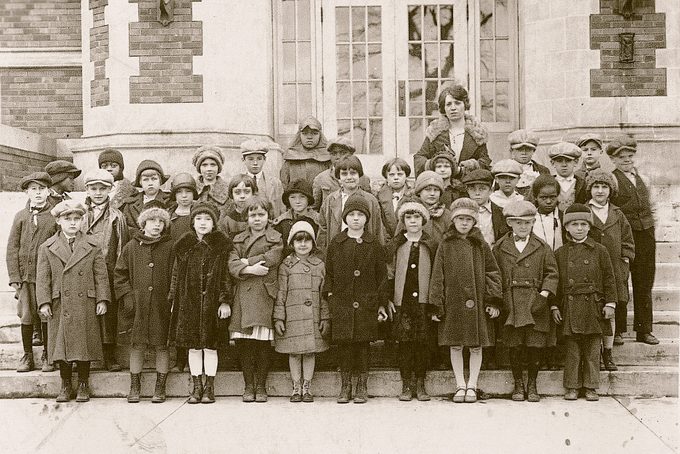
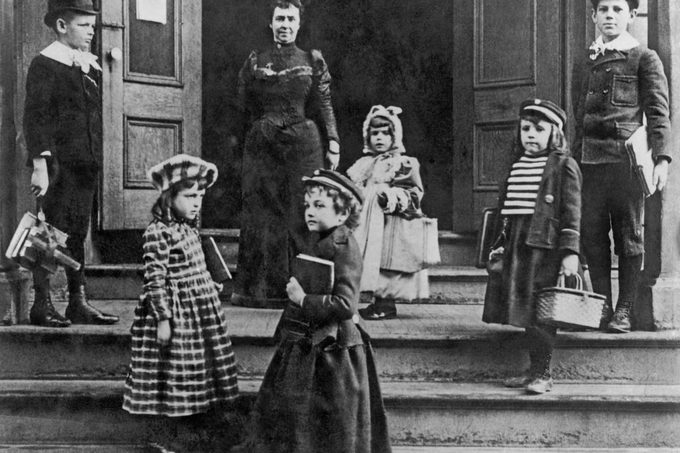
This Is How School Looked 100 Years Back

This Is How School Looked 100 Years Back

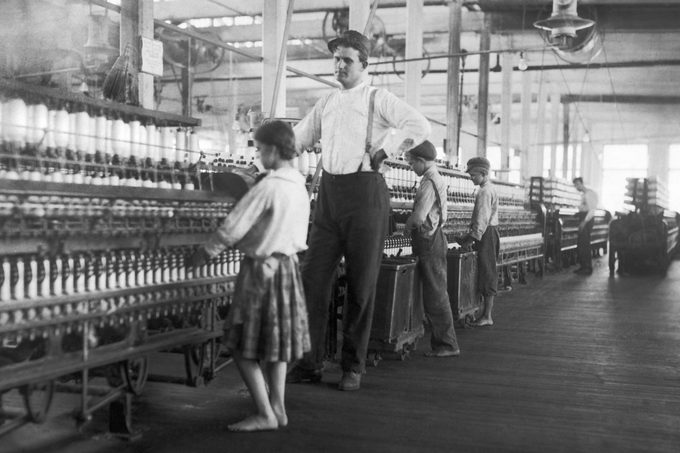
Work came before school for many children

Today’s child labor laws would be unthinkable to many American families a century ago. With the exception of professional or fairly wealthy households, parents often couldn’t make ends meet without children working the family farms, pitching in at family businesses or getting jobs in mills, mines or factories. Some of those jobs are part of the reason why the school year doesn’t start in January .

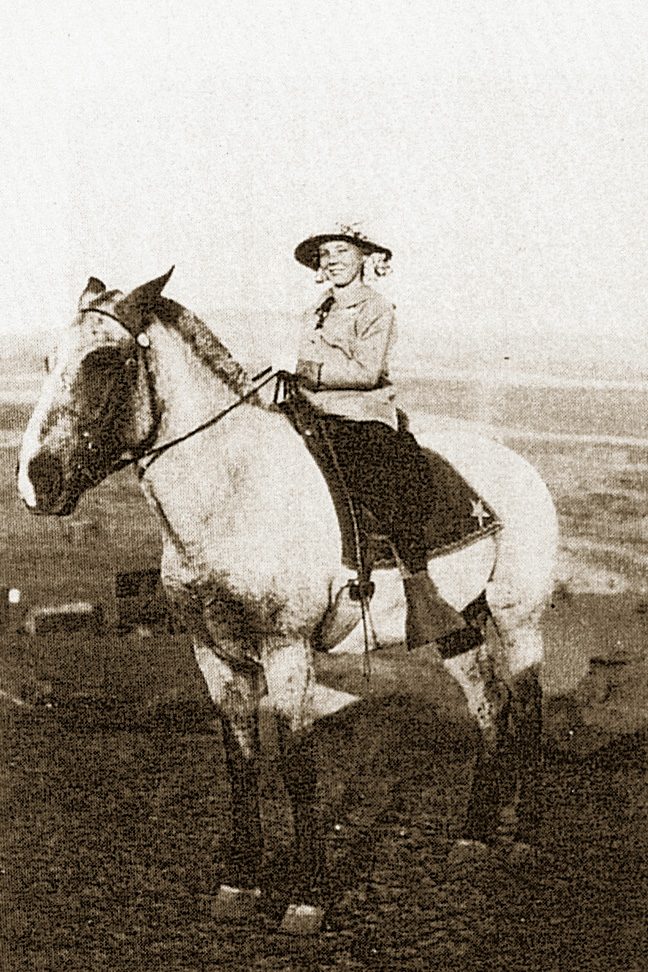
Some students rode horses to school

Louise Basse and her horse, Jane, seen here, navigated seven fields and gates to get to school in Goldendale, Washington, in the early 1900s.

School was segregated

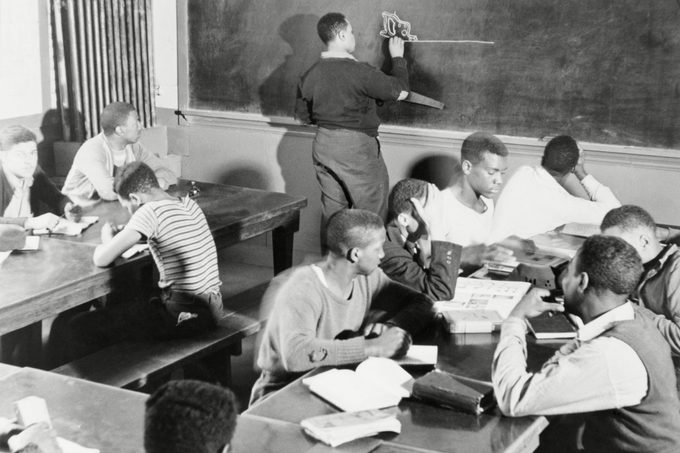
At the turn of the 20th century, long before the Civil Rights movement , there were limited educational opportunities for African American students. In 1910, 90% of Black Americans lived in the South, where schools were far poorer than in the North. Average school years in the South lasted only 121 days, with no attendance laws. Black teachers’ salaries were dismally low, and public secondary schools for African American students were few.

Not all children went to school

At the turn of the century, only 51% of children aged five to 19 even went to school. By 1910, the number had grown to only 59%, according to the National Center for Education Statistics. Enrollment was about 20% lower for non-white students, and most only attended school for a few years to learn basic English and math. In 1900, only 11% of high school-age children were enrolled at all.

Students had specific attire that they wore to school

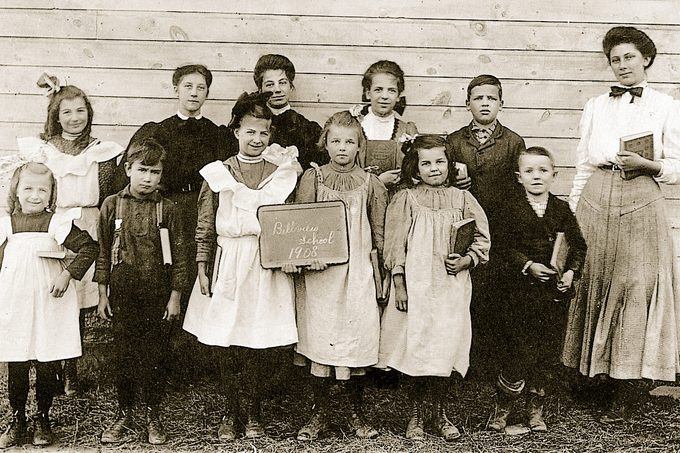
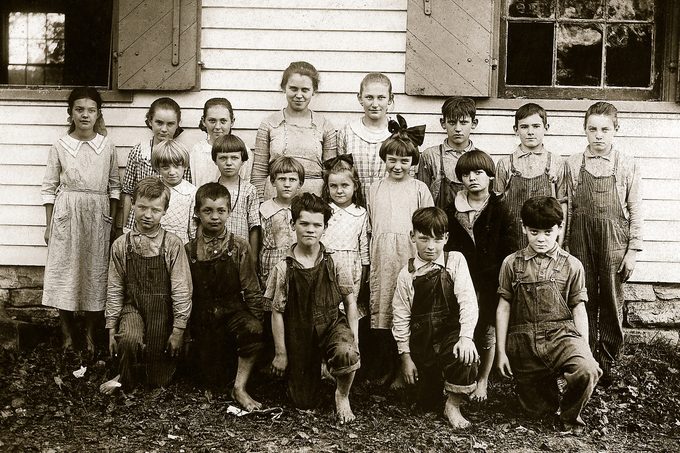
In 1908, Clarice Winters’ mother, Marjorie Zimmerman (back row, center), was in her last year at Bellview School in Somerset County, Pennsylvania. Fashion trends of the era often found girls wearing aprons or frocks over their dresses.

Night school wasn’t just for adults

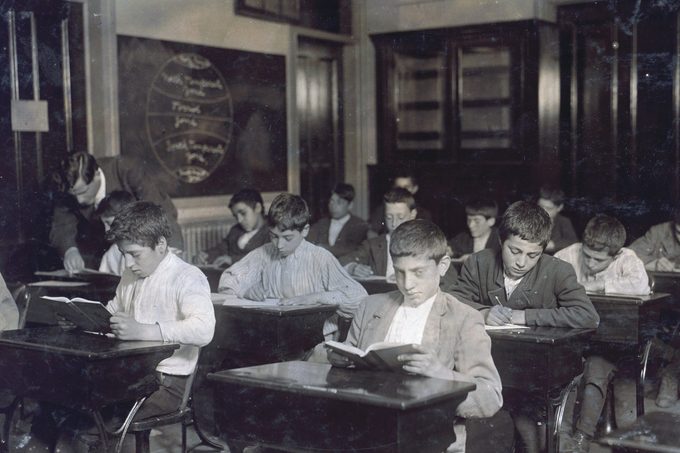
Child labor on farms and in cities was so common in the late 1800s and early 1900s that many states passed laws requiring larger cities to provide evening elementary and high school education. One school official said at the time that parents were happy their kids could finally get a basic education without quitting the farm work or outside jobs they had during the day.

They had school sports, but the uniforms were very different

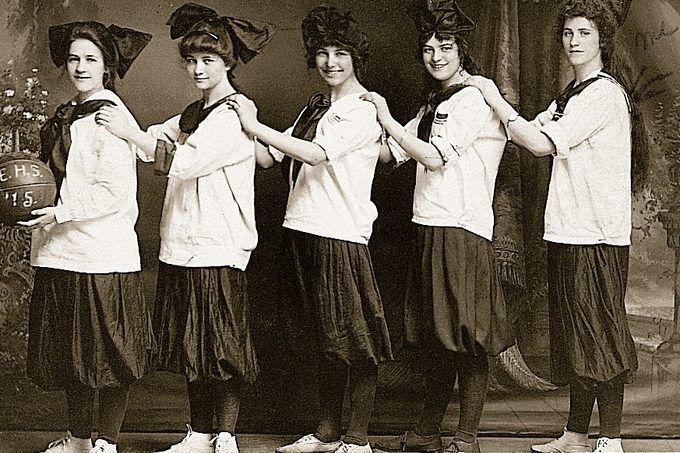
The Emlenton (Pennsylvania) High School girls’ basketball team posed in 1915 in their game attire. Ruth Nuhfer says her mother, Blanche (Grieff) Barnes, is on the right.

Many schools only had one room

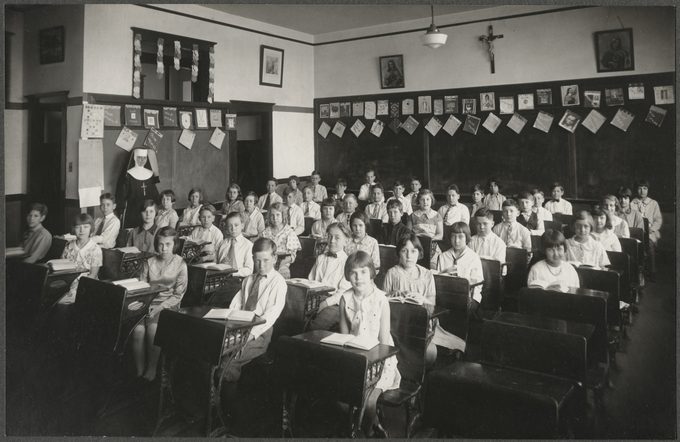
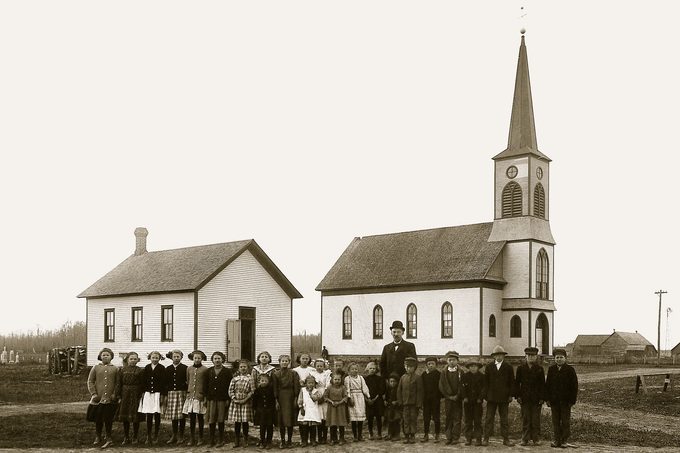
Renata Nelesen and her brother Harold attended this one-room parochial school near Marshfield, Wisconsin, where their father was also the teacher, says Renata’s daughter, Janet Duebner of Sturgeon Bay, Wisconsin. He was also the church’s pastor and posed with his students for this photo in 1913.

Debate teams were more popular

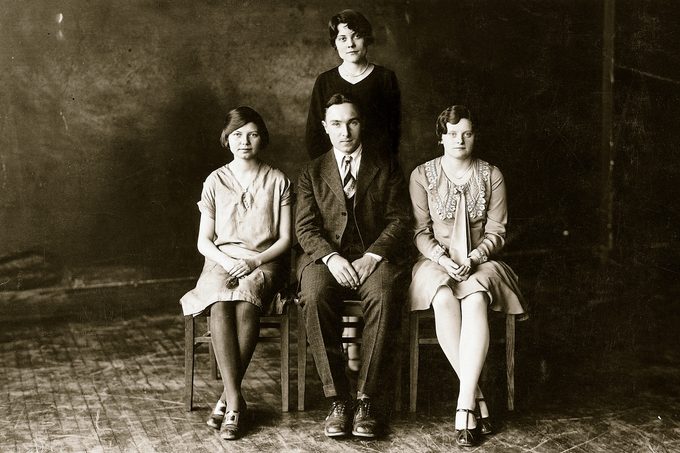
Virla Jean (seated at left) was proud of her accomplishments as part of the Farmington (Michigan) High School debate team in 1929—one of many ways students found purpose and pride beyond the classroom.

Punishment was hands-on

Like today, misbehaving students 100 years ago could get detention or be suspended or expelled from school. But they were also regularly spanked, paddled, lashed or had palms or knuckles rapped with a ruler. Although corporal punishment in schools is outlawed in most of the United States today, it’s still legal in 17 states, according to the National Education Association.

Class sizes fell in the 1920s

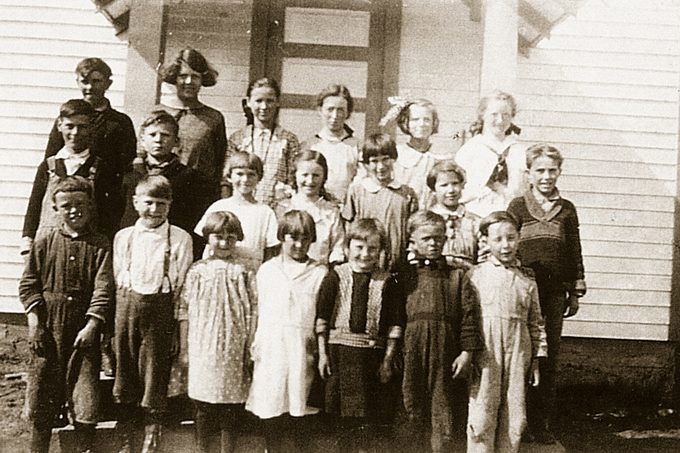
Class sizes in the early 1900s hovered around 35 students per teacher , on average, before falling over the next several decades. These days schools have closer to 20 or 25 students per teacher, though the numbers vary depending on factors including funding and location. Magdalene Becker started teaching in 1927 near Murry, Wisconsin. Her first class, pictured here, had 20 students.

Teachers were just as inspiring back then

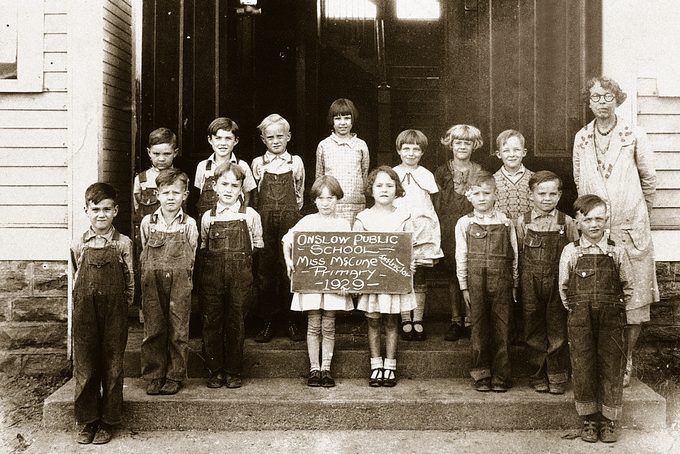
Floyd Streeper (second from right) said his first-grade teacher, Miss McCune, in Onslow, Iowa, gave him a solid foundation for learning in 1929.

Many students were eager to start learning

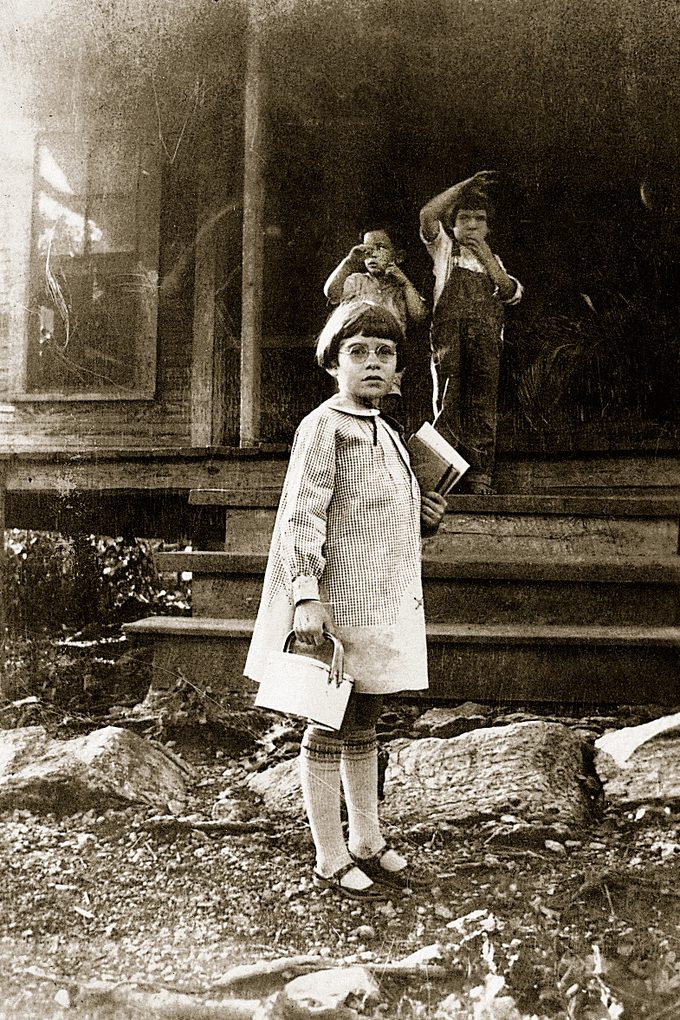
Martha Dudley was eager to start school in 1926. That’s her little brother O.R. and sister Lillie Ruth waving in the background.

Kids just starting school were afraid to leave their parents

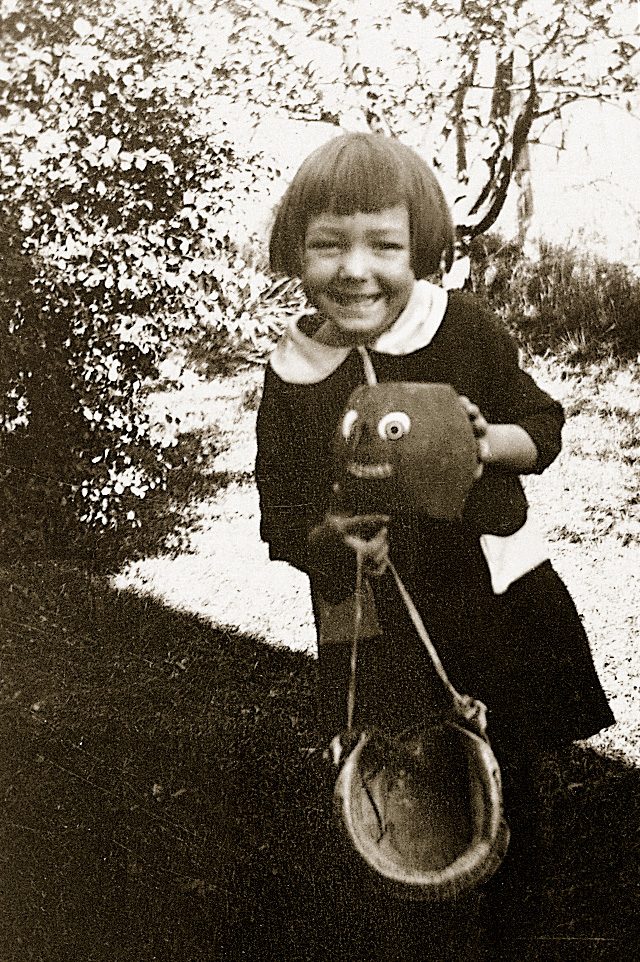
Alice Marks looks more relaxed in this October 1928 photo than she felt for the first two weeks of school. It was her first time being separated from Mom and Dad.

Some children really did walk 5 miles to school

In the 19th and early 20th centuries, there was no public or school transportation across most of the United States. In rural areas, children routinely walked several miles to and from school. Of course, if you had a horse or buggy, you could get there faster.

Some bus rides were long

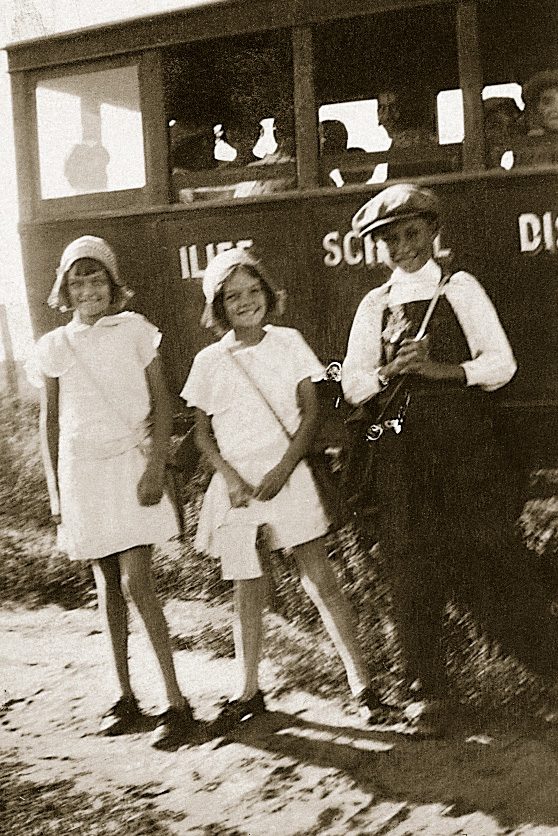
In the 1920s, Mary Ann Kunselman (center), twin sister Martha and brother Shelton had the longest bus ride ever when they got off at the last stop.

Schools could be much smaller

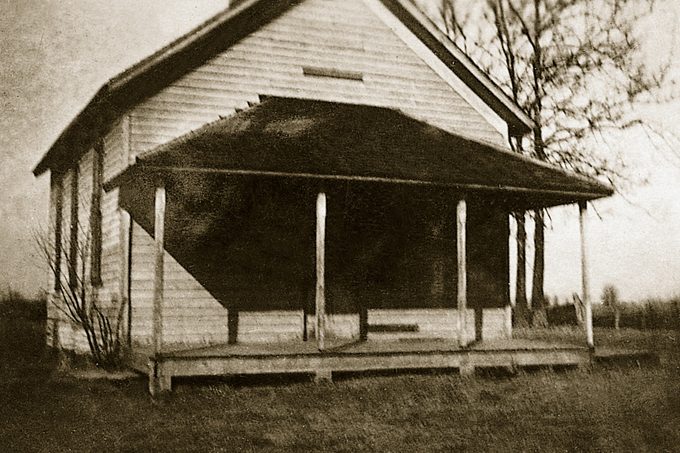
Evelyn Cochran attended this school in Passport, Illinois, from 1915 to 1923. Though major cities had large schools just like they do today, one-room schoolhouses were still common in rural areas.

Buses used to be drawn by horses

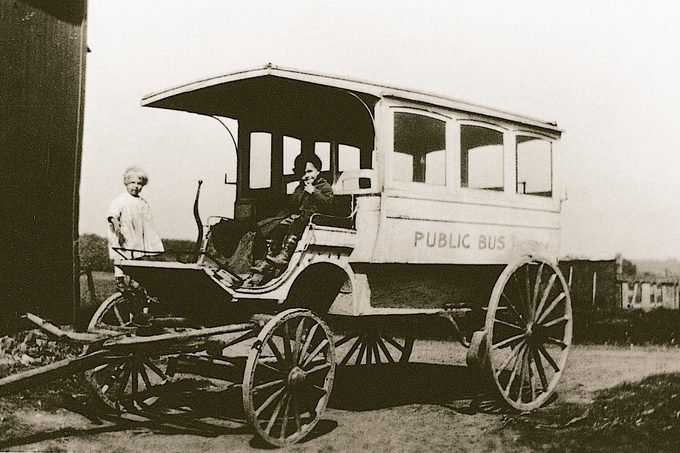
“The horse-drawn bus was painted yellow with a door in the back. Grandpa parked it next to the barn, where kids would play in it,” recalls Elizabeth Norton. “That’s my sister Alta and brother Charles in the wagon in 1923.” Horses weren’t just used for school buses back then— they also helped deliver the mail .

Some students had their mother as their teacher

Belle Brown was Belle Barnes when she attended Edgewood School. That’s her in the lower right corner in 1924. Her mother was the teacher.

The school year was a lot shorter

Today the school year stretches from late August or September through late May or June—about nine months. In the late 1800s, kids in rural areas were in school for only five, because parents needed children to help with harvest and planting seasons. The school year got longer in the early 1900s, as educating children became required by law and more public schools were built. But farm kids were often absent in spring and fall.

Girls learned domestic skills like sewing

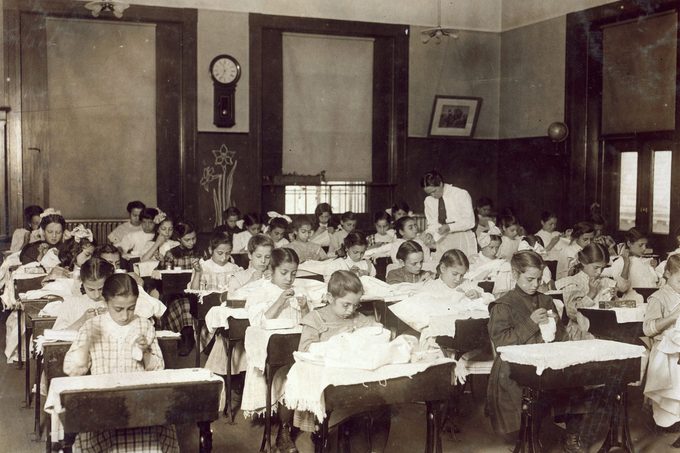
Women’s charities and other groups pushed to include basic domestic skills like sewing, mending and hygiene in girls’ education. These were marketable skills and helped less affluent girls get domestic service jobs like housekeeping and laundering. Advocates of domestic education in schools also believed the skills would improve the home lives of the girls, many of whom were impoverished.

Open-air school was a thing

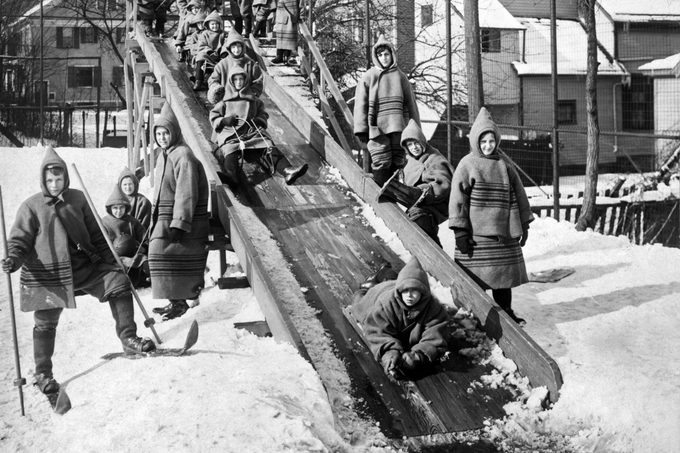
In the early 20th century, outdoor and open-air schools became a popular trend for children with lung disease or other health problems. The school buildings were often a tent with open sides, or just classrooms with huge windows that were left wide open, even in winter. It was thought that the sunshine and fresh air would help the kids breathe easier and feel more energetic.

Discipline was enforced

Max Philpot (front row, far left) and his buddy wondered who’d get the discipline stick first. Max did after he was caught fighting. This photo of their 1850s log school, which was later covered in siding, was taken in 1922.

Students skipped school sometimes

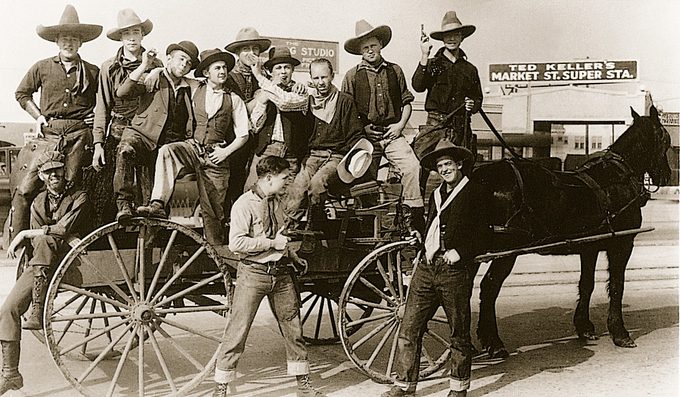
Willard Bailey and his friends at Inglewood High School marked their 1926 “senior skip” day with a Western twist—dressed up like cowboys and rode a wagon around town. Willard is at the top right.

Some classrooms could fit in their teacher’s car

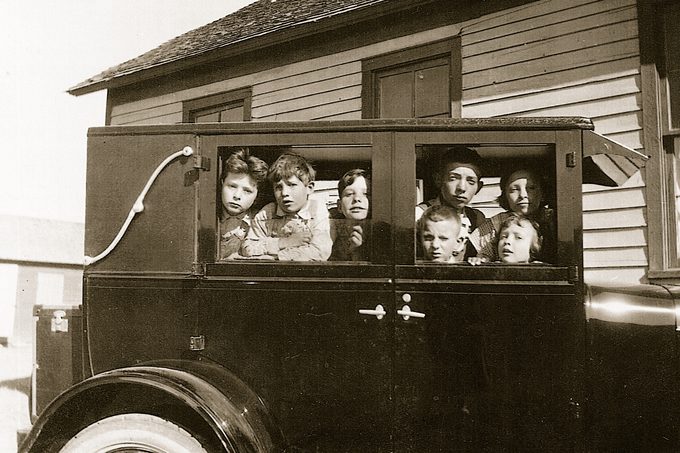
This might be the 1923 class photo for Lucas School, a few miles south of Satanta, Kansas. It shows all the students, including Edmund Wright (left), seated in their teacher’s car.

Scissors looked the same

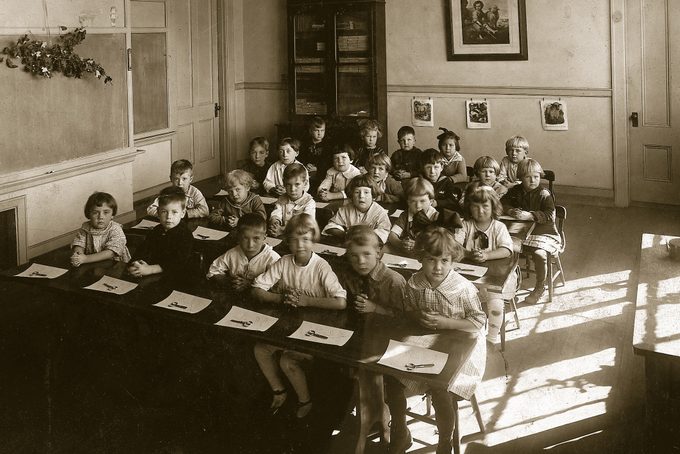
Using scissors is obviously what these children were waiting for in this 1922 photograph at the Presumpscot School in Portland, Maine. Ken Cole is in the last row, on the right.

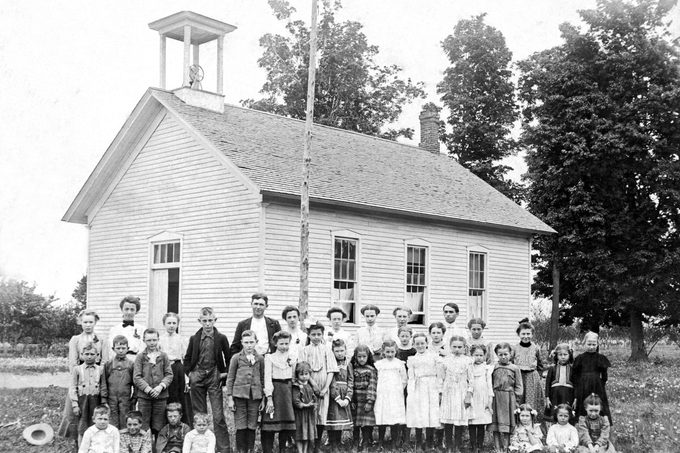
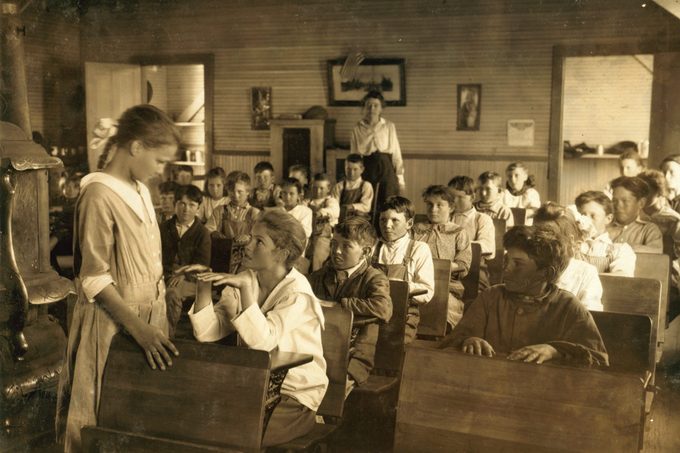
Grades 1 to 8 learned together in a one-room schoolhouse

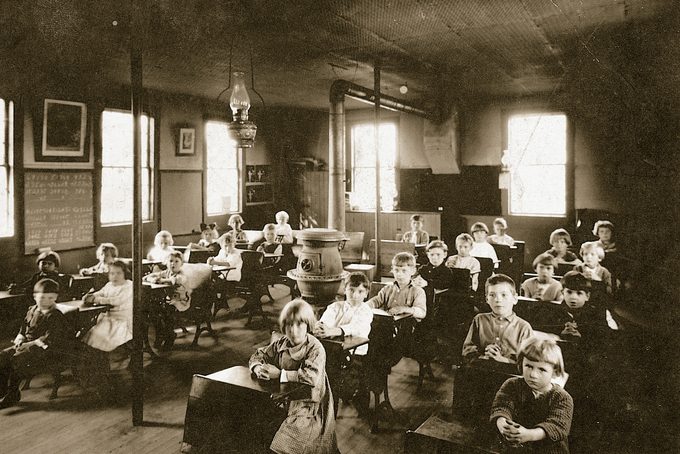
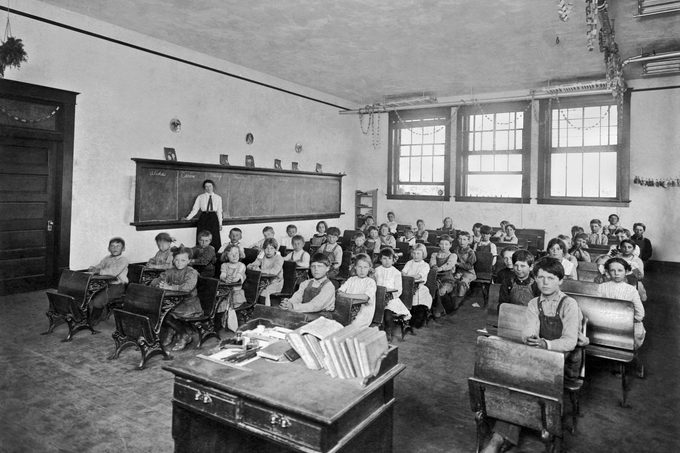
Most American kids in the 1800s and early 1900s attended one-teacher, one-room schoolhouses for first through eighth grade. Depending on the local population, there could be anywhere from a handful of students to more than 40. The youngest kids often sat in the front and the oldest in the back, though here the children are seated with the oldest on the right.

Lunch pails were actual metal pails

In the early 1900s, children’s school supplies were limited to chalk and tiny chalkboards called slates, and sometimes textbooks, according to the Library of Congress. They used slates much like notepaper and worksheets are used in elementary classrooms today—to work math problems, practice writing and spelling, and more. For lunch, children often carried their lunch in metal pails (hence the term “lunch pail”) or woven baskets.

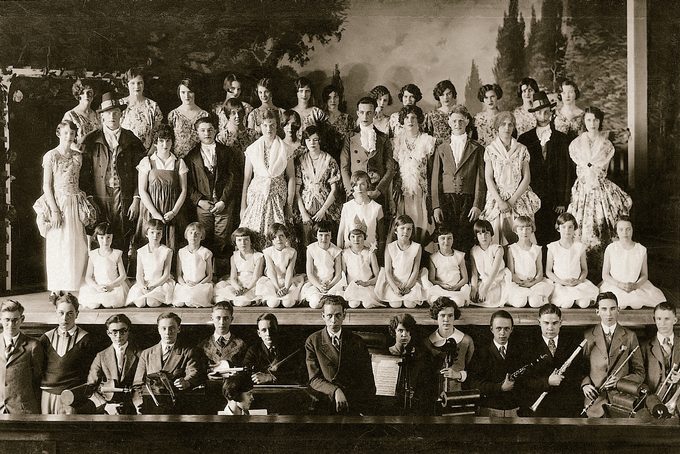
School plays were always a hit

The art and drama department of Howell (Michigan) High School put on a production of The Wishing Well for two nights to a packed house in March 1928. Viola Stoddard (back row, sixth from right) was in the chorus.

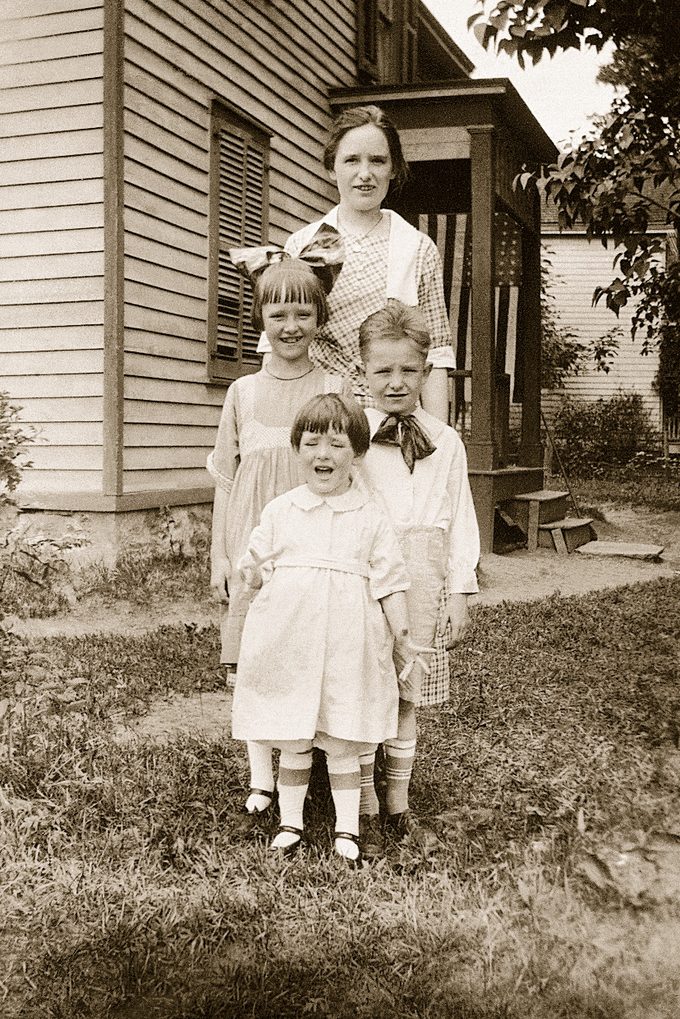
Kindergarten wasn’t available in every town

“It was the first day of school in 1920 for me (in the hair ribbon) and my brother, Raymond,” Marjorie Leborgne says. “Raymond was 5 and going into first grade because there was no kindergarten in Kingston, New York, where we lived. I was 7 and starting third grade. Our sister Alma was 3 and too young for school . She stayed home with our mother, who is behind us.”

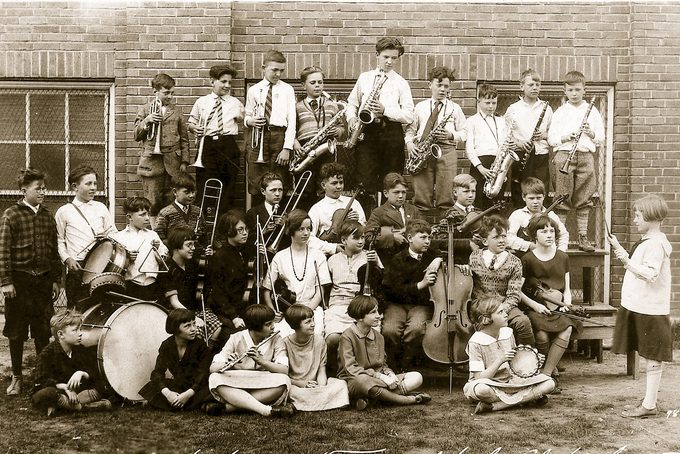
They had limited instruments for music class

“In 1926, I was a 12-year-old musician with the junior orchestra at Mark Twain School in Webster Groves, Missouri,” says Ione Pinsker (second row, right of the triangle). “By the time they got to me, the only instrument remaining was the viola, which I disliked, but I had promised to finish the semester on any available instrument. My real education was learning to appreciate music.”

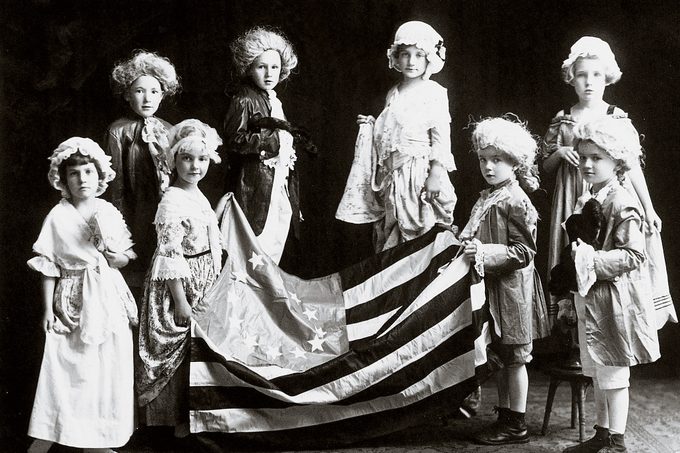
Students put on pageants

Back in 1922, eight second-graders at McAlister School in Lawrence, Kansas, put on a pageant to celebrate Washington’s birthday. That’s James Burdette Smith at the far left in the back row.

A lot of students loved their teachers

“This 1924 picture is of my first-grade class at Warren School in Decatur, Illinois,” says Mary Smith. “I’m second from the left in the first row, and my brother, Paul, is second from the left in the second row. The teacher was Miss Pearson, whom I dearly loved .”

Teeth and fingernails were inspected for dirt

Children’s fingernails, hair, faces, and teeth were inspected for dirt, and they were taught how to properly wash up with soap and scrape the dirt from under their nails. Teachers at overcrowded urban schools also worried about contagious disease and often quarantined kids with sniffles and other symptoms.

While much has changed in the last century, one thing remains the same: The classroom continues to shape future generations, just with fewer horses and more homework.

Why trust us

At Reader’s Digest , we’re committed to producing high-quality content by writers with expertise and experience in their field in consultation with relevant, qualified experts. We rely on reputable primary sources, including government and professional organizations and academic institutions as well as our writers’ personal experiences where appropriate. We verify all facts and data, back them with credible sourcing and revisit them over time to ensure they remain accurate and up to date. Read more about our team , our contributors and our editorial policies .

Sources:

  • Encyclopedia.com : “The 1910s Education: Topics In The News”
  • National Education Association : “Corporal punishment in schools still legal in many states”
  • National Center for Education Statistics : “120 Years of American Education: A Statistical Portrait”

  • Vanderbilt University : “Evening Schools and Child Labor in the United States, 1870-1910”
  • Mental Floss : “11 Ways School Was Different in the 1800s”
  • National Library of Medicine : “Corporal Punishment in U.S. Public Schools: Prevalence, Disparities in Use, and Status in State and Federal Policy”
  • Butler University Libraries : “A Brief History of the Teaching of Home Economics in the Public Schools of the United States”
  • Slate : “When Students Went to School Outside—Even in Winter”
  • Library of Congress : “One-Room Schoolhouse”
  • Chasing Dirt: The American Pursuit of Cleanliness by Suellen Hoy
New Mexico's Early Care and Education Investments Yield Promising Results
New Mexico's Early Care and Education Investments Yield Promising Results
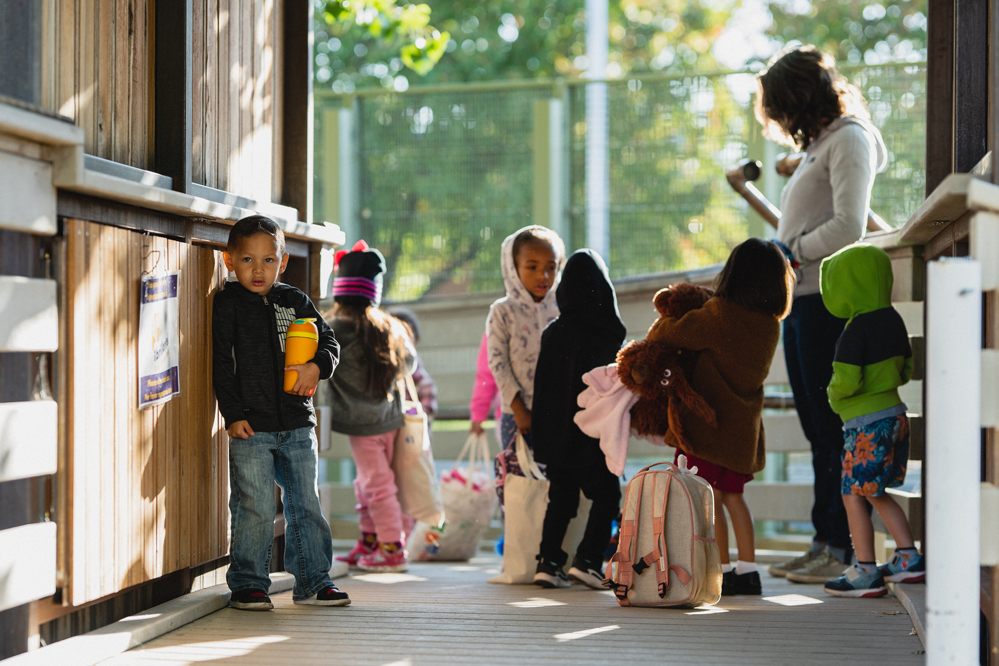
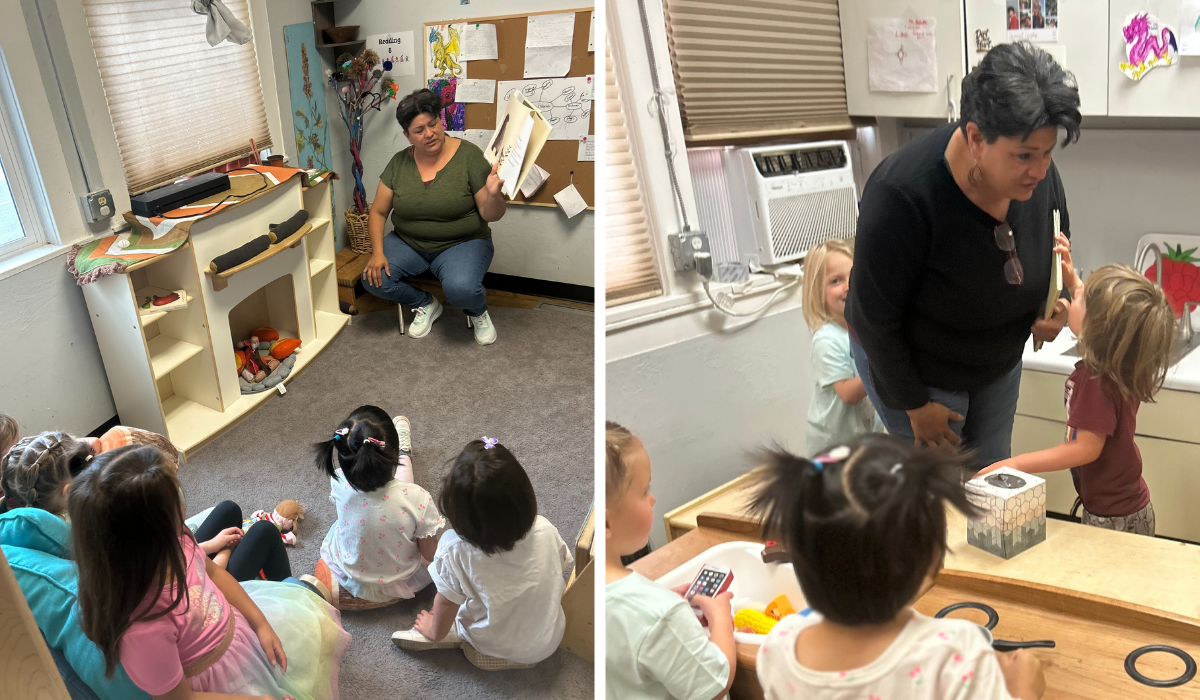
As soon as Sandra Parra walks into her pre-K classroom at the Christina Kent Early Childhood Center in Albuquerque, New Mexico, three children begin vying for her attention. One boy says he has a toy for her, a girl tells her she plans to bring in a croissant from home. A third child recounts how the mailman came to his house and reenacts the story with a toy car. Parra has a cheerful response for each of them. Then she holds up the books she has brought with her to read. And soon, most of the class is sitting on the rug for story time.
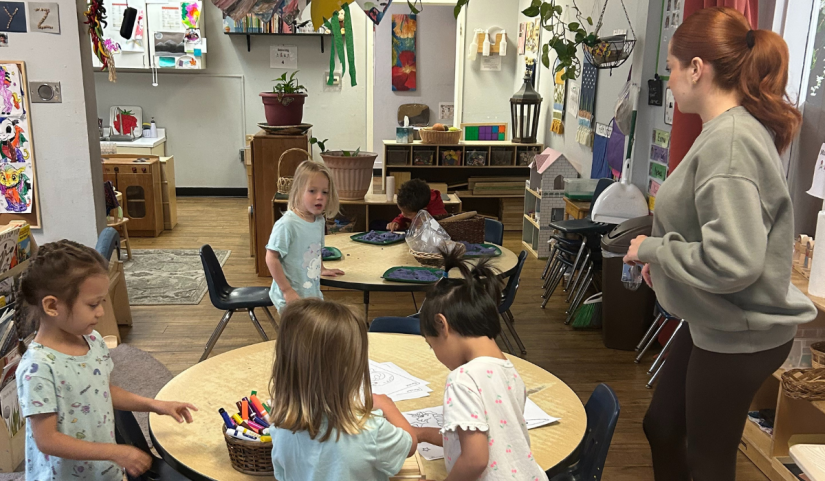
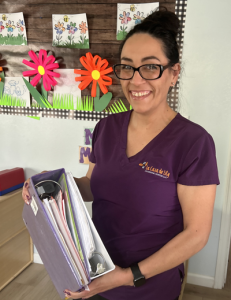
Parra has been teaching at Christina Kent, a child care center that dates back to 1919, for 23 years. Though she works full time, she described when she lived “paycheck to paycheck” as a single mom raising three kids and added that she occasionally had to borrow $20 from a friend, just to get gas.

But the early care and education system in New Mexico has undergone dramatic changes in the past five years, with an influx of investment from the state that has upended the sector’s traditional business model which, in most of the country, relies on thin margins and poverty wages for providers . In 2020, after a sustained effort from local activists, House Bill 83 was signed into law, creating a fund for early childhood education, and a designated early childhood department in the state government.

Get stories like this delivered straight to your inbox. Sign up for The 74 Newsletter

Then, in 2022, New Mexico became the first state to enshrine a right to early education for children ages 0 to 5 years old, by passing a constitutional amendment that expanded funding from the Land Grant Permanent Fund so that a steady stream of money would be dedicated to early childhood year after year. Among the shifts since 2022: increased pay for teachers, higher reimbursements for providers that accept subsidies, more families qualifying for free or reduced price child care, and more child care slots.

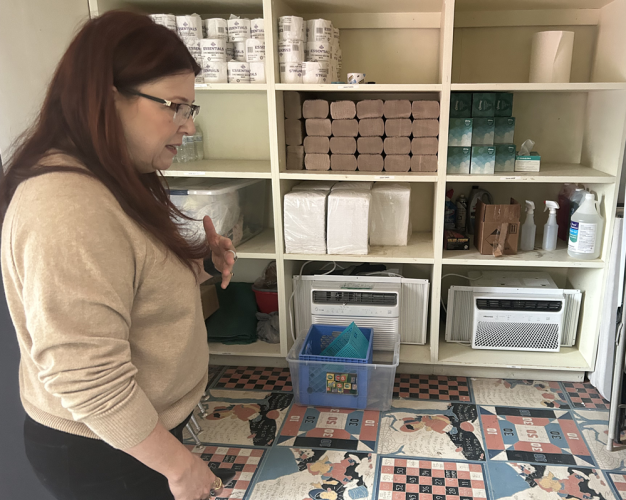
Christina Kent Early Childhood Center, for example, has made significant changes including increasing wages and providing health insurance for staff, said Sondra Carpenter, the center’s executive director. Before COVID, Parra made $17 an hour; today she makes more than $22 an hour. With the additional income, she’s paid off her car, purchased her first home, and reports that she no longer feels the unending stress that comes with financial precarity. The center is also in the process of expanding to serve more families: it’s broken ground on a new facility for infants and toddlers, which Carpenter said will open this September.

Across the state, child care providers who accept subsidies have seen their reimbursement rates rise, and the subsidies are now tax-exempt, saving families and providers more money. With the increased investment, more families now qualify for child care subsidies, including those who make up to 400% of the federal poverty line , which for a family of four is an annual household income of $128,600.

Liliana Vazquez Diaz, another child care provider, has also reaped the benefits of these shifts. She now sees higher reimbursement rates for the six kids enrolled in La Casa de Lily, the child care program she runs out of her house in the Alamosa neighborhood of Albuquerque. Diaz was recently approved to provide pre-K services, which will raise her reimbursement rate even more.

And the Explora Science Center and Children’s Museum in Albuquerque, which runs two classrooms out of their museum space for children of students at the local community college, has just broken ground on a new child care facility, which will serve over 100 children, with 16 slots for infants, which are the toughest slots secure in the state. “The state child care subsidies have made that a viable option,” said Kristin Leigh, co-executive director of Explora.

“We have really made a shift in the way we approach early education,” said Javier Martinez, the speaker of the New Mexico House of Representatives, who ran for the legislature on a platform of early education and immigration rights. “We are rebuilding the village that it takes to raise a child in New Mexico.”

Related

New Mexico Just Became the First State to Make Child Care Free for Nearly All Families

How New Mexico Funded Early Education

New Mexico has consistently been one of the lowest ranked states for school attendance, economic well-being, child poverty, education proficiency, and child well-being . “There is this shame of having more children in poverty than anywhere else,” said Hailey Heinz, deputy director and senior research scientist at the Cradle to Career Policy Institute at the University of New Mexico. The pervasive intergenerational poverty includes New Mexico’s tribal communities which live on sovereign lands but have faced centuries of adverse policies and discrimination. “We have people who have never had a generation that was allowed to thrive,” said Heinz.

An understanding of New Mexico’s complicated history of child well-being and poverty can be traced back to the Mexican-American War in 1846 , when the state ceded to the United States. For more than 60 years, New Mexico was a territory and its people didn’t have full rights as U.S. citizens, but the region’s oil and gas reserves were profitable. When in 1912, New Mexico became a state, a Land Grant Permanent Fund was created , whereby profits from oil and gas would be bound up in the trust, and the proceeds would pay for education and services for its citizens.

“A giant trust fund to secure mineral rights, in which the state constitution determined the beneficiaries,” was how Jacob Vigil, the chief legislative officer for New Mexico Voices for Children described it. “New Mexico is called ‘such a poor state’ but it is not a poor state, it’s a colonized state with historical disinvestment and racism,” he said.

As oil and gas prices continued to boom, the Land Grant Permanent Fund swelled into the billions. Today, it’s worth nearly $32 billion . Yet the state still had high rates of poverty, and more research began to show the profound effects of improving generational poverty outcomes through early education and intervention. So in 2009, grassroots activists, including Martinez and Vigil, targeted the fund as a way to pay for child care .

This required legislative action, and the chairman of the Senate budget committee, Democrat John Arthur Smith, denied the opportunity for a committee vote for nearly a decade. But political pressure and grassroots organizing led to a Democratic primary challenge, which Smith lost in July 2020. After that the bill easily passed both the House and Senate, and since it required a constitutional change, it was put to a public vote, which it passed in the November 2022 election by an overwhelming 70% .

Other states may not have the robust external funding source to use for early childhood, but Erica Gallegos, co-director of Child Care for Every Family Network believes New Mexico’s advocacy efforts are replicable elsewhere, especially when combined with political might. “You have to have a C4 strategy,” she said, referring to the 501(c)(4) tax status organizations have when becoming involved in elections, and the willingness of advocacy groups to unseat legislators. “It can’t just be about going after Republicans. It has to be about going after power and holding that power accountable.”

Related

New Mexico is the First State to Guarantee a Right to Early Childhood Education. Universal Child Care Could Come Next

What Success Looks Like

The dollars from the Land Grant Permanent Fund have allowed for substantial investment in early childhood. In addition to higher wages, increased subsidy reimbursement rates and expanded access to affordable child care for families, the state created an agency dedicated to early childhood with a cabinet-level secretary, and added considerable funding for universal home visiting programs , early intervention and pre-K programs. The state also created a higher earned income tax credit and child tax credit that are both fully refundable.

Martinez says he is “very satisfied” with the state’s progress in early care and education to date. He predicts that in the next few years, New Mexico will start to see improved reading and math scores, as the children benefiting from early learning programs matriculate to elementary school. He cites studies, including a longitudinal study still underway at the University of New Mexico , that show dramatic improvements in the lives of kids and families who participated in the home visiting program,including increased parent confidence, and fewer emergency room visits and interactions with law enforcement.

But he’s also identified additional areas to target: strengthening the care infrastructure for 0 to 3-year-olds, creating a state paid family and medical leave option, and improving the foster care system, which has kids sleeping in homeless shelters and agency offices .

He is also anticipating interest from private equity groups looking to be involved in child care in the state, and he’s keeping a close eye on that, as such groups tend to be intrigued by sectors with steady government funding, yet historically have not always been careful stewards in implementing them.

Martinez knows that the conversations around early care and education have changed. When he was building support for opening up the Land Grant Permanent Fund, he spoke about child care as “the need to invest in kids, how those years were so critical,” he explained. But now, he says he can speak more openly about what this was about. “We are literally talking about a redistribution of wealth,” he said.

As the value of the Land Grant Permanent Fund ballooned, Martinez said, financial advisors and wealth managers investing those funds were making millions each year in fees for doing so. Yet, children in New Mexico were “dying on the vine,” he added.

Opening up the Land Grant Permanent Fund became a rallying cry. “It wasn’t just about more money in the [early childhood] system,” he said. “It was about the poorest and most vulnerable children being able to make use of it.”

This work is supported by a child care reporting grant at the Better Life Lab. More details on the reporting grants can be found here .

2025 MW Exam Questions Revealed: Get a Sneak Peek!

2025 MW Exam Questions Revealed: Get a Sneak Peek!

Many slaved, slogged, swirled and spat their way through the Master of Wine (MW) exams last week. Here's what they were confronted with.

The Institute of Masters of Wine (IMW) yesterday released the list of wines and accompanying questions from the 2025 Master of Wine (MW) stage two exam, which was sat by 141 students between 3 and 8 June in Adelaide, London and Napa.

Ahead of stage two, candidates must pass the stage one assessment – a one-day exam consisting of a 12-wine blind tasting and a theory paper. This year, 85 students sat the stage one assessment.

The MW stage two exam questions are reproduced below, followed by the stage one assessment (S1A) questions.

Practical papers

Paper 1

Question 1

Wines 1 and 2 are blends of the same two grape varieties.

For both wines:

a) Identify the grape varieties. (10 marks)

For each wine:

b) Identify the origin as closely as possible. (2 x 8 marks)

c) Comment on the style, winemaking and quality. (2 x 12 marks)

Question 2

Wines 3–6 are from the same single grape variety.

With reference to all four wines:

a) Identify the grape variety. (16 marks)

For each wine:

b) Comment on the style, quality, and maturity. (4 x 13 marks)

c) Identify the origin as closely as possible. (4 x 8 marks)

Question 3

Wines 7–9 are from the same country and different single grape varieties.

For each wine:

a) Identify the origin as closely as possible, making reference to the grape variety. (3 x 10 marks)

b) Comment on the method of production. (3 x 5 marks)

c) Comment on the style, quality, and maturity. (3 x 10 marks)

Question 4

Wines 10–12 are from three different European countries.

For each wine:

a) Comment on the style of the wine with reference to the relative importance of human inputs versus natural factors. (3 x 15 marks)

b) Identify the grape variety and origin as closely as possible. (3 x 10 marks)

Wines

  1. Château de Fieuzal Blanc, 2021. Pessac-Léognan, France. (12.5%)
  2. Sauvignon Semillon Circa 77, Xanadu, 2023. Margaret River, Australia. (13%)
  3. Chablis 1er Cru Côte de Lechet, Domaine Defaix, 2010. Burgundy, France. (13%)
  4. Chardonnay, Old Stage, 2019. Monterey, California, USA. (14%)
  5. Chardonnay, Iona, 2022. Elgin Highlands, South Africa. (12.5%)
  6. Chardonnay, Moss Wood, 2023. Margaret River, Australia. (14%)
  7. Muscadet Sèvre-et-Maine Monnières Saint-Fiacre l’Ancestrale, Vignobles Günther-Chéreau, 2018. Loire, France. (12%)
  8. Riesling Silberberg de Rorschwihr, Rolly Gassmann, 2021. Alsace, France. (13.5%)
  9. Vouvray Côte de Bourg Demi-Sec, Domaine Huet, 2022. Loire, France. (13%)
  10. Riesling Flussterrassen, Grans-Fassian, 2022. Mosel, Germany. (11.5%)
  11. Rioja Blanco Gran Reserva, López de Haro, 2014. Rioja, Spain. (12.5%)
  12. Vin Santo del Chianti Rufina, Selvapiana, 2015. Tuscany, Italy. (13%)

Paper 2

Question 1

Wines 1–3 are from the same single grape variety or predominant grape variety.

With reference to all three wines:

a) Identify the grape variety. (12 marks)

For each wine:

b) Identify the origin as closely as possible. (3 x 6 marks)

c) Discuss how climate and winemaking techniques have influenced the quality and style of the wine. (3 x 15 marks)

Question 2

Wines 4–7 are from the same country and region.

For each wine:

a) Identify the origin and the grape variety/ies as closely as possible. (4 x 13 marks)

b) Comment on quality within the context of origin. (4 x 7 marks)

c) Comment on the wine’s maturity. (4 x 5 marks)

Question 3

Wines 8–12 are from Europe. They come from five different single or predominant grape varieties, each closely associated with their origin.

For each wine:

a) Identify the origin and the grape variety as closely as possible. (5 x 10 marks)

b) Comment on the quality within the context of wine globally. (5 x 7 marks)

c) Comment on the style and commercial appeal. (5 x 8 marks)

Wines

  1. Chinon Les Barnabés, Olga Raffault, 2021. Loire Valley, France. (12.5%)
  2. Cabernet Franc, El Enemigo, 2021. Mendoza, Argentina. (13.5%)
  3. Toscana IGT “Aranum”, Tenuta di Arceno, 2018. Tuscany, Italy. (14.5%)
  4. Gigondas, Chateau de Saint Cosme, 2022. Rhone Valley, France. (14.5%)
  5. Crozes-Hermitage “Papillon”, Gilles Robin, 2023. Rhone Valley, France. (13%)
  6. Cornas Granit 30, Vincent Paris, 2022. Rhone Valley, France. (13%)
  7. Côtes du Rhône Réserve, Famille Perrin, 2022. Rhone Valley France. (14%)
  8. Touriga Nacional, Quinta do Vallado, 2019. Douro, Portugal. (14%)
  9. Zwiegelt, Bergh, 2021. Niederösterreich, Austria. (12.5%)
  10. Barbera d’Alba Trevie, Vietti, 2022. Piedmont, Italy. (14.5%)
  11. Beaujolais Villages “Le Perreon”, Domaine de la Madone, 2023. Beaujolais, France. (13%)
  12. Xinomavro “Hedgehog”, Alpha Estate, 2022. Amyndeon, Greece. (14%)

Paper 3

Question 1

Wines 1 to 3 are made from the same single grape variety.

a) Identify the grape variety with reference to all three wines. (12 marks)

For each wine:

b) Identify the origin as closely as possible. (3 x 7 marks)

c) Comment on the winemaking techniques. (3 x 5 marks)

d) Comment on the style and quality. (3 x 9 marks)

Question 2

Wines 4 to 6 are from the same country.

For each wine:

a) Identify the origin as closely as possible. (3 x 10 marks)

b) Comment on the winemaking techniques. (3 x 5 marks)

c) Comment on the quality and commercial position. (3 x 10 marks)

Question 3

Wines 7 to 12 are a mixed bag.

For each wine:

a) Comment on the quality and commercial position with specific reference to its classification. (6 x 15 marks)

b) Comment on the winemaking techniques. (6 x 10 marks)

Wines

  1. Riesling Sekt Extra Dry, Dr. Loosen, NV. Mosel, Germany. (11.5%)
  2. Riesling, Framingham, 2023. Marlborough, New Zealand. (12%)
  3. Riesling Berrenauslese, Dr. Loosen, 2018. Mosel, Germany. (7.5%)
  4. Cava Brut Reserva “Essential Púrpura, Juvé y Camps, 2021. Penedès, Spain. (12%)
  5. La Bruja, Comando G, 2022. Valle del Tiétar, Sierra de Gredos, Spain. (14%)
  6. Oloroso VORS 30 Years, Bodegas Tradición, NV. Jerez, Spain. (20%)
  7. Côte de Provence Cru Classé, Chateau Galoupet, 2023. Provence, France (14%)
  8. Pinot Gris Spiegel Grand Cru, Schlumberger, 2022. Alsace, France. (13.5%)
  9. Tokaji Édes Szamorodni, István Szepsy, 2017. Tokaji, Hungary. (12%)
  10. Sercial 10 Years Old, Henriques & Henriques, NV. Madeira, Portugal (20%)
  11. Fine Ruby Port, Cockburns, NV. Douro, Portugal. (19%)
  12. 40 Year Tawny Port, Kopke, NV. Douro, Portugal. (20%)

Theory papers

Paper 1 (Viticulture)

Three questions to be answered, one from Section A and two from Section B.

Section A

1. How effectively can vineyard pests and diseases be controlled without using agrochemicals?

2. “Bacterial and phytoplasma diseases are the greatest threats to vine health today.” Discuss.

Section B

3. How can artificial intelligence (‘AI’) be used in viticulture to improve the quality of wine grapes?

4. To what extent does soil management affect the quality of wine grapes?

5. How do changing rainfall and wind patterns affect viticulture?

6. To what extent can rootstocks be used to mitigate the effects of climate change?

Paper 2 (Vinification)

Three questions to be answered, one from Section A and two from Section B.

Section A

1. Critically assess the key techniques a winemaker can use to enhance complexity and texture in bottle-fermented sparkling wines.

2. Evaluate the different winemaking techniques that can enhance a wine’s potential for extended bottle ageing.

Section B

3. Examine the roles of bacteria in winemaking. How can bacteria be managed to achieve desired outcomes?

4. Evaluate prevention and correction strategies for each of the following issues:

a) 0.9g/L volatile acidity in a Chablis wine (pH3.2, 12.5% ABV) intended for lees ageing;

b) Strong reductive aromas post-malolactic fermentation in a premium Barossa Shiraz (pH 3.8, 15% ABV) destined for 24-month oak ageing;

c) 180mg/L total sulphur dioxide in a Bordeaux blend (pH 3.6, 13.5% ABV) pre-bottling.

5. Considering a diversity of wine styles, critically evaluate the importance of blending to achieve consistency.

6. Assess how pH influences winemaking decisions at key stages from grape to finished wine.

Paper 3 (Handling of wine)

Answer two of the following four questions.

1. As a producer of a dry white wine that may age in bottle for up to five years, you are considering changing from natural cork stoppers to an alternative closure. What technical factors should you consider?

2. Write concise notes on three of the following:

a) Mousiness

b) Light strike in bottled wine.

c) Elevated volatile acidity in bottled wine.

d) Management of a tank of rosé with free sulphur dioxide well above its ideal level.

3. What are the key factors to consider when deciding whether to cold stabilise white and red wines? What quality control measures are required to test that wine is stable?

4. Why are fining agents used in winemaking? For each of the following wines, explain which factors might influence the choice of fining agent used:

a) Entry-level South African Chenin Blanc

b) DOCG Barolo; and

c) Vegan AOC Côtes de Provence rosé.

Paper 4 (The business of wine)

Three questions to be answered, one from Section A and two from Section B.

Section A

1. How has Champagne maintained its primacy in the world of sparkling wine?

2. Do sustainability initiatives inevitably compromise profitability?

Section B

3. How can the wine industry best address the issues of overproduction and falling consumption?

4. To what extent can government wine monopolies benefit producers, retailers and consumers?

5. Wineries are increasingly selling direct to consumers. Evaluate the strengths and weaknesses of this approach compared to other routes to market.

6. Discuss the evolution of the négociant business format in Burgundy over the last 15 years, explaining the contributing factors. Are current conditions financially sustainable?

Paper 5 (Contemporary issues)

Two questions to be answered, one from Section A and one from Section B.

Section A

1. What will be the likely impact on the global wine industry if health warnings about cancer risks become increasingly mandatory on wine labels? Discuss the implications of such changes for producers, marketers and consumers.

2. How is the global wine industry adapting to changing societal attitudes towards alcohol consumption, and how should it respond to the challenges and opportunities these changes present?

Section B

3. You are tasked with creating a wine blend that represents the essence of humanity’s wine culture. Which grapes or regions would you include, and which winemaking style and packaging would you use, and why?

4. Analyse the major ethical concerns in the production of wine.

5. To what extent does wine’s cultural heritage remain relevant to younger consumers around the globe?

Stage one assessment (S1A)

Practical paper

Question 1

Wines 1–3 come from three different countries.

For each wine:

a) Identify the origin as closely as possible making reference to grape variety/ies. (3 x 11 marks)

b) Comment on method of production making particular reference to oak. (3 x 7 marks)

c) Comment on quality in the context of the region of origin. (3 x 7 marks)

Question 2

Wines 4 and 5 are from the same region of origin.

For both wines:

a) Identify the origin as closely as possible. (12 marks)

b) Comment on winemaking. (18 marks)

c) Compare and contrast style and quality. (20 marks)

Question 3

Wines 6–8 are made from the same single grape variety and are from three different countries.

For all three wines:

a) Identify the grape variety. (21 marks)

For each wine:

b) Identify the origin as closely as possible. (3 x 8 marks)

c) Comment on quality within the context of the region of origin. (3 x 10 marks)

Question 4

Wines 9–12 are from four different countries.

For each wine:

a) Identify the origin as closely as possible making reference to grape variety/ies used. (4 x 9 marks)

b) Comment on the key methods of production. (4 x 12 marks)

c) State ABV in % (4 x 2 marks)

d) State RS in g/l (4 x 2 marks)

Wines

  1. Domaine de Chevalier Blanc Pessac Leognan, 2021. Bordeaux, France. (13.5%)
  2. Barefoot Buttery Chardonnay, NV. USA. (13.5%)
  3. Shaw and Smith M3 Chardonnay, 2022. Adelaide Hills, Australia. (13%)
  4. Corte Sant’Alda Valpolicella Amarone, 2016. Veneto, Italy. (15.5%)
  5. Allegrini Valpolicella, 2022. Veneto, Italy. (13%)
  6. Felton Road Bannockburn Pinot Noir, 2022. Central Otago, New Zealand. (14%)
  7. Maison Roisin Curley, Bourgogne Rouge, 2022. Burgundy, France. (13%)
  8. Sandhi Santa Rita Hills, 2022. California, USA. (13%)
  9. Disznókő Tokaji 5 Puttonyos, 2013. Tokaj, Hungary. (12%)
  10. Henriques & Henriques Malvasia 10 years old, NV. Madeira, Portugal. (20%)
  11. Klein Constantia, Vin de Constance, 2019. Constantia, South Africa. (14%)
  12. Gonzalez Byass Leonor Palo Cortado, 12 years old. Jerez, Spain. (20%)

Theory paper

Two questions to be answered, one from Section A and one from Section B.

Section A

Question 1 – What effects do vineyard pests have on grape quality, and how do grape growers control them? (Paper 1)

Section B

Question 2 – Outline the most important quality control checks during bottling and why each is necessary. (Paper 3)

Question 3 – What are the advantages and disadvantages of private-label wines for wineries, distributors and retailers? (Paper 4)

For more information on the Institute of Masters of Wine, the MW exams and past papers, visit the IMW website .

Become a member today!

Wednesday, June 11, 2025

AI in Education: Navigating the Risks and Rewards for What's Next

AI in Education: Navigating the Risks and Rewards for What's Next

Class Disrupted is an education podcast featuring author Michael Horn and Futre’s Diane Tavenner in conversation with educators, school leaders, students and other members of school communities as they investigate the challenges facing the education system in the aftermath of the pandemic — and where we should go from here. Find every episode by bookmarking our Class Disrupted page or subscribing on Apple Podcasts , Google Play or Stitcher .

In the last episode of the season, Michael Horn and Diane Tavenner come together, in person, to reflect on the arc of their artificial intelligence-focused series. They discuss key themes and takeaways, including the enduring importance of foundational knowledge, skepticism around the speed and impact of AI-driven change within traditional schools, and how transformative innovation is more likely to emerge from new educational models. Their conversation explores the challenges and opportunities AI brings — particularly in developing curiosity as a critical habit for learners — and revisits how their own perspectives shifted throughout the season.

Listen to the episode below. A full transcript follows.

Michael Horn: Hey, Diane, it is good to be with you in person.

Diane Tavenner: It’s really good to be in person. It’s a little funny where we are in person, but it’s kind of the perfect setting to end our A.I. you know, miniseries season six. We are at the air show. I think that’s what it’s called, the AI show in San Diego.

Michael Horn: I’m gonna take a selfie, as we say.

Diane Tavenner: We’re gonna send you a picture of this. So we’re. We’re recording here from the floor that is filled with educators and edtech companies and AI. AI. AI!

AI’s Educational Impact Outside Schools

Michael Horn: Because AI is the thing, which is perfect because our season this year has almost exclusively focused on the question of what will the impact of AI be in education? How do we shape that? What do we want it to be? All these questions, frankly, in ways that neither of us had imagined fully. I think when we started this and we did a first sort of rapid reaction.

Diane Tavenner : We did. Were we starting our kind of baseline assessment of what we thought and our knowledge and what we were curious about?

Michael Horn: Yep. And we’ve gone through this journey, and now today, we sort of get to tidy it up with our very sharp, insightful takes. No pressure on us.

Diane Tavenner: No pressure for those key headlines. But, you know, along the way, we interviewed a bunch of really interesting people, some skeptics, some really positive folks. And we benefited a lot from it.

Michael Horn: I learned a ton. My understanding of the space. I don’t know if I conveyed it on our prior episode, but I think it’s a lot deeper than it was when we started.

Diane Tavenner : For me, too. I really appreciate them. And then, you know, in true fashion, we just publicly processed out loud last episode.

Michael Horn : We do.

Diane Tavenner: And now we’re going to try to actually pull it together with some key takeaways. So that’s how we’re going to wrap it today. And so we kind of outlined, you know, three big categories here. And the first one is, I want to ask you what belief was confirmed for you as we made our way through this season?

Michael Horn: Yeah. So people obviously heard where we started, but I will confess, I’ve been struggling. I knew you were going to ask this question, and for days I’ve been wondering, what did it confirm for me? I think I will say two things. If that. And maybe that’s cheating. But it’s our podcast. Right. So, number one, I think it confirmed for me that foundational knowledge will still be important.

Diane Tavenner: Yes.

Michael Horn: And I think developing it into skills will still be important, just as Google did not change that reality, despite what a lot of educators and maybe more schools of education sadly were telling their students that became teachers. I don’t think AI will change that either. We had a long conversation in the last episode around the nature of expertise and who AI is useful for. I think the second thing that maybe hit harder for me but, but confirmed something that we talked about in the first episode was I think the most transformational use cases of AI in education will be in areas outside of the traditional schools with new models that leverage AI that wrap around it to do things very differently from business as usual, frankly. Like why you started public school is outside of the traditional. Right. I think the other piece of that is I’m somewhat skeptical that venture capital will be the thing that funds a lot of these new models that emerge.

Diane Tavenner : Say more about that. Why?

Michael Horn

Well, I could be very wrong in the latter. I’m just coming, we’re at this conference and I just coming from a place where a few people said no, we are funding these things. So I could be completely wrong. I guess my thoughts are that the time frames for explosive growth for VC are short; five to seven years.

Diane Tavenner: Yeah.

Michael Horn: The micro schools, the new emerging schooling models. I don’t even know if micro schools will be the word we use in five years from now. I’m not convinced those are like zero to a hundred thousand student businesses.

Diane Tavenner : Yeah.

Michael Horn : And so I don’t know, can you make a venture style business out of them? Venture might be funding the AI software that sort of makes those things go round and certainly the infrastructure that we’ve talked about.

Diane Tavenner: Right, right.

Michael Horn : But I, but I guess I think that’s going to be the really interesting hotbed of activity to look at. And we had this dichotomy on the first show, teacher facing versus student facing. I think that’s less present in my mind at the moment. But the student facing stuff I think will be in these new models, not the traditional ones.

Diane Tavenner: Fascinating.

Michael Horn: What about you?

Diane Tavenner: Well, I think that, you know, when.

Michael Horn: I feel free to disagree with me also I think.

Related

As Duolingo Turns to AI, Some Users Say Language App Has Joined ‘The Dark Side’

Skeptical Optimism on Change

Diane Tavenner: Well, I think my confirmed belief is sort of a dimension of what you’re talking about, maybe the flip side of what you’re talking about or connected to it and I can’t decide if it’s in conflict with what you’re saying or not. So let me just put it out there and we’ll see. I will say that I think of myself almost as always an optimist, but I am a skeptic in one area and I believed coming into this that we weren’t going to hear that schools were being redesigned or that even had been. And so it sort of confirmed my belief that I don’t know what is going to bring about this kind of change. And so you are saying it’s going to happen outside of the. Yes, because that’s the only place that.

Michael Horn : It’s the only place for transformational use cases.

Diane Tavenner : And it may be yet.

Michael Horn : And it may be yet. And I think the confirmed belief for me at the moment, it’s great when you’re wrong and you learn something new. I will say. But at the moment, it confirmed my sense that it will, look at our field, they tend to be consumed with the hardest, most intractable problems at the center of the field. And this is gonna be the periphery. It’s not gonna be the bulk of it. So there’s a little bit of a cognitive dissonance if you.

Diane Tavenner: I think you’re right. And it’s. It’s so interesting. The story in America is truancy and absenteeism. So data tells a story along that. But if you’re processing that, that is the biggest problem. And then you’re creating, using AI to create a solution structure.

And what is happening in the school day is the problem. Families are voting with their feet.

Michael Horn: So it’s so interesting you say that. I’m rereading Bob Moesta’s book, Five Skills of Innovators. I almost mailed you a copy over the weekend. They’re solving a problem rather than asking, what is the system supposed to do and how do you tighten the variance around that? And as he says, you can solve the problem, but create five others. Or you say, what is the system supposed to do now? Yeah. And so that’s why I think we got to bust out. So let me ask you, Let me ask you the next question. Where did it change your mind or beliefs? Anything that we learned?

Diane Tavenner: Well, I do. I do think it changed my mind. And I’ll point to our episode with John Bailey. That’s how we kicked off this series. And I think I’ve talked to so many people who love that episode, and they’re like, oh, my gosh, I had no idea all the different ways that I could use ChatGPT or Claude or whatever AI I’m using. And it’s true. I mean, John, you know, talked about how we now have an expert in our pocket on every possible topic. And so it really pushed me to think about how I was using it in my life, both in.

In my personal life, in my professional life, and in our product. Now there’s Some challenges with this expert idea that I think came up for both of us.

Michael Horn: Yeah. And maybe that’s where I, maybe that’s where it changed my beliefs. I think I had a sense and you can read my quotes in newspapers and stuff like that. That or newspapers exist. Ed weeks, stuff like that. That. I think this series really gave me a much deeper set of questions around what kinds of students will actually be able to take advantage of these types of tools. I won’t go into it again. Did it the last episode around this novice expert, unknowing, knowing, sort of two by two.

Related

AI Tool Shows Teachers What They Do in the Classroom — and How to Do It Better

Revising Views on AI Strategy

Michael Horn: And so I think that’s like something that I’m really wrestling and revising in my head coming out of this. I think along those lines, it gave me a much deeper concern over a lot of the things that could go wrong if we’re not super intentional and thoughtful about that game. But I think it’s like how we leaned into it. And I, I will say, I don’t know if this is a revision for me. You may tell me I’m leaving my principles behind, but I sort of scoffed a couple years ago when districts would say, we need an AI strategy. And I was like, no, that’s focusing on the inputs, not the outcomes you want. But I think I’ve revised my stance in that I do think that there needs to be more thoughtfulness around what are our beliefs and values and so forth in an era of AI, and what does that mean for what we think about teaching and learning? And maybe that’s your AI strategy.

Diane Tavenner : Well, and this harkens back to the episode with Rebecca Winthorp. Will AI provoke schools to go back and have the real conversations about what is the purpose of education? What are we trying to do? What matters now? How are we using this new, very powerful tool to further our purpose?

Michael Horn : Look, I would hope that they would, but, I mean, I think this is the answer, you know, see number one, where I think it’s more likely that these conversations happen in embryonic education communities than the traditional, despite how broken this could look in five years if we go down this road. But that’s, I left with a lot of concerns.

Diane Tavenner : Yeah. And I’m curious in my own use of AI, if I’m missing out or losing anything, because I’m not, like, processing some of my thinking and work in the way that I used to, like, no doubt more efficient, certain brain work during that process.

Michael Horn: So was it creating cognitive laziness that.

Diane Tavenner : I have no evidence that that’s true. But I do wonder.

Related

Podcast: The Premortem on AI in Education

Michael Horn: And on my other podcast, Future U , Jeff Salingo talked about how his daughter, one of his daughters, asked what you did when you didn’t have phones. And her visual image wasn’t like, oh, you memorized stuff and had to learn a lot. Her visual image was literally like, we have a phone in front of us, navigating us. We must have had a large fold out map. She couldn’t imagine that we would write down the directions and so forth and then. And occasionally you pulled over and had to recalibrate, but. And so he was like, oh, so this is an example of cognitive laziness. And I was like, I actually think that’s an example of freeing up the brain to do other things that I think is.

Curiosity’s Impact on Longevity

Diane Tavenner: Well, and in a whole other part of our lives. We both care a lot about longevity and the science and whatnot. And so there’s certainly some evidence over there that we are not helping our brains when we’re taking all those tasks out of our life. So I want to switch gears and name something else that it changed for me, and that’s curiosity. I think we both came to this. And for me, here was the big aha, like I have for years. Like, I built the summit model with the habits of success, and curiosity was one of the parts of that. But curiosity has always gotten sort of shortchanged, if you will, because everyone’s like, well, that’s great, but how do you teach it and how do you assess it? And it’s sort of sitting up there and to me, like, curiosity comes roaring back in.

It is having its shining moment.

Michael Horn : Like the habit.

Diane Tavenner : Yes.

Michael Horn: That you will need to be a thriving adult in this world. So you don’t take things on face value. So you are inquisitive, so you ask. So you’re always needing to use this, I think, to figure out what is truth, if you will. That’s perhaps a real skill that we will need to be better at developing.

Diane Tavenner : You know, I would probably call it more of a habit, but it is a skill. It’s one of those weird ones because I feel like we’re born naturally curious, not feel like there’s a lot of evidence of that. I sadly believe that our education system actually rings that curiosity out of us.

Michael Horn: It doesn’t reward it. Right?

Diane Tavenner: It doesn’t reward it. And you know what’s interesting? In my current work, you ask employers, you know, who would you provide job shadow opportunities for, who would you have as an intern, those sorts of things. And when you talk to them, curiosity rises to the top. What do they want? A young person who comes in, who’s a signal that you do have a growth mindset and you are interested in growing and you do want to learn and you’re just. Yeah, it’s just such an important quality, I think.

Michael Horn: Yeah, I think that’s right. And it. And it connects all these things. My own worry is that if people don’t have enough foundational knowledge, they’ll actually be far less creative in this world of AI where they’re just doing what is sort of told to them and unable to ask big questions. If I ask you to learn how to ask really big questions that break out of status quo systems and things of that nature.

Diane Tavenner: Exactly to that point. I think the other thing that I’ve been thinking differently about is throughout this series, as you know, my biological son is a history guy.

Michael Horn: Someone after my heart, I know, said.

Diane Tavenner: To me, the other one is obsessed with AI, so it’s an interesting combo.

Michael Horn : But yeah, the other one I have no chance of understanding.

Human Element in Innovation

Diane Tavenner: But yes, yeah, she said to me, you know, mom, because we’re talking about the speed of how the development of the innovation, but the human part is still really real. And so one of the things he said to me is, you know, do you know how long it took for America to fully adopt electricity after it was invented?

Michael Horn : It was like rebuilding of models around it that are native to that at the center.

Diane Tavenner : Yes. And I just think it’s so interesting. Like I had a conversation with ChatGPT about why did it take so long. And so some of the things I learned and my kiddo is like, there’s infrastructure. In the case of electricity, there was a cost. I would argue there’s like hidden costs to it.

Michael Horn : I think there’s huge costs. This is not the zero marginal cost world anymore of Silicon Valley.

Diane Tavenner: Right, right.

Michael Horn: It’s different.

Diane Tavenner: Right. There was a lack of immediate need or use. Why are you getting on AI like, and even the two of us saying, you know, we now almost never go on Google and search Google anymore because we’ve transformed our behavior over. But it took a minute even for us to sort of figure that out, change our behavior.

Michael Horn: Interesting. So this guy Horace Dediu, I was not going to go here until you just brought this up. Who runs the Asymco sort of community podcast, speaks a lot about Apple. He was with the Christensen Institute for a hot minute.

Diane Tavenner: OK.

Michael Horn : And he was doing his research around the adoption of refrigerators and dryers. Adoption of refrigerators was relatively fast, but the adoption of dryers was really, really slow. Oh, and dryers were really, really slow adoption because you had to change the component into which it fit in the house. Right.

Diane Tavenner : And so it requires a different plug.

Michael Horn : Infrastructure. Tells you how fast it will go.

Diane Tavenner: Yeah.

Michael Horn : And we don’t ever ask, have that conversation right around thinking about, you know, how much do you have to redesign huge parts to make really it useful.

Diane Tavenner: And I would assume the case with dryers to households across the country. And I. I think that when people look back on this moment in history, they’ll probably blur the time period it takes. But we’re going to live through, I think, a much longer time period.

Michael Horn : It’s interesting, a lot of my early funders at the Christensen Institute, people like Gisèle Huff, who I adore, they would get annoyed with me. I mean, when I said patience is going to be required because we have an install base, we have a system.

Diane Tavenner: Right.

Michael Horn: I, on the last one, expressed my belief that some of these dynamics could change around disruptive innovation actually now being welcomed for the first time.

Diane Tavenner: So I’m laughing at us a little.

Michael Horn: Bit because of our naivete.

Diane Tavenner : 2020 to do a little. Well, back in 2020, but then we thought we were going to do a little AI miniseries and then we’d figure it all out. But I think that as we wrap this season, season six, we actually have even more questions and curiosity ourselves.

Michael Horn: Well, and we’d love to hear from folks who are tuning in. This is a welcome invitation to just pester us less with your pitches and more with, like, what are you curious about?

Diane Tavenner : Yes.

Michael Horn : Who would you like to hear from? Not in your orbit, but, you know, people that would further both your understanding and ours.

Diane Tavenner: Yes. And what are you doing and what are you seeing and how can we sort of come along on this journey together?

Michael Horn: So let me end with this one question. Will AI have an impact on young people? If so, when and how?

Diane Tavenner: Yes.

Michael Horn: My answer to that question is like, despite what at least one of our guests said is, I can’t imagine it will not have a big impact on individuals. I think AI is going to be much more pervasive, in fact. And look, I’m not one of those people that says just because it’s in the working world, they need to use it now because we’re preparing them for that world.

Diane Tavenner: It’s already impacting them. So it is having an influence on the work that’s available to them. The way employers think about work. The what, what. Where it’s going to have an impact on.

High School: Experiential Learning Shift

Michael Horn: Particularly in high school, I think it’s going to be like the old world of like, here’s the curriculum. Go learn. It, I think, is massively thrown out the window. Right. Like, Maybe K through 8th is a little bit more constant because it is foundational. I, I don’t think it should change as much, but high school, I think, is different. It already should be much more experiential and exploratory in my view. But I, I think it’ll be, I think it should be extremely so now.

All right, let’s wrap. What are you reading, watching, listening to that I should be clued into.

Diane Tavenner: Well, I’m still on all of the ancient Greek fun, so I have gotten a lot of very polarized reactions to this, but hear me out. So Gavin Newsom has a new podcast.

Michael Horn : He does.

Diane Tavenner : I’ve been reading about it and lots of people have been reading about it. I live in California, as you know.

Michael Horn: So he’s your Governor.

Diane Tavenne r: He is my governor. You have to listen to this. The first episode where he interviewed Charlie Kirk. And for those who don’t know, the premise is he’s talking to people who he really disagrees with. Here’s why I’m going to promote it. I love it. These are, they’re getting into the nuance of policy and how things work. And I am learning a lot and I want to be able to make my own decisions.

Diane Tavenner: So I want to hear the full scope of things and feel like. And I don’t. So this is the kind of conversation I want to exist out there.

Michael Horn: Well, so you’re learning from that and I’m learning from you. I, I am, I’m, I’m not just reading non fiction. I’ve also been embracing some fiction books. I’ll name one. Yeah, there you go. Right. I’ll name one which is Paradise. And I’m gonna mess up the author’s name.

Michael Horn: I’m gonna apologize, but Abdulrazak Gurnah. And I’m reading this book Paradise, because I’m, I’m learning from you that it’s nice to read fiction from the country where you’re about to travel. And as you know, I’m headed to Tanzania with Imagine Worldwide. I’m on the board there.

Diane Tavenner: Are you enjoying it?

Michael Horn: I’m still trying to make sense from it.

Diane Tavenne: Yeah.

Michael Horn : It’s less. The fiction that I read around Sierra Leone in particular was like very of the Civil War moment and like I could really figure out where that is. But in Paradise, there are a lot of currents going on in this book. I’m trying to sense make. And it’s really interesting.

Diane Tavenner : How beautiful.

Michael Horn : And thank you to all of our listeners once again. And thank you, of course, to the 74 for distributing this. And it’s how so many of our listeners connect with us. And so to all of you, we will see you next season on Class Disrupted.

Monday, May 27, 2024

Education Evolution: From Conventional to Online Instruction

Abstract.

Over the past several decades, the educational environment has changed dramatically, moving from the conventional classroom to the dynamic and always changing world of online learning. Changes in society needs, technology breakthroughs, and the ongoing search for more flexible and accessible education have all contributed to this transformation. This article will examine the evolution of education from chalkboards to chatbots, go into the complexities of the digital classroom, talk about the ways that the divide between traditional and online learning is being closed, and consider the lessons discovered along the road. In the end, we will look at the course that education technology will take and how it will profoundly affect learning.


From Chalkboards to Chatbots.

The story of how education moved from conventional to online learning is one of both technological advancement and cultural adjustment. Chalkboards and textbooks were the main teaching aids in actual classrooms where education was traditionally conducted. A major part was played by teachers, and much learning was one-way communication.

One important turning moment was the late 20th-century introduction of the internet. More advanced e-learning platforms have their roots in the early distance education methods, such correspondence courses. Breaking the boundaries of actual classrooms, these technologies made interactive learning possible. Further transforming online education were chatbots and AI-driven technologies, which offered pupils individualized learning routes and quick feedback.

More than simply technical progress is represented by the transition from chalkboards to chatbots; it also emphasizes how teacher-student relationships are evolving and how much emphasis is being placed on individualised, self-paced learning. The instruments and techniques used in teaching will probably get even more advanced as technology develops and provide better learning opportunities.

The Digital Classroom.

One of the mainstays of online learning, the digital classroom revolutionizes the way that education is given and received. Using technology, virtual classrooms produce flexible, interesting, and interactive learning environments. Digital classrooms, in contrast to traditional classrooms, let students, as long as they have an internet connection, access instructional materials and attend lessons from any location.

With so many tools and resources that improve learning, e-learning platforms have become essential to the digital classroom. These sites frequently provide assignments, quizzes, discussion boards, and video lectures, so facilitating a whole learning experience. The advantages of online learning are many and include accessibility, flexibility, and a large selection of instructional resources to suit various learning styles.

A worldwide learning community is also fostered via the digital classroom. Enriching their educational experience are interactions, collaborations, and learning from one another among students from many backgrounds. Multimedia and interactive components combined into learning make it more interesting and successful, which improves student retention of knowledge.

Moving to digital classrooms is not without difficulties, though. The efficacy of online learning can be impacted by factors including access to technology, digital literacy, and the requirement for self-control. Fully realizing the potential of the digital classroom requires addressing these issues.

Closing the Distance.

Getting from traditional to online learning is one of the biggest obstacles in the way of education's development. Even although each educational approach has advantages, a more comprehensive learning experience can be produced by skillfully combining them.

Growing numbers of people are using hybrid learning approaches, which blend online and in-person instruction. These methods combine the advantages of online and traditional learning to offer the freedom of online learning together with the regimented setting of a real classroom. Lectures, for example, can be given online, and in-person sessions might be set aside for discussions and interactive exercises.

Moreover, in nowadays blended learning environment, instructors' roles are changing. Rather than being only knowledge carriers, teachers today are learning facilitators. Along with assisting pupils in navigating the abundance of material accessible online, they foster critical thinking and problem-solving abilities.

Schools are also funding training initiatives to assist teachers in making the move to online instruction. This entails acquainting students with digital instruments, e-learning platforms, and best practices in online teaching. Through the provision of teachers with the required knowledge and tools, the divide between traditional and online learning can be successfully closed, guaranteeing students a smooth and rewarding educational experience.

Lessons Acquired.

Future educational methods can be informed by the insightful and instructive lessons that the shift from traditional to online learning has brought about in education. Probably the most important lesson is the value of flexibility. During the COVID-19 epidemic, there was a quick transition to online learning, which brought attention to the requirement of educational institutions being adaptable and flexible to changing conditions.

An other important lesson is the need of customized education. The advantages of adjusting education to personal requirements and learning preferences have been shown by online learning environments. This method raises learning results and increases student involvement at the same time.

Furthermore emphasized is the need of digital literacy. As education moves more and more online, teachers and students alike must be adept with technology. Beyond only technical proficiency, digital literacy also includes critical information evaluation and navigation.

At last, the need of cooperation and community in education has been emphasized. Virtual learning communities where students may cooperate, exchange ideas, and encourage one another have been made possible by online learning platforms despite the physical distance. These communities are very important in improving the educational process and creating a feeling of community.

The Development of Education.

A monument to the transforming potential of technology is the shift in education from traditional to online schooling. It seems clear from looking ahead that technology will keep being a major influence on how education develops.

Increased application of artificial intelligence, virtual reality, and augmented reality is probably what will define education technology in the future. Immersion learning opportunities beyond what conventional classrooms can offer may be created by these technologies. For example, virtual reality offers a more interesting and participatory learning experience by taking pupils to far-off geographical places or historical events.

Online education has a huge influence since it provides chances for lifelong learning and ongoing professional growth. Trends in online learning suggest that an increasing number of students want individualized, adaptable, and easily accessible education that meets their needs.

Furthermore, incorporating data analytics into the classroom can yield insightful information about the learning and performance of the students. Using data to guide instruction, teachers can pinpoint areas where students want more help and adjust their methods as needed.

All students need to be able to use new instructional technology as we continue to investigate and use them. A crucial factor in education is equity; therefore, attempts must be done to close the digital gap and give every student equal chances.

Summary.

There have been many important breakthroughs and insightful lessons along the amazing path of education from traditional to online learning. From the first chalkboards and textbooks to the most recent digital classrooms and AI-driven technologies, education has always changed to fit the demands of society.

The main goal going ahead should be to establish a fair and welcoming learning environment that makes use of the advantages of both online and traditional learning. All people can study in the future if we embrace technology, encourage flexibility, and guarantee fair access to education.

With the constant developments in technology, there are countless opportunities to improve the educational process as education continues to evolve. Exciting possibilities lie ahead for education, and we can create a more inclusive and improved educational environment by using lessons from the past and inventing for the future.


Notification
This is just an example, you can fill it later with your own note.
Done