Articles of Education: journalism
News Update
Loading...
Showing posts with label journalism. Show all posts

Wednesday, August 6, 2025

Teacher Fired Over Student's Chosen Name Won't Return to Class

Teacher Fired Over Student's Chosen Name Won't Return to Class

Featured Image

Background of the Controversy

A little less than a week after a Florida Department of Education committee cleared a Brevard teacher to return to the classroom, Brevard Public Schools Superintendent Mark Rendell announced that the district would not rehire her. The teacher, Melissa Calhoun, was initially removed from her position at Satellite High School for using a student's chosen name without parental permission. This action violated a 2023 Florida Board of Education rule that requires parental consent for students to use names other than their legal names.

Settlement and Probation

Calhoun reached a settlement with the Florida Department of Education on July 30, which allowed her to return to teaching under one-year probation. As part of the agreement, she received a written letter of reprimand, paid a $750 fee to the FLDOE committee, and was required to complete a college-level ethics course. Despite this, Calhoun applied for a job at Brevard Public Schools the following day, but Rendell stated on August 5 that the district would not rehire her.

Superintendent’s Statement

In an emailed statement, Rendell emphasized the district's commitment to parental rights. He stated that while the state had allowed Calhoun to retain her certification under probation, the full term of that probation should be completed before any consideration of employment. "Teachers hold a powerful position of influence, and that influence must never override the rights of parents to be involved in critical decisions affecting their children," he said.

Calhoun’s Response

Calhoun criticized Rendell’s decision, arguing that it undermined educators within the district. She claimed that the superintendent was advocating for a suspension, which was outside his authority. "That is the decision of the (Education Practices Commission), that third-party panel that made that decision. So he's advocating for double jeopardy in this case."

District Investigation and Context

The district's investigation revealed that Calhoun had taught the student prior to the rule's passage and did not realize the student didn't have permission to go by that name. The name she used reflected the student's gender identity. Calhoun admitted to using the student's chosen name but claimed she was unaware that the student did not have permission, stating she had not checked to see if the parents had submitted a signed form through FOCUS, the academic platform used by BPS.

Legal and Policy Violations

Calhoun acknowledged that her actions were intentional and that she was aware of the law and violated it. However, she described her actions as a "complete oversight" and admitted to using the student's chosen name. She immediately followed the state rule upon learning the student did not have permission to go by that name, telling the student she must call them their given name.

Decision Not to Renew Contract

Rendell opted to not renew Calhoun’s contract, citing uncertainty about how the Florida Department of Education might handle her case. Janet Murnaghan, a district representative, explained that the decision was based on the lack of historical data to guide the district on a FLDOE response to the violation. The district wanted to avoid starting the 2025-2026 school year with a teacher whose license may be revoked by the state, leaving them without a teacher midyear.

Public Reaction and Support

Calhoun expressed concerns that the publicity surrounding her case might have influenced the superintendent’s decision. She highlighted that her students maintained high grades throughout the controversy, with some achieving the highest scores in the district. School board member John Thomas called for Calhoun’s reinstatement, expressing deep concern over Rendell’s decision and the judgment that led to it.

Union Response

The Brevard Federation of Teachers condemned Rendell’s decision, calling it a politically motivated injustice. They praised Calhoun’s work, noting her nearly flawless evaluations during her more than 12 years as an educator in Brevard. The union urged the superintendent and school board to reverse the decision and rehire Calhoun.

Conclusion

The situation has sparked a broader debate about the balance between parental rights and student autonomy, particularly regarding gender identity. While the district and state have taken steps to address the issue, the controversy highlights the complexities of navigating educational policies and personal beliefs.

Friday, August 1, 2025

Media Literacy Education Lacks Uniform Standards in Illinois

Media Literacy Education Lacks Uniform Standards in Illinois

Featured Image

Understanding the Disparity in Media Literacy Education in Illinois

A recent survey of educators across Illinois has highlighted a significant variation in how high schools interpret and implement a state law requiring a "unit of instruction" on media literacy. This law, which was enacted in 2022, mandates that public high schools teach students about media literacy, including skills such as accessing information, analyzing media messages, and engaging in thoughtful conversations using facts and reason.

The survey, conducted by the University of Illinois Springfield (UIS), revealed that one-third of educators spend more than one class period but no more than a week on the topic. Another 29 percent dedicate over three weeks to media literacy lessons. Meanwhile, 16 percent of schools cover the subject during a single class period throughout the entire school year.

This wide range of approaches reflects the law’s “bottom-up approach,” which allows local schools to design and deliver media literacy lessons as they see fit. While this flexibility made the legislation politically acceptable, it also leads to inconsistencies in what students learn.

The Impact of Local Control on Media Literacy Education

Yonty Friesem, an associate professor at Columbia College Chicago and co-founder of the Illinois Media Literacy Coalition, emphasized the importance of a consistent approach. He noted that while the law is well-intentioned, its implementation varies greatly from school to school. For instance, he recounted a high school class where a media literacy session lasted only an hour, which technically fulfilled the requirement but fell short of the desired depth.

The UIS survey, conducted in spring 2024, further illustrated these disparities. Less than 82 percent of teachers reported that high school freshmen received media literacy instruction, with the percentage dropping as students advanced through the grades. Only 63 percent of seniors had access to the training.

Integrating Media Literacy into the Curriculum

Some educators have found creative ways to incorporate media literacy into their existing courses. In Springfield, for example, Mike Havener, a library media specialist, collaborates with other teachers to bring classes to the library for media literacy sessions. However, he acknowledged that not all students receive the same level of instruction.

Heather Danek, a public speaking teacher in Minooka Community High School, integrates media literacy throughout her curriculum. She begins with audience analysis and gradually introduces more complex topics like source evaluation. Her approach highlights the value of embedding media literacy into everyday learning rather than treating it as a standalone unit.

Michael Spikes, another co-founder of the Illinois Media Literacy Coalition, stressed that media literacy should be viewed as a pedagogy rather than a specific course. He argued that it should be woven into the educational process to help students navigate the world effectively.

Challenges and Opportunities

Despite these efforts, many educators point to challenges such as a lack of statewide oversight and funding. Danek described the law as an "unfunded mandate," noting that without proper resources, teachers struggle to implement the requirements effectively.

Other states have taken similar approaches to media literacy education. As of 2023, 19 states had approved bills or resolutions related to K-12 media literacy or digital citizenship. However, a study by University of Kentucky professor Daniela Kruel DiGiacomo found that these policies often lack consistency in terms of substance, scope, and definitions.

The Need for Comprehensive Policy

Educators in Illinois believe that identifying teacher competencies and assessing the law’s implementation more thoroughly are essential steps toward improvement. A statewide assessment, potentially led by the Illinois State Board of Education, could provide valuable insights into how effectively the law is being implemented.

Some educators, like Havener, argue that media literacy should be given the same weight as other required tests, such as the Constitution test for graduation.

Addressing Partisan Divides

Media literacy has also become a politically charged issue. Many people equate it with fact-checking and news literacy, but educators emphasize that it encompasses much more. The concept goes beyond identifying biases in news outlets to questioning power structures and the context behind media messages.

The passage of House Bill 234 in 2021 reflected a partisan divide, with Democrats supporting the law and Republicans opposing it. However, some Republicans did not specifically oppose the idea of media literacy itself, focusing instead on concerns about state-mandated curricula.

Friesem clarified that real media literacy is about critical thinking and questioning sources, regardless of political affiliation. He stressed that it is not about indoctrination but about empowering students to engage with media thoughtfully.

Conclusion

The survey underscores the need for a more cohesive and supported approach to media literacy education. While Illinois has taken a pioneering step, the current implementation highlights the importance of addressing gaps in oversight, funding, and teacher training. By fostering a deeper understanding of media literacy and ensuring consistent application across schools, educators can better prepare students to navigate the complexities of the modern information landscape.

Wednesday, July 30, 2025

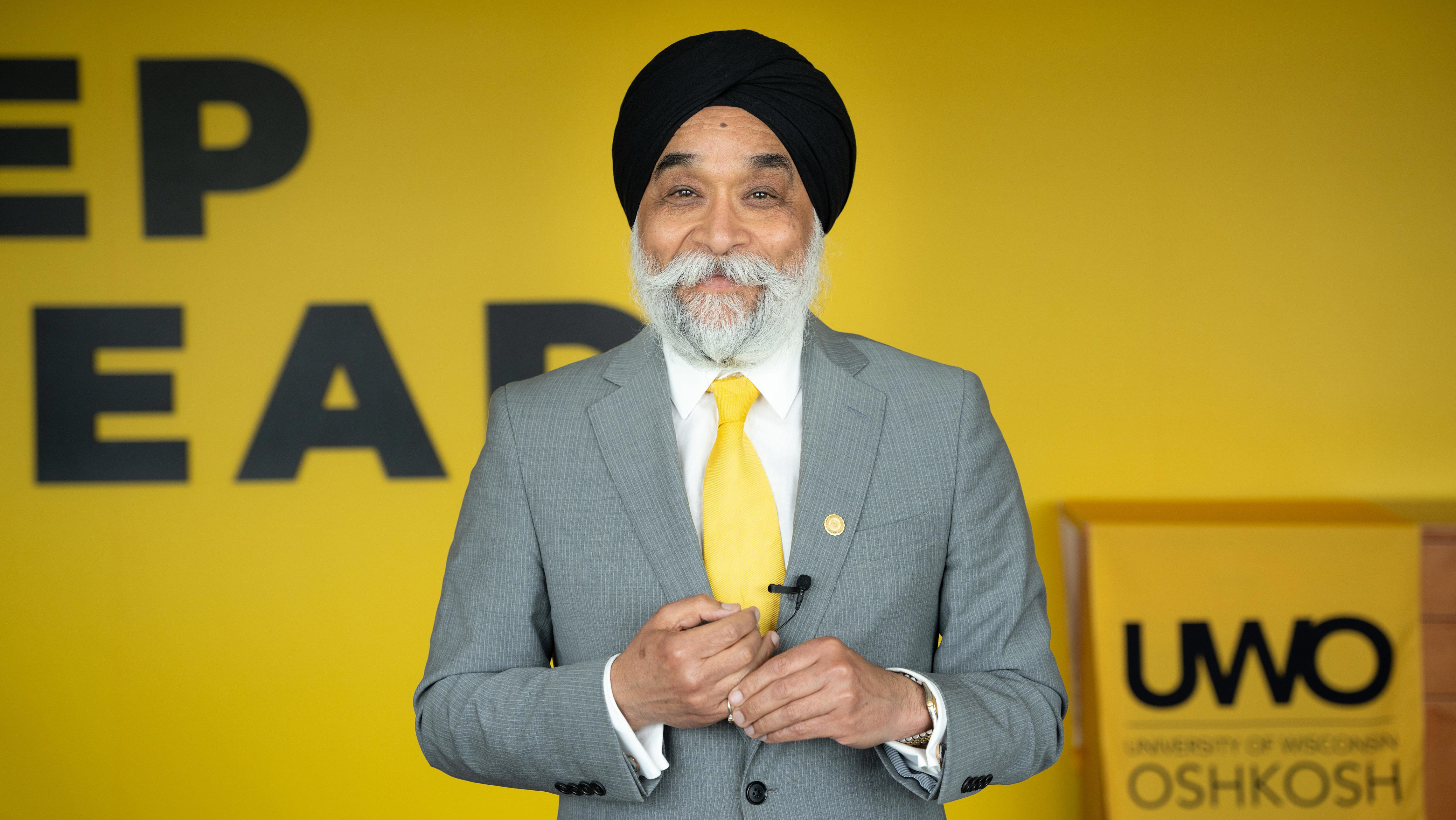
UWO Chancellor Manohar Singh Discusses Enrollment, Gaza War and More in Northwestern Interview

UWO Chancellor Manohar Singh Discusses Enrollment, Gaza War and More in Northwestern Interview

Featured Image

A New Chapter for the University of Wisconsin-Oshkosh

The first 30 days in any new role are always significant, and for Manohar Singh, the newly appointed chancellor of the University of Wisconsin-Oshkosh (UWO), they have been anything but ordinary. Known for his willingness to take on challenges, Singh has quickly immersed himself in the responsibilities of leading a university that is at a pivotal moment in its history.

Singh, who previously served as the interim president of Western Connecticut State University for two years, brings a wealth of academic and professional experience to his new position. He holds a doctorate in finance from Southern Illinois University, a master’s degree in economics from the University of Waterloo in Ontario, Canada, and a degree from Harvard University. His background in education and leadership has prepared him for the complex demands of managing a university system.

A Personal Journey Rooted in Education

Singh's journey to higher education was deeply influenced by his family. As the youngest of seven brothers, he grew up in a household where education was seen as the key to success. His parents, who were refugees from Pakistan and had never attended college themselves, instilled in their children a strong belief in the power of learning. Two of his brothers became Supreme Court Justices in India, while others pursued careers in finance and government service.

This upbringing shaped Singh’s career path, leading him to become a professor before transitioning into administrative roles. He sees his current position as a natural progression, driven by his commitment to higher education and the desire to make a meaningful impact.

A Strong Start with Significant Support

One of the early highlights of Singh’s tenure has been the state budget allocation of $256 million to the Universities of Wisconsin, including $137 million for the renovation of Polk Learning Commons. Singh expressed deep gratitude for the efforts of previous administrations and staff, acknowledging that their work laid the foundation for this investment.

He described the current environment as an exciting opportunity, comparing it to being "a child in a toy store" with so many possibilities ahead. His team is working tirelessly to address multiple challenges simultaneously, and he has observed a growing sense of optimism and pride within the university community.

Choosing UWO: A Call to Action

Despite the challenges UWO faced when Singh took on the role—such as layoffs, academic restructuring, and the closure of the Fox Cities Campus—he saw an opportunity to make a difference. For Singh, education is not just a profession; it is a calling. He believes that every individual deserves access to quality education, regardless of their background or circumstances.

His experience at Western Connecticut State University gave him confidence in his ability to lead UWO through difficult times without resorting to drastic measures. He emphasized the importance of respecting the sacrifices made by the community and ensuring that those efforts do not go in vain.

Vision for the Future

Singh’s vision for UWO is clear: to serve as an anchor institution that meets the evolving needs of the community. He believes that education should be accessible to all, especially first-generation students, who make up 41% of the student body. His focus is on affordability, accessibility, and creating a supportive environment that helps students achieve their goals.

He also recognizes the challenges posed by declining enrollment across the country but remains optimistic. By targeting underrepresented demographics such as international students, midlevel executives, and those with some college experience, UWO can expand its reach and build stronger partnerships with local businesses.

Addressing Diversity and Inclusion

As a minority in a community that lacks diversity, Singh is committed to fostering an inclusive environment. He believes that every student should be treated as an individual, and the university must actively address any instances of prejudice or inequity. This approach emphasizes human connection over broad policy decisions, ensuring that no one is left behind.

Balancing Growth and Stability

While UWO has recently returned to financial stability after a period of restructuring, Singh acknowledges that future changes may be necessary. However, he is determined to avoid unnecessary cuts and instead focus on strategic growth. His experience at Western Connecticut State University showed that it is possible to restructure without reducing staff, and he aims to apply similar principles at UWO.

Navigating Sensitive Issues

Singh also addressed concerns about the university’s response to the Gaza conflict. He emphasized the importance of dialogue and understanding, encouraging students to engage with one another respectfully. The university will continue to promote peace and inclusion, ensuring that all voices are heard and valued.

In his leadership, Singh has demonstrated a deep commitment to education, equity, and community engagement. His presence at UWO marks the beginning of an exciting chapter for the university and its students.

Notification
This is just an example, you can fill it later with your own note.
Done