Articles of Education: commerce
News Update
Loading...
Showing posts with label commerce. Show all posts

Wednesday, November 5, 2025

Benefits of 'Crony Capitalism'

Benefits of 'Crony Capitalism'

Benefits of 'Crony Capitalism'

The Impact of Ad Valorem Tariff on Nigeria’s Petroleum Sector

The introduction of a 15% ad valorem tariff on imported petrol and diesel by the Nigerian government has sparked significant debate. This decision, which aims to support local refineries and stabilize fuel prices, is seen as a strategic move to foster economic growth and reduce dependency on foreign imports. However, it also raises questions about potential crony capitalism and the balance between protecting domestic industries and maintaining affordability for consumers.

Ad valorem tax, derived from the Latin phrase "ad valorem" meaning "according to value," is traditionally associated with real estate, where property values are assessed using a Best of Judgment template. While this method is not commonly applied in other sectors, its adoption for petroleum products signals a shift in policy that could have far-reaching implications.

Zach Adedeji, who proposed the idea to President Bola Tinubu, argues that the tariff will encourage the development of local refineries, ensure price stability, and strengthen the naira. This aligns with broader goals of economic self-sufficiency and resilience against global market fluctuations.

Aliko Dangote, CEO of the Dangote Group, has remained relatively quiet on the matter, but his Chief Branding and Communications Officer, Tony Chiejina, has publicly endorsed the government's decision. Chiejina highlighted the refinery's achievements, including daily production of 45 million litres of petrol and 25 million litres of diesel. He emphasized the refinery's commitment to efficient nationwide delivery and collaboration with regulatory agencies.

Experts suggest that the Dangote Refinery could save Nigeria over $12 billion annually in foreign exchange while creating thousands of jobs. This potential economic boost underscores the importance of supporting local industries through strategic policies like the ad valorem tariff.

The tariff is expected to protect domestic refineries from unfair competition, ensuring they can thrive in a competitive market. It also serves as a signal to investors that Nigeria is open to opportunities in the downstream petroleum sector. The Dangote Refinery’s plan to expand its processing capacity to 1.4 million barrels per day by 2028 further highlights the potential for growth and investment.

Bayo Ogunlesi, Chairman of Global Infrastructure Group, noted that Nigeria is a vast gas province, suggesting that the country has significant untapped resources. While he did not explicitly state plans to establish a refinery, his comments reflect the potential for future investments in the energy sector.

Dangote must maintain consistency in his commitments to avoid repeating the missteps of previous administrations. The failure of the NNPC to operate its refineries effectively has left many Nigerians skeptical. However, the Dangote Refinery’s successful operation in 2024 offers hope for a more reliable and efficient petroleum sector.

Despite delays in the planned initial public offering (IPO) of Dangote Refinery shares, the company continues to generate interest among institutional investors. The potential listing on the Nigerian Exchange Limited could bring much-needed transparency and accountability, ensuring that the company operates in the best interests of shareholders and the nation.

If the IPO proceeds, it could democratize ownership of Nigeria’s downstream petroleum sector, allowing citizens to benefit from the country’s natural resources. This would mark a significant shift from the monopolistic practices of previous state-owned enterprises like the NNPC and NNPCL.

The success of the Dangote Refinery also raises questions about the need for similar strategies in other sectors. For instance, imposing tariffs on imported textiles could help revive Nigeria’s once-thriving textile industry, which was a major employer before government policies led to its decline.

The fragility of the Nigerian textile industry was evident when Western economies withdrew their support following the turmoil under General Sani Abacha’s regime. This highlights the importance of stable governance and supportive policies for industrial growth.

Imposing tariffs on strategic sectors like textiles, food processing, and petroleum refining can protect domestic industries and promote long-term economic development. This approach mirrors the strategies used by countries like the United States, where tariffs have been employed to safeguard national interests.

In addition to tariffs, the government must address other critical areas such as electricity supply, steel production, railway expansion, and agricultural development. These sectors are essential for building a resilient and diversified economy.

By implementing comprehensive policies that support local industries and infrastructure, Nigeria can position itself for sustainable growth and economic independence. The ad valorem tariff on imported fuels is just one step in this broader strategy, but it represents a crucial move toward a more self-reliant and prosperous nation.


BBC uncovers illegal migrant labor in UK mini-marts via crime network

BBC uncovers illegal migrant labor in UK mini-marts via crime network

The Hidden Network of Illegal Migrant Labor on UK High Streets

A complex criminal network is enabling migrants to work illegally in mini-marts across the United Kingdom, according to a recent investigation. This system involves fake company directors who are paid to put their names on official paperwork, while having no real involvement in running the businesses.

Two undercover reporters, both Kurdish, posed as asylum seekers and were told how easy it would be for them to take over and run a shop, making significant profits from illegal vapes and cigarettes. The investigation has linked over 100 mini-marts, barbershops, and car washes, operating from Dundee to south Devon, to this crime network. A financial crime investigator believes the network extends much further.

Home Secretary Shabana Mahmood responded to the investigation, stating that "illegal working and linked organised criminality creates an incentive for people to come here illegally. We will not stand for it."

For the first time, the inner workings of a criminal system that allows asylum seekers to work openly on UK High Streets have been revealed. One man claimed weekly takings from illicit tobacco at his shop could reach up to £3,000. The men facilitating this—so-called "ghost directors"—each have dozens of businesses listed on Companies House but are often not involved in running them.

"The shop doesn't belong to me, it's just under my name," one of them told our undercover reporters. Many of these businesses are dissolved after about a year and then re-opened with minor changes to official paperwork.

These businesses exhibit "all the red flags" associated with organized criminality, according to a financial crime investigator. During the investigation, several concerning findings were uncovered:

  • An asylum seeker, whose claim was rejected, attempted to sell a shop to our undercover reporter for £18,000
  • A Kurdish Facebook group listing dozens of mini-marts, barbers, car washes, and takeaways for sale
  • "Ghost directors" charging illegal workers up to £300 per month to register mini-marts in their names
  • Kurdish builders offering to construct elaborate hiding spaces for illegal cigarettes and vapes that could fool sniffer dogs
  • Asylum seekers, who said the Home Office had left them in legal limbo, working 14-hour shifts in mini-marts for as little as £4 per hour

The two Kurdish journalists involved in the investigation are aware of the tensions surrounding immigration. They worry that such coverage of illegal activities within the Kurdish community could inflame hostilities. One of them is a former asylum seeker himself, and he stated, "I wanted to play a role in uncovering these illegal activities [...] to say loudly that they don't represent us."

Over four months, the team monitored a Kurdish Facebook group where businesses across the UK were listed for sale. New adverts appeared every week. The reporters contacted three individuals who listed mini-marts for sale in Crewe, Hull, and Liverpool. They expressed interest in running a mini-mart and trading illegal cigarettes.

In Cheshire, the man running a Crewe mini-mart called Top Store offered to sell his shop to one reporter for £18,000 cash. Surchi, the shopkeeper, assured the journalist that "you don't need anything" to own and run a mini-mart as an asylum seeker. He claimed to be a Kurdish asylum seeker who arrived in the UK in 2022, but whose claim had been refused.

Asylum seekers generally do not have the right to work in the UK while their claim is being processed. Permission to work is only granted in limited circumstances and is subject to strict conditions. If asylum seekers are granted permission to work, they can only apply for eligible jobs on the Immigration Salary List, which do not include being a shop manager or shop assistant.

Surchi mentioned paying someone named "Hadi" around £250 a month to be named on official papers. This arrangement allowed him to avoid scrutiny by authorities and sell whatever he liked. He also claimed he had never paid any council tax and that the undercover reporter would not need to officially register the company.

Trading Standards had raided the shop once, Surchi said, and he had been fined £200 for selling illegal cigarettes and vapes. Shop owners caught selling these items can be fined up to £10,000, but the profits from such products far exceed the penalties.

During a tour of the premises, Surchi showed the reporter a so-called "stash car" where he hid the bulk of his stock until 17:00 each night. He also demonstrated how he tampered with the electricity meter to avoid paying utility bills. Surchi sold vapes to a group of teenagers while the reporter was present, claiming he had no issue with customers as young as 12 years old.

Customers paid via a card machine into a bank account, which belonged to his cousin, who owned a mini-mart 15 miles away in Stoke.

'Fine craftsmanship' to fool sniffer dogs

On Facebook, the team discovered Kurdish builders willing to help conceal illegal vapes and cigarettes. One reporter posted that he had bought a mini-mart in Manchester and was looking for "a specialist to build a space to hide cigarettes in the shop." Six builders responded. One sent a video showing a vending machine for illegal cigarettes hidden in a loft, which, when pressed, pinged packets down a chute to a concealed vent below.

This "fine craftsmanship" cost £6,000 and was guaranteed to fool Trading Standards' sniffer dogs, the builder claimed.

A network of ghost directors

As the investigation delved deeper, a network of ghost directors began to emerge. One name that kept appearing was Hadi Ahmad Ali, a Birmingham man to whom Surchi claimed to pay a monthly fee. Mr. Ahmad Ali was listed on Companies House as being from Iraq, in his 40s, and a director of more than 50 other businesses—mini-marts, barbers, and car washes.

When one of the reporters called him pretending to be an asylum seeker looking to buy the Crewe business, Mr. Ahmad Ali confirmed he could keep it in his name for a fee of between £250 and £300 a month. He also claimed he could provide a bank card for the shop.

Mr. Ahmad Ali is still listed as an active director on several businesses on Companies House. However, in October 2024, he was disqualified from being a company officer for five years. The ban followed illegal cigarette sales at a shop in his name in Chorley, Lancashire—including to a 16-year-old. Separately, he pleaded guilty to his involvement in the sale of illegal cigarettes in Lincolnshire and was sentenced to six months in prison, suspended for 18 months.

When confronted by the team, Mr. Ahmad Ali denied all allegations, stating that the mini-marts were nothing to do with him and that he had contacted Companies House to get his name removed from the businesses.

Ghost directors and their connections

The team also linked Mr. Ahmad Ali to another man, Ismael Ahmedi Farzanda, who was identified as a ghost director responsible for 25 mini-marts. Mr. Farzanda’s name came up because Companies House filings showed he had taken over as company director from Mr. Ahmad Ali at seven mini-mart businesses. The pair also shared a co-directorship on one shop in Blackpool.

One of the reporters managed to call Mr. Farzanda using the same cover story as he had used with Mr. Ahmad Ali. Mr. Farzanda stated, "I just put the shops under my name for people." He explained that an "accountant" would handle the paperwork, bank accounts, and payments to him, and that he would have no problem with the illegal cigarette sales.
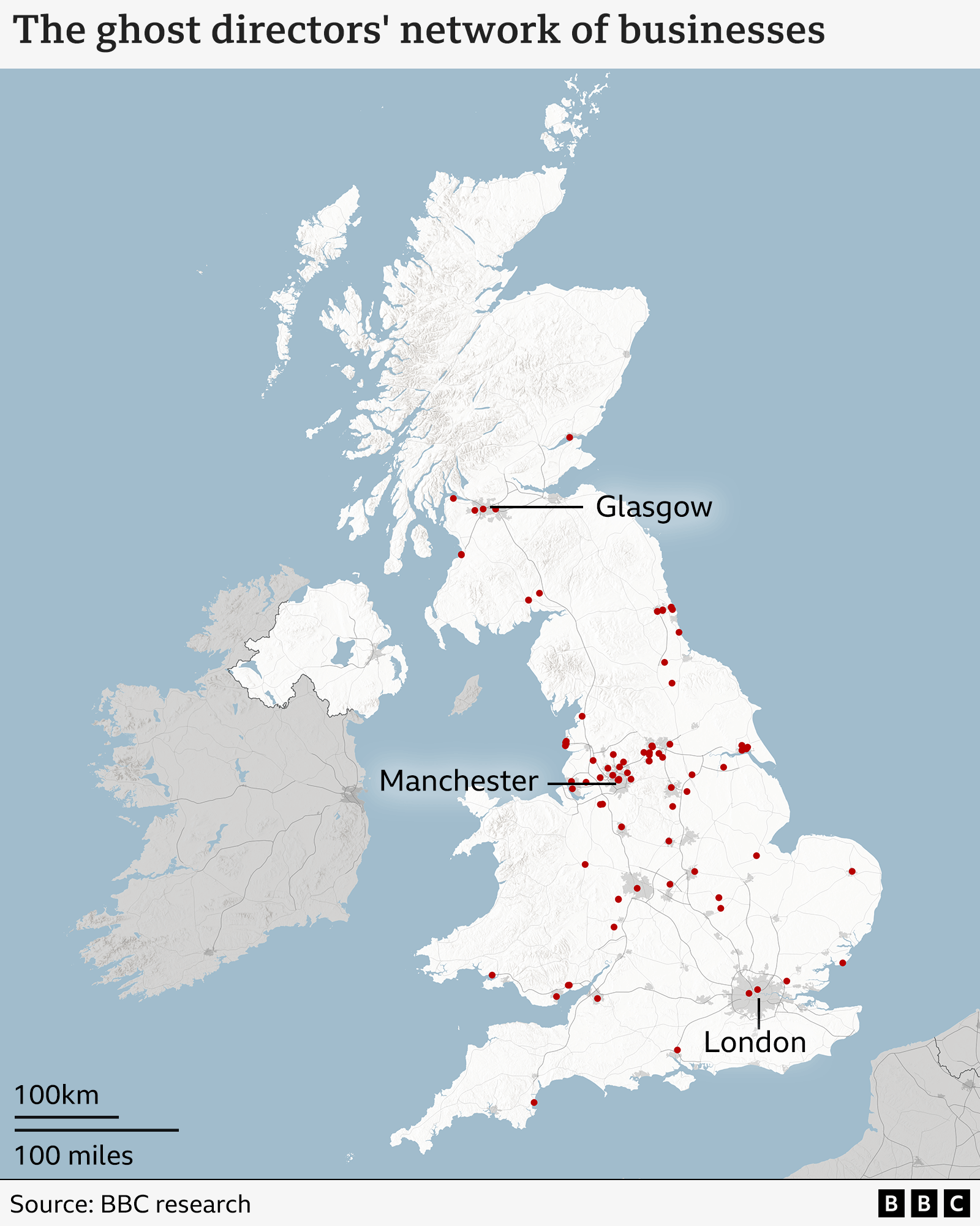
Mr. Farzanda was fined £4,500 in August after one shop, registered in his name in Haslingden, Lancashire, was caught selling illegal vapes to a 14-year-old, according to local media reports. Seventeen shops registered under the names of Mr. Ahmad Ali and Mr. Farzanda have been raided since 2021, with illegal tobacco and vapes seized, according to Trading Standards sources.

Despite being registered on official documents as being from Iran, Mr. Farzanda claimed to be from the Sharazoor district in neighboring Iraq. Both reporters noted that some Kurdish people arriving in the UK on small boats pretend to be Iranian, believing their asylum claims would have a better chance of success.

When presented with evidence, Mr. Farzanda denied all allegations.

Evading Scrutiny and Criminal Activity

The team found that companies would be set up for a year, dissolved, and then re-established with slightly different spelling of the business names. The men's names and birthdays would also be changed slightly. Financial crime investigator Graham Barrow noted that this pattern is likely an attempt to evade tax and scrutiny by authorities.

The network of businesses identified by the team could stretch even wider across the country, according to Mr. Barrow. "I certainly think it's hundreds. It could easily be bigger than that," he said.

The team visited more than a dozen mini-marts linked to this network of ghost directors. Every location was on rundown High Streets in some of the UK's most deprived areas, such as Blackpool, Bradford, Huddersfield, and Hull. All but one of the shops sold counterfeit or smuggled cigarettes for about £4 per pack instead of the average UK price of £16 for a pack of 20.

In addition to Surchi's story in Crewe, the investigation revealed details of other Kurdish asylum seekers being employed illegally. A mini-mart worker in a Blackpool shop linked to one of the ghost directors described working 14-hour days at the shop, earning £60 to £65 per day. He had been interviewed by the Home Office four months ago but had not heard anything since.

The shop had been raided by Trading Standards three times, but he described it as "nothing." "Just give them any name and they will walk away," he explained, saying that whenever he was asked who he was, he would give the name of a famous Kurdish singer, Aziz Waisi.

Another Kurdish shopworker in a Salford shop registered under Ismaeel Farzanda's name said he was in legal limbo. "I've been here for six months and I still haven't claimed asylum," he said. The 42-year-old claimed he had first come to the UK as a teenager before returning to Kurdistan. He returned this year and "they found my previous fingerprint records but nothing came of it." He was staying with friends and said, "Honestly, we're all struggling here and don't know what to do."

The government claims it has increased raids by 51% and raised fines for businesses to £60,000 per person found working illegally. Home Secretary Shabana Mahmood added that the government has "seized millions of pounds worth of unlicensed goods, banned dodgy directors and removed more than 35,000 people with no right to be in the UK."

Additional reporting by Phill Edwards and Kirstie Brewer

'Endless battle': Fighting the crime gangs taking over the high street

The sale of illegal cigarettes signals a deeper problem with UK high streets. Police raid barbers and vape shops suspected of being fronts for crime gangs.


Wednesday, August 6, 2025

Chegg Targets $48M Busuu Revenue and Double-Digit Skills Growth During Strategic Shift and AI Push

Chegg Targets $48M Busuu Revenue and Double-Digit Skills Growth During Strategic Shift and AI Push

Featured Image

Strategic Review and Financial Performance

Chegg (CHGG) recently reported strong results for its second quarter of 2025, with the company showing significant progress in several key areas. The CEO, Nathan Schultz, provided an update on the ongoing strategic review, which includes exploring options such as a potential acquisition, go-private transaction, or remaining a public company. He emphasized that Chegg is actively engaging with select parties during this process.

Schultz highlighted that Q2 was a solid quarter for the company, with revenue reaching $105 million and adjusted EBITDA of $23 million, surpassing expectations. This performance reflects improved financial management and cost control, which have been central to the company’s strategy.

Expense Management and Cost Reduction

The company has made notable strides in managing expenses. An additional $17 million in capital expenditures and expense savings were identified for realization in 2026. Schultz reiterated that Chegg remains on track to achieve the targets outlined in its restructuring efforts, aiming to reduce non-GAAP expenses by $165 million to $175 million in 2025. For 2026, the company now expects total non-GAAP expense savings between $110 million and $120 million.

This focus on cost efficiency is part of a broader strategy to enhance profitability while investing in growth areas. The CFO, David Longo, noted that the company continues to prioritize disciplined cost management aligned with its business outlook. Additional operating expense savings of $10 million and CapEx savings of $7 million were identified for 2026.

Strategic Focus on Skills and Language Learning

Chegg is shifting its focus toward a skills-based organization, with language learning (Busuu) and workplace readiness/upskilling (Skills) positioned as primary growth engines. Busuu demonstrated strong performance, with a 15% year-over-year revenue increase in Q2. The B2B segment showed even more impressive growth, with a 39% year-over-year increase, continuing a robust double-digit growth trajectory.

The company expects Busuu to reach $48 million in revenue in 2025 and become adjusted EBITDA-positive in Q1 2026. Enrollments in Skills increased by 16% quarter-over-quarter, and monthly active users rose by 11% across new programs.

Chegg Study remains a core product, with AI-driven improvements leading to better retention rates. The monthly retention rate increased by 117 basis points in Q2, indicating stronger engagement from users.

Outlook and Financial Results

For Q3, Chegg expects total revenue between $75 million and $77 million, with Subscription Services revenue ranging from $67 million to $69 million. The gross margin is expected to be between 56% and 57%, and adjusted EBITDA is projected to be between $7 million and $8 million.

The company reaffirmed its goals for Busuu to achieve $48 million in revenue in 2025 and to reach adjusted EBITDA-positivity in Q1 2026. It also continues targeting non-GAAP expense savings of $165 million to $175 million in 2025 and $100 million to $110 million in 2026, with additional savings identified for 2026.

In terms of financial results, total revenue for Q2 was $105 million, with subscription services revenue at $90 million and 2.6 million subscribers. Busuu posted a 15% year-over-year revenue increase, with B2B revenue up 39%. Skills and other revenue reached $15 million, including $7 million from content licensing. Non-GAAP operating expenses for the quarter were $64 million, a 33% year-over-year reduction. Adjusted EBITDA was $23 million, representing a margin of 22%.

Capital expenditures were $7 million, down 60% year-over-year. Free cash flow was negative $12 million, impacted by $12.5 million in severance payments. The quarter ended with $114.1 million in cash and investments, and a net cash balance of $52 million.

Analyst Questions and Market Sentiment

Analysts raised questions about Busuu's B2B growth and future partner strategies. Schultz emphasized that Chegg is not reliant on a reseller market and is confident in its direct sales approach and partnerships with companies like Guild. He also discussed the growth prospects of Chegg Study in institutional markets, highlighting the need to prove value to schools.

Regarding competition in the AI education space, Schultz described a shift from traditional boot camps to micro learning moments, emphasizing the modern and effective nature of Chegg's course offerings.

Analysts’ tone was neutral to slightly positive, with questions focused on growth sustainability and competitive positioning. Management maintained a confident and optimistic tone, using phrases like “we are really excited” and “absolutely” to describe future growth prospects.

Key Developments and Risks

Compared to the previous quarter, analyst sentiment shifted from concerns about structural risks to a focus on growth opportunities. Management remained forward-looking and confident, with more concrete evidence of traction in Busuu and Skills.

Key developments included increased B2B growth for Busuu, rising from 29% in Q1 to 39% in Q2, and an increase in Chegg Study institution pilots from 15 to 23. The company sharpened its strategic focus on Busuu and Skills, providing more details on product innovation and market penetration.

Risks include ongoing declines in traffic and subscribers, attributed to factors such as Google AI overviews. Macroeconomic trends and competition from free AI education offerings remain headwinds. Additionally, expense management and restructuring charges, including significant severance payments, continue to impact free cash flow.

Final Takeaway

Chegg’s second quarter 2025 call highlighted the company’s transformation into a skills and language learning-focused organization, with Busuu and Skills as primary growth engines. Strong B2B momentum, disciplined cost control, and ongoing product innovation are central to the company’s strategy. While the strategic review process continues, Chegg remains committed to investing in AI-driven solutions and institutional partnerships to support future growth and profitability.

Saturday, August 2, 2025

Pearson plc Q2 2025 Earnings Call Summary

Pearson plc Q2 2025 Earnings Call Summary

Featured Image

Pearson plc's Q2 2025 Earnings Call Highlights Strong Performance and Strategic Progress

Pearson plc, a global leader in education and learning solutions, delivered impressive results during its Q2 2025 earnings call. The company reported an EPS of $0.3203, surpassing the expected $0.3058. This strong performance reflects the company’s continued focus on strategic growth and operational efficiency.

Strategic Focus and Market Dynamics

Omar Paul Abbosh, CEO of Pearson, emphasized that the company’s strategy remains unchanged and is well established across the organization. Two key trends—demographics and artificial intelligence (AI)—continue to shape the educational landscape. As AI transforms the workforce, Pearson is positioned to play a critical role in developing the skills needed for the future.

Abbosh outlined three main takeaways from the call:

  1. Strategic Clarity: Pearson’s approach remains consistent, with a focus on building medium-term growth engines through enterprise business expansion and product innovation.
  2. Execution Focus: The company is making progress against its strategic goals, with clear proof points demonstrating effective execution.
  3. Confidence in Trajectory: The combination of strategic clarity and strong execution reinforces confidence in Pearson’s medium-term growth outlook.

The company also highlighted its resilience in the face of market dynamics. While certain segments may face challenges, Pearson’s diversified portfolio allows it to benefit from overall market growth while remaining resilient to subsegment trends.

Key Business Segments and Performance

Pearson’s performance across its key business units was strong, with several areas showing significant growth:

  • Assessments & Qualifications: Sales grew by 2%, driven by strong performance in clinical assessments and UK & International Qualifications. However, there were declines in Pearson VUE and US Student Assessment due to contract pauses and PDRI headwinds.
  • Virtual Learning: Sales declined slightly due to previous school losses, but enrollment and retention trends improved, with positive momentum expected in H2.
  • Higher Education: Sales grew by 4%, supported by strong monetization of the Study Prep Tool and continued engagement with AI-driven study tools.
  • English Language Learning (ELL): Sales declined by 3%, primarily due to a strong comp period in H1 2024. However, the PTE business remained stable.
  • Enterprise Learning & Skills: Sales grew by 4%, driven by solid performance in vocational qualifications and momentum in enterprise solutions.

Operational Improvements and Innovation

Pearson is making significant strides in operational improvements, including:

  • Revenue Operations Transformation: Led by Chief Business Officer Naseem Tuffaha, this initiative aims to improve revenue visibility and scalability.
  • Modern Marketing Approach: Under Chief Marketing Officer Ginny Ziegler, the company is focusing on cost efficiencies and enhanced brand presence.
  • Performance Culture: Pearson has streamlined roles and reduced job families, leading to better performance management and more efficient communication.
  • AI-Driven Simplification: The company has implemented AI-powered service agents and content development tools, significantly improving speed to market.

Strategic Partnerships and Growth Opportunities

Pearson continues to expand its strategic partnerships, including new collaborations with Microsoft, AWS, and Google Cloud. These relationships are unlocking new revenue opportunities and enabling co-innovation in education and workforce development.

Additionally, Pearson is investing in targeted markets, such as formative assessment through its partnership with McGraw Hill and expanding test prep capabilities via Pearson VUE. The company is also redirecting investments into AI and immersive learning technologies, partnering with industry leaders like Meta and Google XR.

Early Careers and Enterprise Skilling

Pearson is strengthening its position in two key growth vectors:

  • Early Careers: The acquisition of eDynamic Learning adds a core pillar to Pearson’s Early Careers strategy, providing job-ready skills for the next generation of workers.
  • Enterprise Skilling: With AI transforming the workforce, Pearson is helping enterprises develop talent planning and skill verification capabilities. This aligns with the needs of CEOs who are seeking ways to navigate the evolving skills landscape.

Financial Performance and Outlook

Sally Kate Miranda Johnson, CFO of Pearson, provided an overview of the financial results. Sales grew by 2% on an underlying basis, with adjusted operating profit up 2% to GBP 242 million. Adjusted EPS was down to 24.5p, impacted by FX headwinds, though the share buyback helped offset some of the decline.

The company maintained a strong balance sheet, with free cash flow up to GBP 156 million. Net debt decreased to GBP 1 billion, driven by strong cash performance and the completion of a GBP 350 million share buyback.

Looking ahead, Pearson remains confident in its 2025 outlook. Key business unit growth expectations include:

  • Assessments & Qualifications: Low to mid-single-digit growth, with H2 weighted toward Q4.
  • Virtual Learning: Expected to return to growth in H2, driven by enrollment increases and new school openings.
  • Higher Education: Growth will be higher than in 2024, fueled by sales team transformation and AI-driven innovations.
  • English Language Learning: Full-year growth will moderate due to PTE performance in H2.
  • Enterprise Learning & Skills: High single-digit growth, supported by new contracts and pipeline activity.

Conclusion

Pearson’s Q2 2025 results reflect strong execution, strategic focus, and a commitment to innovation. With a diversified portfolio, operational improvements, and expanding partnerships, the company is well-positioned to drive long-term growth and deliver value to stakeholders. As the world continues to evolve, Pearson remains a key player in shaping the future of learning.

Thursday, June 19, 2025

Where Students Score the Best Discounts: Your Ultimate Guide

Gambar terkait Where You Can Get The Best Discounts If Your A Student (dari Bing)

Student discounts are so much more important than they might initially seem. Cutting the cost of everyday items down to size is something that students are frequently looking to bring into their everyday lifestyle. From meal plans and on-campus living that can diminish transportation costs and bundle eating requirements for greater value to happy hours and drink specials when getting out for social events, saving money is part of a student's daily grind. Many high schoolers can take advantage of student rates for services in their local area, but student discounts really come into their own when speaking about the college experience. Away at college, you'll need to budget on your own and care for many of your individual needs without the same support system found in your younger years. Fortunately, a huge volume of student discounts exist across virtually all spending categories you might find yourself engaging with.

From technology brands to meal prep solutions and entertainment, just about everything you spend money on can benefit from the inclusion of a student discount. Some discounts are felt a small price reductions, keeping a few extra bucks in your pocket. Others bring massive rate cuts into the mix, and can sometimes even deliver free or extremely cheap services that bring about major improvements to your lifestyle. These are some of the best student discounts you'll find across the market to improve your time away at school.

Read more: 5 Goods We Buy From Canada That Would Be Affected By Trump's Proposed Tariffs

Amazon Prime

Amazon Prime is one of the first discount options that students will want to look into. It's easy to sign up for a student rate, and when you do you'll get 6 months of Prime membership service for free. After this, the monthly subscription cost is cut in half, allowing you to continue taking advantage of all of Amazon's critical Prime features at a major price reduction.

Amazon Prime is a service that has grown into a wide-reaching consumer solution. As of this year, over 180 million U.S.-based subscribers have signed up for this enhanced experience on the platform. Started as a means of reducing shipping costs, Prime has grown into a music streaming service, video playback option, and an integrated storage solution for data of all sorts. Amazon has even looked into expanding into telehealth solutions for Prime members. The value of a student Prime account is substantial. Getting it for half price will allow you to shop for all of the educational essentials you require with greater ease while also taking advantage of its entertainment inclusions. Amazon is a bookstore at heart, even if it has grown into something much larger in its roughly three decades of existence. You'll still find great deals on used books, in particular, to support your educational journey, and that's to say nothing of the virtually endless digital shelves that the marketplace provides beyond reading materials.

Microsoft Office

Microsoft Office covers a suite of programs that every student will want to install on their computer. College students across the world utilize these tools to communicate with classmates and teachers, write papers, and dissect data and information for projects. Outlook can be instrumental in helping maintain productivity throughout your educational journey, and Microsoft Word is obviously one of the most important things you'll install on your computer, perhaps throughout your entire life.

Microsoft offers a range of Office packages, including discounted student options. You might buy the software outright, utilizing Microsoft student rates in the process, or opt for a subscription service. Either way, student rates are a major help in keeping costs low and getting you these software solutions you require. One option that can be a valuable asset for students looking to cut down on their expenses is the online Microsoft 365 personal package. Microsoft offers it for $2.99 per month to students.

Clothing Retailers Across The Spectrum

The software you use and the books you study from are only a small portion of the expenses you have while in school. Naturally, these are important features in your educational journey, but a number of other expense areas also play an outsized role in your experience. One that can't be ignored is the clothing you wear. From your attire in the classroom to the threads you wear out with friends in the evening, clothing is a big part of your experience as a human in society. Away at college, this can play a major role in your transformation into the person you are trying to become. Your style says a lot about you, and that makes clothing an important point of expression as you venture off on your own for the first time.

Fortunately for students, there are a great many options available when it comes to discounted retailers. Clothing options with solid student discounts exist across most prominent brands. Some of the biggest names include Nike, with a 10% discount for students, up to 25% off at American Eagle, and up to 15% price reductions at both Adidas and Aeropostale. No matter what your style looks like, getting some of the key staple features of your wardrobe for discounted rates can make a huge difference in your budget.

Regal And AMC Movie Theaters

Books and clothing aren't the only expenses to consider as you build a collegiate budget. The entertainment resources that form a part of your lifestyle while in school are also essential to good mental health, a balanced daily and weekly workload, and more. There's no getting around the reality that socialization is a key feature in any college experience. You won't go away to school simply to sit in class and learn. Growing as a solo individual figuring things out on your own is also a key part of this equation. Going out with friends to see movies, exploring romantic relationships, and new friendships in class and beyond, and managing all of these social commitments alongside study requirements, projects, and papers enriches your life in countless ways.

Student discounts at the cinema are widely available. Regal and AMC theaters are two of the biggest names in the American movie theater conversation. Both can be found in cities and suburban communities across the United States. Both movie theaters operate discounted student prices, however it should be noted that every individual theater will likely roll out these benefits to students in their own unique ways. Checking with your local theater is your best bet. You may find that tickets are reduced by a flat rate or that the theater offers steep discounts on a certain day of the week or within timing windows. However your local theater handles its student discounts, these offers can be a great way to catch the movies you are excited about with friends at a reduced price.

The Headspace Student Plan

Headspace is a valuable mental health resource that can provide beneficial wellness support to students who may be struggling with the transition into college life. Headspace can help connect users with therapy resources, but it's also an instrumental tool for meditation, sleep improvement, and for those chasing general mindfulness and tranquility in their life. Taking time to step away from the business that is college life and exploring your own mental wellbeing is critically important. Unfortunately, many students don't know where to turn when it comes to these kinds of practices.

Headspace provides an 85% discount on its student plan. This comes out to less than 10 bucks for the year. The result is a robust mental health resource that students can take advantage of for literally cents on the dollar. Trying out the program is a great way to explore meditation and other mental wellbeing tools that can help ground your studies and give you the clarity you need to excel in everything you do.

A Smattering Of News Outlets

News is a critical resource for those hungry to learn. Understanding what's going on in the world around you can help frame the things you're learning about in the classroom. Whether you're engaged in scientific research, data analysis, or programming or studying a humanities field, knowing what is happening in the world outside of your educational environment is a big deal. The most timely news resources out there are frequently hidden behind a paywall, and so you'll need to subscribe to major news outlets in order to get up to the minute coverage across most thematic areas.

However, this doesn't mean that you need to pay full price to learn about what's going on in the world or your community. Essentially every major news outlet that you might consider reading can be found with student discount plans in place. The New York Times, The Economist, The Washington Post, The Wall Street Journal, and Bloomberg all provide student rates for their news service plans, and the list goes on. Whether you're looking for financial information to help you stock market journey or the latest updates on economic issues like the outlook on inflation in the coming months, subscribing to your chosen news outlets at discounted prices can help keep you in the know.

AT&T, Verizon, US Mobile, And Other Communications Providers

It's not just information flowing one way that's discounted for students. Communication tools are frequently delivered at student rates, too. In particular, America's the most prominent cell service providers dole out a range of discounts for those enrolled in a degree program. This is a service that just about everyone in the modern world simply can't live without, so getting a rate reduction on your plan is an important resource that every student should use to their advantage. This is also a service that most people pay too much for without realizing it , both while in school and beyond. If you're going to be paying for it anyway, you should look for bargain rates whenever they're available.

Discounts can vary depending on the plan you require and more. But generally speaking, you'll be able to save at least a few dollars per month on upgrades to the base fare or perhaps even get tailored options to buy new phones at student discounted rates over the already favorable contract renewal terms frequently offered to subscribers. It's also worth shopping around if your contract is set to expire. Most of the nation's prominent providers deliver roughly the same coverage and service standards, so if you can lock in a better base price and tack on additional student discounts to further reduce the cost for this essential service, there's no reason to stick with your existing provider and continue paying more.

Samsung And Apple

Approaching communication devices from a different angle, major device manufacturers like Samsung and Apple also offer price reduction for students. These are two of the most prominent players in the marketplace and many products across categories fall under the purview of their student pricing plans. If you're a Mac user, getting a new laptop with a nice chunk taken off the top can help you continue your studies with a key financial boost built into the purchase.

There's also accessory devices to consider. Wireless headphones, tablets, and even TVs (from Samsung, specifically) are frequently offered with additional student discounts built into the price. All kinds of consumer electronics benefit from pricing reductions for those with a valid student ID. Importantly, this is to say nothing for those who prefer cell phones from either one of these goliath manufacturers. Buying a device directly from the maker can be a great way to rack up even more discounts. All told, it's entirely likely that you'll be able to find a price reduction on one or more consumer electronics products that you'd be buying anyway during the four year stretch in the university setting from one of these two primary competitors. Beyond just these two names though, HP, Asus, and many other device manufacturers deliver computers, tablets, printers, and more to the market with favorable pricing for students.

DoorDash, HelloFresh, Home Chef, And A Rake Of Restaurants And Fast Food Outlets

Food has been mentioned a few times above. Feeding yourself is without a doubt one of the most important tasks to consider as you leave for college. Many students will have spent the first 18 years of their lives getting fed largely by their parents. Making dinner for yourself and budgeting for the expense of sourcing ingredients to cook and deciding when to buy meals out and about is a major change for many first-year college students. This new responsibility can be overwhelming, leading some to spend too much of their essential cashflow on fast food and meals out at restaurants. Under normal circumstances, eating out with friends too often is one of the biggest money mistakes you can make .

But when you're a student, the sting of this often-budget-busting practice subsides just a bit. A wide range of prominent fast food chains and established restaurants offer student discounts that can reduce the bill by a notable margin. Restaurants that offer discounts, promotions, and free add-ons include places like Buffalo Wild Wings, TGI Fridays, and Smash Burger. On the fast food side of things, Chick-fil-A, Subway, Chipotle, and McDonald's deliver 10% reductions to their pricing for students, although the specifics on these programs can vary by location. Delivery services also offer price mitigations for students in some circumstances, as well. When it comes to meal planning in your own dorm room or apartment, subscription services like HelloFresh and Home Chef offer notable reductions in the boxes you'll get delivered to help support your journey into adulthood.

Entertainment Resources Like Hulu, Spotify, Peacock, And YouTube Premium

In addition to Amazon Prime delivering entertainment as part of its schtick, plenty of other entertainment resources can also be purchased at discounted subscription rates. Hulu, Spotify, Peacock, and YouTube Premium are just a few names on this list. Each one provides key downtime solutions that can help you recharge and relax at the end of a long day of study or working. Spotify and YouTube Premium are also great options to help keep your focus going as you grind through an evening of paper writing or studying for the next test.

Entertainment is an important part of any lifestyle, whether you're a student or otherwise. But students gain significant value when signing up for these resources. Dropping the price on subscription services means that you can save money on your normal load of subscriptions or add in an extra services to catch up on other shows you may have missed without breaking the bank. The average American spends over $200 every month on subscription services, and in many cases they're wasting money by carrying services they no longer use. As an important aside, canceling your autopay settings can help clear out these unwanted financial drains.

Transportation, Including Trains, Flights, And Even Car Rentals

Transportation is yet another expense category that students frequently rely on and can get decent price reductions within. There are actually numerous airlines that offer student discounts , including United and some international carriers like Iberia and Air France. Whether you're flying home for the summer or heading away for a vacation somewhere (or maybe even studying abroad for a semester), discounted flights can be a big help. There's also a few cost-reducing strategies to consider when booking flights. Travel experts often recommend 'open-jaw' tickets that don't act as a standard roundtrip itinerary for good discounts. Then there's the option to skiplag that comes into play —but can be problematic if you aren't careful.

On the ground, students can also bag solid price reductions when renting cars and trucks. Penske offers 10% rate reductions on moving vans, and Zipcar includes discounted rates under certain circumstances for students. Buying a GM can get you a student discount, and the program extends to those who have graduated within the last two years. Rail services are another transportation option that benefits from student rates. Providers like N.J. Transit and Amtrak both give students a healthy price break when booking travel or buying monthly rail passes.

Read the original article on Money Digest .

Notification
This is just an example, you can fill it later with your own note.
Done