Articles of Education: crime
News Update
Loading...
Showing posts with label crime. Show all posts

Wednesday, November 5, 2025

DSS Updates on Owo Church Attack Prosecutions and Terror Suspects

DSS Updates on Owo Church Attack Prosecutions and Terror Suspects

DSS Updates on Owo Church Attack Prosecutions and Terror Suspects

Nigeria’s Security Agencies Continue Prosecution of Terrorism Suspects

The Department of State Services (DSS) has confirmed that several high-profile terrorism suspects are currently facing trial across the country as part of efforts to strengthen national security and ensure accountability. These trials reflect the commitment of security agencies to bringing perpetrators of terrorism to justice in line with the rule of law.

In a recent statement, the secret police disclosed that five men are being tried for their alleged involvement in the June 2022 attack on St. Francis Catholic Church in Owo, Ondo State, where over 40 worshippers lost their lives. The agency also revealed that suspects linked to the June 2025 Yelwata massacre in Benue State, which claimed dozens of lives, are currently undergoing trial.

According to the DSS Director-General, Tosin Ajayi, the ongoing prosecutions reflect the commitment of security agencies to bringing perpetrators of terrorism to justice in line with the rule of law.

Trial of Terror Suspects in Abuja

The Federal High Court in Abuja will continue the trial of two wanted terror suspects: Mahmud Muhammad Usman and Abubakar Abba who were arrested during a high-risk operation in July. The duo, believed to be leaders of the ANSARU terrorist group, face a 32-count charge, including terrorism financing and illegal mining. Usman has already been sentenced to 15 years for one of the offences, while Abba pleaded not guilty.

The agency also confirmed that the prosecution of Khalid Al-Barnawi, alleged mastermind of the 2011 United Nations building bombing in Abuja, is ongoing alongside four others. Al-Barnawi and his co-defendants are facing charges before Justice Emeka Nwite of the Federal High Court in Abuja.

Details of the Trial

The DSS provided details of the trial, stating that Usman (aka Abu Bara’a) and Abba (aka Isah Adam and Mahmud Al-Nigeri) were captured in a high-risk, intelligence-led, counter-terrorism operation in July by the DSS after several months of chasing them. The two are believed to be leaders of the Jama’atu Ansarul Muslimina fi-Biladis Sudan, commonly known as ANSARU, Nigeria’s Al-Qaeda affiliate.

Usman, the self-styled Emir of ANSARU, allegedly coordinated various terrorist sleeper cells across Nigeria. He is also believed to have masterminded several high-profile kidnappings and robberies, the proceeds of which were used to finance terrorism over the years. Abba, Usman’s chief of staff and deputy, is alleged to have led the so-called “Mahmudawa” cell, which operated around the Kainji National Park, located on the border between the states of Niger and Kwara, as well as the Republic of Benin.

The Office of the National Security Adviser (ONSA), in a statement issued on August 16, claimed Mamuda received training in Libya between 2013 and 2015 under foreign jihadist instructors from Egypt, Tunisia, and Algeria. He is said to have specialised in weapons handling and IED fabrication.

Usman and Abba are being tried on a 32-count terrorism charge, and on which they were arraigned in late August. One of the counts related to illegal mining, to which Usman pleaded guilty and has since been sentenced to 15 years. Abba pleaded not guilty to all the 32 counts.

Continued Trials of Other Terrorists

The DSS is also prosecuting another terror suspect, Khalid Al-Barnawi, accused of being the mastermind of the August 26, 2011, bombing of the United Nations Complex in Abuja, in which 20 people were killed and more than 70 others injured. Captured in 2016, Al Barnawi is facing trial along with four other terror suspects – Mohammed Bashir Saleh, Umar Mohammed Bello aka Datti, Mohammed Salisu, and Yakubu Nuhu aka Bello Maishayi.

The trial has been delayed for an extended period due to legal and procedural issues, including the suspects being occasionally brought to court without any counsel appearing for them. The DSS recently requested the court to grant accelerated hearing in the case, a request Justice Nwite granted.

On October 23 and 24, a trial-within-trial was conducted, during which videos of the defendants’ confessional statements were played in the courtroom.

Additional Charges and Arrests

On August 11, the DSS arraigned five men before a Federal High Court in Abuja over their alleged involvement in the June 5, 2022 attack at St. Francs Catholic Church, Owo, Ondo State. The five are: Idris Abdulmalik Omeiza, Al Qasim Idris, Jamiu Abdulmalik, Abdulhaleem Idris and Momoh Otuho Abubakar. Over 40 people died in the attack, while over 100 individuals sustained injuries.

The five defendants were arraigned on a nine-count terrorism charge, marked: FHC/ABJ/CR/301/2025, in which they are accused among others, of being members of Al Shabab terrorist group, with cell in Kogi State. The defendants are also alleged to have carried out the attack in furtherance of their religious ideology.

They pleaded not guilty when the charge was read to them, following which Justice Nwite ordered that they be remanded in the custody of the prosecuting agency. In a ruling on September 10 the judge rejected their request for bail on the grounds that they were not only charged with offences that capital in nature, they are also accused of being members of a notorious terrorist organisation.

Ongoing Trials of Yelwata Massacre Suspects

Also undergoing trial are the suspects arrested in connection with the Yelwata massacre in Guma Local Government Area of Benue State on June 13 2025. The attack, in which dozens of people were killed and 107 injured, drew worldwide condemnation. President Bola Tinubu paid a condolence visit to the state and demanded the arrest of the killers and attackers.

On June 24 2025, the Inspector-General of Police (IGP), Kayode Egbetokun, announced the arrest of 26 suspects in connection with the massacre. In August 2025, the DSS filed terrorism-related charges before the Federal High Court in Abuja, against nine suspects. Two suspects, Haruna Adamu and Muhammad Abdullahi of Awe local government area of Nassarawa state, who are still at large, were charged with four counts of terrorism, among which is the concealment of information about the attacks, before they were staged in Abinsi and Yelwata villages between June 13th and 14th.

In total, the DSS filed six separate charges against the arrested suspects, who are now undergoing trial. They are Adamu and Abdullahi are Musa Beniyon, Bako Malowa, Ibrahim Tunga, Asara Ahnadu, Legu Musa, Adamu Yale, Boddi Ayuba, and Pyeure Damina. The DSS also charged two other suspects, Terkende Ashuwa and Amos Alede of Guma local government area of Benue State, with three counts for allegedly carrying out reprisal attack against the terror suspects involved in the Abinsi and Yelwata attacks.

Their trial, which is ongoing, before Justice Nwite’s court began with their arraignment in early September, with the defendants pleading not guilty.

Commitment to Justice

Director General of the DSS, Tosin Ajayi, said:

” The various arrests and trials of terrorism suspects showed that Nigeria’s security agencies have been diligent in dealing with the perpetrators of terror in the country. The men we are prosecuting are separate from the hundreds of suspects under the military’s protective custody, whose cases are being handled by the Office of the Attorney General of the Federation. In July last year, 125 of the terrorists were convicted.

“We shall continue to make the suspects accountable for disrupting the peace of our country, in consonance with the rule of law.”
DSS Reports Progress in Terror Cases, Trials Resume Nov 19

DSS Reports Progress in Terror Cases, Trials Resume Nov 19

DSS Reports Progress in Terror Cases, Trials Resume Nov 19

Overview of Ongoing Terrorism Prosecutions in Nigeria

The Department of State Services (DSS) has provided a detailed update on the ongoing prosecution of several high-profile terrorism cases across Nigeria. The agency has reaffirmed its commitment to ensuring accountability and justice under the rule of law, emphasizing that all actions are conducted within the framework of legal procedures.

One of the most notable cases involves two internationally wanted terrorism suspects, Mahmud Muhammad Usman and Abubakar Abba. Their trial is set to continue on November 19 before Justice Emeka Nwite of the Federal High Court in Abuja. This information was disclosed by the DSS’s Deputy Director, Public Relations and Strategic Communications, Favour Douzie, in a statement released on Tuesday evening.

Background on the Suspects

Usman, also known as Abu Bara’a, and Abba, also referred to as Isah Adam and Mahmud Al-Nigeri, were arrested in a high-risk, intelligence-led counterterrorism operation in July after months of surveillance. They were captured following a prolonged investigation into their activities.

The DSS revealed that these two individuals are believed to be leaders of ANSARU, Nigeria’s Al-Qaeda affiliate. Usman, who is self-styled as the Emir of ANSARU, is alleged to have coordinated various terrorist sleeper cells across Nigeria. He is also accused of masterminding several high-profile kidnappings and robberies, which were used to finance terrorism over the years.

Abba, serving as Usman’s chief of staff and deputy, is said to have led the so-called “Mahmudawa” cell, which operated around the Kainji National Park, located on the border between the states of Niger and Kwara, as well as the Republic of Benin. According to a statement from the Office of the National Security Adviser (ONSA), Mamuda received training in Libya between 2013 and 2015 under foreign jihadist instructors from Egypt, Tunisia, and Algeria. He is said to have specialized in weapons handling and IED fabrication.

Legal Proceedings and Charges

Usman and Abba are being tried on a 32-count terrorism charge, with Usman pleading guilty to one count related to illegal mining and receiving a 15-year sentence. Abba, however, pleaded not guilty to all 32 counts.

In another case, the DSS is prosecuting Khalid Al-Barnawi, who is accused of being the mastermind behind the August 26, 2011, bombing of the United Nations Complex in Abuja. The attack resulted in 20 deaths and over 70 injuries. Al-Barnawi, captured in 2016, is facing trial alongside four other suspects. The trial has faced delays due to legal and procedural issues, including instances where the suspects were brought to court without counsel. Recently, the DSS requested accelerated hearing, which was granted by Justice Nwite.

Other Terrorist Cases

Another significant case involves five men standing trial for their alleged involvement in the June 5, 2022, attack on St. Francis Catholic Church in Owo, Ondo State. The attack left more than 40 people dead and over 100 injured. The five defendants—Idris Abdulmalik Omeiza, Al Qasim Idris, Jamiu Abdulmalik, Abdulhaleem Idris, and Momoh Otuho Abubakar—are charged with being members of Al Shabab, a terrorist group with a cell in Kogi State. They pleaded not guilty when the charges were read to them, leading to their remand in custody.

Justice Nwite rejected their request for bail, citing the severity of the charges and the strength of the evidence against them. The judge noted that the DSS's argument about the likelihood of the defendants jumping bail was deemed credible.

Additional Trials and Investigations

Other ongoing trials include those connected to the Yelwata massacre in Guma Local Government Area of Benue State on June 13, 2025. The attack, which resulted in dozens of deaths and 107 injuries, drew global condemnation. In response, President Bola Tinubu visited the state and demanded the arrest of the perpetrators.

On June 24, 2025, the Inspector-General of Police announced the arrest of 26 suspects in connection with the massacre. In August 2025, the DSS filed terrorism-related charges against nine suspects, with two others still at large. These suspects are now undergoing trial, with the defendants pleading not guilty.

Commitment to Justice and Accountability

Director General of the DSS, Tosin Ajayi, emphasized the agency’s resolve to combat terrorism through lawful means. He stated that the arrests and trials reflect the diligence of Nigeria’s security agencies in addressing terrorism. Ajayi also highlighted that the cases being prosecuted by the DSS are separate from those handled by the military’s protective custody, with the Office of the Attorney General of the Federation managing those cases.

The DSS remains committed to making all suspects accountable for their actions, ensuring that justice is served in accordance with the rule of law. This ongoing effort underscores the agency’s dedication to maintaining peace and security in Nigeria.


BBC uncovers illegal migrant labor in UK mini-marts via crime network

BBC uncovers illegal migrant labor in UK mini-marts via crime network

The Hidden Network of Illegal Migrant Labor on UK High Streets

A complex criminal network is enabling migrants to work illegally in mini-marts across the United Kingdom, according to a recent investigation. This system involves fake company directors who are paid to put their names on official paperwork, while having no real involvement in running the businesses.

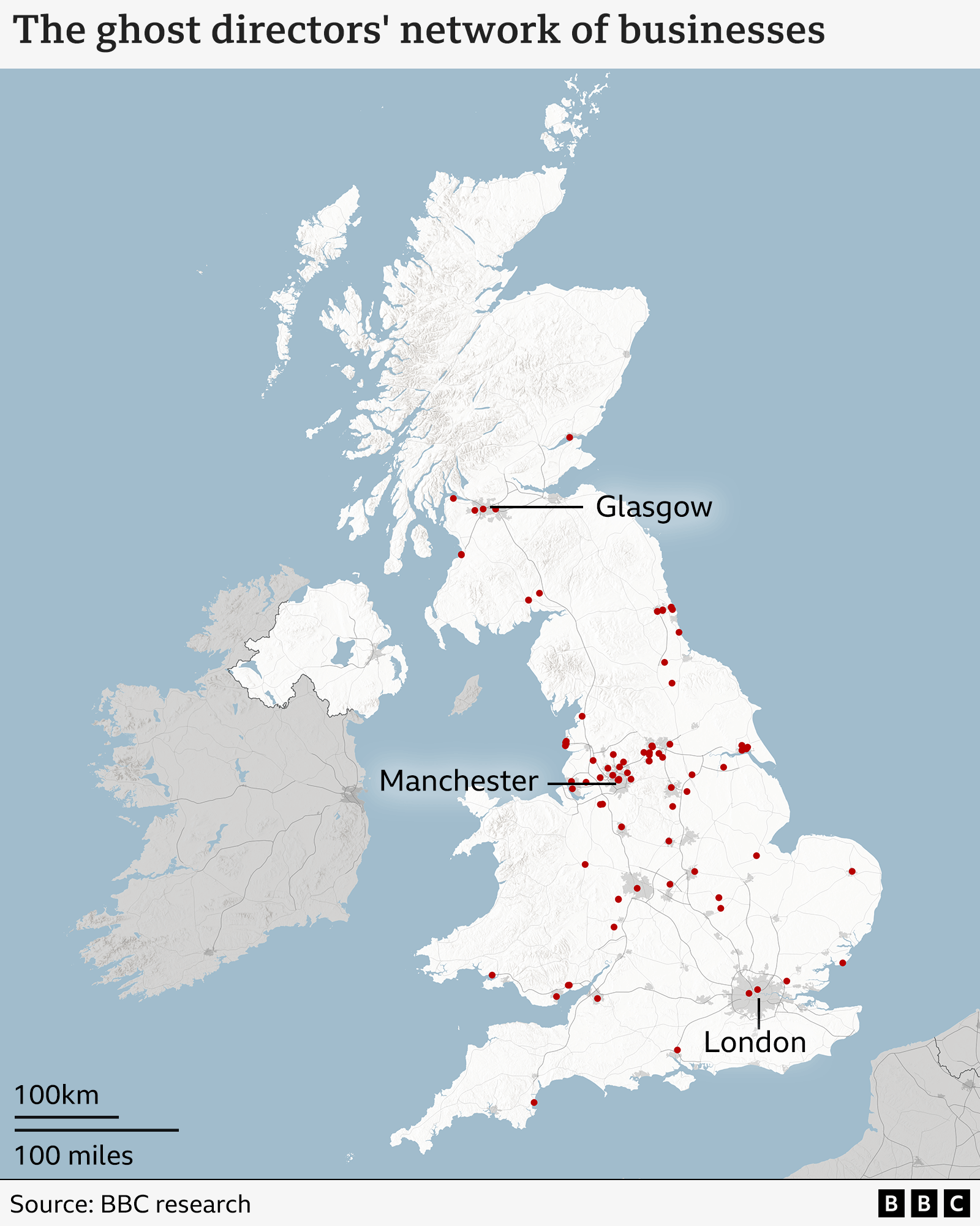
Two undercover reporters, both Kurdish, posed as asylum seekers and were told how easy it would be for them to take over and run a shop, making significant profits from illegal vapes and cigarettes. The investigation has linked over 100 mini-marts, barbershops, and car washes, operating from Dundee to south Devon, to this crime network. A financial crime investigator believes the network extends much further.

Home Secretary Shabana Mahmood responded to the investigation, stating that "illegal working and linked organised criminality creates an incentive for people to come here illegally. We will not stand for it."

For the first time, the inner workings of a criminal system that allows asylum seekers to work openly on UK High Streets have been revealed. One man claimed weekly takings from illicit tobacco at his shop could reach up to £3,000. The men facilitating this—so-called "ghost directors"—each have dozens of businesses listed on Companies House but are often not involved in running them.

"The shop doesn't belong to me, it's just under my name," one of them told our undercover reporters. Many of these businesses are dissolved after about a year and then re-opened with minor changes to official paperwork.

These businesses exhibit "all the red flags" associated with organized criminality, according to a financial crime investigator. During the investigation, several concerning findings were uncovered:

  • An asylum seeker, whose claim was rejected, attempted to sell a shop to our undercover reporter for £18,000
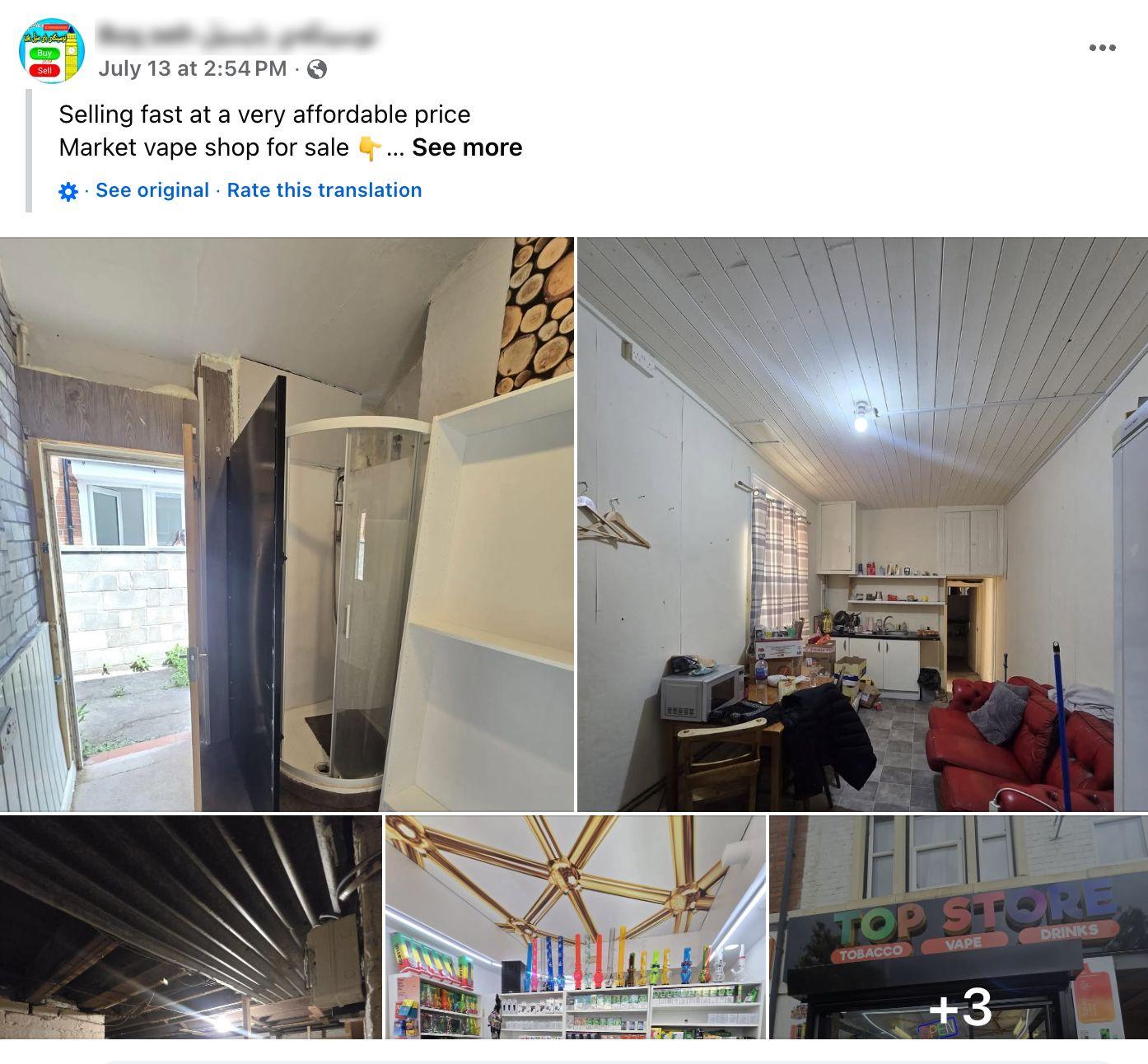
  • A Kurdish Facebook group listing dozens of mini-marts, barbers, car washes, and takeaways for sale
  • "Ghost directors" charging illegal workers up to £300 per month to register mini-marts in their names
  • Kurdish builders offering to construct elaborate hiding spaces for illegal cigarettes and vapes that could fool sniffer dogs
  • Asylum seekers, who said the Home Office had left them in legal limbo, working 14-hour shifts in mini-marts for as little as £4 per hour

The two Kurdish journalists involved in the investigation are aware of the tensions surrounding immigration. They worry that such coverage of illegal activities within the Kurdish community could inflame hostilities. One of them is a former asylum seeker himself, and he stated, "I wanted to play a role in uncovering these illegal activities [...] to say loudly that they don't represent us."

Over four months, the team monitored a Kurdish Facebook group where businesses across the UK were listed for sale. New adverts appeared every week. The reporters contacted three individuals who listed mini-marts for sale in Crewe, Hull, and Liverpool. They expressed interest in running a mini-mart and trading illegal cigarettes.

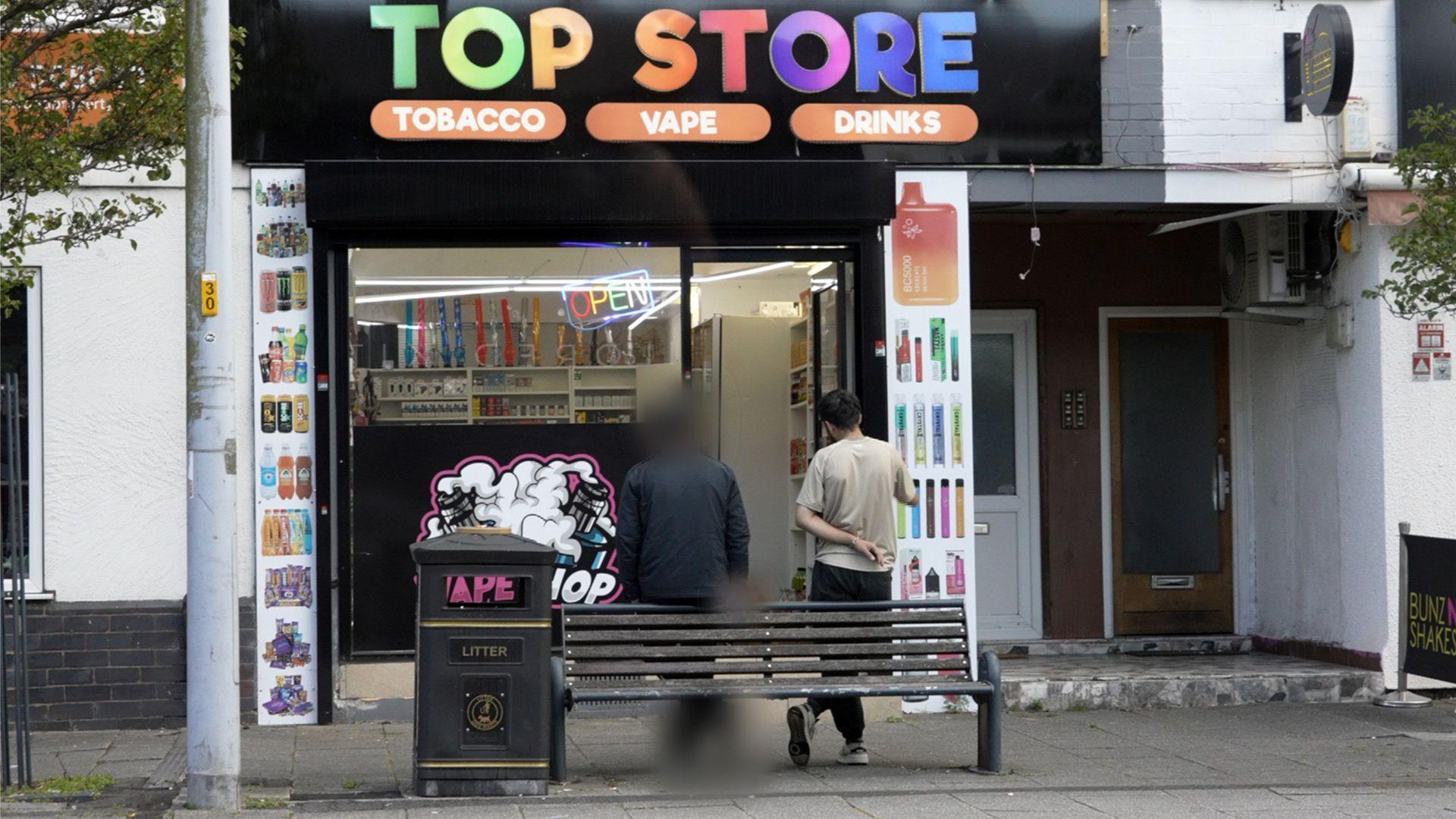
In Cheshire, the man running a Crewe mini-mart called Top Store offered to sell his shop to one reporter for £18,000 cash. Surchi, the shopkeeper, assured the journalist that "you don't need anything" to own and run a mini-mart as an asylum seeker. He claimed to be a Kurdish asylum seeker who arrived in the UK in 2022, but whose claim had been refused.

Asylum seekers generally do not have the right to work in the UK while their claim is being processed. Permission to work is only granted in limited circumstances and is subject to strict conditions. If asylum seekers are granted permission to work, they can only apply for eligible jobs on the Immigration Salary List, which do not include being a shop manager or shop assistant.

Surchi mentioned paying someone named "Hadi" around £250 a month to be named on official papers. This arrangement allowed him to avoid scrutiny by authorities and sell whatever he liked. He also claimed he had never paid any council tax and that the undercover reporter would not need to officially register the company.

Trading Standards had raided the shop once, Surchi said, and he had been fined £200 for selling illegal cigarettes and vapes. Shop owners caught selling these items can be fined up to £10,000, but the profits from such products far exceed the penalties.

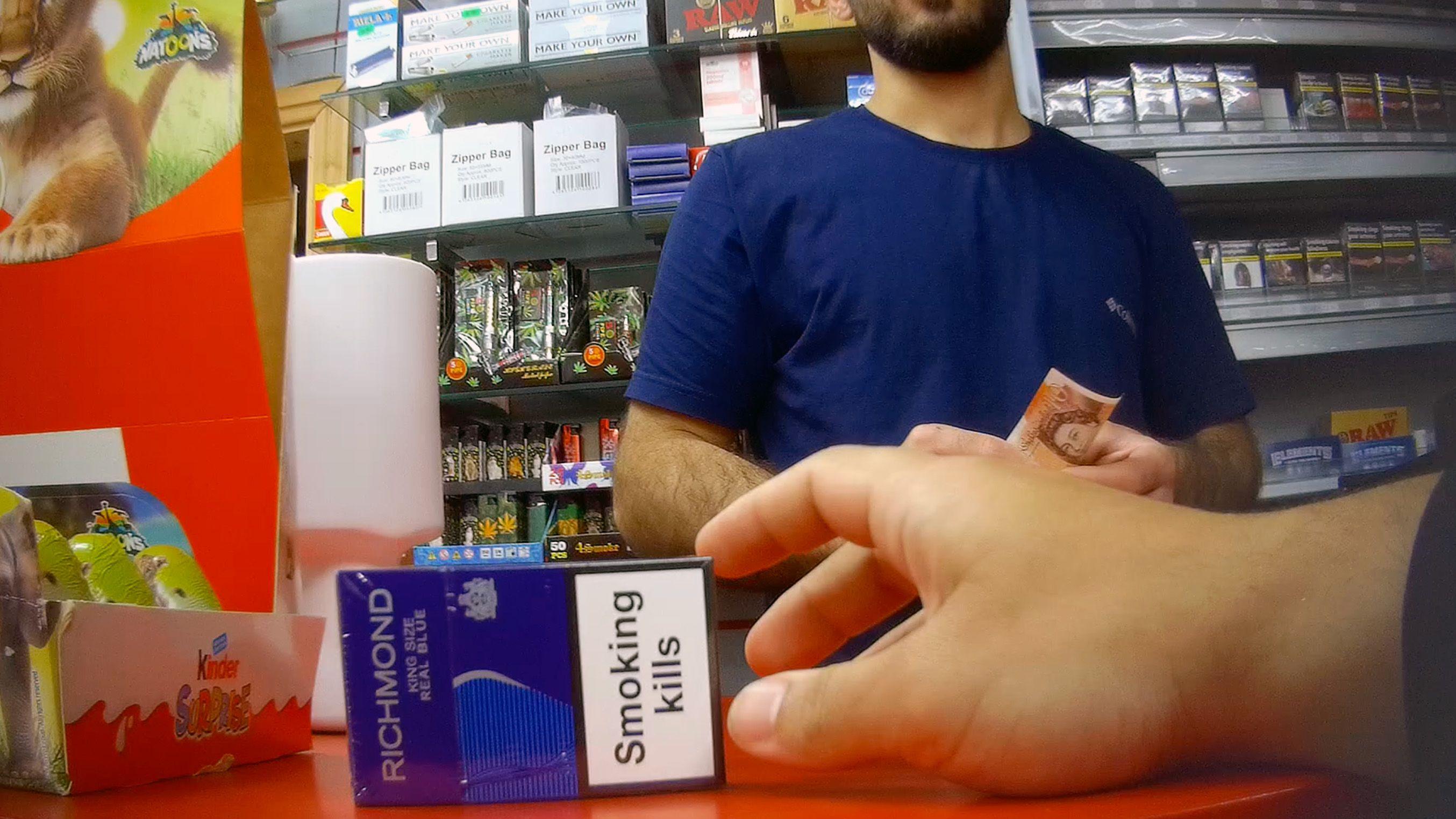
During a tour of the premises, Surchi showed the reporter a so-called "stash car" where he hid the bulk of his stock until 17:00 each night. He also demonstrated how he tampered with the electricity meter to avoid paying utility bills. Surchi sold vapes to a group of teenagers while the reporter was present, claiming he had no issue with customers as young as 12 years old.

Customers paid via a card machine into a bank account, which belonged to his cousin, who owned a mini-mart 15 miles away in Stoke.

'Fine craftsmanship' to fool sniffer dogs

On Facebook, the team discovered Kurdish builders willing to help conceal illegal vapes and cigarettes. One reporter posted that he had bought a mini-mart in Manchester and was looking for "a specialist to build a space to hide cigarettes in the shop." Six builders responded. One sent a video showing a vending machine for illegal cigarettes hidden in a loft, which, when pressed, pinged packets down a chute to a concealed vent below.

This "fine craftsmanship" cost £6,000 and was guaranteed to fool Trading Standards' sniffer dogs, the builder claimed.

A network of ghost directors

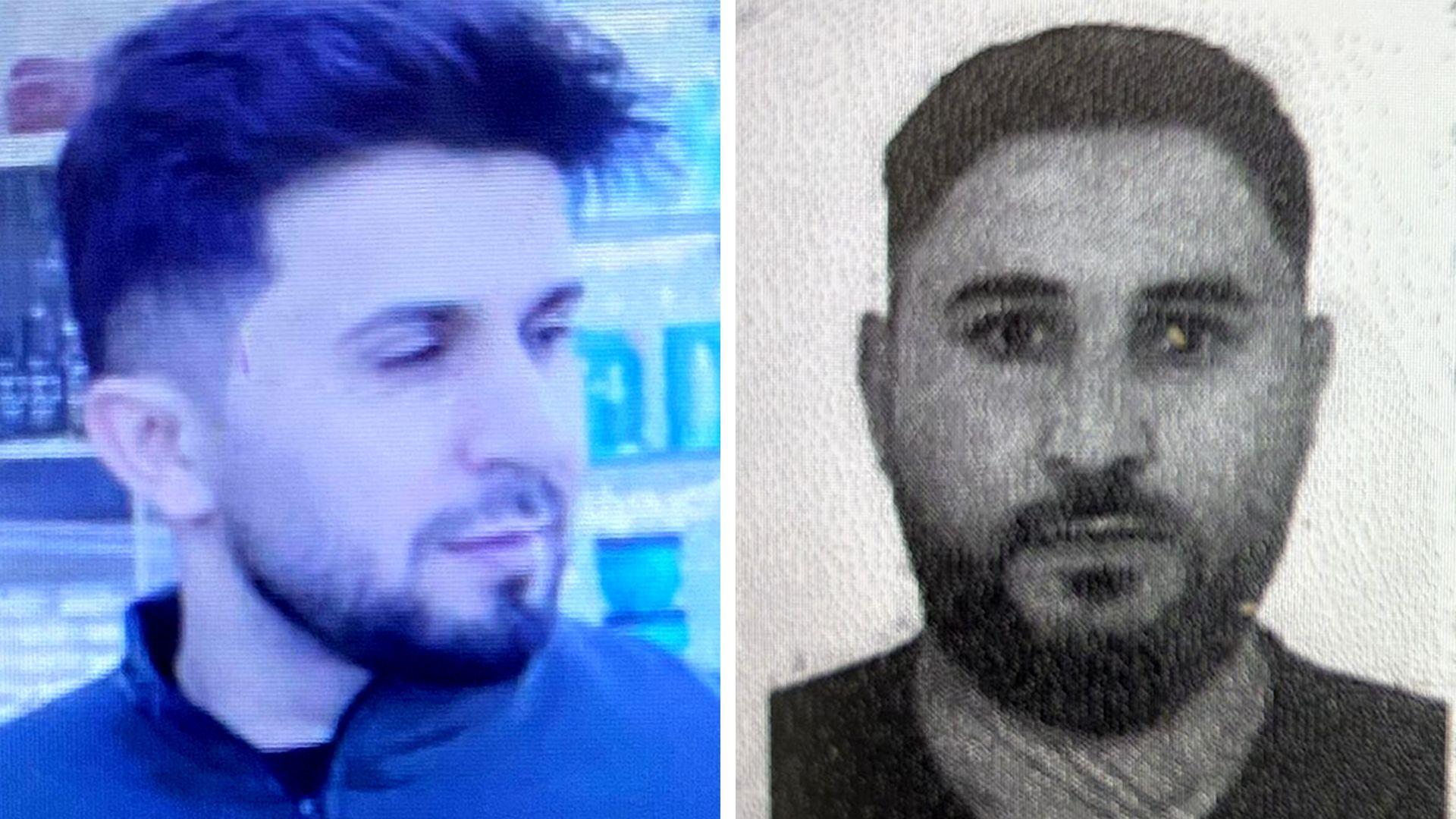
As the investigation delved deeper, a network of ghost directors began to emerge. One name that kept appearing was Hadi Ahmad Ali, a Birmingham man to whom Surchi claimed to pay a monthly fee. Mr. Ahmad Ali was listed on Companies House as being from Iraq, in his 40s, and a director of more than 50 other businesses—mini-marts, barbers, and car washes.

When one of the reporters called him pretending to be an asylum seeker looking to buy the Crewe business, Mr. Ahmad Ali confirmed he could keep it in his name for a fee of between £250 and £300 a month. He also claimed he could provide a bank card for the shop.

Mr. Ahmad Ali is still listed as an active director on several businesses on Companies House. However, in October 2024, he was disqualified from being a company officer for five years. The ban followed illegal cigarette sales at a shop in his name in Chorley, Lancashire—including to a 16-year-old. Separately, he pleaded guilty to his involvement in the sale of illegal cigarettes in Lincolnshire and was sentenced to six months in prison, suspended for 18 months.

When confronted by the team, Mr. Ahmad Ali denied all allegations, stating that the mini-marts were nothing to do with him and that he had contacted Companies House to get his name removed from the businesses.

Ghost directors and their connections

The team also linked Mr. Ahmad Ali to another man, Ismael Ahmedi Farzanda, who was identified as a ghost director responsible for 25 mini-marts. Mr. Farzanda’s name came up because Companies House filings showed he had taken over as company director from Mr. Ahmad Ali at seven mini-mart businesses. The pair also shared a co-directorship on one shop in Blackpool.

One of the reporters managed to call Mr. Farzanda using the same cover story as he had used with Mr. Ahmad Ali. Mr. Farzanda stated, "I just put the shops under my name for people." He explained that an "accountant" would handle the paperwork, bank accounts, and payments to him, and that he would have no problem with the illegal cigarette sales.

Mr. Farzanda was fined £4,500 in August after one shop, registered in his name in Haslingden, Lancashire, was caught selling illegal vapes to a 14-year-old, according to local media reports. Seventeen shops registered under the names of Mr. Ahmad Ali and Mr. Farzanda have been raided since 2021, with illegal tobacco and vapes seized, according to Trading Standards sources.

Despite being registered on official documents as being from Iran, Mr. Farzanda claimed to be from the Sharazoor district in neighboring Iraq. Both reporters noted that some Kurdish people arriving in the UK on small boats pretend to be Iranian, believing their asylum claims would have a better chance of success.

When presented with evidence, Mr. Farzanda denied all allegations.

Evading Scrutiny and Criminal Activity

The team found that companies would be set up for a year, dissolved, and then re-established with slightly different spelling of the business names. The men's names and birthdays would also be changed slightly. Financial crime investigator Graham Barrow noted that this pattern is likely an attempt to evade tax and scrutiny by authorities.

The network of businesses identified by the team could stretch even wider across the country, according to Mr. Barrow. "I certainly think it's hundreds. It could easily be bigger than that," he said.

The team visited more than a dozen mini-marts linked to this network of ghost directors. Every location was on rundown High Streets in some of the UK's most deprived areas, such as Blackpool, Bradford, Huddersfield, and Hull. All but one of the shops sold counterfeit or smuggled cigarettes for about £4 per pack instead of the average UK price of £16 for a pack of 20.

In addition to Surchi's story in Crewe, the investigation revealed details of other Kurdish asylum seekers being employed illegally. A mini-mart worker in a Blackpool shop linked to one of the ghost directors described working 14-hour days at the shop, earning £60 to £65 per day. He had been interviewed by the Home Office four months ago but had not heard anything since.

The shop had been raided by Trading Standards three times, but he described it as "nothing." "Just give them any name and they will walk away," he explained, saying that whenever he was asked who he was, he would give the name of a famous Kurdish singer, Aziz Waisi.

Another Kurdish shopworker in a Salford shop registered under Ismaeel Farzanda's name said he was in legal limbo. "I've been here for six months and I still haven't claimed asylum," he said. The 42-year-old claimed he had first come to the UK as a teenager before returning to Kurdistan. He returned this year and "they found my previous fingerprint records but nothing came of it." He was staying with friends and said, "Honestly, we're all struggling here and don't know what to do."

The government claims it has increased raids by 51% and raised fines for businesses to £60,000 per person found working illegally. Home Secretary Shabana Mahmood added that the government has "seized millions of pounds worth of unlicensed goods, banned dodgy directors and removed more than 35,000 people with no right to be in the UK."

Additional reporting by Phill Edwards and Kirstie Brewer

'Endless battle': Fighting the crime gangs taking over the high street

The sale of illegal cigarettes signals a deeper problem with UK high streets. Police raid barbers and vape shops suspected of being fronts for crime gangs.

Friday, June 27, 2025

Volusia County Schools Introduces New Student Code of Conduct: Board Votes in July

Volusia County Schools Introduces New Student Code of Conduct: Board Votes in July

When Volusia County students return to class on Aug. 11, they will most likely have a new code of conduct and disciplinary procedures that district officials expect will draw clear boundaries for times when they step out of line.

The Volusia County School Board heard a presentation of the proposed changes June 24 and agreed to advertise the new policy for approval at the July 29 board meeting. It's the first comprehensive update of the code in more than 10 years, said Mike Micallef, executive director for graduation assurance and student services.

The current code is ambiguous and needs clarity, he said.

"It was a bunch of very broad definitions. Nothing was clear," Micallef said.

The goal of rewriting the code — with specific definitions and examples — is to make parents and students understand what is being enforced "so they can be on our side to help us out," Micallef said.

A new Code of Civility will be posted in every school.

"We want every interaction with family and students to be friendly, be positive, to work together," he said. "That's what this whole plan is about."

Student disciplinary/referrals drop in 2024-25

More than 55,000 referrals were written by teachers and staff during the 2024-25 school year. That's nearly one for every student.

But Micallef said the district saw an 18.5% reduction in student referrals in 2024-25 from the previous year, when more than 68,000 referrals were made.

All student groups showed improvement, including students with disabilities, English language learners, Black students, Hispanic students and economically disadvantaged students.

The drop is due to positive school cultures, an emphasis on academic, social and emotional growth, early and targeted student interventions, inclusive and supportive learning environments and "strengthening our whole-student philosophy," Micallef said.

How is the Volusia Code of Conduct changing for minor violations?

"Level I infractions are minor acts of misconduct that interfere with the orderly operation of the classroom, school function, extracurricular activities or approved transportation," according to a district presentation.

The policy is changed from a "general list of violations," to 11 specific infractions with a matrix of definitions and examples.

For instance, a bus disturbance (minor) is defined as any incident that interferes with the safe and orderly operation of a school bus. Specific examples include: Eating or drinking, using inappropriate language or gestures and standing or moving between seats.

Another example: Horseplay, defined as "engaging in non-confrontational physical contact with another student." Examples cited are: Pushing or shoving without intent to harm, running in hallways or classrooms and throwing objects without intent to harm.

The unauthorized use of electronic devices is also considered a Level 1 offense.

How will the district respond to a Level 1 violation?

The new code spells out the district's response to the violation. A first offense will require a student conference with a teacher or staff member, contacting the parent or guardian, loss of privileges for one to three days and a student reflection assignment.

A second offense results in a conference with a parent or guardian, detention for one to three days, the loss of privileges for one to five days and a behavior contract.

A third offense escalates the violation to a Level 2 infraction.

"A kid can't constantly have their cellphone out 27 times and just (result in) that parent call," Micallef said. "The infraction will now bump up to the severity of a Level 2 consequences where those will now ramp up."

Level 2 violations carry harsher penalties

The 27 Level 2 violations include more serious bus disturbances, such as yelling, screaming and playing loud music, or refusing to follow the bus driver's instructions; cheating; disrespect; "eloping," or running off school campus without permission; insubordination; inappropriate materials; skipping classes; use of tobacco.

The penalties include a mandatory parent/guardian conference, three- to five-day detentions, loss of privileges for 10 school days, with those penalties escalating for second and third offenses.

What constitutes a Level 3 offense?

Possession or use of alcohol, holding ammunition, bullying, burglary, major bus disruptions, consensual sex, cyberstalking, drug possession, harassment, hazing and gang activity are included among the listed offenses for a Level 3 violation. There are 50 listed and Level 3 acts "disrupt the educational environment or endanger health and safety."

Level 3 consequences include being assigned to an alternative education program, expulsion from school or bus, Saturday school, and referral to a counselor or psychologist.

Yes, there is a Level 4

Level 4 offenses start with expulsion. Those listed include assault/threat/intimidation, bomb threat, drug distribution or sale, an off-campus felony, possession of weapons, paintball or airsoft guns or lookalikes, riot and vandalism over $1,000. There are 21 total offenses and are considered "the most serious acts of misconduct that threaten school safety and require mandatory intervention."

Board member Donna Brosemer said teachers and administrators "get a lot of grief from the parents" when their children face discipline.

"How much of the enforcement is discretionary on the part of the individual school administrator?" Brosemer asked.

Micallef responded: "The discipline matrix should be their guide to lead them with their discipline process."

"So they don't necessarily have the discretion to say, 'Well, OK, we'll let it go this time'?" Brosemer asked.

"Yes they do have that discretion. They honestly could as a school principal," Micallef said. "Every student has a different story, every situation is different knowing that as a school-based leader myself, so you take those sometimes into consideration, but... the matrix is there to guide our decision making for any kind of infractions. That's what it's there for, for us to be consistent across the board."

New approach to bullying

Under the current code, bullying has a "very general" description with limited specificity about behaviors, patterns and reporting requirements, Micallef said.

The definition in the proposed code is: "Pattern of behavior displayed against multiple students or employees or repetitive behavior against a single student or employee which inflicts physical hurt or psychological distress that is severe or pervasive enough to create an intimidating, hostile or offensive environment; or unreasonably interfere with the individual's school performance or participation, including through electronic means. Behavior must have been reported to school officials and documented."

Board member Jessie Thompson asked whether parents must report bullying off campus or after hours.

"Yes. Anything ... that's going to turn into a campus event, and normally all of that does, they have to report it to the school and then the school would document it," Micallef said.

How new Florida law banning cellphones affects Volusia

House Bill 1105 ensures that elementary and middle school students are prohibited from using cellphones or other communication devices throughout the entire school day. Previously, cellphones were only barred from elementary schools statewide, although Volusia County Schools has already had a ban on cellphone use in both elementary and middle schools.

High school students are allowed to use their cellphones in designated areas to be determined by local school boards, although they are required under the new law to be put away in backpacks or pockets unless otherwise authorized by their teacher.

Board Chair Jamie Haynes said after implementing the cellphone policy last year banning them from elementary and middle schools, she didn't hear any complaints. High schools, though, became more permissive.

"I don't have a problem if all of a sudden the teacher says, 'Could all of you take it out, turn it on, do this?'" she said. "... The biggest number of complaints I received last year after implementing this is from parents saying our kids are being told they can have them out in class, and beyond them doing whatever they want, there was not a purpose for them."

Haynes said students told her that teachers allowed them to keep their phones out, but urged them to put them away if they saw administrators approaching.

"So we can't have a policy, and the state has now dictated exactly how it's supposed to be, and everyone not follow that policy," Haynes said.

Haynes inquired about Apple Watches and whether they must be put away, as well.

"That's going to be a great discussion that we get to have here, and look at pros and cons with, but it is something you're right, with Apple Watches and things," Micallef said. "Yes, kids wear them and yes, kids have them."

Will new code work? One board member calls it 'uphill battle'

Board member Ruben Colón recounted when the district implemented a school uniform requirement that has since been rescinded. School administrators would stand at the door as students entered and frequently sent them to the auditorium for an hour of "non-learning" until someone brought them appropriate attire.

"My one-of-five hope is that we would take more of a passive approach where this doesn't become disruptive to the learning environment," Colon said. "You know, The referral goes in, it goes to the administrator. Because the last thing I'd like to see is teachers having to fight cellphones. We know this is an uphill battle. There's no question that the enforcement on this is going to be crazy."

Superintendent Carmen Balgobin said the district's communications team will be involved with sharing information about legislation to all families, adding: "Parents and families will need to hear this multiple times."

This article originally appeared on The Daytona Beach News-Journal: Volusia County Schools rolls out new student code of conduct; board to vote in July

Notification
This is just an example, you can fill it later with your own note.
Done