Articles of Education: anxiety
News Update
Loading...
Showing posts with label anxiety. Show all posts

Sunday, August 24, 2025

Neural Insights Reveal Brain's Fear Memory Control

Neural Insights Reveal Brain's Fear Memory Control

Featured Image

Understanding Fear Extinction and Its Neural Basis

Fear is a natural response that helps humans and animals avoid danger. However, when fear becomes excessive or persistent, it can lead to phobias or anxiety disorders. The process of learning to suppress these fearful memories—known as fear extinction—is crucial for adapting to changing environments. Recent research has shed light on the brain mechanisms involved in this process, offering new insights into potential therapeutic strategies.

The Role of Context in Fear Extinction

Extinction learning occurs when an individual learns that a previously feared stimulus is no longer dangerous. For example, someone might initially associate a toaster with danger due to a past negative experience. However, if they later encounter a toaster in a safe environment, they may learn that it is not always a threat. This shift in perception is called extinction learning.

Studies have shown that extinction learning is highly dependent on context. The same stimulus can be perceived as threatening in one setting but safe in another. However, the exact neural mechanisms behind this process were not fully understood until recently.

Research Findings from a Multinational Team

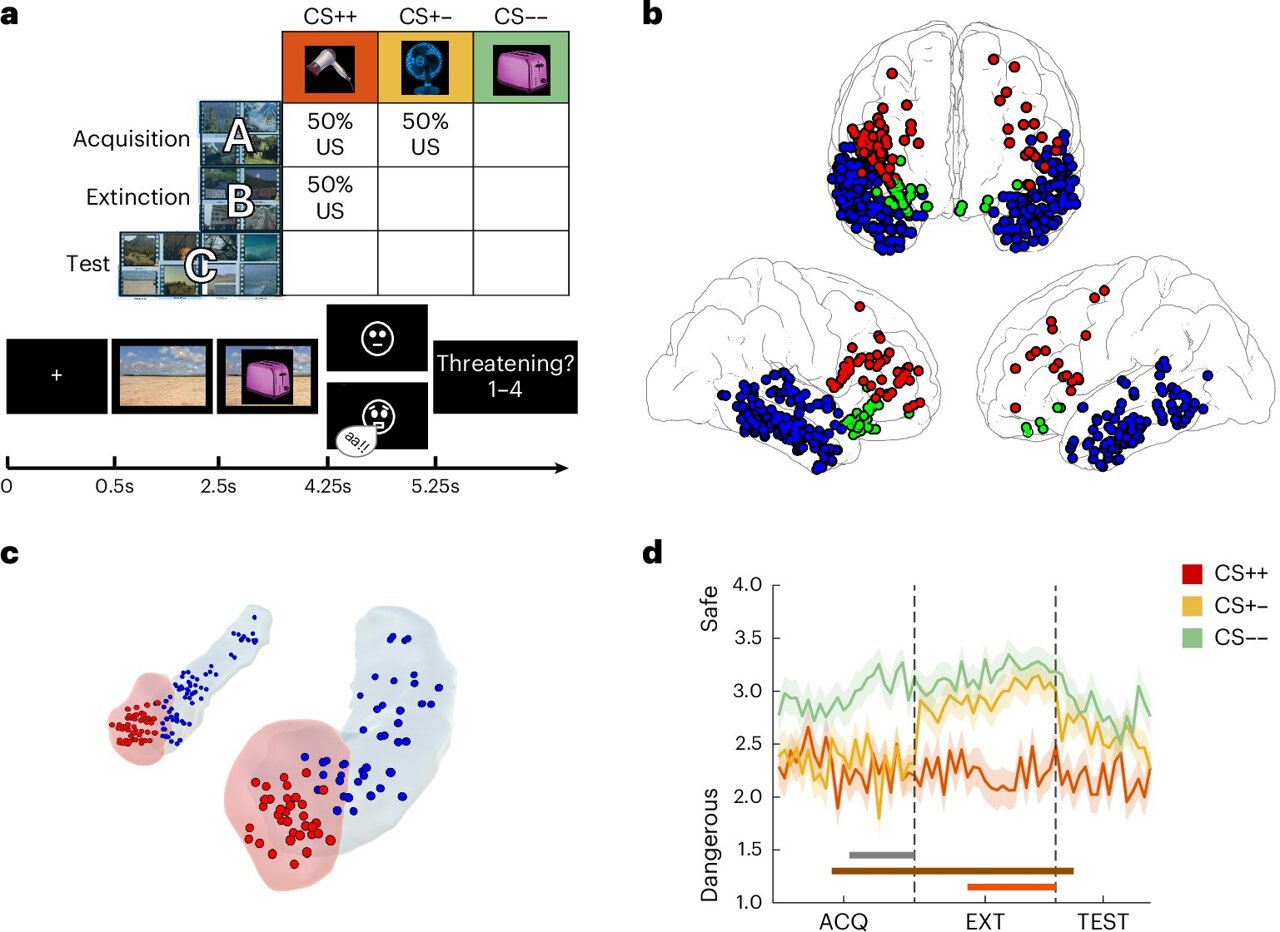
A team of researchers from Ruhr University Bochum, Paris Brain Institute, and other institutions conducted a study to explore how the brain processes fear extinction. Their findings, published in Nature Human Behavior, reveal that this process involves stable and context-specific neural representations across multiple brain regions, including the amygdala and hippocampus.

Nikolai Axmacher, senior author of the study, explained that extinction learning allows individuals to adapt to their surroundings. He highlighted that even after learning that a stimulus is safe, the original fear memory may resurface in different contexts—a phenomenon known as the "return of fear."

Methodology: Using Intracranial Electrodes

One of the challenges in studying fear extinction is the difficulty of accessing deep brain structures like the amygdala and hippocampus. To overcome this, the researchers used intracranial electrodes implanted in the brains of epilepsy patients. These electrodes allowed them to record neural activity directly from specific brain regions.

Participants were shown images of electric devices, such as toasters, hair dryers, fans, and washing machines. Some images were followed by an aversive stimulus, such as a fearful face and a scream. Over time, some devices that were initially associated with danger became safe, allowing the researchers to observe the process of extinction learning.

Key Neural Patterns Identified

The study found that the amygdala, traditionally linked to fear responses, showed unexpected activity related to the safety of stimuli. Additionally, the prefrontal cortex, which is involved in decision-making and behavior control, played a key role in modifying context-specific representations during extinction.

The researchers also observed that if the neural representations of different contexts varied significantly, the extinction learning did not generalize to new environments. This means that participants might no longer fear a toaster in one setting but still perceive it as dangerous in another. This finding highlights the importance of context in shaping fear responses.

Implications for Future Research

The results of this study could pave the way for further research into the neural underpinnings of fear and its extinction. Axmacher and his colleagues plan to adapt their experiments to better reflect real-world situations. They are particularly interested in using technologies like Virtual Reality to create immersive environments that mimic everyday experiences.

This approach could help researchers understand how fear and safety associations change over time and how they are influenced by different contexts. It also raises intriguing questions about whether extinction learning creates new memory traces that suppress rather than replace existing ones.

Conclusion

Understanding the brain’s ability to reframe fear is essential for developing effective treatments for anxiety disorders. By uncovering the neural mechanisms behind fear extinction, researchers are taking a significant step toward improving therapeutic interventions. As technology advances, future studies may provide even deeper insights into how the brain adapts to changing environments and manages emotional responses.


Sunday, August 10, 2025

Sleep Worsens Negative Memory Bias in Anxious Teens

Sleep Worsens Negative Memory Bias in Anxious Teens

Featured Image

Understanding the Role of Sleep in Emotional Memory and Anxiety

Recent research has uncovered a significant link between sleep, anxiety, and emotional memory processing. A study published in the Journal of Child Psychology and Psychiatry suggests that sleep may amplify the tendency for anxious children and young adolescents to overgeneralize negative experiences. This means that after a night’s sleep, children with higher anxiety levels are more likely to misidentify new but similar negative images as ones they have seen before.

The study was driven by the growing understanding that sleep plays a critical role in shaping emotional memories. During sleep, the brain reactivates and consolidates recent experiences, often prioritizing emotionally charged material. While this process can be adaptive, helping individuals learn from significant events, it can also become problematic when it comes to anxiety. In such cases, the brain's focus on negative experiences may lead to what researchers call negative overgeneralization—when a single unpleasant event influences how similar, harmless situations are perceived.

This research focused on late childhood and early adolescence, a period marked by heightened emotional responses, changing sleep patterns, and increasing rates of anxiety. The team wanted to explore whether anxiety interacts with sleep to alter how emotional memories are recognized and generalized during this crucial developmental stage.

“Our interest was sparked by a growing recognition that sleep plays a pivotal role in cognitive processes like memory consolidation, especially during critical neurodevelopmental periods such as early adolescence,” said Liga Eihentale, a doctoral student at Florida International University and member of the REMEDY research group.

Anxiety disorders often emerge during this time, and understanding sleep-dependent memory processes could shed light on the mechanisms driving psychopathology. By bridging cognitive neuroscience with clinical science, the researchers aimed to explore how sleep interacts with anxiety to influence negative overgeneralization.

Methodology and Key Findings

The study involved 34 participants aged 9 to 14 years, recruited from both clinical settings and the community to capture a broad range of anxiety severity. Anxiety was assessed using a clinician-rated measure, and participants were randomly assigned to either a sleep condition or a wake condition. Everyone completed an emotional memory similarity task.

In the first phase, participants viewed 145 images—negative, neutral, and positive—and rated each one’s emotional tone. They were not told there would be a later test. After a 10- to 12-hour interval, which included overnight sleep for one group and a daytime period of wakefulness for the other, participants took a surprise recognition test. This test included exact repeats of some images, new but similar “lure” images, and entirely new images.

Among children and young adolescents who slept, higher anxiety was linked to greater generalization of negative images—that is, a stronger tendency to believe that new but similar negative pictures had been seen before. This relationship did not appear in the wake group. The three-way interplay between anxiety, emotional tone, and condition was statistically significant for negative images, but not for neutral images. Positive images showed a weaker and less consistent pattern.

Exploratory comparisons suggested that the effect was most pronounced at higher anxiety levels. Participants with high anxiety generalized negative memories substantially more after sleep than those with low anxiety. At the other end of the spectrum, participants with low anxiety sometimes generalized negative memories more after daytime wakefulness than after sleep, hinting that sleep may reduce negative generalization in less anxious individuals.

Implications and Future Directions

The key takeaway from the study is that sleep plays an active role in shaping memory and perception, particularly in emotionally vulnerable youth. Children and adolescents with higher levels of anxiety tend to overgeneralize negative experiences more after sleep compared to wakefulness, meaning they are more likely to extend negative associations to similar but non-threatening situations, which can perpetuate anxiety.

“Our findings underscore sleep’s key role in emotional memory processing during a sensitive developmental stage and point to the need for a deeper understanding of what is happening during sleep (i.e., sleep neurophysiology) in anxious youth to drive aberrant memory consolidation processes.”

These findings align with theories proposing that sleep strengthens emotional memories and extend that idea to a pattern that may be maladaptive in anxiety. The data indicate that sleep-related memory consolidation could be one pathway through which negative overgeneralization takes hold in anxious children and young adolescents. That interpretation fits with broader work suggesting that the brain extracts the “gist” of experiences during sleep and integrates that gist into existing knowledge, which can be helpful in many situations but may become problematic when negative themes become dominant.

This line of research also points toward potential clinical applications. If sleep can strengthen memory traces, it might be possible to guide that process toward more adaptive outcomes. Some experimental approaches cue specific memories during sleep to change how they are stored, and there is interest in testing whether such techniques could help reduce negative overgeneralization by reinforcing neutral or positive interpretations.

However, the study had some limitations. The sample size was relatively small, which limits the statistical power and generalizability of the findings. The researchers relied on actigraphy and sleep diaries to assess sleep, which, while ecologically valid, do not capture detailed neural processes. Additionally, circadian factors and emotional arousal were not fully controlled or directly measured, which could have influenced memory encoding and retrieval.

Future studies could examine the sleep stages and brain rhythms most closely tied to emotional memory generalization, include larger and more diverse samples, and use image sets that are matched for arousal as well as content. It would also be useful to follow children and young adolescents over time to see whether sleep-related generalization of negative memories predicts later anxiety symptoms or whether shifting sleep habits changes the tendency to generalize.

“Our long-term goal is to map how sleep-related memory mechanisms contribute to the onset and persistence of anxiety in early adolescence,” Eihentale explained. “This includes investigating specific features of sleep microarchitecture—such as slow-wave activity and spindles—that are critical for memory formation and long-term storage. By identifying when and how overgeneralization becomes maladaptive, we aim to inform targeted sleep-based interventions that can disrupt these processes early and reduce the risk of chronic anxiety disorders.”

Tuesday, July 1, 2025

**"Empower Your Child: 30+ Back-to-School Affirmations for Confidence & Positivity"**

**"Empower Your Child: 30+ Back-to-School Affirmations for Confidence & Positivity"**

Is your child feeling anxious about the new school year already? You’re not alone! One minute we’re savoring summer popsicles and pool days, and the next, we’re packing lunchboxes and double-checking supply lists. And in my family we’re already preparing our back-to-school affirmations.

As a mom, I know how emotional this time can be—not just for us, but for our kids, too. Whether they’re nervous about making friends, worried about a new teacher, or just feeling all the big feelings that come with change, a few encouraging words can make a world of difference. For moms too!

That’s why I love using simple, positive affirmations to boost their confidence and remind them how capable, kind, and brave they are. Keep reading for more than 30 back-to-school affirmations to help your child walk into the new year feeling grounded, supported, and ready to shine.

Back-to-school Affirmations for Young Kids

Affirmations are a practice that even young children can understand and participate in, especially if they are kept simple, like the following.

I am important.

The one thing children want to feel more than anything else is seen. They want to know they’re an integral part of whatever is happening around them.

I am loved.

Love is the best emotional protection a child can have. There is no such thing as too much love when it comes to kids. Making sure they understand how valued they are can make all the difference.

I can do hard things.

If everything were easy all the time, we’d never feel the satisfaction of accomplishment. This goes for spelling tests as well as having the courage to make new friends.

I am kind.

Sharing concrete examples of when you’ve seen your child be kind can help them internalize this affirmation.

I am a good friend.

One of the most important parts of school is making friends. This affirmation reminds them that being a good friend is the first step to having good friends. Ask questions about what they like about their friends and why. This can help kids think through what being a good friend looks like in practice.

I can ask for help when I need it.

Schools are full of helpers, but sometimes kids need to feel like they have permission to ask for assistance.

I can learn how to do anything.

This is the whole point of school! And even if they don’t have a natural gift for, say, long division, framing it as something they haven’t mastered yet can change how they think about their skills and abilities.

I forgive and learn from my mistakes.

Remind them that we go to school to learn new things, so of course, we don’t know how to do everything right away. This also applies to getting in a fight with a friend or missing recess to make up a homework assignment they forgot about. Now is the time for them to learn how to navigate these situations.

I am safe and cared for.

Big emotions can come with change. Help them remember that even during times of transition, they are safe to explore and they are cared for by you and other around them.

I am brave.

When they do feel the nerves coming in for the start of a new year, this positive affirmation will help them remember that they can tackle difficult situations.

It’s OK to try again.

There may be a learning curve to certain things at school since there’s so much information to absorb. If a new skill isn’t mastered on the first try, saying “it’s OK” gives kids the opportunity to reset and try again in a positive way.

I am unique.

Meeting new friends at school can be an exciting experience, but it doesn’t mean a child has to conform into someone they are not. To be yourself is wonderful and that is what makes you unique.

I have great ideas.

Having an imagination can highlight creativity. This affirmation allows kids to participate in group settings and can help with critical thinking as they get older.

I am smart.

Everyone learns differently. A new skill or subject can take more time to learn compared to others, or the skill may need to be taught in a different way for it to stick. How a child learns or how long it takes them to grasp a concept doesn’t define how smart they are.

I am doing great.

Acknowledge when things are going great—positivity is infectious—even when things aren’t going the way they planned.

Affirmations for Tweens and Teens

As kids move toward the tween and teen phases, their emotional lives become more complicated, and social pressures increase. This is a good time to introduce affirmations that address some of these pressures, like the following.

Problems are challenges that help me grow.

Contrary to what social media might have them believe, they don’t have to have everything figured out. Give them permission to struggle and grow from it.

My past self is the only one I can compare myself to.

Sadly, the pressure of comparison starts early. Kids need to understand that they never know what’s going on with someone on the inside—and they can’t compare their own inside to another person’s outside.

My goal is progress, not perfection.

The pressure to succeed at school is now hitting harder and earlier than ever before . Many students struggle with perfectionism and its resulting mental health challenges. This affirmation can help kids keep things in perspective.

I am making good choices.

Helping kids to feel more confident in their decision-making skills is a great way to encourage good choices.

I am enough just the way I am.

Though older kids might not let on, they need to believe people can love them just the way they are—starting with their parents or caregivers.

It is enough to do my best.

While competition can be a good thing and beneficial to kids’ growth, this affirmation can serve as a reminder that doing their best in any situation is all that matters.

The only person I can control is myself.

As kids enter the phase where they want to do whatever their friends are doing, this is a great reminder that they alone are responsible for their actions. We also love that this can serve as a reminder that while they can’t control the actions of others, they are in control of how they respond. It serves as a great way to practice emotional regulation as well.

To thine own self be true.

It never hurts to throw in a little Shakespeare, and what could be more important than this statement?

I am proud of myself.

We can tell our kids every day that we are proud of them, and while that will also make a profound impact, them internalizing the belief that they can be proud of their own accomplishments will be invaluable and likely highly motivating.

I am beautiful, inside and out.

There are enormous pressures on all kids to look a certain way, keep up with trends , and place value on their physical appearances. They can use this affirmation to remind them that their beauty goes beyond physical attributes.

I have a bright future ahead of me.

Help them remember what school is all about—setting them up for a successful and prosperous future.

I belong here.

As children get older, it can be difficult to try to fit in or find a friend group. It’s important for kids to know that they belong.

All of my feelings are valid.

Children need to express themselves. Repeat this affirmation to them so they know they don’t have to hide how they feel. When they have validation, they can be more open to talk about their problems.

My voice and opinion matter.

This statement is powerful because it gives kids the confidence to speak up for themselves and others.

I can make a difference.

The world can seem so big at times, but sometimes it only takes one person to start a movement.

I believe in myself.

To tell a kid you believe in them can go a long way, and when a kid starts to believe it too, it can make the biggest difference. They do not need to constantly seek validation from others.

While a serious practice, affirmations can be fun, too! Encourage your kids to create their own affirmations. Make up some of your own . Say them together over breakfast, in the car, or post them on the mirror. This is a journey you can take with your kids and one that benefits everyone.

ABOUT THE AUTHOR

Caitlin Weaver, Contributing Writer

Caitlin is a writer and editor living between Atlanta and Toronto. She has covered an extensive range of parenting , wellness , and empowering motherhood content for The Everymom. When not chasing her two young boys, she can be found on her yoga mat or tackling her ever-growing TBR pile.

READ CAITLIN’S FULL BIO
ABOUT THE AUTHOR

Patty Schepel, Editorial Intern

As the editorial intern, Patty works with The Everymom’s team on pitches, creating original articles, updating existing content, photo sourcing, writing shopping product descriptions, inputting freelance articles, and more. When she’s not working, you can find her spending time with her family, training for half marathons—she ran one 16 weeks pregnant—traveling, cooking, reading a rom-com, and keeping her sourdough starter, Rose, alive.

READ PATTY’S FULL BIO

Like The Everymom content? Be sure to follow us .

This article was originally published on The Everymom

Notification
This is just an example, you can fill it later with your own note.
Done