Articles of Education: technology
News Update
Loading...
Showing posts with label technology. Show all posts

Wednesday, November 5, 2025

Redefining the Future of Work: A Public Sector Vision

Redefining the Future of Work: A Public Sector Vision

Redefining the Future of Work: A Public Sector Vision

Understanding the VUCA World and Its Implications

The world as we know it is in a state of complex flux. This shift has led to the concept of a VUCA environment—vulnerable, uncertain, complex, and ambiguous. This understanding has significant implications for how we perceive our lives, relationships, organizational dynamics, and the way work is organized and performed. As we navigate this new reality, it becomes crucial to reimagine the intersection of management, work, workplace dynamics, and disruptive technologies.

This theme was particularly relevant during the 57th Annual International Conference of the Chartered Institute of Personnel Management of Nigeria held in Abuja. The conference aimed to explore how public administrators, personnel, and human resource managers can rethink traditional notions of what an organizational workplace means in the new normal. With the rapid emergence of new technologies, traditional management and bureaucratic borders are being dissolved and disrupted at an increasing rate.

The Role of Technology in Shaping Workplaces

Knowledge, information, and data are now mediated by artificial intelligence and the Internet of Things, with enormous computing power enabling new forms of interactions between humans and machines. These developments complicate and transform the tasks of managers in the workplace, especially regarding human resource functions, decision-making, and policy architecture.

Another dimension of this complex flux often overlooked is the sociological implications of the transformation of the nature of work and workplace conditions. The impact on value orientation, identity construction, tradition, and experience, as well as communal ethos and social inequality, must be considered in policy action and management research.

The Impact of the Pandemic on Public Sector Resilience

The COVID-19 pandemic highlighted the structural weaknesses in the Nigerian public sector's capability readiness. It exposed the fragmentation of work in public sector workplaces and the near-absence of policy innovation and creativity. This situation raises urgent concerns about public sector institutional resilience-building and the capacity to manage emergencies, early warning signals, and crisis response.

The People-Issue: A Central Concern

In the face of these transformations, the most urgent workplace consideration is the people-issue. This involves ensuring that persons and personnel remain the focus of any reforms, changes, and adjustments driven by information, data, knowledge, and technologies. It also includes regenerating the public service workplace to mainstream technologies and new managerial procedures that place citizens at the center of service delivery.

Open Government Initiatives and Public Administration

Open government initiatives play a crucial role in the new managerial revolution in the public service. They refocus the significance of the people as citizens and insist on addressing the challenges of where, when, and how people work. Digitally-enabled platforms and technologies assist the government and public service in measuring institutional and administrative successes in humane and transparent ways.

Public managers are compelled to focus on work-life balance and articulate best practices that involve participatory budgeting, co-creation of public values, delegated authority, and real-time strategic communication dynamics within bottom-up planning frameworks.

Evolving Roles of Public Managers

Traditionally, public managers were seen as experts, regulators, engagers, and reticulists. However, within the new knowledge and technology environment, they must also be critical, discretionary, and proactive jugglers, balancing human-machine components of the workplace.

Challenges in Nigeria

Two variables are critical in configuring the workplace in Nigeria. The first is the damaging effect of the brain drain, or japa syndrome, leading to the search for better living and working conditions abroad. The second variable is the increasing incidence of machine or artificial intelligence displacing humans in roles such as bookkeeping and payroll processing.

These challenges are further complicated by the growing informalisation of wage employment, affecting social protection systems and labor regulations.

Reimagining Public Administration

Reimagining and reforming public administration systems and public sector institutional dynamics is essential. The interplay of knowledge, data, information, and technologies reconfigures the nature and meaning of work in the twenty-first century, impacting human capital development, productivity, and national development.

Institutional Reform and Education

Institutional reform begins with rethinking the intellectual bases of work, jobs, skills, pay, and employment policies. Adapting to the changing nature of work requires a value reorientation and cultural readjustment program that helps the workforce adapt to a technology-enabled environment.

A constant programme of re-professionalisation, training, and upskilling will become important for both workers and public managers. The new workplace operating under the new normal will task the administrative and managerial acumen of public managers.

The Need for Proactive Educational Initiatives

The Nigerian government must become proactive in developing educational and administrative curricula in public administration and public management. Activating administrative training institutes across the country to focus on skills development that cannot be easily replaced by machines is essential.

Conclusion

The fundamental key to transforming the workplace is the willingness to continuously educate the workforce and build their capacity for “learning to learn” the dynamics that keep changing the workplace. This will require equipping future employees through creating new knowledge based on intelligent prospecting of future work and the future skills requirements the national economy will need to keep performing productivity.


Tuesday, August 19, 2025

I Let AI Pretend to Be Me and Teach My Course—Here's What I Discovered About the Future of Learning

I Let AI Pretend to Be Me and Teach My Course—Here's What I Discovered About the Future of Learning

Featured Image

A Personalized Learning Experience with AI

Imagine having an unlimited budget for individual tutors who offer hyper-personalized courses that maximize learners' productivity and skills development. This summer, I explored this idea through a unique and somewhat self-indulgent experiment. I asked an AI tutor agent to play the role of me, an Oxford lecturer on media and AI, and teach me a personal master's course based entirely on my own work.

The agent was set up using an off-the-shelf ChatGPT tool hosted on the Azure-based Nebula One platform. The prompt was to research and impersonate me, then build personalized material based on what I already think. I didn't provide the large language model (LLM) with any additional resources or access to learning materials that aren't publicly available online.

The result was a well-structured, term-long, original six-module journey into my collected works that I had never devised, but admit I would have liked to. The course was interactive and rapid-fire, demanding mental acuity through regular switches in formats. It was intellectually challenging, like good Oxford tutorials should be. The agent taught with rigor, giving instant responses to anything I asked. It had a powerful understanding of the fast-evolving landscape of AI and media through the same lens as me, but had done more homework.

This knowledge apparently came from my entire multimedia output—books, speeches, articles, press interviews, even university lectures I had no idea had even been recorded, let alone used to train GPT-4 or GPT-5. The course was a great learning experience, even though I supposedly knew it all already. So in the inevitable student survey, I gave the agentic version of myself well-deserved, five-star feedback.

For instance, in a section discussing the ethics of non-playing characters (NPCs) in computer games, it asked: "If NPCs are generated by AI, who decides their personalities, backgrounds or morals? Could this lead to bias or stereotyping?" And: "If an AI NPC can learn and adapt, does it blur the line between character and 'entity [independent actor]'?" These are great, philosophical questions, which will probably come to the fore when and if Grand Theft Auto 6 comes out next May. I'm psyched that the agentic me came up with them, even if the real me didn't.

Agentic me also built on what real me does know. In film, it knew about bog-standard Adobe After Effects, which I had covered (it's used for creating motion graphics and visual effects). But it added Nuke, a professional tool used to combine and manipulate visual effects in Avengers, which (I'm embarrassed to say) I had never heard of.

The Source of the Agent’s Knowledge

So where did the agent's knowledge of me come from? My publisher, Routledge, did a training data deal with Open AI, which I guess could cover my books on media, AI and live experience. Unlike some authors, I'm up for that. My books guide people through an amazing and fast-moving subject, and I want them in the global conversation, in every format and territory possible (Turkish already out, Korean this month).

That availability has to extend to what is now potentially the most discoverable "language" of all, the one spoken by AI models. The priority for any writer who agrees with this should be AI optimization: making their work easy for LLMs to find, process and use—much like search engine optimization, but for AI.

To build on this, I further tested my idea by getting an agent powered by China's Deep Seek to run a course on my materials. When I found myself less visible in its training corpus, it was hard not to take offense. There is no greater diss in the age of AI than a leading LLM deeming your book about AI irrelevant.

When I experimented with other AIs, they had issues getting their facts straight, which is very 2024. From Google's Gemini 2.5 Pro I learned hallucinatory biographical details about myself like a role running the media company The Runaway Collective. When I asked Elon Musk's Grok what my best quote was, it said, "Whatever your question, the answer is AI." That's a great line, but Google DeepMind's Nobel-winning Demis Hassabis said it, not me.

The Future of Education with AI

This whole, self-absorbed summer diversion was clearly absurd, though not entirely. Agentic self-learning projects are quite possibly what university teaching actually needs: interactive, analytical, insightful and personalized. And there is some emerging research around the value.

A German-led study found that AI-generated tuition helped to motivate secondary school students and benefited their exam revision. It won't be long before we start to see this kind of real-time AI layer formally incorporated into school and university teaching. Anyone lecturing undergraduates will know that AI is already there. Students use AI transcription to take notes. Lecture content is ripped in seconds from these transcriptions, and will have trained a dozen LLMs within the year. To assist with writing essays, ChatGPT, Claude, Gemini and Deep Seek/Qwen are the sine qua non of Gen Z projects.

But here's the kicker. As AI becomes ever more central to education, the human teacher becomes more important, not less. They will guide the learning experience, bringing published works to the conceptual framework of a course, and driving in-person student engagement and encouragement. They can extend their value as personal AI tutors—via agents—for each student, based on individual learning needs.

Where do younger teachers fit in, who don't have a back catalog to train LLMs? Well, the younger the teacher, the more AI-native they are likely to be. They can use AI to flesh out their own conceptual vision for a course by widening the research beyond their own work, by prompting the agent on what should be included.

In AI, two alternate positions are often simultaneously true. AI is both emotionally intelligent and tone-deaf. It is both a glorified text predictor and a highly creative partner. It is costing jobs, yet creating them. It is dumbing us down, but also powering us up.

So too in teaching. AI threatens the learning space, yet can liberate powerful interaction. A prevailing wisdom is that it will make students dumber. But perhaps AI could actually be unlocking for students the next level of personalization, challenge and motivation.

Monday, August 11, 2025

Top 10 Trailblazing Entrepreneurs to Watch in 2025

Top 10 Trailblazing Entrepreneurs to Watch in 2025

Featured Image

Transformative Leaders Shaping the Future

Disruption in business isn’t just about breaking the mold—it’s about building something better in its place. The entrepreneurs featured here are doing exactly that. Through bold ideas, unconventional strategies, and a clear sense of purpose, they’re reshaping industries and setting new standards for growth and innovation. As 2025 unfolds, these are the names to watch—leaders who are challenging norms and charting their own course forward.

Dr. Davida Hunter-Cummins: Pioneering Youth Mental Health

Dr. Davida Hunter-Cummins is a driving force in the mental health field, leading transformative change in youth wellness across New Jersey. As the Executive Director and Founder of AspireNJ Youth, she has redefined how mental health support is delivered to children and young adults—building programs that prioritize healing, empowerment, and long-term growth.

With over a decade of clinical expertise, Dr. Davida has developed a trauma-informed framework that meets young people where they are. AspireNJ Youth serves individuals ages 4 to 21, addressing complex emotional, social, and psychological challenges with care models that are both evidence-based and deeply human. Her leadership is anchored in a belief that every child deserves access to high-quality, culturally competent mental health support—regardless of background or circumstance.

At the heart of AspireNJ Youth’s success are specialized programs like Equine-Assisted Therapy and Expressive Arts Therapy, which give young clients the tools they need to process trauma, build resilience, and take control of their emotional well-being. These aren’t generic solutions—they’re thoughtfully crafted interventions designed to create lasting change.

Dr. Davida’s impact extends beyond clinical practice. Through strategic partnerships with institutions like the Newark Board of Education, she is shaping state-wide conversations on mental health policy, accessibility, and equity. Her commitment to underserved communities has positioned her as a respected voice in both public health and youth advocacy spaces.

Ethan A Brecher: Legal Expertise Meets Innovation

Ethan A. Brecher is the main man behind The Law Office of Ethan A. Brecher LLC—a solo practice with the impact of a full legal team. He’s not just an attorney—he’s a fierce advocate for high-level professionals in finance, tech and medicine who are going through some of the most stressful times in their careers. Whether it’s employment disputes or fights over hospital privileges, Ethan is the one they turn to when the stakes are high.

What makes him stand out? Ethan is known for his deep, analytical approach. While most solo lawyers keep it simple, he uses powerful legal research tools like Westlaw AI—operating at the level of a 7-to-10-person firm. That means every case he takes on gets the careful treatment, backed by strategy, precision, and thorough research.

His work hasn’t gone unnoticed. Ethan is an AV-rated attorney by Martindale-Hubbell, its highest honor. He’s also been named a New York Super Lawyer for 15 years—a distinction earned by only the top 5% of attorneys. On top of that, he serves as an arbitrator with the American Arbitration Association and is a respected member of the American Law Institute, both positions that require significant peer recognition.

But he’s not just about winning cases. His goal is to make complex legal issues feel less overwhelming, provide clarity during tough times, and offer the kind of personalized support that helps people move forward—never making anyone feel like just another case.

Matthew A. Mills: Leading the Green Revolution

Matthew Mills stands at the forefront of a green revolution. As the founder and CEO of Med-X, Inc., he transforms how we view health and sustainability. A seasoned leader and visionary, Mills previously served as COO of a dot-com venture that went from zero revenue to $200 million in annual sales. At the time together with his team, secured a NASDAQ listing that held a $600 million market cap.

At Med-X, Mills set out to reimagine national brands with a global impact. His innovative product lines, Nature-Cide and Thermal-Aid, are designed to serve health-conscious consumers globally. Nature-Cide offers unique plant-based pest control solutions that in some cases are replacing toxic pesticides altogether. The multiple professional-strength formulas protect residences and commercial operations without the dangers associated with toxic chemical exposure or harming the environment.

Thermal-Aid introduces natural heating and cooling modalities that fuse ancient wellness practices for the whole family with sleek, modern utility. Both lines echo Mills’ passion for smarter, healthier and sustainable living. The professional strength Nature-Cide product line is already a go to for professionals here in the United States, and is expanding rapidly into markets like Thailand, Singapore, Mexico and beyond.

Mills’ commitment to transparent, sustainable products resonates through each development and innovation. The COVID-19 pandemic amplified global demand for safer alternatives, accelerating his team’s focus on wellness-driven, green technologies.

Looking ahead, Med-X’s pending goal to list the Company on the NASDAQ could potentially capitalize and mark a gateway to growth, strategic alliances, and global leadership. The plan supports a broader global presence and cements its positioning as a pioneering force in the future of sustainable solutions.

Sabrina Crumpton: Empowering Women Through Transformation

Sabrina Crumpton is a powerhouse of transformation and a champion for women everywhere. As the inspiring author of Rediscovering Your Worth, Sabrina doesn’t just pen down inspiring ideas; she lives them every day. She’s the kind of person who turns adversity into triumph, showing women, especially women of color, that true power lies in embracing their authentic selves.

More than just pages and podcasts, Sabrina’s brand is a spark for transformation—glowing with hope, healing, and fresh starts. Her book Rediscovering Your Worth, the ever-inspiring Sistah’s Inspiring Transformation podcast (S.I.T.), and high-energy mindset coaching, serve as powerful tools—offering real-world tips to help women shake off self-doubt and step boldly into their best selves.

Her audience is filled with brave women who are eager to heal, grow, and rewrite their own narratives. Sabrina dreams of seeing her life story flash across the big screen, inspiring even more women to take charge of their destinies. A strong believer in giving back, she actively supports her community by donating prom dresses and hosting virtual events that light up hearts and minds.

The career of Sabrina sparkles with a series of stellar accomplishments. Her years of service in the Federal Government not only highlight her leadership and problem-solving prowess, but also reflect her deep commitment to public service and empowering others. Her authentic voice earned her a spot on the Paul P Podcast in LA. Now, she eagerly looks forward to translating her story into a cinematic experience, partnering with a producer to share her journey with audiences around the world.

Sabrina delivers fresh doses of inspiration, wrapping wisdom in humor and warmth. Each word feels personal and uplifting, and her energy sparks renewed courage in everyone she meets, creating lasting change.

Adam Chronister: Digital Marketing Innovator

As the founder of Enleaf, a high-impact digital marketing agency, Adam Chronister has built a career around transforming underperforming brands into thriving powerhouses. With a strategy-first mindset and a relentless focus on results, he’s helped startups become category leaders and guided established companies to entirely new levels of success.

What separates Adam from the average marketer is his ability to blend entrepreneurial insight with real-world execution. He doesn’t just advise businesses—he builds them. The same digital strategies that grew Enleaf into a seven-figure agency have fueled his own multi-million dollar real estate portfolio, with properties across the Pacific Northwest and international markets like Costa Rica.

Adam has also established himself as a forward-thinking leader at the intersection of artificial intelligence and digital marketing. Long before AI became mainstream, he pioneered its integration into core marketing operations—enhancing keyword research, predictive analytics, automated content generation, and voice-of-customer analysis through sentiment tools. These innovations have enabled Enleaf to streamline SEO workflows and deliver exceptional results at scale.

Under his leadership, Enleaf delivers tailored growth systems across SEO, web design, branding, and paid media, creating campaigns that don’t just attract traffic—they convert it into real, scalable revenue. His client roster includes brands generating over $1 million in monthly revenue, and others who’ve secured life-changing exits.

Adam is also a featured speaker at major conferences like the Traffic & Conversion Summit, where he educates audiences on practical AI applications in marketing. Known for breaking down complex tech into accessible, actionable strategies, his sessions empower both technical and non-technical professionals alike.

Internally, Adam trains his team to use AI responsibly—systemizing workflows and building scalable, future-ready marketing ops. Enleaf now operates as an innovation lab for AI-driven digital marketing. Featured in Wired, WSJ, TechCrunch, and more, Adam shares his insights through podcasts, books, and mentorship—helping entrepreneurs scale with clarity and confidence.

Dr. JoDee Anderson: Redefining Aesthetic Medicine

As the CEO of Fresh Faces Rx and Portland's sole female physician-led medical spa owner, Dr. JoDee Anderson has established a successful enterprise that combines medical knowledge with aesthetics. She has transformed the aesthetic industry by emphasizing innovation, inclusivity, and medical excellence, setting new standards for patient care. With over 13,000 active clients across two locations, Dr. Anderson grew Fresh Faces Rx from a small startup with a 300-person email list into a nationally recognized brand.

By challenging outdated beauty standards, Dr. JoDee has built a business that emphasizes personalized patient care over unrealistic ideals. With a master's degree in medical education, she gained recognition for her research into simulation-based training methods that help medical teams improve their performance in intricate settings.

Recognizing a gap in the industry, Dr. JoDee took a bold leap into entrepreneurship and founded Fresh Faces Rx. Today, the company ranks among the top 1% of med spas in the U.S.. Her commitment to patient education, safety, and artistic precision has established Fresh Faces Rx as a trusted name in aesthetic medicine.

Dr. JoDee is also an Allergan Medical Institute (AMI) Trainer, a role reserved for top industry educators. She trains medical professionals nationwide on advanced injectable techniques, safety protocols, and complication management, reinforcing best practices across the field.

Beyond business, her impact extends into holistic wellness and leadership. Holding certifications in Neurolinguistic Programming (NLP), Integrative Nutrition, and Life Coaching, Dr. JoDee combines a mind-body approach for patient care and business strategy. Her vision is straightforward: aesthetic medicine should be transparent, inclusive, and scientifically grounded.

Dr. Jessika Satori: Leadership and Creativity Redefined

Dr. Jessika Satori, known as The Present Minded Professor, has the superpower of making complex decisions feel like an art form, not a chore. Her presence is sharp, magnetic, and just playful enough to keep you guessing whether the next conversation will include business strategy or a story about filming in the mountains for an award-winning Western.

Jessika has redefined what it means to coach seasoned leaders. Her platform is a living, breathing space where wisdom leaders come to refine their leadership edge and translate decades of experience into actionable, real-world impact.

Dr. Satori’s approach is anything but conventional—she crafts customized learning journeys rooted in over three decades of diverse, hands-on experience. From Boeing’s boardrooms to traditional government agencies to the unconventional settings of indie film sets, her vast global journey has shaped her unique perspective on leadership and creativity, having taught in all countries such as the UAE, Russia, South Korea, and Madagascar.

What truly sets Jessika apart is her ability to empower leaders to distill their legacies for present and future generations to benefit. She is a writer who works with leaders who want to be authors to create meaningful memoirs and business books. Last year she was an #1 Amazon International Bestselling author in the multi-author book Beyond Coincidence. This year she will release the 25th Anniversary of Synchronicity: The Entrepreneur’s Edge that proves the legitimacy of this decision making tool. Later in the fall the creative life and leadership book Bumping Up to First Class will be published, and to be released in May 2025, is Momisms, a memoir about her Mother, a WWII US Army Officer, who was stationed in India.

Dr. Jessika Satori’s vision is clear: help people lead with clarity, write with confidence, and live with curiosity. It’s wisdom with a wink, strategy with soul. And in a world sprinting toward what’s next, she reminds us the real edge lies in being fully present.

Art Lewin: Crafting Elegance and Power

For over three decades, Art Lewin has been the trusted name behind some of the finest custom suits in America. As the founder and CEO of Art Lewin Bespoke, he has dressed more than 23,000 professionals—from Fortune 500 CEOs and high-powered attorneys to A-list celebrities and royal families. Each client walks away not just with a suit, but with a carefully tailored statement of power, elegance, and presence.

Mr. Lewins’ journey began with a vision: to create garments that do more than fit—they empower. He takes the time to understand each individual’s personality, goals, and lifestyle, ensuring every detail—from fabric to silhouette—aligns with the client’s identity. “A suit should speak before you do,” Art says, and in his world, it does. With over 5000 of the world’s finest fabrics and personalized design consultations, Art Lewin Bespoke delivers true sartorial excellence.

Mr. Lewin has been featured in the Los Angeles Times, CNN, Wall Street Journal, Hispanic Business Magazine, GQ, Entrepreneur Magazine, Esquire, Los Angeles Business Journal, American Express, INC Magazine, Club Corp Magazine, CSQ, Beverly Hills Lifestyle and featured on numerous other publications, Television & Radio shows. And, has become a respected voice in both fashion and business. But the most telling stat? A 94% client retention rate—proof that once someone experiences the Art Lewin touch, they rarely look elsewhere.

Beyond tailoring, Art is deeply committed to giving back. He’s donated over $1 million to local and national causes and is an active supporter of professional networking organizations that empower underrepresented entrepreneurs and small business owners.

Whether it’s a boardroom, a gala, or a wedding aisle, Art Lewin doesn’t just dress you for the moment—he prepares you to own it. Because wearing a custom Art Lewin Bespoke suit isn’t just about looking sharp. It’s about walking with confidence, clarity, and intention—every single time.

Iradina Woodley: A Multifaceted Force of Nature

Iradina Woodley is more than just a name—she’s a force of nature whose energy you feel before she steps on stage and long after the lights go down. A singer, rapper, dancer, entrepreneur, and activist, Iradina embodies a rare versatility that defies categorization. She moves between worlds: one foot in music, the other in advocacy and enterprise. From covering legends like Tina Turner, Whitney Houston, and Anita Baker to channeling the energy of Cardi B, Glorilla, and Nicki Minaj, her vocal range and stage performance seamlessly transcend genres and generations.

But the mic isn’t the only place she’s making waves. Behind the scenes, Iradina is building something revolutionary—an insurance company designed not just to protect, but to empower. After 15 years of record-breaking sales, she’s disrupting the industry model, creating opportunities where there were none and redefining financial freedom for working-class communities. Her business isn’t just about profit—it’s about creating pathways to financial independence for those who need it the most.

Her roots in activism run deep. By the age of 14, she was already working with gifted and disabled youth, learning firsthand how to connect, adapt, and uplift. She’s collaborated with icons like Magic Johnson, Betty Shabazz, and Bill Cosby, carrying forward a legacy of impact. But her activism now includes pushing for reform in family courts and advocating for justice in ways that empower the marginalized. With a powerful new album, Open2Healin’, Iradina invites the world into her story of survival, strength, and rebirth.

For Iradina, the goal is simple: to make sure everyone, especially those struggling in America, has access to something greater. A way out. A way forward. And a reason to believe that transformation is always within reach.

Dr. Lisa Webb: Healing Through Compassion

When it feels like you're carrying the weight of the world, Dr. Lisa Webb is exactly the kind of psychologist you want in your corner. From her warm, welcoming office in Murfreesboro, Tennessee, she’s quietly transforming lives—especially for high-achievers who’ve been running on fumes for far too long.

As a clinical psychologist and the founder of Body & Mind Consulting, Dr. Webb has spent over 15 years helping professionals, executives, and entrepreneurs—particularly women—rediscover who they are beneath the burnout. She doesn’t just treat symptoms. She sees the whole person, offering care that’s both grounded in science and guided by empathy.

Her credentials speak volumes: a doctorate in clinical psychology, a Master of Public Health, an MBA, and specialized trauma training. But what her clients value most is the way she integrates traditional therapy with a deeper, holistic lens on wellness.

Walking into Body & Mind Consulting feels like stepping into a sanctuary. It’s a space where driven individuals can finally drop the performance mask and breathe. Dr. Webb understands the hidden costs of leadership—the brain fog, the emotional exhaustion, the pressure to keep performing. And she creates room for honesty, healing, and growth.

She’s also a published author, offering practical, compassionate tools for navigating relationships in high-powered lives. Her book, The Executive Marriage Solution, delivers grounded wisdom to power couples trying to stay connected while juggling demanding careers.

What sets Dr. Lisa Webb apart isn’t just her expertise—it’s her unwavering dedication to helping people thrive, not just survive. For those ready to reclaim their energy, clarity, and connection, she offers more than therapy. She offers a true partnership in healing.
Tuesday, August 5, 2025

Michael Antonovych Empowers Businesses to Ask Better Questions Without Coding

Michael Antonovych Empowers Businesses to Ask Better Questions Without Coding

Featured Image

A Visionary Approach to Technology and Data

Michael Antonovych has dedicated his career to making technology practical and people-focused. With experience in education, software development, and operations, he consistently tackled a common challenge: businesses had vast amounts of data but struggled to extract clear insights when they needed them most.

At Brightgrove, Antonovych led international growth and built strong systems that supported both clients and staff. This experience later inspired him to launch SolaraCloud, a platform that allows users to ask questions in plain language and receive fast, helpful answers without needing to write code. As founder and CEO of both SolaraCloud and 28software, Antonovych helps businesses turn information into action. His tools reflect how people naturally think, enabling teams to move faster, stay focused, and make confident decisions.

A Background in Practical Education

Antonovych’s interest in accessibility began with his work in education. In 2016, he joined Sigma Software Group and built Sigma Software University from the ground up. What started as internal training for employees expanded to include university students and even younger learners curious about programming.

He collaborated with educators and employers to create programs focused on practical skills. He helped launch Ukraine’s national IT-Eureka hackathon and formed partnerships with top universities. These initiatives provided students with clear paths from learning to employment and offered valuable hands-on experience.

Antonovych believed that education should lead to something useful. By focusing on real-world applications, he helped bridge the gap between classroom and industry in ways that continued to shape how Sigma Software approached talent development.

Scaling with Structure at Brightgrove

In 2017, Antonovych joined Brightgrove as Chief Operating Officer. His task was to grow the company’s international operations while maintaining quality. Under his leadership, Brightgrove opened offices in Germany and expanded in North America. Within 18 months, the company secured two Fortune 500 clients, and U.S. revenue grew to 25 percent of the total.

He also made improvements inside the company. He increased billable hours from 70 to 85 percent and cut idle time by more than half. Recruitment became faster and more consistent through the use of data-informed hiring systems.

Antonovych focused on building systems that supported teams and helped them grow efficiently. That mindset would carry into his later ventures.

From Consulting to a New Kind of Platform

After Brightgrove, Antonovych began consulting. He worked with several tech companies, many of which had strong systems in place. Yet he kept hearing the same problem. Sales teams, HR managers, and operations leads had questions they couldn’t easily answer. They either waited for analysts or gave up.

This inspired him to create SolaraCloud. The platform enables users to ask direct questions in plain language and receive clear, meaningful answers. Users don’t need to learn new systems or write code. The platform handles the complexity behind the scenes.

SolaraCloud adapts to the user, rather than asking users to change their habits. This approach enables teams to act quickly and stay informed.

Designed Around Real Team Needs

SolaraCloud allows different teams to create their workspaces. Legal, marketing, operations, and other departments can connect their data sources and set up workflows that align with their existing operational processes. Teams don’t need engineers to build reports or manage updates.

The impact has been measurable. A consulting agency using SolaraCloud reduced 320 hours of reporting to a single-click process, saving $180,000 per year. A gaming studio improved its customer support response time from 30 minutes to 2 minutes, resulting in savings of over $300,000.

Antonovych and his team continue to update the platform based on direct user feedback. This helps them improve the product without sacrificing ease of use.

Global Experience Shapes Product Design

Antonovych’s experience leading international teams helped shape how SolaraCloud works. At Brightgrove, he managed teams across Germany, North America, and Eastern Europe. Each region came with different business norms and levels of technical fluency.

These experiences taught him the importance of prioritizing flexibility. SolaraCloud supports various team structures and compliance needs. Most users are up and running in a matter of weeks. The platform can adapt to multiple workflows without requiring teams to modify their existing processes.

By focusing on adaptability, Antonovych created a product that fits how businesses work, not the other way around.

Tools That Do What They Promise

Antonovych believes the best tools are the ones people use. He has always focused on function over flash, whether building learning platforms or enterprise-level software.

SolaraCloud continues that philosophy. Its interface is clean and intuitive. Users don’t need training or technical backgrounds to see results. Companies in consulting, retail, insurance, and gaming use the platform because it saves time and reduces friction in their workflows.

For Antonovych, the success of a product is measured by how much easier it makes someone’s day. That mindset has earned SolaraCloud a place in a growing number of industries.

A Clear Vision for the Future

Antonovych and his team are focused on improving SolaraCloud while staying true to its original purpose. The next phase encompasses three primary objectives.

First, the platform will expand its understanding of user questions, improving its ability to interpret a broader range of natural language input. Second, SolaraCloud will roll out new features tailored to industries like legal, insurance, and consulting. These sectors rely heavily on data but often lack user-friendly tools. Third, the company plans to simplify access for small and medium-sized businesses through faster setup and more flexible pricing options.

Each step supports a larger goal: helping more teams use data effectively without needing additional resources or technical skills.

Changing How People Use Information

Antonovych believes technology should help people think clearly and work more efficiently. SolaraCloud provides users with direct access to their data and the flexibility to ask specific questions at their own pace.

This shift in control helps businesses move faster. Teams no longer wait days for reports or answers. They can test ideas, confirm facts, and make decisions in real time.

Antonovych has built more than a platform. He has built a way for people to work smarter by providing them with the tools to ask better questions and obtain clear answers. That approach has already made a significant difference in how companies approach data, and it continues to shape the future of workplace technology.

Monday, August 4, 2025

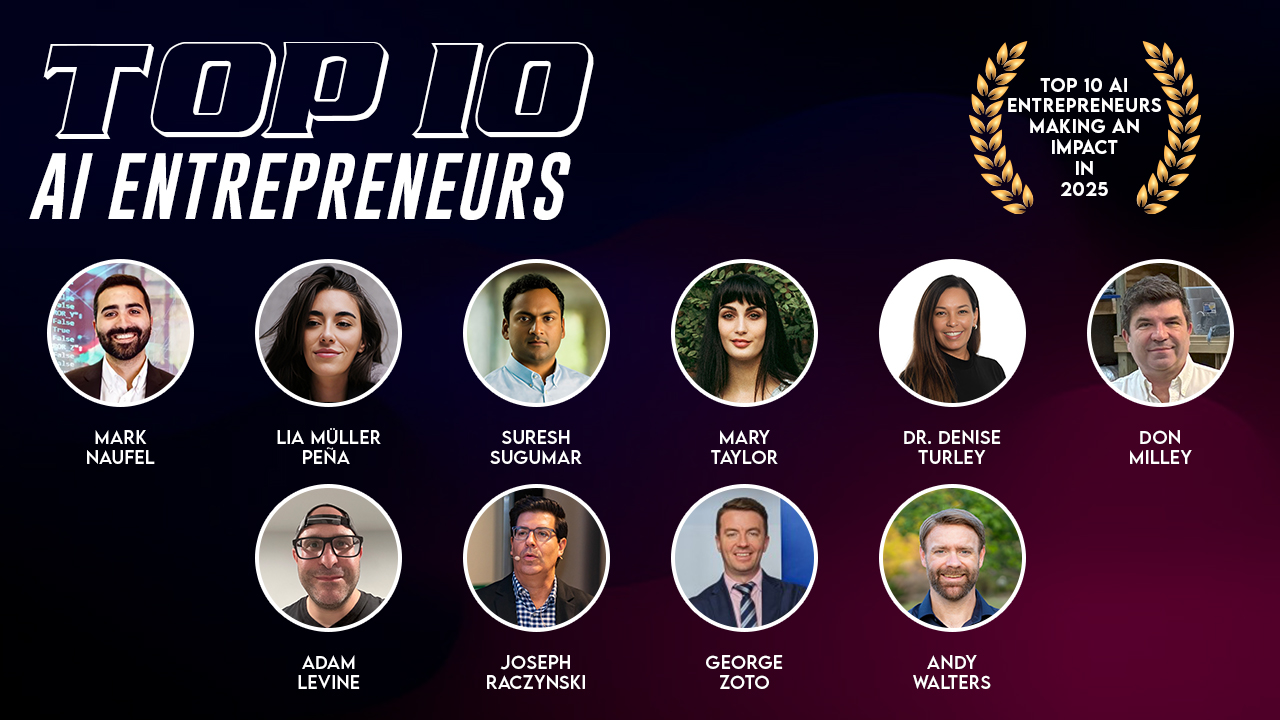
Top 10 AI Visionaries Shaping 2025

Top 10 AI Visionaries Shaping 2025

Featured Image

Trailblazing AI Entrepreneurs Redefining the Future

In a rapidly evolving world where artificial intelligence is reshaping industries at an unprecedented pace, a new generation of entrepreneurs is leading the charge. These innovators are not just adapting to change—they are driving it, creating smarter systems, solving complex problems, and redefining what’s possible in business, communication, and creativity.

As AI tools transition from experimental novelties to essential components of daily life, the visionaries behind them are becoming more influential than ever. This article highlights ten remarkable AI entrepreneurs whose work is making a measurable impact in 2025. From streamlining operations to transforming customer experiences, these leaders are proving that AI is not just about automation—it’s about amplifying human potential.

Mark Naufel: Pioneering Personalized Learning

Mark Naufel, founder and CEO of Axio AI, is revolutionizing education through a human-centric approach to artificial intelligence. With a background in innovation leadership at Arizona State University and a PhD in Human Systems Engineering, Naufel has led Axio to become a transformative force in personalized learning. The company’s platform uses a patented multi-agentic generative AI architecture to unify LMS, CRM, and SIS systems, streamlining operations while delivering deeply personalized learning experiences.

Axio has been recognized as one of Pepperdine’s 2024 Most Fundable Companies and is now deploying its AI-native platform at institutions like Western Governors University. Naufel’s mission is clear: to democratize personalized education and empower every learner to reach their full potential.

Lia Müller Peña: Bridging Generative AI and Web3

Lia Müller Peña, a founding member of BitGPT.network, is bridging the worlds of generative AI and Web3 to unlock the potential of decentralized networks. With expertise in data architecture, AI ethics, and blockchain, she has developed innovative platforms that simplify complex web3 ecosystems. As C-level leader of multiple tech ventures, she emphasizes the importance of ethical AI strategies and reducing algorithmic bias.

BitGPT, unveiled at Binance Blockchain Week, aims to drive mass adoption by merging AI’s power with Web3’s promise of digital sovereignty. Müller Peña believes that thoughtful AI development can democratize access and fuel positive societal change, making her a trailblazer in the AI space.

Suresh Sugumar: Building the Future of AI Hardware

Suresh Sugumar, founder of Mastiá¹£ka, is shaping the future of artificial intelligence by developing advanced AI hardware chips, systems, and infrastructure. With two decades of experience in chip design and leadership at RISC-V International, he and his team are creating GPGPU-based AI compute for generative and agentic AI use cases. Their systems support high-performance computing workloads, including pandemic preparedness, drug discovery, and oil and gas exploration.

Mastiá¹£ka’s vertically integrated tech stack—combining silicon, compilers, and AI models—empowers nations and enterprises to reclaim sovereignty over their AI infrastructure. Within just 12 months, the company demonstrated DeepSeek R1 model inference on an FPGA platform, marking a milestone in bringing AI hardware from concept to real-world impact.

Mary Taylor: Revolutionizing Sustainable Landscaping

Mary Taylor, founder of OpenSprouts, is revolutionizing sustainable landscaping through AI-powered automation. Her platform simplifies complex processes such as plant selection, environmental impact estimation, and layout optimization. By engaging with professionals in the landscaping industry, Taylor has built a tool that empowers landscapers to work smarter, reduce their carbon footprint, and embrace a greener future.

OpenSprouts has secured the NC IDEA Grant and gained industry traction through strategic networking and conferences. By blending AI with sustainability, Taylor is bridging tech with tradition, creating a meaningful impact in the field.

Dr. Denise Turley: Making AI Accessible and Ethical

Dr. Denise Turley is reshaping how people connect with AI, making it accessible, ethical, and empowering. As an equity-driven technologist, educator, and strategist, she helps non-technical professionals and organizations use AI to solve real-world problems—from inclusive workforce development to educational innovation.

Her people-first approach builds trust through clarity, ethical frameworks, and practical pilots. With a proven framework for implementation, she turns complex technology into a force for equity, voice, and meaningful change.

Don Milley: Transforming the Resale Economy

Don Milley, founder of WhatsitAI, is revolutionizing how everyday people unlock value in the $175B resale economy. Dubbed “Shazam for stuff,” WhatsitAI uses AI to instantly identify and value thrifted or secondhand items with a simple photo, turning any smartphone into a personal valuation expert.

Since launch, the app has had 40,000 downloads and has a rabid fan base. With provisional patents filed and cross-marketplace listing tools on the way, Milley is positioning WhatsitAI as a powerful utility for resellers, estate clearers, and everyday shoppers alike. At its core, WhatsitAI is about democratizing data by making real-time pricing and identification accessible to anyone, not just experts.

Adam Levine: Pushing the Boundaries of Human Performance

Adam Levine, a performance coach, agile coach, and AI coach, has built his career in fast-paced, margin-tight environments across advertising, public accounting, and internal audit. His groundbreaking coaching program fuses peak performance strategies with agile-based methodologies, gamification, LEGO® Serious Play (LSP), neuroscience, biology, and evolutionary psychology into one dangerous program.

Now, he's building an AI-powered coaching tool that will stack these same elements—engineering it into one dangerous app designed to break limits and push the boundaries of human performance. Levine continues to drive innovation, pioneering the next evolution of coaching through advanced AI technology.

Joseph Raczynski: Navigating the Intersection of AI and Blockchain

Joseph Raczynski, a technologist and futurist, has been at the forefront of AI innovation since 2015, helping leaders navigate the exponential growth of emerging technologies. Through JT Consulting & Media, he pioneers the intersection of agentic AI and blockchain, creating secure, interoperable AI agents for industries like publishing, legal, and finance.

His approach—Observe, Listen, Inspire, Build—drives his work with startups, universities, and corporations to push the boundaries of what’s next. A sought-after speaker and strategist, Raczynski challenges businesses to embrace the future by experimenting with cutting-edge AI tools and applications, making complex technology accessible and transformative.

George Zoto: Leading Ethical AI and Data Science

George Zoto, Director of Responsible AI, is a visionary leader at the forefront of ethical AI and advanced data science. His transformative work spans nonprofits, real estate, and global tech sectors—improving decision-making for 1.5 million members at the National Association of Realtors and revolutionizing data use at Share Our Strength to better fight hunger.

At Hughes Network Systems, he led satellite-linked data center initiatives, expanding global broadband access. Founder of the Deep Learning Adventures community and recognized by CIO Magazine, George blends innovation with integrity. His approach ensures AI is not only powerful but principled, driving impact, equity, and sustainability across every organization he touches.

Andy Walters: Redefining AI Adoption

Andy Walters, founder of Emerge Haus, is redefining AI adoption through tailored, cutting-edge solutions. His passion for the transformative potential of AI drives the company’s mission to build custom systems that fit each client’s unique needs, rather than forcing businesses into off-the-shelf products.

In just one year, Emerge Haus has secured marquee clients like Anaconda and Noridian, forged partnerships with tech ecosystems like LlamaIndex, and surpassed $1M in revenue. Constantly at the forefront of AI innovation, Walters plans to launch enterprise-grade software in 2025, further expanding their impact. His forward-thinking approach helps businesses navigate AI’s rapid evolution, turning complex possibilities into tangible results.

Opinion: AI and the Future of College Education

Opinion: AI and the Future of College Education

Featured Image

The Arrival of AI in Education: A New Era or a Threat?

As August approaches, the excitement of a new school year is overshadowed by an undercurrent of anxiety. This isn’t about the end of summer but rather the growing presence of Artificial Intelligence (AI) and Large Language Models (LLMs) in education. Since the emergence of ChatGPT in 2022, AI has permeated various aspects of life, from manufacturing to healthcare, reshaping industries and transforming how we work and live.

Many experts predict that AI will significantly impact employment, with some jobs disappearing while others evolve. In the realm of education, institutions are quickly adapting to this change. For instance, Ohio State University has announced that all incoming students will be trained in AI, emphasizing its importance in future careers. Similarly, the University of Florida and Arizona State University have integrated AI across multiple disciplines, claiming it enhances critical thinking and deepens learning.

Proponents argue that AI can lead to better questions and more profound thinking. By using AI to find and summarize articles, students save time and focus on more meaningful tasks. Tech entrepreneurs suggest that AI could bring about a future of abundance, creativity, and social justice through fair decision-making and transparency.

However, such optimism echoes past predictions about technological advancements. The internet was expected to dismantle dictatorships, MOOCs were supposed to revolutionize education, and social media promised a more connected world. Yet, these promises have not fully materialized. Instead, the internet has been used for political repression, social media poses risks to mental health, and online learning during the pandemic led to significant learning losses.

Moreover, companies promoting AI often have financial incentives. Deloitte, for example, has invested $2 billion in AI and encourages higher education institutions to adopt AI tools. Microsoft, OpenAI, and Anthropic also invest heavily in training educators to use AI, aiming to create long-term customers.

While capitalism drives innovation, it’s crucial to remain cautious. Studies from MIT and Microsoft-Carnegie Mellon University reveal that AI can hinder cognitive development. Using AI to write essays or summarize articles reduces the need for critical thinking and independent analysis. These findings highlight the potential dangers of relying too heavily on AI in education.

Cheating with AI is already prevalent in higher education. As noted in a New York Magazine article, many students rely on AI to complete their assignments, undermining the purpose of learning. Despite this, some administrators, like Mildred Garcia of the California State University System, embrace AI, launching initiatives that cost millions despite budget constraints.

The challenge lies in addressing AI's role in education without stifling its potential benefits. Detection software for AI-generated content is unreliable, and banning AI may not be effective if administrators support its use. This creates a dilemma for educators who must navigate the complexities of integrating AI into their teaching methods.

In conclusion, while AI offers opportunities for innovation and efficiency, its integration into education requires careful consideration. Balancing the benefits of AI with the need for critical thinking and independent learning is essential. As the new school year begins, the debate over AI's role in education continues to unfold, leaving many to wonder what the future holds for traditional learning.

Saturday, August 2, 2025

Pearson plc Q2 2025 Earnings Call Summary

Pearson plc Q2 2025 Earnings Call Summary

Featured Image

Pearson plc's Q2 2025 Earnings Call Highlights Strong Performance and Strategic Progress

Pearson plc, a global leader in education and learning solutions, delivered impressive results during its Q2 2025 earnings call. The company reported an EPS of $0.3203, surpassing the expected $0.3058. This strong performance reflects the company’s continued focus on strategic growth and operational efficiency.

Strategic Focus and Market Dynamics

Omar Paul Abbosh, CEO of Pearson, emphasized that the company’s strategy remains unchanged and is well established across the organization. Two key trends—demographics and artificial intelligence (AI)—continue to shape the educational landscape. As AI transforms the workforce, Pearson is positioned to play a critical role in developing the skills needed for the future.

Abbosh outlined three main takeaways from the call:

  1. Strategic Clarity: Pearson’s approach remains consistent, with a focus on building medium-term growth engines through enterprise business expansion and product innovation.
  2. Execution Focus: The company is making progress against its strategic goals, with clear proof points demonstrating effective execution.
  3. Confidence in Trajectory: The combination of strategic clarity and strong execution reinforces confidence in Pearson’s medium-term growth outlook.

The company also highlighted its resilience in the face of market dynamics. While certain segments may face challenges, Pearson’s diversified portfolio allows it to benefit from overall market growth while remaining resilient to subsegment trends.

Key Business Segments and Performance

Pearson’s performance across its key business units was strong, with several areas showing significant growth:

  • Assessments & Qualifications: Sales grew by 2%, driven by strong performance in clinical assessments and UK & International Qualifications. However, there were declines in Pearson VUE and US Student Assessment due to contract pauses and PDRI headwinds.
  • Virtual Learning: Sales declined slightly due to previous school losses, but enrollment and retention trends improved, with positive momentum expected in H2.
  • Higher Education: Sales grew by 4%, supported by strong monetization of the Study Prep Tool and continued engagement with AI-driven study tools.
  • English Language Learning (ELL): Sales declined by 3%, primarily due to a strong comp period in H1 2024. However, the PTE business remained stable.
  • Enterprise Learning & Skills: Sales grew by 4%, driven by solid performance in vocational qualifications and momentum in enterprise solutions.

Operational Improvements and Innovation

Pearson is making significant strides in operational improvements, including:

  • Revenue Operations Transformation: Led by Chief Business Officer Naseem Tuffaha, this initiative aims to improve revenue visibility and scalability.
  • Modern Marketing Approach: Under Chief Marketing Officer Ginny Ziegler, the company is focusing on cost efficiencies and enhanced brand presence.
  • Performance Culture: Pearson has streamlined roles and reduced job families, leading to better performance management and more efficient communication.
  • AI-Driven Simplification: The company has implemented AI-powered service agents and content development tools, significantly improving speed to market.

Strategic Partnerships and Growth Opportunities

Pearson continues to expand its strategic partnerships, including new collaborations with Microsoft, AWS, and Google Cloud. These relationships are unlocking new revenue opportunities and enabling co-innovation in education and workforce development.

Additionally, Pearson is investing in targeted markets, such as formative assessment through its partnership with McGraw Hill and expanding test prep capabilities via Pearson VUE. The company is also redirecting investments into AI and immersive learning technologies, partnering with industry leaders like Meta and Google XR.

Early Careers and Enterprise Skilling

Pearson is strengthening its position in two key growth vectors:

  • Early Careers: The acquisition of eDynamic Learning adds a core pillar to Pearson’s Early Careers strategy, providing job-ready skills for the next generation of workers.
  • Enterprise Skilling: With AI transforming the workforce, Pearson is helping enterprises develop talent planning and skill verification capabilities. This aligns with the needs of CEOs who are seeking ways to navigate the evolving skills landscape.

Financial Performance and Outlook

Sally Kate Miranda Johnson, CFO of Pearson, provided an overview of the financial results. Sales grew by 2% on an underlying basis, with adjusted operating profit up 2% to GBP 242 million. Adjusted EPS was down to 24.5p, impacted by FX headwinds, though the share buyback helped offset some of the decline.

The company maintained a strong balance sheet, with free cash flow up to GBP 156 million. Net debt decreased to GBP 1 billion, driven by strong cash performance and the completion of a GBP 350 million share buyback.

Looking ahead, Pearson remains confident in its 2025 outlook. Key business unit growth expectations include:

  • Assessments & Qualifications: Low to mid-single-digit growth, with H2 weighted toward Q4.
  • Virtual Learning: Expected to return to growth in H2, driven by enrollment increases and new school openings.
  • Higher Education: Growth will be higher than in 2024, fueled by sales team transformation and AI-driven innovations.
  • English Language Learning: Full-year growth will moderate due to PTE performance in H2.
  • Enterprise Learning & Skills: High single-digit growth, supported by new contracts and pipeline activity.

Conclusion

Pearson’s Q2 2025 results reflect strong execution, strategic focus, and a commitment to innovation. With a diversified portfolio, operational improvements, and expanding partnerships, the company is well-positioned to drive long-term growth and deliver value to stakeholders. As the world continues to evolve, Pearson remains a key player in shaping the future of learning.

Friday, August 1, 2025

TAL Education Unveils $600M Stock Buyback as Learning Tech Grows

TAL Education Unveils $600M Stock Buyback as Learning Tech Grows

Featured Image

Strategic Growth and Financial Performance

Zhuangzhuang Peng, President and CFO of TAL Education Group, emphasized the company's commitment to executing strategic priorities while strengthening the foundation for future development. He highlighted that learning services achieved a steady growth trajectory across both offline Peiyou programs and online enrichment offerings. Peng noted the disciplined expansion of the Peiyou learning center network, focusing on cities where services are established and reinforcing product quality for user retention.

Peng reported that the company further expanded its product lineup in this quarter, providing learning solutions tailored to diverse user needs. In May, three new models—P4, S4, and T4—were launched across different price tiers. For Q1, Peng announced net revenues of $575 million, representing a year-over-year growth of 38.8%. Non-GAAP income from operations reached $25.1 million, with net income attributable to TAL reaching $42 million.

Jackson Ding, Deputy CFO, stated that the Peiyou enrichment programs continued to deliver year-over-year revenue growth, supported by consistent service quality and broad user recognition. Ding also noted that the retention rate for Peiyou Small Class stood at around 80% in the quarter. He highlighted the learning devices’ business, noting that it saw continued year-over-year revenue growth driven by efforts to optimize products, enhance user experience, and strengthen sales channels.

Ding further announced that on July 28, 2025, the company's Board of Directors authorized a new share repurchase plan. Under the new program, the company may spend up to $600 million to repurchase its common shares over the next 12 months.

Outlook and Operational Focus

Peng stated that the company expects progress to continue into the second quarter of fiscal year 2026. Q2 is generally a high season for the business, benefiting from summer vacation and major e-commerce shopping festivals, which are expected to contribute positively to revenue. The company anticipates an improvement in operating profit compared to this quarter on a non-GAAP basis.

Peng indicated a continued focus on enhancing both product and service quality to better meet user needs. For the content solutions business, product optimization, innovation, and go-to-market execution will remain key priorities.

Financial Results Overview

TAL reported net revenues of $575 million, representing a 38.8% year-over-year increase. Gross profit increased by 47.3% to $315.4 million, with a gross margin rising to 54.9% from 51.7% in the prior year period. Operating income was $14.3 million, reversing a loss from operations of $17.3 million in the same period last year. Non-GAAP income from operations was $25.1 million versus $0.9 million a year ago.

Net income attributable to TAL was $31.3 million, with non-GAAP net income at $42 million. Non-GAAP selling and marketing expenses as a percentage of revenue increased to 30.9% from 28.5% year-over-year. Non-GAAP general and administrative expenses as a percentage of total revenues decreased to 19.8% from 23.7% year-over-year.

The company had $1,267.2 billion in cash and cash equivalents, $2,205.6 million in short-term investments, and $291.2 million in restricted cash. Deferred revenue stood at $967.9 million. Net cash provided by operating activities for the quarter was $347.8 million.

Q&A Highlights

During the earnings call, Timothy Zhao of Goldman Sachs asked about Peiyou business expansion and outlook. Peng responded that expansion would focus on increasing center density in established cities, maintaining a disciplined approach, and prioritizing long-term sustainable growth. He noted that the fiscal '25 growth pace is not expected to stay the same in fiscal '26, with Peiyou's year-over-year revenue growth expected to gradually taper off.

Eddy Wang of Morgan Stanley inquired about learning devices and performance of new models. Peng explained that Q1 is typically a low season for the learning device business, with revenue declining quarter-over-quarter compared to the fourth quarter last fiscal year. However, on a year-over-year basis, healthy growth was recorded due to sales volume expansion.

Felix Liu of UBS questioned about sales and marketing expenses and margin profile for hardware. Ding confirmed that non-GAAP selling and marketing expenses as a percentage of revenue increased slightly from 28.5% to 30.9% year-over-year, primarily due to investment in online marketing activities. Regarding learning devices, Ding said the business recorded a non-GAAP operating loss in Q1, with a strategy balancing near-term investment with long-term development.

Jing Yuan of CICC questioned drivers of margin performance and outlook. Ding pointed to operating leverage from revenue base expansion, efficiency improvements, and AI integration in content production. He mentioned using AI agents to support learning coaches with tasks such as tracking student attendance, creating study plans, answering questions, and managing routine logistics.

Sentiment and Strategic Evolution

Analysts' tone was positive, with consistent congratulations on results and a focus on understanding growth sustainability and expense trends. Their questions targeted expansion pacing, hardware profitability, and cost optimization, showing underlying curiosity about future margins and competitive positioning.

Management maintained a confident yet measured tone, emphasizing disciplined expansion and sustainable growth. Phrases like "we remain confident in its trajectory" and "our primary focus remains on sustainable long-term growth" supported a slightly positive sentiment, especially when discussing innovation and financial discipline.

Compared to the previous quarter, both management and analysts demonstrated more focus on margin improvement and operational efficiency, with a subtle shift from discussing broad growth to highlighting sustainable profitability and cost control.

Quarter-over-Quarter Comparison

Guidance language shifted from general optimism about core business growth in the previous quarter to an explicit expectation of seasonal revenue increases and operating profit improvement in Q2. Strategic focus remained on learning services and content solutions, but with new emphasis on AI-driven product innovation and broadening device offerings.

Analysts’ questions continued to probe for detail on expansion pacing and profitability, but with increased attention to margin drivers and sales/marketing investment. Key financial metrics showed improvement: revenue and operating income increased, gross margin rose, and the company moved from an operating loss to a profit.

Management’s confidence appeared bolstered by concrete margin improvements and cash generation, while reiterating a disciplined, long-term approach. Strategic priorities evolved to include a new $600 million share repurchase plan, indicating increased focus on shareholder returns.

Risks and Concerns

Management noted that Peiyou's year-over-year revenue growth is expected to gradually taper off as supply and demand normalize. The learning devices business, while showing year-over-year growth, recorded a non-GAAP operating loss in Q1 and remains in an investment phase amid intensifying competition.

Ding highlighted the need for careful capacity planning and maintaining high-quality service as the learning center network expands. Margin improvement measures focus on operational efficiency and leveraging AI, but management cautioned that investments will be balanced with long-term growth objectives.

Final Takeaway

TAL Education Group reported strong year-over-year revenue and margin growth for Q1 2026, supported by disciplined expansion in learning services and a broadened portfolio of AI-powered learning devices. Management highlighted ongoing investment in technology, operational efficiency, and a new $600 million share repurchase plan as key pillars for sustaining long-term value. The outlook remains positive, with expectations for further operating profit improvement in the high season, while the company continues to monitor growth normalization in its core businesses and invest strategically in innovation and market reach.

Wednesday, July 30, 2025

What Gen Alpha Is Growing Up With That No One Else Had

What Gen Alpha Is Growing Up With That No One Else Had

Featured Image

A Fully Digital Childhood

Gen Alpha, the generation born between 2010 and 2025, is the first to grow up entirely within the digital age. Unlike previous generations who witnessed the rise of technology, Gen Alpha is immersed in it from birth. Their daily experiences, education, communication, and worldview are shaped by tools, environments, and expectations that are entirely new. This digital fluency is second nature to them and dramatically reshapes how they learn, play, and connect.

Born Into the App Ecosystem

From toddler years, Gen Alpha interacts with apps designed specifically for early learning and entertainment. Whether it’s educational games, language apps, or YouTube Kids, screen-based engagement often precedes reading physical books. Parents use these apps not just for entertainment but as tools for early development. For Gen Alpha, talking to devices like Alexa, Siri, and Google Assistant is completely normal. They grow up commanding lights, music, and even homework help through voice interaction. These tools offer convenience, but they also change how children expect to receive answers—instantly and without typing.

Growing Up with Streaming Over Broadcast

Traditional television has taken a backseat in Gen Alpha households. Instead of waiting for a scheduled program, they can stream shows on-demand across tablets, TVs, and phones. Platforms like Netflix, Disney+, and YouTube give them control over content, curating their own experience from an early age. This shift has changed how they consume media and interact with stories, making streaming a central part of their lives.

Personalized Learning from Day One

Gen Alpha is reshaping education. Their classrooms look and function differently than those of previous generations. Smartboards, AI tutors, and individualized learning plans are becoming standard, tailoring education to each child’s needs and pace. The COVID-19 pandemic accelerated online education, and Gen Alpha was the first to experience large-scale hybrid learning. Many now expect flexible schooling that combines physical classrooms with digital platforms like Google Classroom or Zoom. It’s not a backup plan—it’s part of their normal school life.

AI Tutors and Gamified Learning

AI-driven educational tools provide real-time feedback and adjust difficulty based on performance. Apps like Khan Academy Kids or Duolingo offer gamified lessons that keep them engaged. Learning has become more interactive and fun, and the line between play and education is increasingly blurred. Teachers and parents now have access to data dashboards tracking academic progress, emotional wellbeing, and engagement levels. This allows for more responsive education tailored to individual students. Gen Alpha is the first to grow up under this kind of continuous educational monitoring.

A New Kind of Social Life

For Gen Alpha, digital interaction isn’t a supplement—it’s a primary mode of connection. Friendships, hobbies, and even identities are shaped through online platforms from an early age. While face-to-face play remains essential, their social world is much more tech-integrated than any before. While Millennials grew up with AIM and Gen Z with Snapchat, Gen Alpha may have their first friends through platforms like Roblox, Minecraft, or even Zoom. These platforms provide shared experiences and virtual “playgrounds” where kids socialize, collaborate, and compete.

Digital Avatars and Virtual Identity

Children are creating and customizing digital avatars to represent themselves in games and apps. From outfits to personalities, Gen Alpha is learning early how to express identity online. This concept of a “digital self” is more embedded in their reality than in any previous generation. Gen Alpha is more likely to interact with peers across the world than previous generations ever were at the same age. Whether it’s via online classes, global gaming servers, or social video content, they’re developing a more international awareness from a young age.

Health, Wellness, and AI-Driven Parenting

Parenting tools, monitoring apps, and tech-based wellness solutions are shaping how Gen Alpha is being raised. This generation is growing up in homes that use AI for sleep tracking, digital health monitoring, and screen time management. Smart Baby Monitors and Wearables, from infancy, Gen Alpha has their sleep, heart rate, and movement patterns tracked by devices like Owlet or Nanit. Wearables help parents keep tabs on safety and health in ways that weren’t available even a decade ago. This data-driven approach is becoming part of everyday parenting.

Mental Health Apps for Children

Apps and tools like Headspace for Kids and Calm provide guided meditations and emotional check-ins for young users. These resources are being introduced in homes and schools to help children develop emotional literacy. Gen Alpha is growing up with mental wellness tools built into their routine. Modern parenting includes managing device exposure through screen time limits, filters, and real-time monitoring. Gen Alpha is the first to grow up with built-in digital boundaries, where apps track and notify parents of usage patterns. These tools help enforce healthier digital habits from the start.

Shaped by a Global Crisis

Unlike other generations, Gen Alpha’s earliest memories are shaped by a pandemic and the world’s digital adaptation to it. Their world has been marked by sudden change, virtual connection, and a heightened awareness of health and social responsibility. Childhood During COVID-19, from virtual birthday parties to wearing masks in preschool, Gen Alpha experienced the pandemic during their most formative years. Social distancing shaped how they interacted and learned, possibly changing developmental norms for years to come.

Increased Awareness of Global Issues

Because of the pandemic, climate change coverage, and global social movements, Gen Alpha is growing up with an early awareness of international events. Many parents and educators now include these discussions early in life, leading to socially conscious kids from a young age. Entertainment That Adapts to Them, Gen Alpha’s entertainment isn’t just passive—it’s interactive, responsive, and immersive. They’re not just watching shows; they’re participating in narratives, co-creating content, and sometimes becoming influencers themselves.

Rise of Interactive Storytelling

Streaming platforms now offer choose-your-own-adventure content where kids influence the story’s outcome. This fosters creative thinking and deeper engagement. Shows and games adapt to player responses, offering a personalized entertainment experience. Becoming Content Creators Early, with kid-friendly tools like Canva, CapCut, and even YouTube editing suites, Gen Alpha children are creating videos, animations, and stories. Some have their own channels or social accounts (monitored by parents), building confidence and digital fluency.

AR and VR Tools

AR and VR tools are entering children’s entertainment and education spaces, giving Gen Alpha immersive learning experiences. From exploring the solar system to walking through ancient Rome, these tools turn abstract concepts into vivid, hands-on encounters. A Generation of Firsts, Gen Alpha is growing up with innovations and experiences no previous generation has known from such a young age. They’re tech-native, globally aware, health-monitored, and creatively empowered. While these advancements bring both opportunities and challenges, they’re shaping a generation unlike any the world has seen. As Gen Alpha comes of age, the world will need to adapt to the way they think, learn, and live—because they’re not just growing up in the future; they are the future.

Why and When: Responsible AI Integration in Classrooms

Why and When: Responsible AI Integration in Classrooms

Featured Image

The Growing Role of AI in Education

As social media platforms continue to flood with content on how to leverage AI for academic tasks, the conversation around artificial intelligence in education is becoming increasingly complex. From videos titled "How to Use AI to Write Your Essay in 5 Minutes" to guides on bypassing readings with ChatGPT, the focus has largely been on the technical aspects of AI use. However, this emphasis on methods and mechanics risks overshadowing more critical questions about the purpose and appropriateness of using these tools.

Beyond the "How": The Philosophical Questions

The discourse surrounding AI in education often centers on practical concerns—how to craft the perfect prompt, how to integrate AI into academic work, or how to detect its use. While these are important issues, they represent a narrow perspective that neglects deeper philosophical inquiries. Specifically, educators must ask: Why should we use these tools in the first place, and when is it appropriate to do so?

Addressing the "how" involves solving technical challenges, but answering the "why" and "when" requires a philosophical foundation. Without a coherent framework, the integration of AI into learning environments may become aimless, driven by novelty rather than meaningful educational outcomes.

Virtue Epistemology: A New Lens for Learning

Two key frameworks can help shift the conversation from technical efficiency to a more thoughtful approach. The first is virtue epistemology, which emphasizes that knowledge is not merely the accumulation of facts but the result of practicing intellectual virtues such as curiosity, perseverance, and critical thinking. This perspective reframes the role of AI in education—not as a shortcut to polished outputs, but as a tool that supports the development of these essential qualities.

For example, if a student uses AI to brainstorm counterarguments for a debate, they are engaging in intellectual flexibility. Similarly, using AI to map connections between theoretical frameworks in a research paper can deepen conceptual understanding. In both cases, AI serves as a means to enhance the learning process, not replace it.

The Dangers of Bypassing Intellectual Labor

However, when AI is used to avoid the struggle that builds intellectual virtue, it undermines the very purpose of learning. For instance, a graduate student who generates a list of research without engaging with the sources misses out on the critical process of synthesis and analysis. This approach contradicts the views of philosopher John Dewey, who saw learning as an active, experiential process rooted in doing, questioning, and grappling with complexity.

Assignments that prioritize perfection over process encourage students to see learning as a matter of prompting and receiving rather than constructing meaning. This mindset reduces education to a transactional activity, where the goal is to produce a product rather than develop skills.

Care-Based Approaches: Prioritizing Relationships

In addition to virtue epistemology, a care-based approach offers another crucial perspective. As philosopher Nel Noddings argued, education should prioritize relationships and the needs of individual learners over rigid rules. This means that the question of "when" to use AI cannot be answered with a simple rubric.

For some students, AI can be a compassionate tool that helps them overcome barriers to learning. For example, a student with a learning disability or severe anxiety might benefit from using AI to structure their initial thoughts, allowing them to engage with the intellectual labor of a task without being overwhelmed by the mechanics of writing. In this context, the use of AI is not about avoiding effort but enabling deeper engagement.

Conversely, for students who need to develop foundational skills, relying on AI for basic tasks could be counterproductive. Deciding when to use AI requires educators to understand each learner's unique needs and goals, making it a relational rather than a technical decision.

The Mediating Role of AI

Historian and philosopher Michel Foucault challenged the notion of the lone, autonomous author, arguing that all creation is mediated by language, culture, and prior texts. AI, as a powerful new mediator, makes this truth impossible to ignore. Rather than focusing on policing originality and plagiarism, educators should consider how AI can support or hinder intellectual growth.

This shift in perspective moves the focus from controlling students to shaping meaningful learning experiences. The central question becomes not whether AI should be used, but under what conditions it enhances the learning process.

Redesigning Assessments and Policies

Currently, many educational systems are investing in AI detection software, but this approach may not address the root issues. Instead of focusing on surveillance, schools should invest in redesigning assessments to align with the values of intellectual labor and virtue. Similarly, policies requiring students to declare AI use are insufficient unless they lead to meaningful conversations about the role of these tools in learning.

Educators must take a proactive role in guiding students through the ethical and philosophical dimensions of AI. This involves not only understanding the technology but also reflecting on what it means to produce knowledge and cultivate intellectual character.

Moving Forward with Purpose

The responsible integration of AI into education depends on a commitment to values that prioritize human development over efficiency. It requires educators to act as architects of learning, shaping environments where students can engage deeply with ideas and build the skills necessary for lifelong growth.

It is time to move beyond the default focus on "how" and instead lead the conversation about the values that define when and why AI fits within meaningful and effective learning. By grounding our approaches in philosophy, ethics, and care, we can ensure that AI serves as a tool for empowerment, not a substitute for intellectual growth.

Friday, July 25, 2025

The Rise of Bumper Stickers: From Ads to Learning Tools on the Road

The Rise of Bumper Stickers: From Ads to Learning Tools on the Road

Featured Image

The Evolution of Bumper Stickers: From Simple Adhesives to Educational Tools

Bumper stickers have come a long way since their inception in the 1940s. What started as a simple advertising tool has evolved into a powerful medium for communication, education, and family bonding. These small, adhesive messages have transformed from basic tourist promotions to complex visual language that spans American highways, RV campgrounds, and family vehicles. Today, they offer modern fathers unique opportunities to turn routine car rides into engaging geography lessons and meaningful family experiences.

The journey began with Forrest P. Gill, a Kansas City screen printer who combined two wartime technologies to create what were initially called "bumper strips." His first major breakthrough came with an order for 25,000 stickers from Marine Gardens in Clearwater, Florida—a now-defunct tourist attraction. This innovation marked the beginning of a marketing revolution that would reshape American road culture. Before this, vehicle advertising relied on metal or cardboard signs wired to chrome bumpers, a cumbersome system that was eventually replaced by the more practical and durable adhesive technology.

Early tourist attractions like Seven Falls in Colorado and Lookout Mountain in Tennessee adopted aggressive marketing strategies, often applying stickers to vehicles without permission. This practice, while unconventional, proved effective in building brand recognition. The transition from tourism to politics occurred during the 1952 presidential election when "I Like Ike" stickers appeared nationwide, establishing bumper stickers as permanent fixtures of American political culture and personal expression.

European Influence and the Rise of Destination Codes

The three-letter destination sticker phenomenon traces its roots to the 1968 United Nations Vienna Convention on Road Traffic, which established standardized oval identification stickers for European vehicles. These specifications required precise dimensions and were designed to solve the confusion created by similar-looking license plates across borders. American travelers returning from Europe began displaying these international codes as status symbols, showcasing their worldly adventures.

This trend naturally evolved into domestic adaptations, with American destinations creating their own European-style oval stickers using local abbreviations. Nantucket, Massachusetts, pioneered this adaptation with "ACK" stickers using the island's airport code. In 1993, North Carolina restaurateur Jim Douglas visited Nantucket and observed the popularity of these destination markers. Inspired by their success, he created "OBX" for North Carolina's Outer Banks, with the "X" chosen for its aesthetic balance.

Douglas's initial investment of $250 for 2,500 stickers in 1994 evolved into a million-dollar business, with OBX stickers appearing on vehicles from coast to coast. This success spawned countless imitators, from "MV" for Martha's Vineyard to "HH" for Hilton Head, creating a nationwide network of destination codes that reward geographic knowledge and spark curiosity in young passengers.

The Stick Family Revolution

What the industry calls "stick family decals" emerged in the early 2000s as families sought new ways to represent their household composition through vehicle displays. These collections typically feature simple line-drawing representations of family members, pets, and interests, creating instant demographic profiles. Unlike traditional bumper stickers, stick family decals serve multiple educational and social functions that benefit family-oriented fathers.

They signal shared interests to other parents, create natural conversation starters in parking lots and school pickup lines, and help children understand family identity within community diversity. The collaborative process of selecting and arranging family figures becomes a valuable activity that reinforces family bonds while teaching children about representation and mathematical concepts.

Modern stick family decals are crafted from high-quality outdoor-rated vinyl designed to withstand years of weather exposure. Individual figure cutting allows families to update displays as circumstances change—adding new family members, acknowledging children's growth, or reflecting evolving hobby interests. This adaptability provides ongoing opportunities for fathers to discuss change, growth, and family evolution with their children.

The RV Revolution of Collecting Destination Stickers

RV culture emerged during the 1970s as America's growing middle class embraced recreational vehicle travel, creating new opportunities for Forrest P. Gill's adhesive innovation to find expression. The founding of the RV/MH Hall of Fame in 1972 marked the industry's coming of age, just as destination stickers began transforming from simple tourist promotions into comprehensive travel documentation systems.

These mobile homes evolved into rolling advertisements for the American road trip lifestyle, with experienced RVers displaying dozens of location markers that tell stories spanning entire lifetimes of exploration. According to RV industry associations, destination stickers influence travel decisions for over 60% of families, with children frequently requesting visits to locations they observe repeatedly on other recreational vehicles.

Campground sticker displays serve multiple community functions that benefit family travelers, identifying experienced RVers who can provide destination advice while creating conversation starters that help children understand diverse American geography. For fathers introducing children to camping culture, these displays provide instant connection points with fellow travelers and natural opportunities to discuss planning, budgeting, and goal-setting through collaborative observation.

From Paper to Digital: LED Signs Continue to Evolve Bumper Stickers

The electronic evolution of bumper stickers represents a technological leap that would have amazed Forrest P. Gill. Light-emitting diodes, invented by Nick Holonyak Jr. at General Electric in 1962, didn't reach automotive applications until 1986 when the Chevrolet Corvette featured the first LED center high-mount stop lamp. Personal-use programmable LED signs became commercially accessible in the early 2000s, eventually evolving into today's affordable car displays that combine Gill's original concept of mobile messaging with cutting-edge digital versatility.

Modern LED car signs, available in sizes from 7x3 inches to 27x5 inches, represent the natural evolution of Gill's vision—allowing families to rotate messages, update travel status, and share real-time information while maintaining the personal expression that made his original stickers appealing. These displays feature Bluetooth connectivity, smartphone app control, and support for scrolling text, animations, and custom graphics that would have seemed like science fiction to early bumper sticker pioneers.

Current technology can be powered through USB connections or 12V car adapters, offering placement flexibility from rear windows to dashboards that maintains Gill's principle of mobile visibility. Advanced models support voice commands and can display full-color images, GIFs, and personalized animations that particularly appeal to tech-savvy families seeking to bridge traditional road trip experiences with modern digital engagement.

Education Through Highway Games: How Modern Fathers Transform Road Trips Into Family Travel Learning Adventures

The same innovative spirit that drove Forrest P. Gill to combine wartime technologies into mobile messaging tools now inspires engaged fathers to transform routine highway travel into meaningful educational experiences. Gill's 1940s vision of vehicles carrying messages across America has evolved into one of the most accessible methods for building geographic literacy, cultural awareness, and critical thinking skills in the next generation.

Geographic Literacy Through Systematic Observation
Pre-trip preparation, which involves researching destination codes and establishing observation games, maintains engagement during long drives while building spatial awareness. Simple tracking systems enable children to document their discoveries, developing organizational skills that make geographic references more meaningful through guided discussion and collaborative exploration.

Critical Thinking Through Historical Guessing Games
The highway debates that characterized American family travel from the 1950s through the 1980s—before smartphones dominated car rides—required children to use context clues and logical reasoning to decode unfamiliar abbreviations, building problem-solving skills through entertainment. These postwar-era traditions emerged alongside the widespread adoption of car ownership and the development of interstate highways, creating new opportunities for family interaction during long-distance travel.

Cultural Understanding Through Regional Pattern Recognition
Systematic sticker observation fosters informed citizens who understand American diversity and geographic relationships, developing cultural literacy without requiring expensive travel. This accessible educational approach aligns with existing family travel patterns, making quality learning available to all, regardless of economic circumstances, while promoting an appreciation for everyday learning opportunities that Gill himself would have valued.

Three Generations of Innovation: Bumper Stickers Continue With Modern Families

The remarkable journey from Forrest P. Gill's wartime technology combination to today's LED displays creates unique opportunities for fathers to bridge generational experiences while building meaningful family connections. Just as Gill's original Marine Gardens stickers sparked curiosity about distant destinations, modern vehicle displays continue that legacy of discovery and shared exploration.

Creating family traditions around sticker observation—whether decoding three-letter destination codes or programming LED messages—builds lasting bonds that extend far beyond childhood travel experiences. Children who grow up with engaged fathers develop similar attitudes that enrich their own family relationships throughout their lives, continuing the spirit of curiosity and innovation that Gill himself embodied when he first combined adhesive paper with fluorescent paint in 1940s Kansas City.

Notification
This is just an example, you can fill it later with your own note.
Done