Articles of Education: colleges and universities
News Update
Loading...
Showing posts with label colleges and universities. Show all posts

Sunday, August 17, 2025

College Students Are Forever Changed

College Students Are Forever Changed

Featured Image

The Rise of Generative AI in Higher Education

A college senior returning to classes this fall has spent nearly their entire undergraduate career under the influence of generative AI. ChatGPT launched in November 2022, when that student was a freshman. As a department chair at Washington University in St. Louis, I witnessed the chaos it created on campus. Students were unsure what AI could do or which uses were appropriate. Faculty were taken by surprise by how effectively ChatGPT could write papers and complete homework. College, it seemed to those who teach it, was about to be transformed.

But nobody expected it to happen so quickly. Three years later, the AI transformation is nearly complete. By the spring of 2024, almost two-thirds of Harvard undergrads were using the tool at least once a week. In a British survey of full-time undergraduates from December, 92 percent reported using AI in some fashion. Forty percent agreed that “content created by generative AI would get a good grade in my subject,” and nearly one in five admitted they had tested that idea directly by using AI to complete assignments. These numbers will only rise in the year ahead.

“I cannot think that in this day and age that there is a student who is not using it,” said Vasilis Theoharakis, a strategic-marketing professor at the Cranfield School of Management who has done research on AI in the classroom. That’s what I’m seeing in the classes I teach and hearing from students: The technology is no longer just a curiosity or a way to cheat; it is a habit, as common on campus as eating processed foods or scrolling social media. In the coming fall semester, this new reality will be undeniable. Higher education has been changed forever in the span of a single undergraduate career.

A Pragmatic Approach to AI Use

“It can pretty much do everything,” says Harrison Lieber, a WashU senior majoring in economics and computer science. As a college student, he has mostly inhabited a world with ChatGPT. For those in his position, the many moral questions that AI provokes—such as whether it is exploitative, anti-intellectual, or ecologically unsound—take a back seat to its utility. Lieber characterized the matter as pragmatic above all else: Students don’t want to cheat; they certainly don’t want to erode the value of an education that may be costing them or their family a small fortune. But if you have seven assignments due in five days, and AI could speed up the work by tenfold for the cost of a large pizza, what are you meant to do?

In spring 2023, I spoke with a WashU student whose paper had been flagged by one of the generally unreliable AI detectors that universities have used to stem the tide of cheating. He told me that he’d run his text through grammar-checking software and asked ChatGPT to improve some sentences, and that he’d done this to make time for other activities that he preferred. “Sometimes I want to play basketball,” he said. “Sometimes I want to work out.”

His attitude might have been common among large-language-model users during that first, explosive year of AI college: If a computer helps me with my paper, then I’ll have more time for other stuff. That appeal persists in 2025, but as these tools have taken over in the dorms, the motivations of their users have diversified. For Lieber, AI’s allure seems more about the promise of achievement than efficiency. As with most students who are accepted to and graduate from an elite university, he and his classmates have been striving their whole life. As Lieber put it, if a course won’t have “a tangible impact on my ability to get a good job,” then “it’s not worth putting a lot of my time into.” This approach to education, coupled with a “dismal” outlook for postgraduate employment, justifies an ever more ferocious focus on accomplishment.

Diverse Uses of AI Among Students

Da’Juantay Wynter, another rising senior at WashU who has never seen a full semester without AI, told me he always writes his own essays but feels okay about using ChatGPT to summarize readings, especially if he is in a rush. And like the other students I spoke with, he’s often in a rush. Wynter is a double major in educational studies and American-culture studies; he has also served as president of the Association of Black Students, and been a member of a student union and various other campus committees. Those roles sometimes feel more urgent than his classwork, he explained. If he does not attend to them, events won’t take place. “I really want to polish up all my skills and intellect during college,” he said. Even as he knows that AI can’t do the work as well, or in a way that will help him learn, “it’s always in the back of my mind: Well, AI can get this done in five seconds.”

Another member of his class, Omar Abdelmoity, serves on the university’s Academic Integrity Board, the body that adjudicates cases of cheating, with AI or otherwise. In almost every case of AI cheating he’s seen, Abdelmoity told me, students really did have the time to write the paper in question—they just got stressed or preoccupied by other things, and turned to AI because it works and it is available. Students also feel the strain of soaring expectations. For those who want to go to medical school, as Abdelmoity does, even getting a 4.0 GPA and solid MCAT scores can seem insufficient for admission to the best programs. Whether or not this is realistic, students have internalized the message that they should be racking up more achievements and experience: putting in clinical hours, publishing research papers, and leading clubs, for example. In response, they seek ways to “time shift,” Abdelmoity said, so they can fit more in. And that’s at an elite private university, he continued, where the pressure is high but so is the privilege. At a state school, a student might be more likely to work multiple jobs and take care of their family. Those ordinary demands may encourage AI use even more.

Professors and the AI Challenge

In the end, Abdelmoity said, academic-integrity boards such as the one he sits on can only do so much. For students who have access to AI, an education is what you make of it.

If the AI takeover of higher ed is nearly complete, plenty of professors are oblivious. It isn’t that they fail to understand the nature of the threat to classroom practice. But my recent interviews with colleagues have led me to believe that, on the whole, faculty simply fail to grasp the immediacy of the problem. Many seem unaware of how utterly normal AI has become for students. For them, the coming year could provide a painful revelation.

Some professors I spoke with have been taking modest steps in self-defense: They’re abandoning online and take-home assignments, hoping to retain the purity of their coursework. Kerri Tobin, an associate professor of education at Louisiana State University, told me that she is making undergrads do a lot more handwritten, in-class writing—a sentiment I heard many times this summer. The in-class exam, and its associated blue book, is also on the rise. And Abdelmoity reported that the grading in his natural-science courses has already been rejiggered, deemphasizing homework and making tests count for more. These adjustments might be helpful, but they also risk alienating students. Being forced to write out essays in longhand could make college feel even more old-fashioned than it did before, and less connected to contemporary life.

Other professors believe that moral appeals may still have teeth. Annabel Rothschild, an assistant professor of computer science at Bard College, said she’s found that blanket rules and prohibitions have been less effective than a personal address and appeal to social responsibility. Rothschild is particularly concerned about the environmental harms of AI, and she reports that students have responded to discussions about those risks. The fact that she’s a scientist who understands the technology gives her message greater credibility. It also helps that she teaches at a small college with a focus on the arts.

The Future of Classroom Innovation

Like the other members of his class, Lieber did experience a bit of college life before ChatGPT appeared. Even then, he said, at the very start of his freshman year, he felt alienated from some of his introductory classes. “I would think to myself, What the hell am I doing, sitting watching this professor give the same lecture that he has given every year for the last 30 years?” But he knew the answer even then: He was there to subsidize that professor’s research. At America’s research universities, teaching is a secondary job activity, at times neglected by faculty who want to devote as much time as possible to writing grants, running labs, and publishing academic papers. The classroom experience was suffering even before AI came onto the scene.

Now professors face their own temptations from AI, which can enable them to get more work done, and faster, just as it does for students. I’ve heard from colleagues who admit to using AI-generated recommendation letters and course syllabi. Others clearly use AI to write up their research. And still more are eager to discuss the wholesome-seeming ways they have been putting the technology to use—by simulating interactions with historical authors, for example, or launching minors in applied AI.

But students seem to want a deeper sort of classroom innovation. They’re not looking for gimmicks—such as courses that use AI only to make boring topics seem more current. Students like Lieber, who sees his college education as a means of setting himself up for his career, are demanding something more. Instead of being required to take tests and write in-class essays, they want to do more project-based learning—with assignments that “emulate the real world,” as Lieber put it.

But designing courses of this kind, which resist AI shortcuts, would require professors to undertake new and time-consuming labor themselves. That assignment comes at the worst possible time. Universities have been under systematic attack since President Donald Trump took office in January. Funding for research has been cut, canceled, disrupted, or stymied for months. Labs have laid off workers. Degree programs have cut doctoral admissions. Multi-center research projects have been put on hold. The “college experience” that Americans have pursued for generations may soon be over.

The existence of these stressors puts higher ed at greater risk from AI. Now professors find themselves with even more demands than they anticipated and fewer ways to get them done. The best, and perhaps the only, way out of AI’s college takeover would be to embark on a redesign of classroom practice. But with so many other things to worry about, who has the time? In this way, professors face the same challenge as their students in the year ahead: A college education will be what they make of it too. At some point, everyone on campus will have to do the work.
Sunday, August 10, 2025

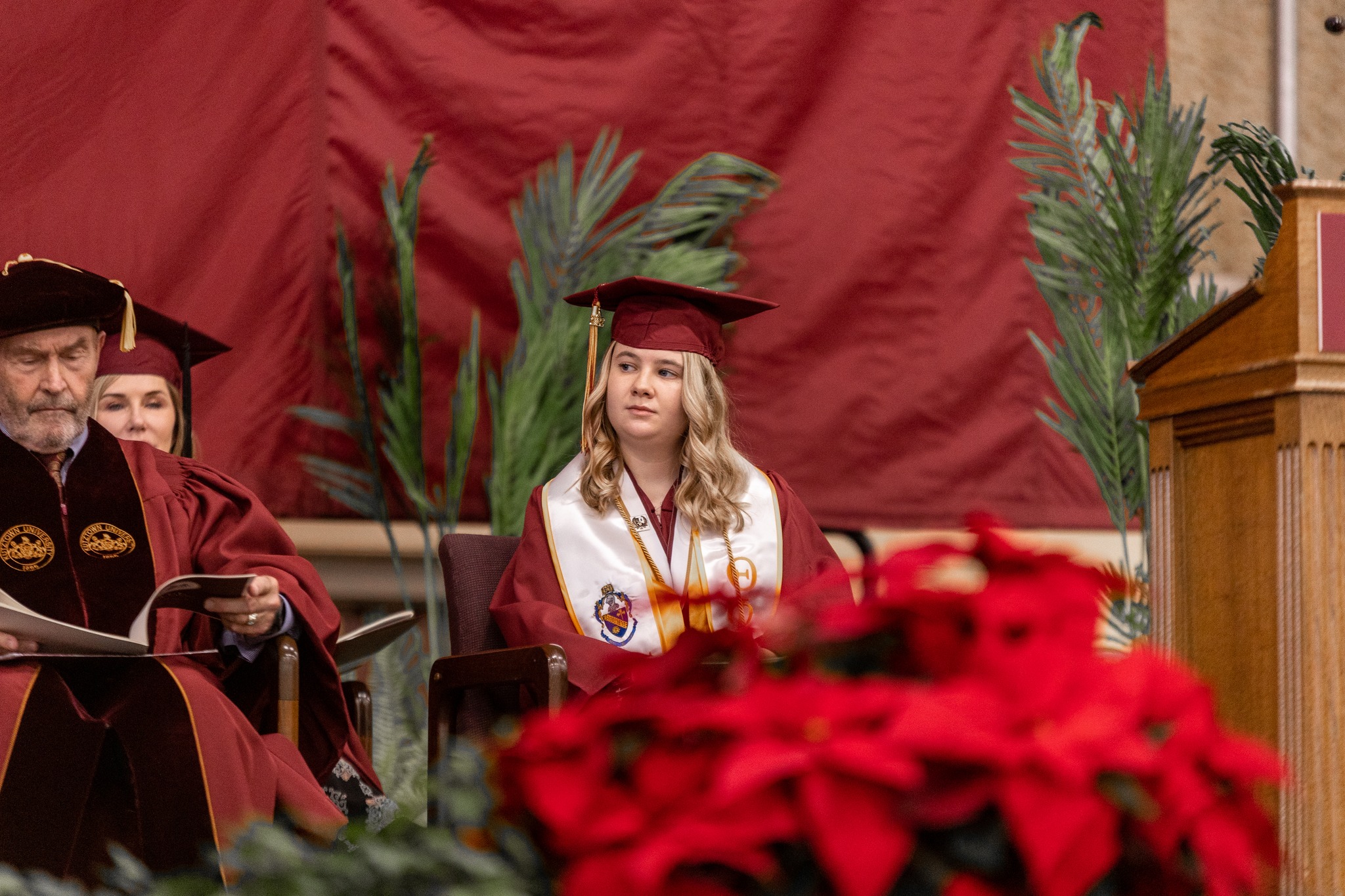
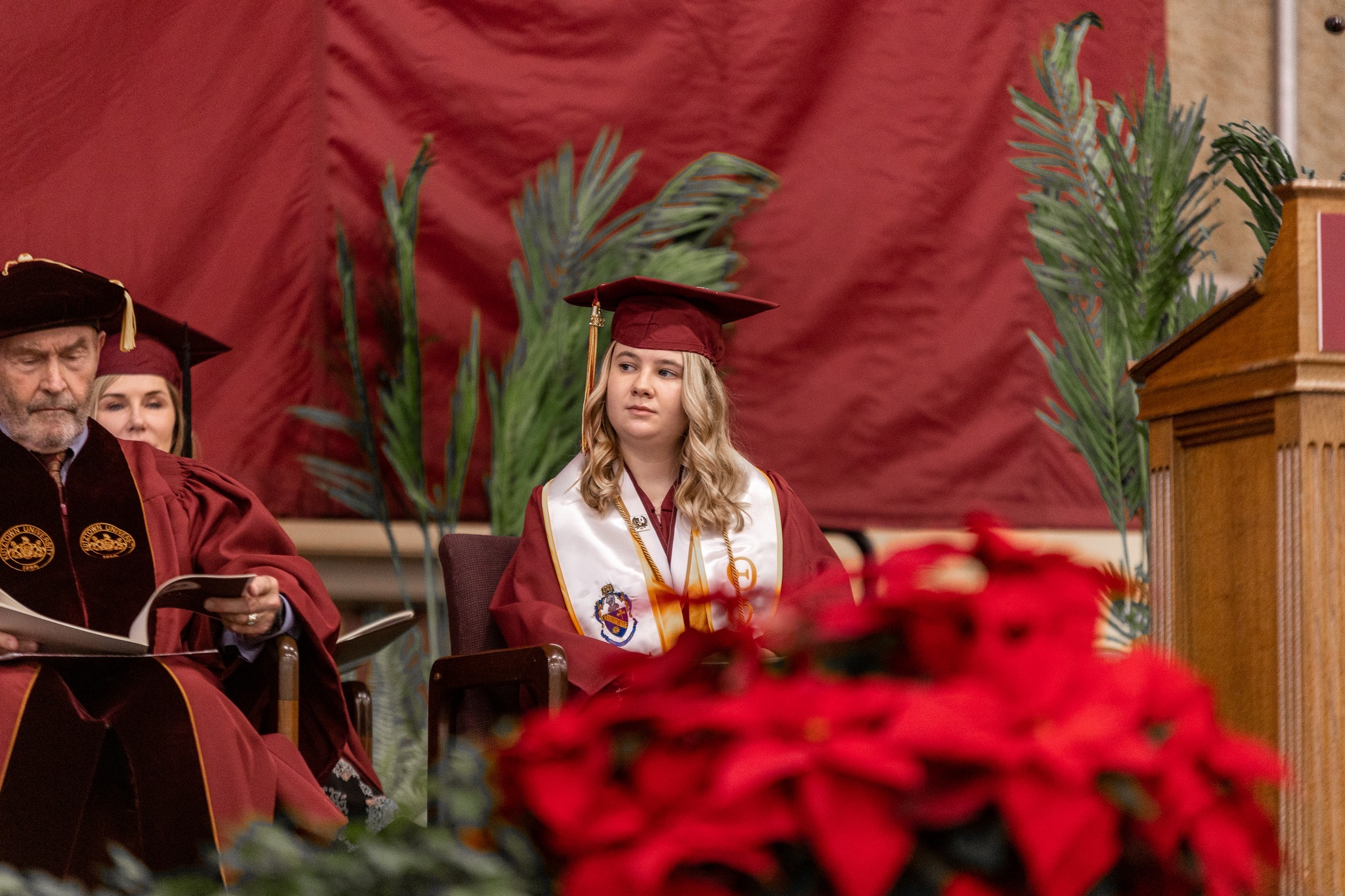
Kutztown University Class of 2025 Graduates

Kutztown University Class of 2025 Graduates

Kutztown University Class of 2025 Graduates

List of Graduates from Kutztown University

Kutztown University celebrated the achievements of numerous students who received their degrees during the spring graduation ceremony. Each graduate is recognized with honors, which are indicated as follows: with highest distinction; with high distinction; with distinction.

Doctor of Social Work

  • Alycha L. Boehm, Fleetwood
  • Jennifer L. Hoffa, Mohnton

Doctor of Education

  • Kathleen Brad, Topton
  • Cheryl L. Brattley, Fleetwood
  • Brent M. Erb, Cumru Township
  • Patricia Mejabi, Spring Township
  • Katie Ann Monahan, Kempton, transformational teaching and learning

Master of Public Administration

  • Philip W. Appiah-Agyei, Kutztown

Master of Business Administration

  • Katie R. Barker and Elvis K. Dzidzornu, Kutztown
  • Sarah G. Gatehouse, Spring Township
  • Abder Guzman Sanchez, Laureldale
  • Joseph Jardine, Mohrsville
  • Timothy S. Lias, Boyertown
  • Erik T. Shimkanon, Breinigsville

Master of Education

  • McKenzie Barlet, Lyons
  • Stephanie A. Mauser, Breinigsville
  • Amanda J. Remick, Alburtis, reading specialist
  • Samantha Boyer, West Lawn
  • Molly Garcia, Myerstown
  • Lauren McCall-Smith Hirsch, Leesport, instructional technology
  • Tucker Danish, Alburtis
  • Sean Y. Deiley, Boyertown, secondary education-teaching
  • Danielle M. Strunk, Kutztown, secondary education -curriculum and instruction
  • Jerri D. Holderer, Mount Penn
  • Melissa A. Zhang, Cumru Township, art education
  • Linda I. Onwubuya, Kutztown, higher education and student affairs
  • Jai Young, Hamburg, multicultural education-special education

Master of Arts

  • Kirsten A. Bayer, Douglassville
  • Elisabeth Hutchinson, Kutztown
  • Francesca I. Strickler, Sinking Spring
  • McKenna E. Yob, Kutztown, counseling – marriage, couple and family
  • Bryana Elliott, Hamburg
  • Jessica Filpe, Kutztown
  • Ana L. Sulivera and Jeff Tineo, Reading, counseling – clinical mental health
  • James W. Holmes, Reading
  • Ann M. Lemon, Mohnton, addiction counseling
  • Kara M. Johnson, Laureldale, arts administration

Master of Library Science

  • Kim Cowell, Kutztown

Master of Social Work

  • Luz M. Dabo, Jazmine D. Morales and Nicole Shaylor, Reading
  • Kate Geist, Birdsboro
  • Emily S. Hain, Bowers
  • Gianna M. Maier, Breinigsville
  • Mikhaiel Nanouh, Mount Penn
  • Grace Patton, Shillington
  • Laura H. Stoudt, Blandon
  • Lisa J. Tumbleson, Kutztown

Master of Science

  • Jovonni A. DeJesus, Wyomissing, computer science
  • Lucrecia Maldonado-Figueroa, Temple, school counselor

Bachelor of Science in Education

Elementary - Riley T. Adam, Shoemakersville
-
Emma A. Bollinger, Mertztown
-
Garrett M. Camelleri and Kaitlyn E. Kabatt, Exeter Township
-
Breanna M. Dagrella, Hamburg
-
Grace E. Good, Emily R. Jones and Jade E. Slaughter, Boyertown
-
Noah S. Hermany, Mertztown
- Payton O. Jones, Shillington
-
Hannah M. McGlone, Douglassville
-
Reanna J. Reynolds, Kutztown
-
Gabrielle Rider, Ontelaunee Township
-
Lauren Thomas, Mount Penn
-
Samantha J. Vaccaro, Fleetwood
-
Hannah Wanko, Gilbertsville
-
Juliann N. Yenser, Breinigsville, preK-4
-
**Kya A. Blake, West Lawn, 4-8 math and social studies
- Shingyin H. Kha, Denver, 4-8 science/English

Secondary - Matthew F. Graczyk, Gilbertsville, social studies
- Glenn R. Heckman, Shillington
- **Nathan B. Schaeffer, Mohrsville, mathematics
-
Madison L. Katein, Spring Township
- Lauren E. Kuennen, Robesonia
- **Matthew P. Stahl, Oley, English
- Veronica M. Nieves, Laureldale
- Thomas A. Shive, Alburtis, biology
-
Kyle X. Rautzhan, Leesport, general science

Special Education - Ashton M. Ochs, Denver
-
Emily E. Ramseur, Breinigsville
- Armando L. Torres, Blandon
-
Soleil B. Twyman, Reading

Bachelor of Science in Business Administration

  • Karen M. Awad, Gilbertsville
  • Kylie E Christman, Shoemakersville
  • Morgan T. Hillegas, Boyertown
  • Daniel S. Huber, Gilbertsville
  • **Joskar Marino Javier-Miranda, Reading
  • **Paige B. Krajcic, Mertztown
  • **Spencer L. Rose, Shillington
  • Noah I. Vivian, Barto, marketing
  • John P. Chibirka, Wernersville
  • *Emmanuel Eason, Sinking Spring
  • Eileen M. Jaquez, Reading
  • Makenzie M. Kramer and Taylor Mullin, Boyertown
  • *Tracey A. White Temple, finance
  • Hunter S. Darwin Deturk, Fleetwood, general business

Bachelor of Science

  • **Emily B. Baab, Breinigsville
  • Eden M. Bernstein, West Lawn
  • Haleigh Davis, Morgantown
  • ***Jonae M. Hatch, Exeter Township
  • **Sara R. Hunter, Blandon
  • ***Kelly Kline, Laureldale
  • Nikki Krzesinski, Kutztown
  • ***Cameran K. Martin, Sinking Spring
  • Dana Mejia, Temple
  • Amber M. Mengel, Wyomissing, psychology
  • Jacob Riley Baker, Birdsboro
  • Rachel L. Erb, Spring Township
  • Reece K. Iannacone, Breinigsville
  • Michael D. Maenza, Mohrsville
  • ***Gillian R. Samony, Gilbertsville, environmental science-biology
  • **Michael C. Barnett, Douglassville
  • **Lane Senkow, Bally
  • ***Molly Shiery, West Lawn
  • ***Angie J. Silva Garcia, Reading
  • ***Zoe A. Weidman, Kutztown, cinema, TV and media production
  • George C. Beard, Sinking Spring, general studies
  • ***Evan S. Binkley, Alburtis
  • Dyllan E. Burgos, Josh A. Cacayan and Luis M. Mateo, Sinking Spring
  • ***Shannen T. Cawley, Blandon
  • *Eve A. Collier, St. Lawrence
  • **Matthew N. Hill, Kutztown
  • Zachary C. Reese, Mount Penn
  • Kyle Twardowski, Exeter Township
  • ***Arman M. Sheets, Mertztown
  • Alex D. Snyder, Gilbertsville
  • ***Elliot J. Swan, Shoemakersville
  • Austin E. Swartley, Bernville, computer science
  • **Therese F. Coleman, Wernersville
  • ***Marshall Hersey, Barto
  • **Aaron D. Schwien, Alburtis, microcellular biology
  • Valerie I. Colon, Kutztown
  • Zachary Kijak, Birdsboro
  • Jared R. Messner, Shoemakersville
  • Alyssa M. Scoblick, Gilbertsville
  • Brody J. Wagner, Hamburg, criminal justice
  • Cameron T. Crites and Devin A. Peterson, Kutztown
  • ***Kathryn E. Gabriel, Blandon, physics
  • **Evan M. Curtin, Douglassville, physics-astronomy
  • Kayla Oviedo, Reading, engineering physics
  • ***Ashton C. Datko, Exeter Township
  • ***Trevor J. Wylezik, Sinking Spring, mathematics
  • Ashleigh M. Deacosta, Leesport, environmental science-geography
  • ***Lismeylin F. Medrano, Spring Township, public relations
  • Kale R. Fenstermaker, Kempton
  • ***Haley L. Gravish, Hamburg
  • Anthony Lopez, Leesport, social media theory and strategy
  • Emily E. Ford, Breinigsville
  • *Joshua D. Romig, Kutztown, biology-allied health
  • ***Aalay Patel, Janvi C. Patel and Colby A. Rosen, Breinigsville, biology – pre-med and health
  • **Sierra Friscia, Kutztown
  • ***Brielle L. Fritz, Breinigsville
  • ***Kira M. Pepper, Muhlenberg Township
  • *Emma Simms. Exeter Township, art education
  • Mitchell D. Hawkins, Fleetwood, game development
  • ***Hannah J. Katein, Spring Township, computer science/game development

Bachelor of Social Work

  • *Mallory P. Barndt, Douglassville
  • ***Jenna A. Brickel, Kutztown
  • Chavonna Cooper, Tia Cooper, Mayra Del Toro Alicea, Zander Douglas, Whitney D. Laurenceau and Emely Morban, Reading
  • *Teigan M. Goudy, Robesonia
  • Yunivi A. Matta Mercedes, Sinking Spring
  • **Haylie L. Provencher, Barto
  • **Jordyn A. Rivera, Muhlenberg Township

Bachelor of Arts

  • ***Anthony R. Batista, Fleetwood
  • **Liam M. Dalesandro, Robesonia
  • Caitlyn S. Koch, Douglassville, history
  • ***Ava P. Bendetti and Ian C. Bower, Breinigsville
  • ***Hunter E. Canestra, Gilbertsville
  • **Sydney C. Knabb, Fleetwood, communication studies
  • Erick R. Caraballo, Reading, music performance
  • **Emma D. Cook, Kutztown, music business
  • **Jonah A. Teel, Mertztown, music – commercial
  • ***Abigail E. Craft, Fleetwood
  • Johnesha Salata, Kutztown, English
  • ***Abigail L. Miller, Kutztown, English – paralegal studies
  • *Gigi B. Doklan, Hamburg
  • ***Siobhan Houghton, Fleetwood
  • **Grant L. Rambo, Morgantown
  • Nathaniel J. Soisson, Kutztown, English-professional writing
  • Erin H. Foley, Fleetwood, Spanish (also bachelor of science in biology-organismal ecology/geography)
  • Megan E. Grim, Reading
  • Tyler A. Scheirer, West Reading, geography
  • Akash Singh, Breinigsville
  • Seth T. Winger, Birdsboro, political science
  • ***Jessica Southgate-Sands, Breinigsville, German (also bachelor of science in secondary education)
  • ***Sabrina M. Spicer, Gilbertsville, sociology
  • Kendra A. Talarico, Alsace Township, anthropology (also bachelor of science in microcellular biology)

Bachelor of Fine Arts

  • *Beck W. Borelli, Reading
  • **Ruby J. Garcia, Temple
  • *Evan A. Henninger, Gilbertsville
  • Abigail F. Kunkle, Mohrsville
  • ***Melissa Laubach, Kutztown
  • **Makayla A. McKiernan, Alburtis
  • *Kayden R. Moyer and Julia Treacy, Douglassville
  • **Ryan T. Murphy, Mount Penn
  • ***Elizabeth P. Nieli, Denver
  • ***Karleigh A. Patton, Exeter Township
  • Luke D. Repsik, Boyertown, communication design
  • Kristina I. Bryan, Sinking Spring
  • Jade J. Ramos, Mount Penn
  • Jacob A. Wildermuth, Hamburg, studio art (also bachelor of science in art education)
  • Bridget T. Danish, Alburtis
  • Aniyah L. Jackson, West Lawn
  • Gabrielle E. Ordiway, Alburtis, studio art
  • **Sydney Hartman, Oley Township
  • Ava J. Henschel and ***Lily J. Keim, Birdsboro
  • Anh Thu Huynh and Emily H. Light, Myerstown
  • Mallory C. Johnson, Boyertown
  • ***Anastasia C. Kelsall, Kutztown
  • *Edward J. Luna, Reading
  • ***Warren J. Valentine, Fleetwood, animated arts

Tuesday, August 5, 2025

Crisis to Comeback: Jayson Boyers on Embracing Disruption in Higher Education

Crisis to Comeback: Jayson Boyers on Embracing Disruption in Higher Education

Featured Image

From First-Gen Student to Systems Thinker

Jayson Boyers, Ed.D, has carved a unique path in the world of higher education. As a first-generation college graduate, his journey was anything but conventional. “College wasn’t really a consideration in my family, and becoming a college graduate was in some ways hard to fathom,” he recalls. This personal experience instilled in him a deep passion for education as a tool for socioeconomic mobility and personal growth. “It allowed me to experience things I could never have imagined without a college education. I fell in love with this door to opportunity and wanted to help others open it.”

This sense of purpose led Boyers into various leadership roles across academia, from dean to vice president, and eventually to the presidency at institutions facing significant financial and operational challenges. At one institution, he inherited a 60-day notice from the bank just weeks into his tenure. Rather than being overwhelmed, he confronted the root issues that extended beyond the balance sheet. He used the uncertainty as an opportunity to reimagine what these colleges could become. “I used to tell my team, there’s always an answer. You may not like the answer, but it’s there,” he says. “You have to make choices aligned with your values, and if you do, even in crisis, you can build something stronger on the other side.”

Why College Still Pays

Despite growing skepticism about the value of a degree, Boyers remains steadfast in his belief that higher education is one of the most reliable paths to long-term economic stability. “When you look at lifetime earnings, it’s exponentially different for those with a college degree. The data doesn’t lie. Attaining a college degree is worth it.” For Boyers, the return on investment isn't just about salaries. “A college degree isn’t just about making money. It prepares you to be an engaged, capable citizen. We need people who understand how to contribute to their communities. College helps with emotional, social, and financial maturity.”

Recent research from the Social Security Administration supports this claim. Men with bachelor’s degrees earn approximately $900,000 more in median lifetime earnings than high school graduates. For women, the difference is about $630,000. The Association of Public and Land-grant Universities (APLU) notes that bachelor's degree holders earn 31 percent more than those with an associate degree and 74 percent more than individuals with only a high school diploma.

Boyers highlights institutions like West Coast University, where he currently serves in a senior leadership role. The university, which focuses on healthcare credentialing, ranks in the top 1 percent of U.S. institutions for 40-year return on investment, according to Georgetown University. “That’s a powerful example of how the right kind of education, tailored to workforce demand, pays off, not just financially, but societally.”

Diagnosing the Real Problem in Higher Ed

Boyers is quick to challenge conventional thinking when it comes to why many colleges fail. “When institutions collapse, the issue usually isn’t financial. That’s just the symptom. The real problem is when schools forget who they are or can’t translate their mission into the modern economy.” This diagnosis is particularly acute for smaller private colleges, often in rural areas, that face mounting pressure from demographic shifts, shrinking enrollment, and outdated models. “These colleges were built for 18- to 22-year-olds, but that group now makes up a smaller slice of the college population than it has historically. The reality is most college students are over 25. College is no longer a four-year chapter. It’s a lifelong endeavor.”

Estimates from the National Center for Education Statistics and the Lumina Foundation place the number of non-traditional students in higher education at approximately 73 to 74 percent. Boyers believes this should fundamentally reshape how institutions design programs, allocate resources, and imagine campus life. “It’s not enough to support students while they’re present on campus. We have to design environments that support both campus and growth beyond campus, in the global classroom, over a lifetime.”

Building Capacity Before Growth

For Boyers, real transformation begins with matching vision to capacity. “Too often, schools chase ambitious goals like new programs and partnerships, without the infrastructure to support them,” he says. “You need to ask: what do I need to build now to sustain this later?” It’s an approach he refers to as “growing with guardrails.” The goal is not just growth, but sustainable, student-centered growth. “You can grow fast, but are you ready to support that growth? Do you have the systems, the staffing, the leadership? If not, you risk implosion.”

Boyers also urges institutions to move past what he calls “legacy wins.” “There’s a difference between dead tradition and living tradition. Dead tradition turns your institution into a museum. Living tradition adapts what was meaningful about your past into something vital for today.” This mindset was tested during the pandemic, when the college he led had already integrated digital learning platforms across all programs. “When COVID hit, our students adapted quickly. We hadn’t changed who we were, but we had built in the flexibility to thrive under new conditions. That’s the power of living tradition.”

Leadership Rooted in Values

With more than 25 years in the field, Boyers has helped institutions navigate disruption not as a threat, but as an opportunity for renewal. The institutions that endure are those that know who they are, and are willing to adapt without abandoning that core. What ultimately drives Boyers’ approach is a clear-eyed commitment to values. “You make decisions aligned with your mission and your people: students, faculty, staff. If you stay true to that, you’ll find a way forward,” he says. “A lottery ticket, an overnight solution, waiting for that one donor, none of that will save you. But thoughtful, aligned decisions will.”

Monday, August 4, 2025

Ocean Studies or Marine Sciences? Hemel Students Explore Top South Coast Research University

Ocean Studies or Marine Sciences? Hemel Students Explore Top South Coast Research University

Featured Image

A City Shaped by the Ocean

Portsmouth, a city uniquely positioned as the only island city in the UK, has long been defined by its deep connection to the ocean. From its natural deep-water harbor to its rich maritime history, the city's relationship with the sea is both historical and evolving. Today, Portsmouth is also emerging as a hub for ocean-focused education and research, offering students and researchers unparalleled opportunities to explore and contribute to the future of marine science.

Local Studies with Global Impact

The University of Portsmouth stands at the forefront of this movement, serving as a leading research institution that drives positive change locally and globally. For those passionate about the oceans and their sustainable future, the university provides exceptional facilities and real-world experiences. Students often find themselves involved in research that influences policy and blue economy strategies across the globe, from Africa to Zanzibar.

Leading in Ocean Science Research

Addressing the complex challenges facing marine environments requires expertise from multiple disciplines and collaboration between scientists within the university and across the world. Several research centers in Portsmouth are dedicated to protecting the planet’s seas, including:

  • Marine Biology Research Group
  • Centre for Blue Governance
  • Centre for Enzyme Innovation
  • Revolution Plastics Institute
  • Institute of Marine Sciences
  • Institute of Biological and Biomedical Sciences

At the Centre for Blue Governance, researchers and students work on projects focused on the protection, restoration, and sustainable governance of aquatic environments. With over 70% of the Earth’s surface covered by water, understanding and managing these ecosystems is not only vital but also economically significant.

Understanding the Oceans

The university's international community of interdisciplinary researchers examines issues such as climate change, pollution, biodiversity loss, and the safeguarding of human health. Professor Pierre Failler, Director of the Centre for Blue Governance and UNESCO Chair in Ocean Governance, highlights the city’s long-standing involvement in oceanic studies. “When it was a polytechnic school, people were working in economics and the management of marine resources,” he explains. Over time, the university has built strong networks with policymakers across the globe, including collaborations on the Blue Economy Strategy for Africa and similar initiatives in Asia.

Hands-On Learning Opportunities

For students, experiencing healthy and degraded ocean ecosystems firsthand is crucial. Portsmouth offers both examples along its coastline, allowing students to observe and study these environments directly rather than relying solely on classroom materials.

Research Facilities and Marine Restoration

The Institute of Marine Sciences, located at Langstone Harbour, provides researchers with easy access to the diverse marine life of the Solent, including several designated conservation areas. Here, scientists monitor and test various marine environments and seawater, studying human impacts and marine behavior in these underwater worlds.

Marine restoration and conservation efforts are also central to the university’s mission. The Solent Seascape Project, endorsed by the United Nations, and the Solent Oyster Restoration Project, led by the Blue Marine Foundation, aim to restore critical habitats such as oyster reefs, seagrass meadows, saltmarsh, and bird populations.

Pollution Monitoring and Assessment

Research from the Revolution Plastics Institute has revealed alarming levels of pollution around Britain’s coastline, with microplastics and fibreglass contamination found in shellfish. Additionally, students and researchers have mapped noise pollution along UK coasts and used environmental DNA (eDNA) sampling to track changes in marine biodiversity.

Student Experience and Academic Excellence

Portsmouth is known for its progressive approach to education, with a strong reputation for innovative teaching and globally significant research. The university recently ranked 5th in overall satisfaction for research degrees according to the Postgraduate Research Experience Survey (PRES). It also secured third place among modern UK universities for research power in the Times Higher Education REF rankings.

By integrating research into undergraduate learning, the university ensures students receive a high-quality education that prepares them for future careers. Recent achievements include a student who discovered a 145-million-year-old prehistoric mammal during fieldwork on the Dorset coast.

Where Sport Meets Science

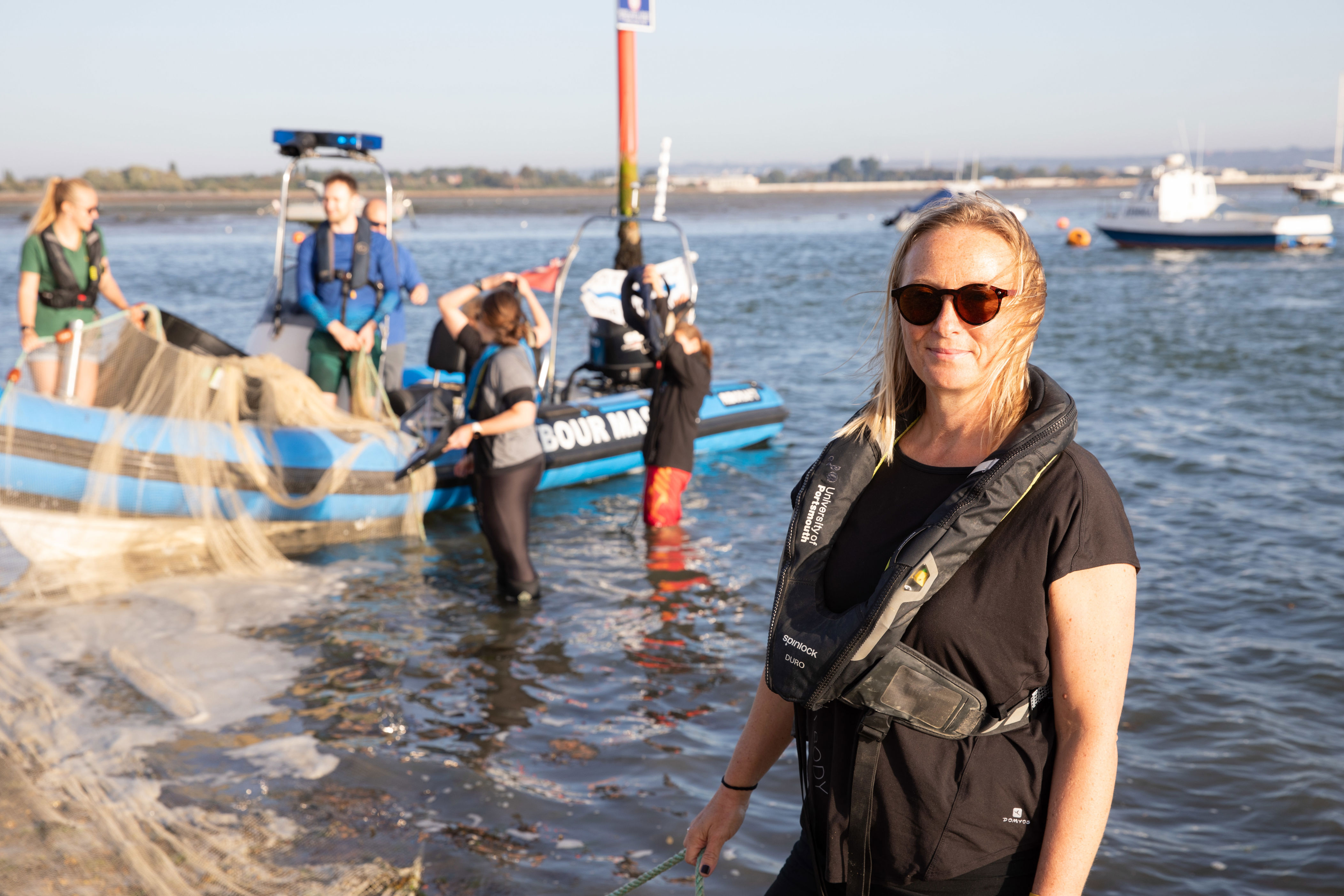
For students interested in combining academic pursuits with outdoor activities, Portsmouth offers unique opportunities. Laura Fantuzzi, a PhD student, monitors pollution and biodiversity in British coastal waters using data collected during the GB Row Challenge, an ocean rowing race event. The university’s coastal location also allows for water-based activities like sailing, rowing, and diving.

“Being on the coast is a major advantage,” says Fantuzzi. “The Institute of Marine Sciences is right on the water, and you can go out and snorkel. The water is surprisingly clear, and there’s life growing on the submarine blocks and hiding among the rocks.”

Exploring Opportunities

For prospective students, the University of Portsmouth offers a range of courses through Clearing. Those interested in applying for 2026 can visit the official website or contact the Clearing line at 023 9284 8073.

Saturday, August 2, 2025

University of Delhi | Redefining Academic Excellence | Top Government University

University of Delhi | Redefining Academic Excellence | Top Government University

Featured Image

A Legacy of Excellence and Transformation

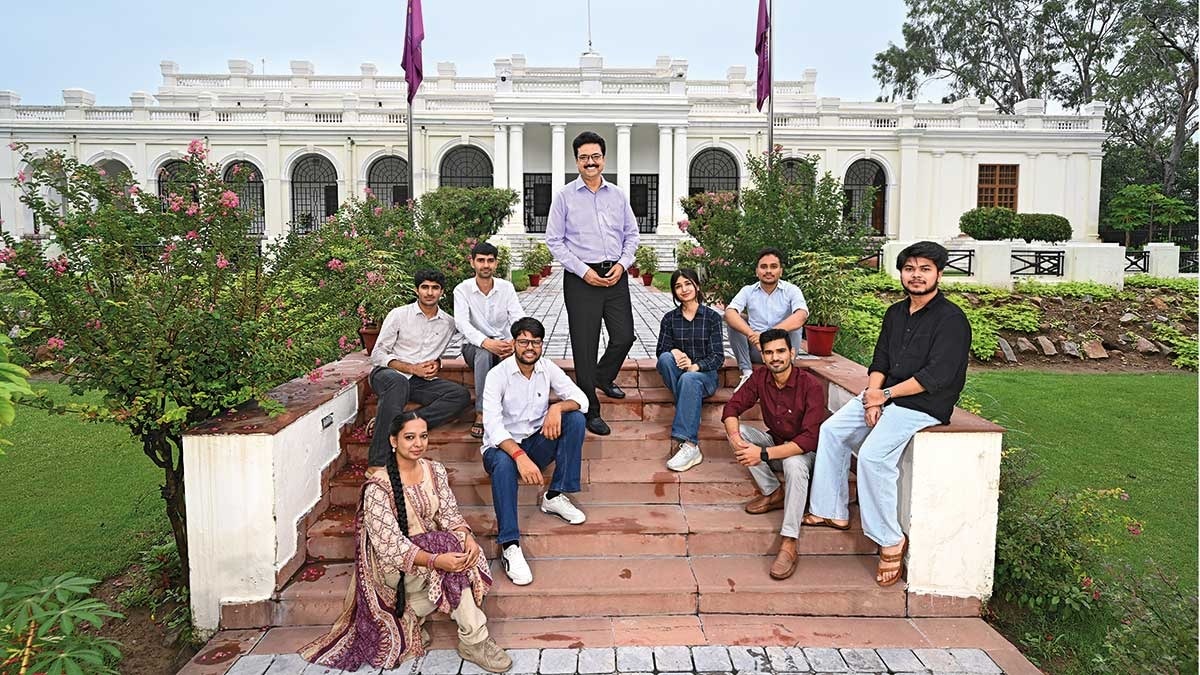
The University of Delhi, established in May 1922 through an Act of the central legislature, has grown into one of India's most prestigious institutions of higher learning. Initially, it had two faculties—Arts and Science—and offered a limited range of undergraduate and postgraduate programs through three founding colleges: St. Stephen's, Hindu College, and Ramjas College. The university started with eight departments, including Sanskrit, History, Economics, English, Arabic, Persian, Physics, and Chemistry. Its library was founded with a donation of 1,380 books, reflecting the early commitment to academic excellence.

By 2025, the university has expanded significantly. It now offers 90 undergraduate, 135 postgraduate, and 71 PhD programs, along with 37 certificate and 114 diploma courses. Spanning 407 acres, it encompasses 91 colleges, 16 faculties, 86 academic departments, and 23 centers, schools, and institutes. With over 620,000 students enrolled, it stands as one of India’s largest and most diverse public universities.

More than 11,000 students are currently enrolled in postgraduate programs, highlighting the university's dedication to advanced academic training, research, and interdisciplinary scholarship. Out of 109 academic units, 87 focus on postgraduate and higher studies. Aligning with the National Education Policy 2020, the university introduced the Undergraduate Curriculum Framework (UGCF) 2022 and the Postgraduate Curriculum Framework (PGCF) 2025, emphasizing flexibility, interdisciplinarity, and research orientation.

The infrastructure blends colonial-era buildings with modern facilities, including 34 libraries with over 1.7 million volumes and access to 30,000+ e-journals. The campus features 20 student hostels, 568 classrooms equipped with audio-visual tools and WiFi, and 238 specialized laboratories supporting PG and doctoral programs across various disciplines.

In 2024, the university recorded an impressive research output, with over 5,200 publications indexed in Scopus. Of these, 10.4% were in the top 10%, and 1.2% were among the top 1% most cited globally. The university also filed four patents and achieved 1,725 campus placements, with leading recruiters like Accenture, Deloitte, EY, McKinsey & Company, ZS Associates, ICICI Bank, KPMG, Amazon, Adobe, ITC, Mahindra, Morgan Stanley, and TCS. The highest package offered to a postgraduate student exceeded Rs 1 crore per annum.

However, this figure only captures part of the placement landscape. Many students pursue non-traditional careers, such as independent legal practice, judicial apprenticeships, or roles in translation, creative writing, journalism, and freelance performance. Over 50% of outgoing postgraduate students come from Science, Commerce, Economics, and Social Sciences, often entering start-ups, consultancies, NGOs, and digital media. These fields emphasize flexibility, innovation, and personal growth, reinforcing the university's role as a powerhouse of higher education.

Transforming the Future

Over the past two years, the University of Delhi has undergone significant transformation, driven by a vision to elevate its status as a premier institution. One of the key achievements has been the recruitment of nearly 5,000 faculty members, enhancing academic quality and research excellence. The ongoing recruitment of non-teaching staff ensures better administrative support and smoother operations across the university's extensive network of 91 colleges and 500 academic programs.

Infrastructure upgrades have been a priority, with a Rs 2,000 crore investment aimed at renovating existing facilities and constructing new buildings with modern amenities such as smart classrooms, WiFi connectivity, CCTV surveillance, and sustainable solar power solutions. The new East and West campuses, located near Karkardooma Court and Sector 21 metro station in Dwarka, are set to become operational by September 2026, marking the university's expansion beyond its traditional North and South campuses.

Academic innovation is also a focus. The university has launched engineering programs, expanding its reach into technology education after decades of reliance on affiliated institutes. New MA programs in Korean and Chinese Studies reflect a global and interdisciplinary outlook. The implementation of the National Education Policy (NEP) 2020 introduced four-year undergraduate programs, enhancing academic flexibility and depth.

Research output has flourished, with over 5,200 publications in 2024 and the highest H-Index among Indian universities. The 'Institution of Eminence' status and government funding have accelerated investments in digital infrastructure and central research facilities. Entrepreneurship is being nurtured through a dedicated startup incubator offering seed funding, mentorship, and internships, while the Vice Chancellor Internship scheme connects students with industry and administrative roles.

Admission reforms through a centralized entrance test ensure a level playing field for applicants across diverse educational boards, fostering meritocracy and diversity with a balanced gender ratio of 53% female students. As the University of Delhi celebrates more than a century of excellence, these comprehensive reforms and investments signal a dynamic new chapter.

A Launchpad for Dreams

After completing my BSc (Hons) in Chemistry from Hindu College, I dedicated myself to preparing for the UPSC Civil Services Exam, reaching the interview stage in February this year. However, over time, I realized that while public policy fascinated me, I also wanted to explore its application from a corporate perspective. That’s when the Faculty of Management Studies (FMS) became my natural next step.

FMS offered everything I needed: academic excellence, flexibility, an unbeatable alumni network, and the convenience of being in Delhi, which allowed me to manage my UPSC attempt alongside my course studies. Academically, FMS keeps us on our toes. We tackle diverse courses—finance, IT, marketing, strategy—before specializing in the second year. I chose marketing and strategy, and I’m also diving deep into government consulting. We’re currently required to complete a dissertation.

What I love most about the FMS and DU ecosystem is its balance—it’s rigorous but not suffocating. There’s space for growth beyond textbooks through case competitions, guest lectures, and cultural clubs. Outside the classroom, I’m an executive member of the Public Policy Club, the first of its kind at FMS. We host guest lectures and policy conferences, and it’s rewarding to create platforms where business students explore how policy intersects with the private sector.

As I look forward to my final semester, placements, and beyond, I also reflect on my time at FMS. It has been more than just pursuing a degree—it’s been a pivot, a platform, and most of all, a launchpad.

NLSIU Bengaluru | Top Law University | Strong Legal Foundations

NLSIU Bengaluru | Top Law University | Strong Legal Foundations

Featured Image

Infrastructure and Academic Expansion at NLSIU

The National Law School of India University (NLSIU) in Bengaluru is undergoing a significant infrastructural revamp to support its academic growth. Over the past few years, the university has expanded its student intake, increasing the total number from 550 in 2019 to 1,734 currently. This expansion has necessitated improvements to the campus, which spans 23 acres. Two academic blocks are set for an upgrade, and the university plans to develop an additional 7-acre parcel recently granted by the Karnataka government. A budget of Rs 100 crore has been allocated for the redevelopment of these two academic blocks over the next two years.

Prof. Dr Sudhir Krishnaswamy, the Vice-Chancellor of NLSIU, emphasizes that the combination of people and infrastructure is crucial to maintaining the university's status as India’s top law institution. He highlights that this mix is supported by rigorous teaching and learning practices. The comprehensive redevelopment of the campus will be a key focus in the coming years, with the aim of enhancing both academic and student experiences.

Academic Milestones and Program Developments

In May 2025, NLSIU celebrated a major milestone with the graduation of the first batch of students from its three-year LLB course, launched in 2022. Among the graduates was Vibha Swaminathan, a Rhodes Scholar and one of five recipients in India for the year 2025. This achievement underscores the university’s commitment to excellence and attracting high-caliber students.

Another significant development is the interdisciplinary Master's in Public Policy (MPP) program, which marked its 10th anniversary in 2024. Introduced in 2014, the MPP program has played a pivotal role in NLSIU's evolution into a multidisciplinary university. It has provided a foundation for hiring faculty members in policy studies and social sciences. To date, the program has produced approximately 500 alumni.

For the current academic year, NLSIU is focusing on strengthening its research initiatives by introducing a new fellowship program for researchers at various stages of their academic and professional careers. The goal is to foster original knowledge creation in law, social sciences, public policy, and related disciplines while building a strong research community.

PhD Program Reforms and Research Opportunities

Over the past three years, NLSIU has transformed its PhD programs. The PhD (Law), PhD (Public Policy), and PhD (Interdisciplinary) have been restructured around four core disciplines: Law, Social Sciences, Humanities, and Public Policy. This realignment aims to increase academic rigor and improve professional opportunities for students. In 2025, the university saw a 70% increase in PhD applications compared to 2024, with offers extended to students from diverse backgrounds, including historians, economists, sociologists, and lawyers.

In addition, NLSIU introduced doctoral fellowships in 2025 for all full-time PhD scholars. These fellowships start at Rs 50,000 per month in the first year and include annual increments. The stipend is higher than what is offered at many other Indian universities.

In 2024, NLSIU celebrated the 10th anniversary of its MPP program. A curriculum review process involving academics, government officials, civil society, and professionals led to enhancements that provide students with more exposure to public policy through internships, client-led projects, and capstone projects. The university has also improved its student intake through a rigorous admission process and enhanced placement opportunities.

In 2025, NLSIU will launch a research fellowships program, offering opportunities for top scholars from India and abroad to spend between six months and two years conducting high-quality research on critical issues. These researchers will tackle challenges such as Labour and Work, Climate Justice, State Capacity and Reform, Law, Technology and Society, and Access to Justice and Legal System Reform. At least 15 research fellowship positions will be open for applications in July.

Student Perspectives and Campus Life

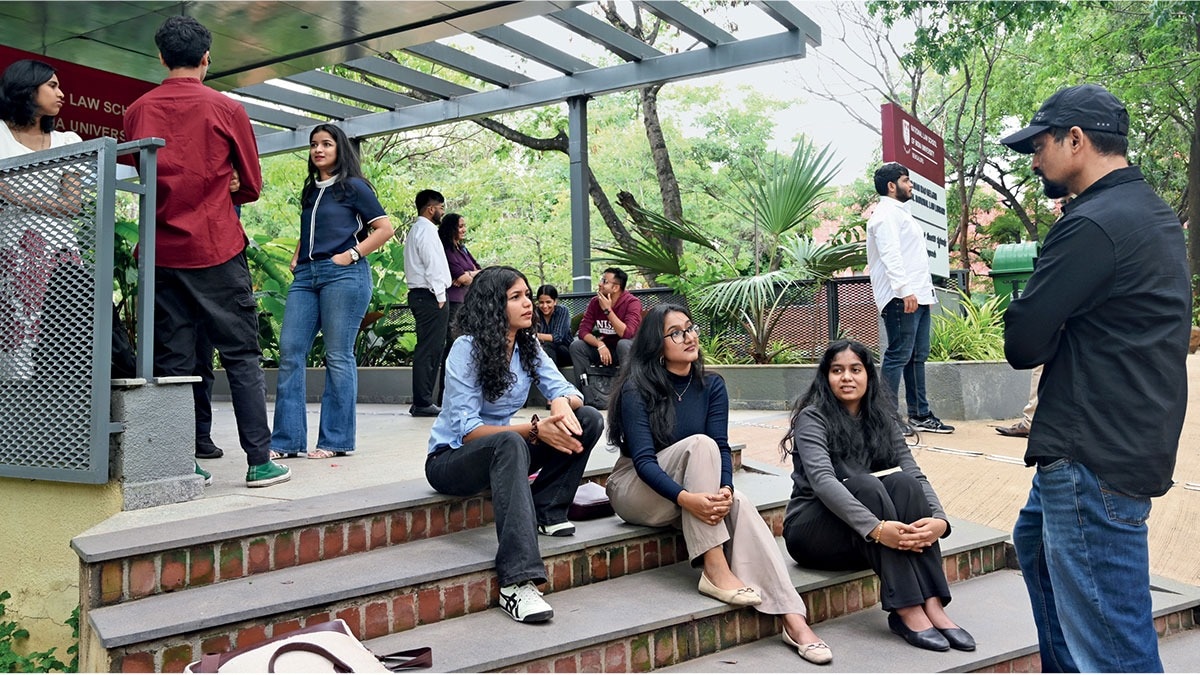
Omya Joshi, a postgraduate law student pursuing a Master’s in Public Policy, shares her experience at NLSIU. She was drawn to the MPP program not only because it is one of the oldest in the country but also due to the quality of its faculty. Many professors are accomplished policy practitioners and activists, enriching the learning experience by connecting classroom theories with real-world problems.

Joshi also highlights the mandatory rural immersion internship, which allowed her to engage with development realities on the ground. The MPP program is known for its rigor, with a heavy workload involving reading, assignments, and discussions. The diverse cohort of students provides varied perspectives, enhancing the learning environment.

Beyond academics, NLSIU offers a vibrant campus life with regular conferences and guest lectures featuring leading scholars. While Master’s students may not always have time for campus events, Omya participated in activities like the Uni Week singing competition, creating memorable experiences with her peers.

Thursday, July 31, 2025

She Holds a PhD, Yet This KC Dean Knows Education Isn't One-Size-Fits-All

She Holds a PhD, Yet This KC Dean Knows Education Isn't One-Size-Fits-All

Featured Image

A Journey Shaped by Mentorship and Service

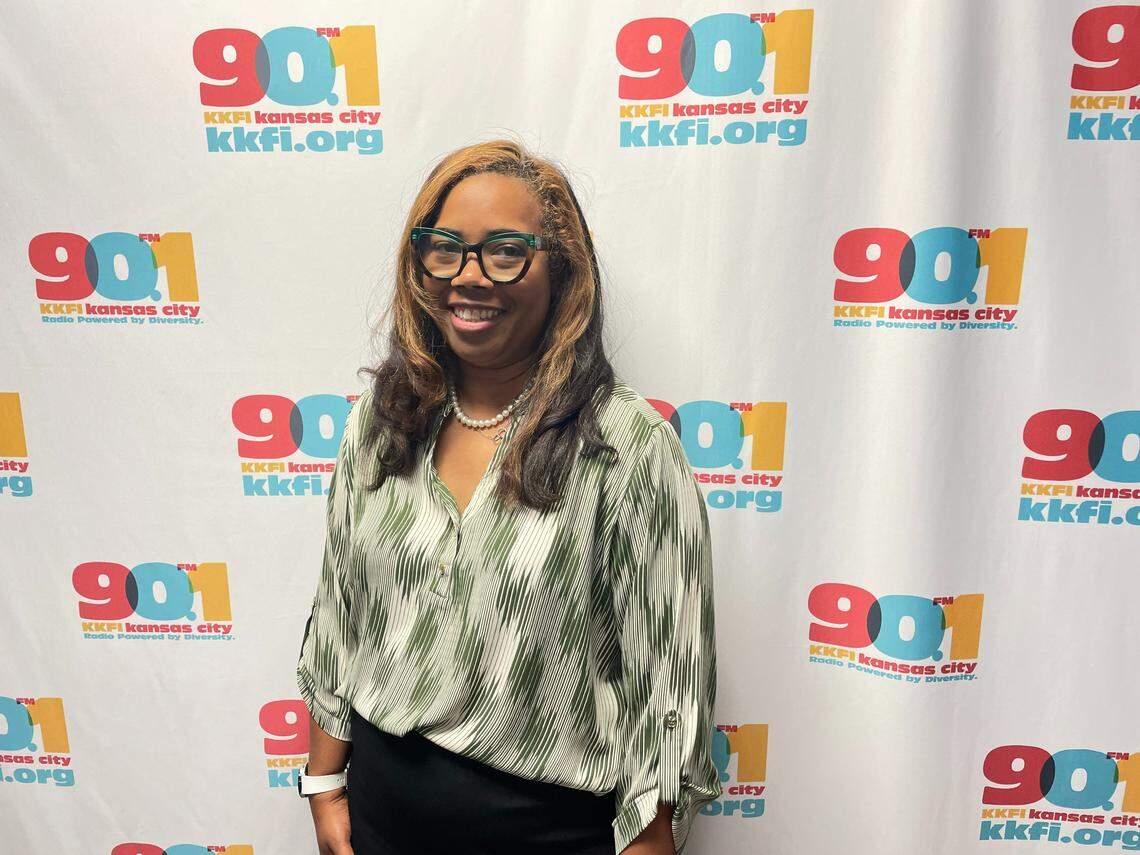
For Samaiyah Jones Scott, education was never a straight path. It was a journey shaped by mentorship, opportunity, and a deep sense of service. From being a standout student in Kansas City to being selected for the prestigious Mellon Fellowship, her path was guided by those who believed in her potential. Today, as dean of student development and enrollment management at Metropolitan Community College–Penn Valley, she continues to inspire and empower students.

Raised in Kansas City and a proud graduate of Lincoln College Preparatory Academy, Scott’s connection to education runs deep. She credits her KCPS roots with pride, believing that public schools have a powerful and lasting impact on students. Now, at MCC–Penn Valley, she leads efforts to redefine what success in higher education looks like. She focuses on accessibility, affordability, and workforce alignment, challenging long-standing stigmas around community colleges.

Scott's mission is clear: to make education an attainable, transformative reality for every student. Whether helping first-generation college students, expanding career and technical education pathways, or bridging gaps between K–12 schools and college campuses, she works tirelessly to ensure students have the support they need to succeed.

The Path to Education Leadership

Scott’s journey into education began when she attended a historically Black college in Augusta, Georgia. There, a faculty member introduced her to the Mellon Fellowship Program, which seeks to increase the number of Black students entering higher education as professors. Selected among 30 students nationwide in 2003, this experience set her on a trajectory toward a career in higher education.

Her passion for education grew from her upbringing in Kansas City. She attended Lincoln Prep from sixth grade through 12th grade, where she was exposed to impactful educators. Teachers like Dr. May Washington, who emphasized relevant reading materials such as Beloved, played a significant role in shaping her academic journey.

Lincoln Prep has a rich history of academic excellence, especially for African-Americans. It once offered associate degrees during segregation, highlighting its long-standing tradition of educational achievement. As a Blue Ribbon school, it continues to serve as a model for academic success in the metro area.

Servant Leadership and Educational Vision

Scott’s passion for education stems from her upbringing in a family that valued servant leadership. Her parents were active in their community, and she was involved in church and youth groups. This background naturally led her to pursue a career in education, where she could give back and help others achieve their goals.

She recalls how, even in elementary school, she took it upon herself to help peers who struggled with math. This early experience of mentoring others solidified her belief that education is not just about knowledge, but also about service and empowerment.

At Penn Valley, her role as dean involves working with students from recruitment to graduation. She collaborates with K-12 partners and community organizations to ensure students are well-prepared for higher education. By communicating the value of community colleges, she helps dismantle the stigma that these institutions are only for students who haven’t succeeded academically.

Redefining Success in Higher Education

Community colleges offer a range of benefits, including affordability, shorter training programs, and access to high-paying jobs in fields like HVAC and computer-integrated machining. Scott emphasizes that these options are ideal for students who want to avoid debt while gaining valuable skills.

She believes that education extends beyond the classroom. At Penn Valley, students have access to career services, counseling, and leadership opportunities. These resources help students develop soft skills that are essential in the workforce, such as communication, teamwork, and time management.

Challenging Stigma and Encouraging Diversity

The stigma surrounding community colleges often dates back to the idea that four-year institutions are the best option for high-achieving students. However, Scott argues that this perception is outdated and harmful. She works to show that community colleges can provide quality education and opportunities for all students, regardless of their background.

She also advocates for a more progressive view of education, emphasizing that not every student needs a four-year degree. Instead, she encourages students to explore different paths based on their interests and career goals.

Enrollment Trends and Future Goals

Since joining Penn Valley three years ago, Scott has seen a steady increase in enrollment. The campus has recovered from the decline caused by the pandemic and continues to grow. The rising population of students of color and international students has helped maintain strong enrollment numbers.

One of the biggest challenges Scott faces is managing the diverse needs of students and partners. From middle college programs to literacy initiatives, each group requires tailored support. Despite these challenges, she remains committed to ensuring every student receives excellent service and opportunities for growth.

Looking Ahead

Scott envisions a future where no student falls through the cracks. She wants to improve the consistency of service across all programs and encourage more project-based learning opportunities. These experiences help students prepare for the workforce and gain practical skills.

For those interested in learning more about the programs at Penn Valley, she recommends visiting mcckc.edu. Prospective students and educators can explore the campus, see facilities like the virtual hospital and Advanced Technical Skills Institute, and learn about the various career pathways available.

Wednesday, July 30, 2025

Harvard's Windfall: Executives Return to School

Harvard's Windfall: Executives Return to School

Featured Image

Harvard’s Shift to Executive Education as a Financial Lifeline

Harvard University has increasingly turned to executive and continuing education programs as a vital source of revenue, offering a crucial financial buffer during a period of significant challenges. This shift has positioned the university as a key player in the growing market for professional development, even as it faces scrutiny and financial pressures from external forces.

Before the Trump administration imposed restrictions on federal funding, Harvard had already begun focusing more on these programs. Executives and professionals seeking to enhance their skills or stay current with technological advancements have been willing to invest substantial sums in Harvard's courses, often covering the costs themselves or through employer sponsorship. These programs have become a reliable revenue stream, insulated from the political and financial turbulence that has affected other parts of the university.

In 2024, Harvard reported that executive and continuing education contributed nearly $600 million to its operating revenue, a significant increase from $155 million two decades ago. These programs accounted for 9% of the university's total operating revenue of $6.5 billion, making them a major financial pillar. Additionally, they made up 42% of the school’s net tuition and fee revenue, compared to 26% in 2005.

Despite some skepticism from alumni who view these programs as lacking the traditional prestige of Harvard’s degree-granting programs, the demand remains strong. The programs cater to a wide range of learners, including corporate executives, professionals, and lifelong learners. Courses vary in length and cost, with some short-term certificates priced at a few hundred dollars and others, such as multiyear programs at the Harvard Business School, costing over $150,000.

Revenue Streams and International Appeal

The appeal of Harvard's executive education programs extends beyond U.S. borders. Approximately 70% of the 12,000 executive education students at the Harvard Business School are international, making global reach a significant selling point. For instance, Raoul-Gabreil Urma, a UK-based entrepreneur, recently completed a multiyear program that included on-campus components and cost around $150,000. He praised the program for bringing together a diverse group of professionals from around the world.

However, the Trump administration’s efforts to restrict federal funding and limit enrollment of foreign students pose potential threats to this international appeal. Despite these challenges, many elite U.S. universities are expanding their executive education offerings, both online and in-person, to meet rising demand.

Other institutions, such as MIT, Columbia University, and the University of Virginia, have also entered the executive education space. MIT is developing a network of campuses across the U.S., while Columbia offers specialized programs for chief financial officers. The University of Pennsylvania’s Wharton School has established a campus in San Francisco, and the Darden School of Business at the University of Virginia has expanded into the Washington, D.C. area.

Expanding Global Reach and New Programs

Harvard itself is broadening its professional education initiatives. The university offers executive and continuing education through various schools, including the Kennedy School of Government and the TH Chan School of Public Health. These programs include cybersecurity certificate courses and leadership training, which are highly sought after by professionals in different sectors.

The TH Chan School of Public Health, for example, has seen a significant portion of its revenue come from federal research grants. However, as these funds face uncertainty, the school is turning to continuing education to fill the gap. A recent online leadership program, priced at $14,000, attracted interest from professionals looking for high-quality, flexible learning opportunities.

Rifat Atun, the new vice dean for non-degree education and innovation at the TH Chan School, is leading efforts to expand these programs, particularly in Latin America and the Middle East. His goal is to create more tailored educational offerings that meet the needs of a global audience.

Future Directions and Innovation

Harvard is also exploring new formats for continuing education. The Harvard Extension School is introducing microcertificates in AI-related topics and online graduate certificates that can be stacked toward a master’s degree. These innovations aim to provide more accessible and flexible learning options for working professionals.

Unlike earlier attempts at free online courses, which were not financially sustainable, executive education has proven to be a profitable model. Peter Bol, a Harvard professor, noted that while free online courses were a “money loser,” executive education has been a successful financial venture.

As Harvard and other top universities continue to invest in executive and continuing education, these programs are becoming an essential part of the higher education landscape. They not only provide critical revenue but also offer valuable learning opportunities for professionals seeking to advance their careers in an increasingly competitive global market.

UWO Chancellor Manohar Singh Discusses Enrollment, Gaza War and More in Northwestern Interview

UWO Chancellor Manohar Singh Discusses Enrollment, Gaza War and More in Northwestern Interview

Featured Image

A New Chapter for the University of Wisconsin-Oshkosh

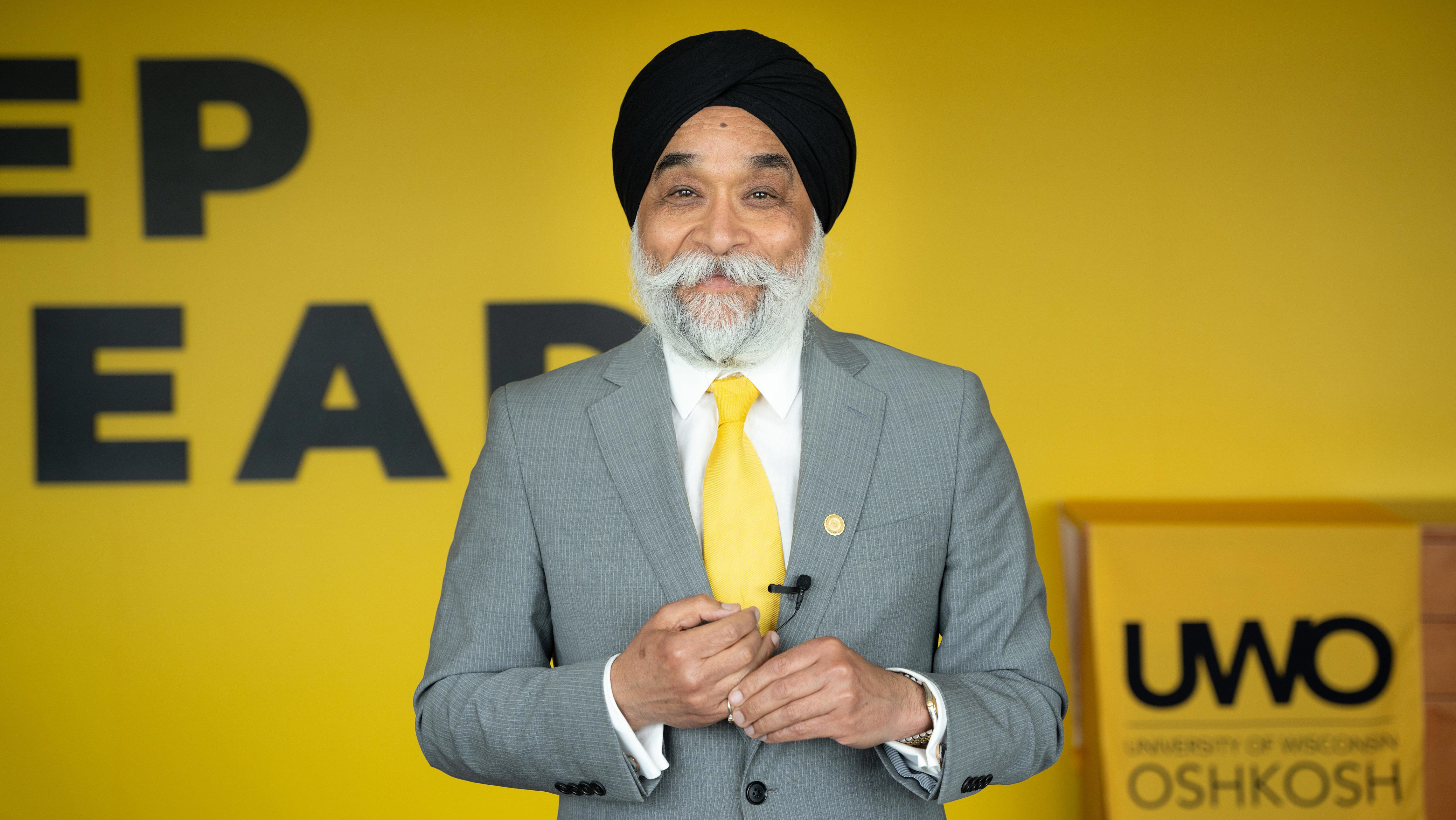
The first 30 days in any new role are always significant, and for Manohar Singh, the newly appointed chancellor of the University of Wisconsin-Oshkosh (UWO), they have been anything but ordinary. Known for his willingness to take on challenges, Singh has quickly immersed himself in the responsibilities of leading a university that is at a pivotal moment in its history.

Singh, who previously served as the interim president of Western Connecticut State University for two years, brings a wealth of academic and professional experience to his new position. He holds a doctorate in finance from Southern Illinois University, a master’s degree in economics from the University of Waterloo in Ontario, Canada, and a degree from Harvard University. His background in education and leadership has prepared him for the complex demands of managing a university system.

A Personal Journey Rooted in Education

Singh's journey to higher education was deeply influenced by his family. As the youngest of seven brothers, he grew up in a household where education was seen as the key to success. His parents, who were refugees from Pakistan and had never attended college themselves, instilled in their children a strong belief in the power of learning. Two of his brothers became Supreme Court Justices in India, while others pursued careers in finance and government service.

This upbringing shaped Singh’s career path, leading him to become a professor before transitioning into administrative roles. He sees his current position as a natural progression, driven by his commitment to higher education and the desire to make a meaningful impact.

A Strong Start with Significant Support

One of the early highlights of Singh’s tenure has been the state budget allocation of $256 million to the Universities of Wisconsin, including $137 million for the renovation of Polk Learning Commons. Singh expressed deep gratitude for the efforts of previous administrations and staff, acknowledging that their work laid the foundation for this investment.

He described the current environment as an exciting opportunity, comparing it to being "a child in a toy store" with so many possibilities ahead. His team is working tirelessly to address multiple challenges simultaneously, and he has observed a growing sense of optimism and pride within the university community.

Choosing UWO: A Call to Action

Despite the challenges UWO faced when Singh took on the role—such as layoffs, academic restructuring, and the closure of the Fox Cities Campus—he saw an opportunity to make a difference. For Singh, education is not just a profession; it is a calling. He believes that every individual deserves access to quality education, regardless of their background or circumstances.

His experience at Western Connecticut State University gave him confidence in his ability to lead UWO through difficult times without resorting to drastic measures. He emphasized the importance of respecting the sacrifices made by the community and ensuring that those efforts do not go in vain.

Vision for the Future

Singh’s vision for UWO is clear: to serve as an anchor institution that meets the evolving needs of the community. He believes that education should be accessible to all, especially first-generation students, who make up 41% of the student body. His focus is on affordability, accessibility, and creating a supportive environment that helps students achieve their goals.

He also recognizes the challenges posed by declining enrollment across the country but remains optimistic. By targeting underrepresented demographics such as international students, midlevel executives, and those with some college experience, UWO can expand its reach and build stronger partnerships with local businesses.

Addressing Diversity and Inclusion

As a minority in a community that lacks diversity, Singh is committed to fostering an inclusive environment. He believes that every student should be treated as an individual, and the university must actively address any instances of prejudice or inequity. This approach emphasizes human connection over broad policy decisions, ensuring that no one is left behind.

Balancing Growth and Stability

While UWO has recently returned to financial stability after a period of restructuring, Singh acknowledges that future changes may be necessary. However, he is determined to avoid unnecessary cuts and instead focus on strategic growth. His experience at Western Connecticut State University showed that it is possible to restructure without reducing staff, and he aims to apply similar principles at UWO.

Navigating Sensitive Issues

Singh also addressed concerns about the university’s response to the Gaza conflict. He emphasized the importance of dialogue and understanding, encouraging students to engage with one another respectfully. The university will continue to promote peace and inclusion, ensuring that all voices are heard and valued.

In his leadership, Singh has demonstrated a deep commitment to education, equity, and community engagement. His presence at UWO marks the beginning of an exciting chapter for the university and its students.

Sunday, July 27, 2025

Indiana's College-Going Rate Falls to 51.7%

Indiana's College-Going Rate Falls to 51.7%

Featured Image

Declining College-Going Rates in Indiana Spark Concerns

Indiana’s college-going rate for high school graduates has reached its lowest level in recent history, with fewer than 52% of the Class of 2023 enrolling in college within a year of graduation. This marks a continued decline from previous years, where the rate remained steady at around 53% between 2020 and 2022. A decade ago, the rate was as high as 65%, highlighting a significant shift in educational trends.

According to data released by the Indiana Commission for Higher Education (CHE), approximately 39,000 students from the Class of 2023 enrolled in college within a year of finishing high school. The numbers show that about 36% of these students chose to attend one of Indiana’s public four-year institutions, while 8% opted for private colleges or universities. An additional 7.6% enrolled in schools outside of the state.

The data, posted on the agency’s website earlier this month, has raised concerns among state leaders who have long worried about the declining college-going culture in Indiana. As the state increasingly emphasizes career credentials and work-based learning, questions are being asked about the impact on traditional college pathways.

Political Criticism and Institutional Changes

Rep. Ed DeLaney, a Democratic representative from Indianapolis, criticized the drop in college enrollment rates, attributing it to a lack of financial support and morale. He pointed to the governor’s decision to freeze tuition at state universities but noted that this move has not been accompanied by guarantees for increased financial aid or scholarships. DeLaney argued that without such support, more students may be forced to pursue alternative paths rather than attending college.

The 2023 data comes shortly after the higher education commission approved major changes to Indiana’s high school diploma, set to take effect in 2029. These changes emphasize work-based learning and career readiness over traditional college preparation. Students will now need to earn at least one “diploma seal” to graduate, which includes options for employment or postsecondary readiness. While some seals are designed for college-bound students, the new requirements no longer mandate all the coursework typically expected for college admission.

DeLaney accused Republican leaders of devaluing the opportunities provided by colleges and universities. He claimed that the supermajority has focused on attacking higher education institutions, including limiting course offerings and creating a new high school diploma that prioritizes workforce entry over academic preparation.

Data Highlights and Demographic Trends

The data also reveals important demographic trends. For instance, the college-going rate for male students dropped to 45%, compared to 59% for female students, widening an existing gender gap. Among racial groups, Asian and white students had the highest rates, at 70.7% and 54%, respectively. Black and Hispanic students had lower rates, at 45.5% and 41.7%. Students from low-income backgrounds, as measured by eligibility for free or reduced lunch, had a college-going rate of 38.7%, significantly lower than the 60% rate for their higher-income peers.

A quarter of postsecondary enrollees were pursuing STEM-related degrees, followed by business and communications programs (17.8%), health programs (16%), social and behavioral sciences and human services (11%), arts and humanities (9.9%), trades (7.4%), and education (5.8%). About 7% of students were undecided about their field of study.

More than 78% of college-bound graduates from the 2023 cohort were part of Indiana’s 21st Century Scholars program, which provides full tuition and fees for low-income students who enroll in the 8th grade.

Continued Focus on Early Success Metrics

The data also included updates on the Class of 2022. According to the CHE dashboard, 53% of that cohort met all three early college success benchmarks: they did not need remediation, completed all courses they attempted during their first year, and persisted to their second year. Additionally, 77.5% of the 2022 cohort that enrolled in a postsecondary program persisted to the second year.

These figures highlight ongoing challenges in ensuring that students are adequately prepared for college and able to succeed once they enroll. As Indiana continues to shift its focus toward career-oriented education, the implications for college access and completion remain a pressing issue.

Saturday, July 26, 2025

The Right's Battle Against Higher Education

The Right's Battle Against Higher Education

Featured Image

The Political Backlash Against Higher Education

Project 2025 has outlined a clear strategy to reshape the American higher education landscape. This includes eliminating the Department of Education, cutting federal funding, taking control of the accreditation system, and dismantling diversity, equity, and inclusion (DEI) programs. The ultimate goal is to influence what students study and what professors teach. But why is this happening, and is it effective?

Michael Roth, president of Wesleyan University and author of books such as Beyond the University and The Student: A Short History, is one of the most vocal defenders of higher education. He sees the current political attacks on universities as an assault not only on academic institutions but also on civil society itself.

In a recent discussion on The Gray Area podcast, Roth explored the political backlash against universities and its implications. He also examined where American higher education has gone wrong and what needs to change, especially in the context of AI’s growing role.

Roth argues that the federal government is attempting to weaken civil society by undermining the legitimacy of colleges and universities. He explains that this effort is part of a broader pattern of targeting institutions that hold independent authority from the ruling ideology. For instance, the Trump administration targeted high-profile universities like Harvard and UVA, which have significant cultural and intellectual influence.

What Is the Government Actually Doing?

Roth points out that the administration starts with seemingly minor issues, such as the treatment of trans athletes in NCAA sports. Although there are fewer than 10 trans athletes in the country, this issue becomes a rallying point for political agendas. He highlights how the administration uses these issues to exert control over university curricula and research funding. For example, he suggests that if a university does not align with certain views on Middle Eastern Studies, it could lose funding for critical research like Alzheimer’s studies.

This approach leads to a shift in higher education from fostering an oppositional culture to one that prioritizes compliance with the preferences of those in power. As a result, many universities begin to avoid controversial topics to prevent conflict with the administration.

Addressing the Public's Skepticism

Some people dismiss the concerns about universities, arguing that campuses are filled with privileged individuals with extreme views that don’t reflect the broader population. Roth counters this by pointing out that top universities like UVA and Harvard have growing majors in computer science and data science—fields far removed from the "woke" stereotypes often attributed to them. He emphasizes that students at these institutions are not representative of the general public because they are exceptionally talented, not necessarily politically extreme.

Roth also notes that in a democracy, it is important to celebrate excellence, even if it seems elitist. He draws a parallel to athletes or military personnel, who are admired for their skills rather than viewed as elitists. However, he acknowledges that some resentment exists toward institutions that create environments where exceptional individuals can thrive.

The Role of Universities in Democracy

Roth believes that universities should foster an environment where people can experiment with ideas, art, science, and politics. However, he warns that there is a growing effort to impose strict guardrails that force conformity with the views of those in power. This trend is unusual in the history of the United States and threatens the democratic values that higher education has traditionally supported.

He also addresses the question of whether the backlash against universities is entirely manufactured or if universities themselves have contributed to the problem. While he acknowledges that universities have real challenges, such as ideological conformity among faculty, he argues that these issues are not the root cause of the current attacks on free speech and academic freedom.

Reimagining the Purpose of College

When asked about the purpose of college, Roth outlines three key functions. First, it should help students discover what they love to do. Second, it should help them become better at what they love. Third, it should teach them how to share their talents with others, often through employment.

He emphasizes that college should not be solely about job preparation or credentialing. Instead, it should provide a space for personal growth, intellectual exploration, and the development of practical skills. Roth also discusses the role of AI in education, suggesting that while it can be a useful tool, it should not replace the human experience of learning and thinking.

The Future of Higher Education

As AI continues to evolve, Roth raises concerns about whether students will continue to value independent thinking or rely on machines to do the work for them. He believes that people want to think and engage with ideas, provided they are invited to do so. Ultimately, he sees the future of higher education as a balance between leveraging new technologies and preserving the core values of discovery, growth, and shared knowledge.

Friday, July 25, 2025

Online Classes Cost as Much as In-Person for College Students

Online Classes Cost as Much as In-Person for College Students

Featured Image

The Rising Cost of Online Education: A Paradox in Higher Learning

Online education has become a significant part of the American higher education landscape, with more students learning entirely online than ever before. However, this shift has brought with it a growing concern among students and educators alike: why do online courses often cost just as much—or even more—than their in-person counterparts?

Emma Bittner, a 25-year-old from Austin, Texas, found herself in this situation when she considered pursuing a master’s degree in public health. She expected that an online program would be more affordable, but instead, she discovered that the cost was comparable to or even higher than traditional in-person programs. “I’m like, what makes this worth it?” she said. “Why does it cost that much if I don’t get meetings face-to-face with the professor or have the experience in person?”

This confusion is widespread. A 2024 survey by New America found that 80% of Americans believe online learning after high school should cost less than in-person programs. After all, technology has driven down costs in many industries, and online courses theoretically offer economies of scale by eliminating the need for physical classrooms.

Yet, according to an annual survey of campus chief online learning officers, 83% of online programs in higher education cost students as much as or more than their in-person equivalents. Some institutions even add an extra “distance learning fee.” This discrepancy raises questions about how universities are pricing their online offerings.

The Financial Strategy Behind Online Tuition

Universities and colleges often use revenue from online programs to subsidize other parts of their operations. For instance, 60% of public and over half of private universities make more money from online education than they spend on it, according to the same survey. Many of these institutions reinvest the funds into general operating budgets.

Kevin Carey, vice president of education and work at New America, argues that online education is seen as a new revenue stream rather than a way to reduce costs. “Public officials are not stopping them,” he said. “They’re not coming and saying, ‘Hey, we’re seeing this new opportunity to save money. These online courses could be cheaper. Make them cheaper.’ This is just a continuation of the status quo.”

In addition to financial considerations, online programs also face higher operational costs. They require expensive technology infrastructure, faculty support, and resources such as online advisors and tutoring centers. According to a survey by Ithaka S+R, 80% of faculty reported that it takes as much time, or more, to develop online courses compared to in-person ones due to the need for technological integration.

Marketing and the Perception of Value

Another factor contributing to the high cost of online education is marketing. Universities invest heavily in advertising to attract students across the country. For example, the University of Arizona Global Campus spent $11,521 on advertising for every online student it enrolled. Similarly, the University of Maryland Global Campus committed $500 million to advertising over six years.

Such spending raises questions about whether the money could be better used to lower tuition. “What if you took that money and translated it into lower tuition?” asked Carey.

Despite the high costs, online students often face poorer outcomes. Research by Duha Altindag and colleagues found that online instruction results in lower grades than in-person education, and students are more likely to withdraw or repeat courses. Lower-income students, in particular, tend to struggle more in online settings due to limited access to resources and balancing work or family responsibilities.

The Future of Online Education

While online education continues to grow, some examples show that lower tuition is possible. Georgia Institute of Technology offers a $7,000 online master’s degree in computer science, significantly cheaper than its in-person version. Other institutions, such as Western Governors University and Southern New Hampshire University, also offer relatively low-cost options.

Competition among online providers is increasing, and some universities are cutting ties with for-profit middlemen known as online program managers. In 2023, nearly 150 such deals were canceled or not renewed.

However, despite these developments, the proportion of universities charging more for online programs than in-person classes has only slightly declined, and the drop is statistically insignificant. As enrollments continue to fluctuate, institutions increasingly rely on online revenue to sustain their operations.

For students like Bittner, the question remains: Why do online programs cost so much? “Even in the program I’m in now, you don’t get the same access to stuff as an in-person student,” she said. “What are you putting into it that costs so much?”

Notification
This is just an example, you can fill it later with your own note.
Done