Articles of Education: early childhood education
News Update
Loading...
Showing posts with label early childhood education. Show all posts

Wednesday, August 20, 2025

Clear Indicators Your Child Is Excelling Academically

Clear Indicators Your Child Is Excelling Academically

Featured Image

Understanding the Importance of a Strong Educational Foundation

For your child to succeed in life, it’s essential that they receive a solid education from an early age. Education is more than just academic knowledge—it shapes how children think, interact, and grow throughout their lives. As a parent, it’s crucial to support and encourage your child’s learning journey. However, knowing what to look for in their educational development can make a significant difference in how you approach their growth.

Here are some key indicators that your child’s education is progressing well, and how you can actively contribute to their success.

Curiosity and Asking Questions

One of the most powerful signs that your child is on the right track is their curiosity about the world around them. Children who ask questions regularly demonstrate a desire to understand how things work, why certain events happen, or what causes specific outcomes. This natural inquisitiveness is a strong indicator of critical thinking skills, which are vital for long-term learning.

Encouraging this curiosity is simple. You can respond to their questions thoughtfully, engage them in deeper conversations, and avoid dismissing their inquiries. By doing so, you help nurture their intellectual growth and foster a lifelong love of learning.

Confidence in Learning

As your child gains knowledge, they should also begin to show increasing confidence in their ability to learn new things. Whether it's tackling a difficult math problem or exploring a new subject, confidence plays a crucial role in how children approach challenges. This doesn’t mean they always get everything right, but rather that they feel empowered to try, fail, and try again.

If you notice your child approaching new tasks with self-assurance, it’s a positive sign that their education is helping them build resilience and a growth mindset.

Communication Skills

Strong communication skills are a fundamental part of any education. These skills go beyond speaking and listening—they include the ability to express ideas clearly, tell stories, and explain what they’ve learned. When children can articulate their thoughts, it shows that they are not only absorbing information but also processing and sharing it effectively.

Supporting communication development can be as simple as having meaningful conversations, reading together, or encouraging them to write about their experiences. These activities help reinforce language skills and enhance overall learning.

Literacy Skills

Literacy is another core component of a well-rounded education. From reading comprehension to writing and vocabulary, these skills form the foundation for all other learning. If you see improvements in your child’s ability to read, write, and understand complex texts, it’s a clear sign that their education is moving in the right direction.

Reading to your child regularly is one of the most effective ways to boost literacy. It not only enhances their language skills but also expands their knowledge and imagination.

Problem-Solving and Creativity

Creativity and problem-solving are often overlooked, but they are essential for success in both academic and real-world settings. Children who can think outside the box and find unique solutions to problems are better equipped to navigate challenges in life.

If you observe your child experimenting with ideas, building things, or coming up with innovative answers, it’s a good indication that they are developing these valuable skills. Encourage creativity by providing opportunities for exploration and play.

Social Growth

While cognitive development is important, social growth is equally vital. A well-rounded education includes learning how to collaborate, resolve conflicts, and respect others. If your child is showing improvement in these areas, it suggests that their school environment is supporting their holistic development.

Social skills also help children build relationships, communicate effectively, and function well in group settings. Supporting these skills at home can reinforce what they learn in school and prepare them for future interactions.

By recognizing these signs and actively engaging in your child’s learning, you can help ensure they are on the path to a successful and fulfilling life.

Monday, August 11, 2025

Tuition Soars Past $70K Annually—Before Kindergarten: Inside NYC's Elite Preschools

Tuition Soars Past $70K Annually—Before Kindergarten: Inside NYC's Elite Preschools

Featured Image

The Unconventional World of New York City’s Elite Preschools

In the summer of 2020, I found myself at a backyard barbecue in Brooklyn, where I met a man who had once been a homicide detective with the NYPD. It was still early in the pandemic, and even outdoors, people wore face masks. His presence there was unusual, especially given his friendly demeanor. When he mentioned that he now worked at a preschool, I was taken aback. A former detective teaching toddlers? That seemed surreal.

He explained that many of these elite preschools hire specialist teams from the police department, particularly those from high-pressure units. At the time, I didn’t have children yet, but I was fascinated by the idea of such a dramatic career shift. It wasn’t long before I became immersed in the world of early education in New York City, where the preschool experience is anything but ordinary.

Extreme Education for Tiny Toddlers

New York City is known for its extremes—whether it's the cost of living, the pace of life, or the weather. This extends to early childhood education as well. In some of the city’s most prestigious schools, toddlers are immersed in Mandarin, introduced to wellness through movement-based science, and taught emotional regulation techniques that could fit into a corporate mindfulness seminar. Tuition can easily exceed $70,000 per year, and admissions cycles begin when babies are just starting to speak their first words. Security is often handled by ex-cops, adding an extra layer of protection in a city where safety is paramount.

I later learned that the detective I met at the barbecue was not exaggerating. These schools are designed to provide an environment where children are nurtured, challenged, and prepared for future success from an incredibly young age.

Language Immersion and Play-Based Learning

At Avenues: The World School, one of the most exclusive early learning institutions in the city, toddlers are immersed in either Mandarin or Spanish from the moment they arrive. The school emphasizes a “language-rich environment” where games, stories, and music help children absorb language naturally. By the time students reach middle school, it’s often difficult to tell which children were raised speaking the language at home and which learned it at school.

Similarly, The Packer Collegiate Institute takes a play-based approach, allowing children’s interests to shape the curriculum. For example, a class that becomes fascinated with acorns may explore the topic through art, science, and storytelling. The school fosters a fluid and responsive learning environment, where teachers adapt to the needs and curiosities of each child.

A Different Approach: No Grades, No Uniforms

Saint Ann’s School in Brooklyn Heights takes a unique approach by rejecting traditional grading systems and formal discipline. Instead, the school offers narrative reports to parents, focusing on individual progress rather than competition. There are no uniforms, and teachers go by their first names, creating a more relaxed and personalized atmosphere.

On the other end of the spectrum, The Chapin School in Manhattan enforces a strict college-preparatory curriculum for three-year-olds, aiming for fluency in one of three languages by high school. Admissions require written applications, parental interviews, and evaluations during playgroup sessions. Almost all students go on to attend elite colleges, making it a top choice for parents seeking academic excellence.

Creative Programs and Rigorous Admissions

The 92nd Street Y preschool is another highly sought-after institution, offering creative programs focused on the arts. Weekly music and dance classes, art projects, and sensory play are part of the curriculum. However, access to these programs comes at a price—both financially and in terms of time. Families must go through a rigorous application process, including a guided tour with their infants, to be considered for enrollment.

Wellness, Movement, and Security

Beyond academics, these schools emphasize wellness and movement. At Avenues, the WAM program teaches children about the circulatory system through imaginative obstacle courses. Packer’s health and wellness curriculum includes conflict resolution and emotional resilience-building. These programs aim to equip children with the tools they need to navigate both school and life.

Security is also a priority. At Avenues, former NYPD detectives work as security officers, blending seamlessly into the school community. They are described as efficient, highly trained, and part of the school’s culture of care. Similarly, Packer uses a credentialed gate system and visitor lanyards to ensure safety while maintaining an open and welcoming environment.

College Conversations and Financial Aid

For families investing in these elite schools, college planning begins early. Parents often discuss higher education opportunities with their children as young as three. While this might seem excessive, educators argue that building a strong foundation in early years leads to long-term success.

Financial aid is available at many of these schools, though it is rare for younger children to qualify. At Packer, financial aid is among the most robust in the city, ensuring that some students from diverse backgrounds can attend alongside wealthier peers. Teachers are trained to avoid questions that highlight financial disparities, instead encouraging children to share meaningful experiences.

Networking and Professional Parenting

These schools also offer significant networking opportunities. Parents often form close connections, creating a supportive community that extends beyond the classroom. Educators emphasize the importance of building trust and collaboration between families and schools.

As the children grow, these relationships become invaluable. Parents who stay involved throughout their child’s education often gain a deeper understanding of the value of early learning. The goal is not just to prepare children for college, but to foster confidence, curiosity, and a lifelong love of learning.

Conclusion

In the rarefied world of New York City’s elite preschools, even the youngest students are given a head start. From language immersion and wellness programs to strict admissions processes and professional parenting, these schools are designed to provide a comprehensive and nurturing environment. While the costs and expectations may seem extreme, the focus remains on the long-term development of each child, ensuring they are equipped to thrive in an ever-changing world.

Monday, August 4, 2025

Ohio Tackles Disability Bias in Child Care Centers

Ohio Tackles Disability Bias in Child Care Centers

Featured Image

A New Approach to Inclusion in Child Care

When Selina Likely became director of the Edwards Creative Learning Center six years ago, she knew there was one longstanding practice that needed to change. For as long as she had taught at the thriving child care center, it had turned away many children with disabilities such as autism and Down syndrome. This practice was even outlined in the center’s handbook as a policy.

Likely, who is also the parent of a child with a disability, wanted to stop turning families away but understood that doing so would require more support for her and her staff. “I said, ‘Let’s start getting training and see what we can do.’” Her efforts received a significant boost from a state-funded initiative in Ohio called Ohio PROMISE, which aims to strengthen child care teachers’ knowledge and confidence in working with young kids with disabilities and developmental delays.

Ohio PROMISE offers free online training for child care workers on topics ranging from the benefits of inclusive learning environments to the types of classroom materials most helpful for children with disabilities. It also provides mentorship and support from trained coaches across the state.

Child care providers across the country, including large centers and small home-based programs, struggle to meet the needs of children with disabilities, according to a 2024 report from the U.S. Government Accountability Office (GAO). More than a quarter of parents of children with disabilities reported difficulty finding appropriate care for their kids. Even those who find a spot often face challenges, such as exclusion from extracurricular activities or academic instruction.

Elizabeth Curda, a director on the GAO's Education, Workforce and Income Security team and coauthor of the report, emphasized that it is really hard to find child care for this population. The report found that even well-resourced centers face challenges in meeting the needs of children with disabilities.

There is a strong desire at the grassroots level to change this situation. Ohio PROMISE and other recent initiatives provide models for how to expand the capacity and willingness of child care centers to serve the more than 2 million U.S. children age 5 or below who have a disability or developmental delay.

In Vermont, officials are planning to launch a free, on-demand training program aimed at helping child care teachers create more inclusive classrooms. In Ohio’s Summit County, home to Akron, officials report growing interest from other counties in creating programs based on Summit’s decade-old model that provides in-person training for child care operators on inclusion.

“We’re helping to create child care centers that feel they can handle whatever comes their way, especially when it comes to significant behavior concerns,” said Yolanda Mahoney, the early childhood center support supervisor for Summit County’s disabilities board.

The federal government has encouraged the creation of such models. In 2023, the Department of Education and Department of Health and Human Services issued a joint statement urging states to take steps to support inclusion in early childhood settings, including strengthening training and accountability. A year-old provision of the Child Care and Development Fund requires that states increase the availability of child care for children with disabilities as a prerequisite for receiving funds. However, 43 states have received waivers allowing them to delay implementation of that provision.

Under the current administration, federal momentum on the issue has largely stalled. While the administration has not directly attacked inclusion in the context of special education, the president has criticized the term more broadly — especially when it comes to diversity, equity, and inclusion. That can create uncertainty and a chilling effect on advocates of inclusion efforts.

Funding for some inclusion efforts is also in jeopardy. States rely on Medicaid, which faces nearly $1 trillion in cuts over the next decade, to pay for early intervention programs for children up to age 3 with developmental delays and disabilities. The president has also proposed eliminating Preschool Development Grants, which states such as Vermont and Illinois have used to expand support for young children with disabilities.

That means progress on inclusion in child care settings could hinge largely on state and local investment. Kristen Jones, an assistant director on the GAO’s education, workforce, and income security team, noted that there is a “real desire” among providers to enroll more children with disabilities. “But there’s also a concern that currently they can’t do that in a safe way” because of a lack of training and resources.

In Ohio, the idea for Ohio PROMISE came after an appeal in 2022 from Republican Gov. Mike DeWine. He reported that families were coming to him saying they couldn’t find child care for their kids with disabilities. “He said, ‘Come to me with ideas to solve that problem,’” recalled Wendy Grove, a senior adviser in the Ohio Department of Children and Youth who spearheaded development of the program.

Grove and her colleagues had already been working on a related effort. In 2020, Ohio won a federal grant that included help exploring how well — or not — children with disabilities were being included in child care and early education settings. DeWine liked the idea Grove’s team presented of morphing that work into a state-led effort to strengthen training and support for child care teachers.

The training, which debuted about two years ago, is provided in three levels. Jada Cutchall, a preschool teacher at Imaginative Beginnings, an early learning center just outside of Toledo, recently completed the third tier, which for her included customized coaching. Cutchall’s coach helped her create communication tools for a largely nonverbal student, she said, including a board with pictures children can point to if, for example, they want to go to the bathroom or try a different playground activity.

As a result, Cutchall said, she has watched kids with disabilities, including those with speech impairments and autism, engage much more directly with their classmates. “They have the courage to ask their peers to play with them — or at least not distance themselves as much as they usually would,” she said. All of the children in the classroom have benefited, she added, noting that kids without disabilities have taken an interest in learning sign language, strengthening their own communication skills and fostering empathy.

Child care programs where one teacher and one administrator have completed some of the training earn a special designation from the state, which may eventually be tied to the opportunity to get extra funding to serve children with disabilities. In Ohio PROMISE’s first year, 1,001 child care centers — about 10% of the total number in Ohio — earned that designation, according to Grove.

The effort costs a little over $1 million in state dollars each year, with most of that paying for several regional support personnel who work directly with centers as mentors and advisers. Over the last two years, Ohio has seen a 38% increase in the number of children in publicly funded centers who qualify for the higher voucher reimbursement rate for children with disabilities, which can be double the size of the standard voucher.

Grove hopes that ultimately the effort plays a role in narrowing a critical and stubborn gap in the state: about 27% of children without disabilities show readiness on state standards for kindergarten; only 14% of children with disabilities do. Since so few disabilities exhibited at that age are related to intellectual or cognitive functioning, “we shouldn’t see that gap,” said Grove. “There’s no real reason.”

One goal of the new efforts is to reduce the number of young children with disabilities who are expelled from or pushed out of care. Those children are frequently asked to leave for behaviors related to their disability, the GAO report found.

Several years ago, a child care center in Columbus expelled Meagan Severance’s 18-month-old son for biting a staff member. The boy has several special needs, including some related to attention deficit hyperactivity disorder. Severance brought him to Edwards Creative Learning Center, where not too long after Likely shifted into the role of director. The boy also bit a staff member there — not uncommon behavior for toddlers, especially those with sensory sensitivities and communication challenges.

Likely was determined to work with the child, not expel him. “They put in time and effort,” said Severance. “The response wasn’t, ‘He bit someone, he’s gone.’”

Likely empathized. Decades earlier, her own daughter had been expelled from a child care center in her hometown of Mansfield, Ohio, for biting. “I was so angry and mad at the time — how are you going to kick out a 1-year-old?” she said. The center director didn’t think at all about how to help her child, Likely recalled, instead asking Likely what might be happening at home to make the child want to bite. She said she got no notice or grace period to find a new placement. “That left me in a disheartened place,” she said. “I was like, ‘I still have to go to work.’”

Seventeen years old at the time, she was inspired by the injustice of the situation to quit her job in a factory and apply to be an assistant in a child care program. She’s been in the industry ever since, gradually trying to make more space for children like her daughter, who was later diagnosed with autism.

As director, Likely displays the nameplate “chaos coordinator” on her desk. And she’s taken the stance that the center should at least try to work with every kid. She and some of her teachers have completed the first two tiers of the Ohio PROMISE training, as well as some related sessions available from the state. Likely estimates that about 10% of the children in her center have a diagnosed disability or developmental delay.

Liasun Meadows, whose son has Down syndrome, chose Edwards several years ago for her then 1-year-old over another program better known for its work with children with disabilities. She has not been disappointed. Parents of kids with disabilities watch their children like a hawk, she said. “There are certain things you notice that you don’t expect others to notice, but they do at Edwards. They’ve been growing and learning alongside him.”

Severance, whose son is now 8, works at the center these days, leading the 3-year-old room, which includes two children who are largely nonverbal. She’s made the classroom more inclusive, adding fidget toys for children with sensory issues, rearranging the classroom to create calming areas, providing communication books to nonverbal children so they can more easily express needs and wants, and teaching everyone some sign language.

“For a while there was segregation in the classroom” between the kids with disabilities and those without, Severance said. But that’s lessened with the changes. “Inclusion has been good for the kids who are verbal — and nonverbal,” she said.

As in Ohio, state officials in Vermont turned to online training to help ensure young children with disabilities aren’t denied quality care. The state should soon debut the first parts of a new training program, focusing on outreach to child care administrators and support for neurodivergent children. The state wanted to focus on center leaders first because “directors that are comfortable with inclusion lead programs that are comfortable with inclusion,” said Dawn Rouse, the director of statewide systems in Vermont’s Child Development Division.

Vermont also pumped millions of dollars into a separate program, known as the Special Accommodations Grant, that supports young children with disabilities. Since 2009 the state has set aside $300,000 a year that child care centers can tap to provide services for individual children with disabilities. It might help buy specialized equipment for a child with cerebral palsy, for instance, or be used to hire a full- or part-time aide.

The $300,000 has been maxed out every year, Rouse said. And after the pandemic, the need — and the number of applications — surged. As a result, the state allocated some federal American Rescue Plan and Preschool Development Grant dollars to increase spending on the program by about sevenfold — to between $2 million and $2.5 million annually — an amount Rouse still describes as a “Band-Aid.” Without access to the grants, “we see a lot of children being asked to leave programs,” Rouse said. “That’s not good for any child, but for children with specialized developmental needs it’s particularly bad.”

Over time, Likely hopes, her Ohio center can play a small role in reducing that instability, although the center hasn’t yet been able to work with all such children it wants to. Likely recalls one toddler with a severe disability who climbed up anything he could. There wasn’t enough money to pay for what the child really needed: a full-time aide. “It’s hard when you know you’ve tried but still have to say no,” she said. “That breaks my heart more than anything.”

On one June morning, the center’s teachers acknowledged and celebrated several milestones in its work on inclusion, big and small. One child in the 3-year-old classroom with fine and gross motor challenges was drinking independently from a bottle. The preschool classroom held its first graduation ceremony, translated partly into sign language. All of the kids, no matter their challenges, were set to go on field trips to Dairy Queen and the zoo.

Likely dreams of someday running a center where about half of the children have a disability or delay. It may be years off, she said, but as with the milestones she sees scores of children at the center reach every day, “There’s a way — if there’s a will.”


Tuesday, July 22, 2025

Oregon Tribes Prioritize Community, Language, and Culture in Early Education

Oregon Tribes Prioritize Community, Language, and Culture in Early Education

Featured Image

Preschoolers Learn in Chinuk Wawa at Tribal School

Eleven preschoolers are spread out across a classroom at Shawash-iliʔi Skul, an immersion school operated by the Confederated Tribes of Grand Ronde in northwestern Oregon, chatting away in a mix of English and Chinuk Wawa, a historical language of the tribe. For these children, speaking Chinuk Wawa is natural, but for tribal members, it represents a significant cultural milestone. The presence of the language in early education reflects a broader effort to preserve and pass on traditions, languages, and values.

The teachers, whom the children affectionately call “auntie” and “uncle,” move around the room, helping with tasks like sharpening pencils or joining in games. Creating such programs has not been without challenges. Efforts to establish a dedicated Tribal Early Learning Hub over two years were met with obstacles in 2023, despite $2 million in state and federal funding. Concerns about tribal sovereignty among the nine tribes in Oregon led to setbacks. However, advocates regrouped and successfully pushed for a bill that creates a dedicated fund allowing each tribe to design its own early education approach.

A Step Forward for Tribal Education

Angela Fasana, Grand Ronde’s education manager, sees this as a crucial step forward. However, she acknowledges that more work is needed. The path to establishing the new fund was not smooth. For years, tribal leaders have faced barriers in passing along their cultures, languages, and traditions through early education. Oregon’s financial support for early childhood education is distributed through 16 geographic hubs, but accessing funds was a major hurdle for some tribes.

Fasana noted that while one hub was welcoming and shared resources, other tribal partners in different parts of the state did not have the same experience. In 2021, lawmakers tried to address this by creating a dedicated Tribal Early Learning Hub, but it proved insufficient. Valerie Switzler, education manager for the Confederated Tribes of Warm Springs, explained that tribes could not access the money directly and had to go through third parties. This process was further complicated by staff turnover in the Department of Early Learning and Care’s tribal affairs positions.

The New Tribal Early Learning Fund

The new Tribal Early Learning Fund emerged from discussions among tribal leaders and was passed with bipartisan support in June. Paulina Whitehat, the state early learning department’s tribal affairs director, emphasized that the fund recognizes the importance of tribes designing early learning systems rooted in their language, culture, and values. However, the initial budget proposed by Gov. Tina Kotek included $4.75 million, which lawmakers reduced to approximately $700,000 for the 2025–2027 biennium. This amount, roughly $73,880 per tribe, is enough to maintain current services but not to expand them.

Councilor Julie Siestreem of the Confederated Tribes of Coos, Lower Umpqua and Siuslaw expressed relief that they are not losing ground. Currently, her tribe does not have a dedicated space for early childhood education, and if they had more funding, they would likely use it to build a separate facility for the education department. Fasana mentioned that the nine tribes are discussing ways to maximize the available funds, such as opening training opportunities for all tribes.

Challenges and Cuts

Four tribes—Grand Ronde, Warm Springs, the Cow Creek Band of Umpqua Tribe of Indians, and Klamath Tribes—participate in state programs that subsidize early childhood education, including Preschool Promise, the Equity Fund, and Oregon Prenatal to Kindergarten. However, legislative cuts to the Department of Early Learning and Care’s budget in May threaten some of this funding. The Equity Fund and Preschool Promise supported 145 tribal children in the 2023–24 school year, but both face a 10% reduction.

Fasana expressed concern about how these cuts will affect the programs and whether they will impact the tribes’ ability to access the funds. Whitehat said the state agency is still determining the implications of the cuts for various programs.

Indigenous Education Approach

At Shawash-iliʔi Skul, children learn about their natural resources, community, history, ethics, and language. Jeff Mercier, a longtime language immersion preschool teacher, emphasized the importance of identity in the program. Justine Flynn, the administrator, worries about her daughter facing mockery or confusion in public school for using Chinuk Wawa or singing traditional songs. She hopes the preschool experience will instill pride in her heritage.

Tribal leaders believe that robust early education helps children succeed academically and culturally. Studies show that quality early childhood education can improve attendance and performance in reading and math, according to state data. Fasana hopes to give children a fighting chance to be successful.

A Hopeful Future

Fasana and Mercier have already noticed more people using Chinuk Wawa as the immersion school grows and more families begin learning the language alongside their children. Fasana noted that the language is alive in her home with her granddaughter enrolled at the school. The Grand Ronde tribe has also expanded its early childhood education classrooms and plans to open at least one more next school year.

“We’ve never not had a wait list for early childhood services,” Fasana said. Her dream is to open enough classrooms to meet the needs of the entire community. For many tribal leaders, expanding early childhood support is essential for the success of their youth, the preservation of their culture, and the strength of their communities.

“This is a part of something bigger than just education,” Mercier said. “It’s both school and lifestyle.”

Thursday, June 26, 2025

Federal Funding Cuts and Late Notices Threaten Ms. Paula's Preschool 'Magic'

Federal Funding Cuts and Late Notices Threaten Ms. Paula's Preschool 'Magic'

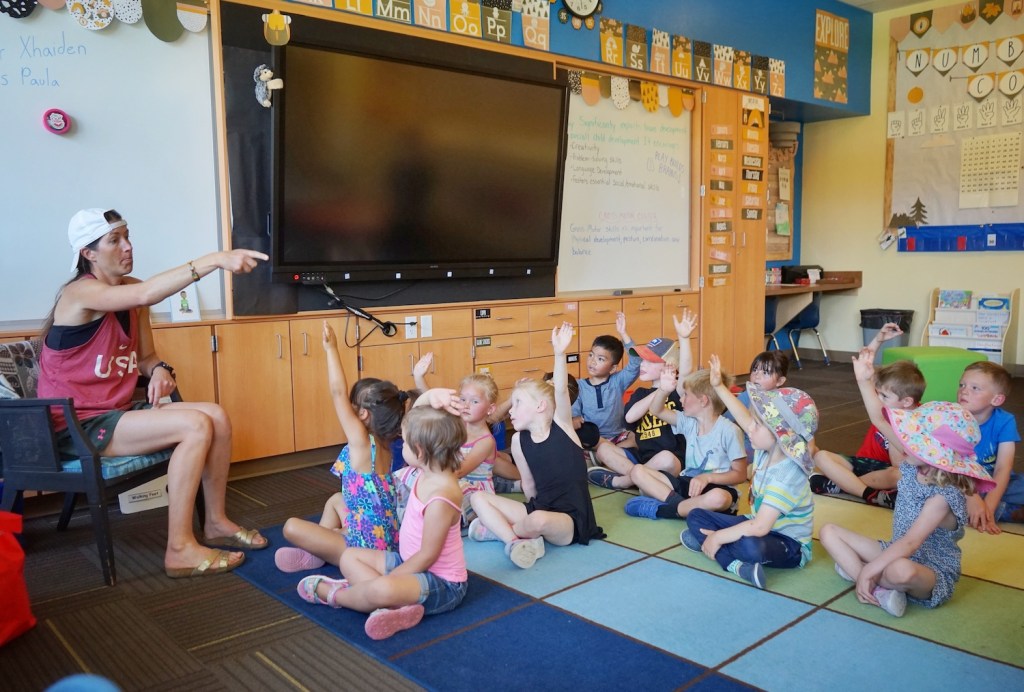
At the head of a classroom in Lander, Paula Vincelette held up a small plastic pig and asked a dozen preschoolers to help the pig build a house with bricks. The students-turned-builders intently mimed the construction of small imaginary homes on the carpet in front of them.

As Vincelette continued with the story of the “Three Little Pigs,” she paused often with prompts and questions. On cue, her rapt pupils enthusiastically repeated the famous tagline: “Not by the hair of my chinny-chin-chin!!”

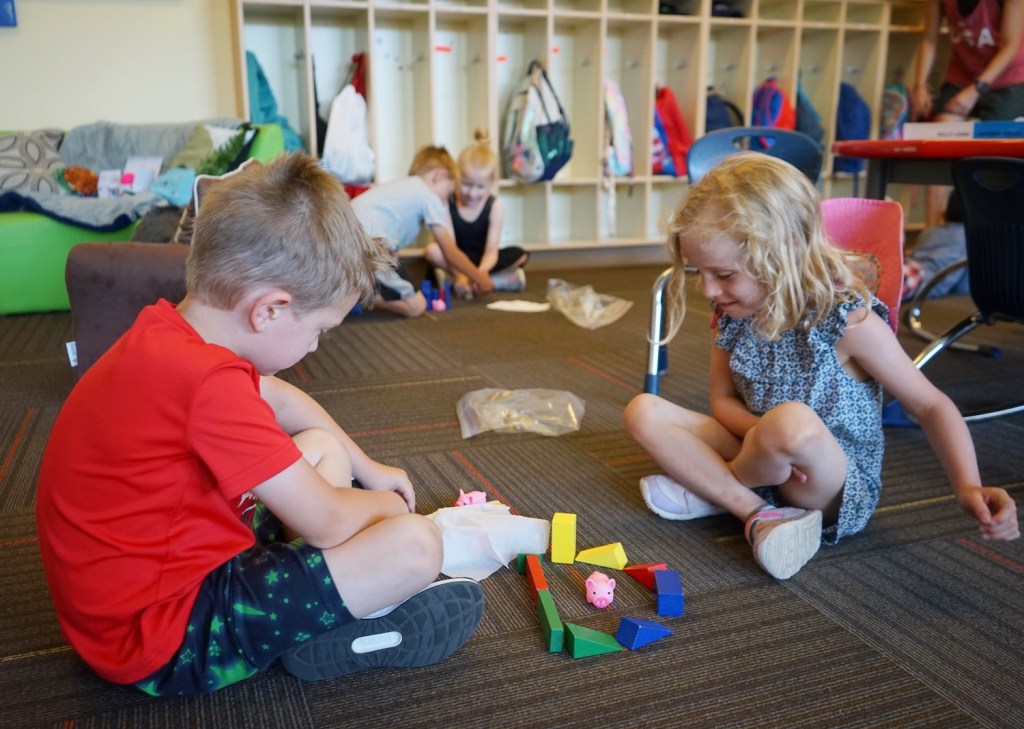
It may have looked like a simple storytime, but Vincelette incorporated elements meant to prepare these children for the kindergarten classroom next year. Like constructing a house brick by brick, they were honing their listening skills and building vocabulary; learning how to raise their hands and speak in turn. Later, when she paired them up to build their own little story sets using actual props, they worked on sharing, body awareness and communication.

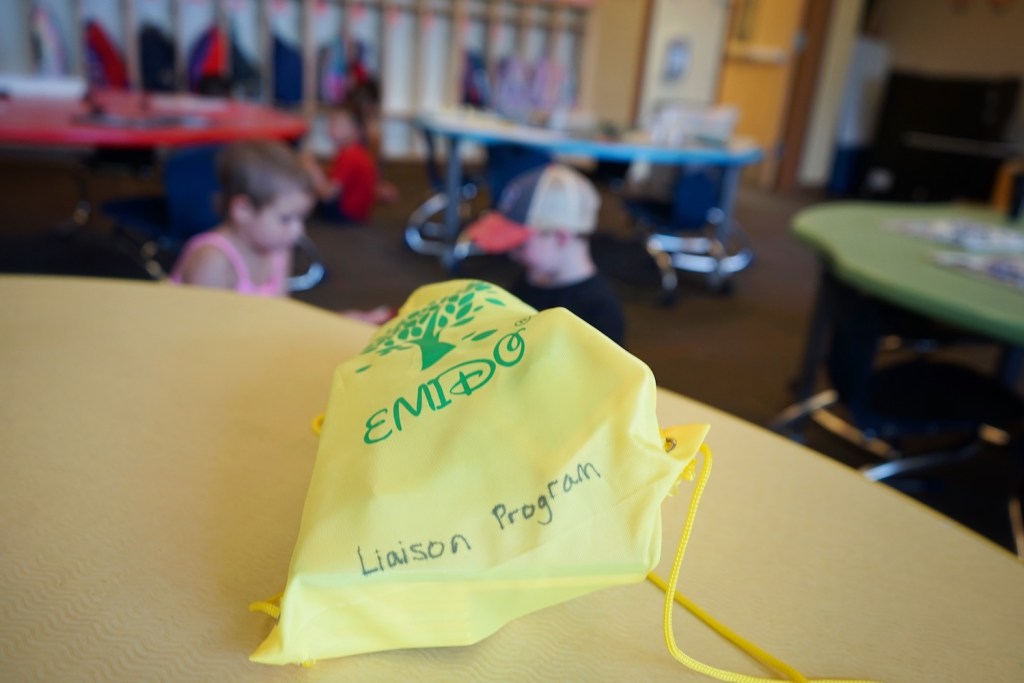
As the early childhood education liaison for Fremont County School District 1, Vincelette has done this kind of work for five years. Along with direct instruction, she has also worked with child care providers and parents in her overarching goal to build better early childhood education foundations for district children.

Her position, however, is coming to an end. The school district discovered late this spring that its 2025-26 federal Title I funds — which supplement state and local funding for low-achieving children — would be cut by roughly $86,000. Administrators made what they described as an extremely difficult choice to terminate the position.

Although the end of the early childhood education job comes amid a torrid of federal cuts fueled by President Donald Trump’s DOGE efforts, this one is unrelated. Title I funds are calculated based on demographics, specifically the number of children living in poverty. The number of Fremont County children living in poverty declined from 227 in the last cycle to 182 in this one, according to the Wyoming Department of Education.

A similar demographic shift is occurring across much of the state. But what can on its face be interpreted as a positive trend had the downstream effect of reducing funding in most of Wyoming’s school districts. Notice from the federal government of decreases was months late, leaving many administrators scrambling after budgets were set. And, in places like Fremont County, it means an end to what many parents and supporters call a life-changing educational opportunity.

“Our family definitely benefited from Paula’s programs,” said Lander mom Amelia Decker. Decker started attending Vincelette’s free programs for families when her older son was a baby, received individual help when he was in preschool and enrolled him in the kindergarten transition session last summer.

“Her advice, the space she offered for myself and other parents, and the learning opportunities about how to interact with my children shaped me as a mother and opened up so many connections for our family,” Decker said.

In an era when educational experts say the role of early childhood education is crucial, many in Fremont County hope the district will be able to reinstate Vincelette’s position in the future.

Census numbers and federal funds

The number of Wyoming children ages 5-17 living in poverty dropped between the 2022 and 2023 U.S. Census, the basis for calculating ‘25-26 Title I allocations. The number fell by nearly 700 children, from 11,420 to 10,731, according to WDE calculations. The state’s total population of children ages 5-17, meanwhile, remained relatively stable, barely budging from 98,774 to 98,764. But statewide public school enrollment has been falling for at least five years, a trend educators attribute to factors like more parents deciding to homeschool their children.

The poverty-related shift resulted in a statewide drop of a little over $1 million for the federal Title I funds compared to the ‘24-25 school year, state figures indicate.

Though it’s hard to say what specific mix of factors contributed to the trend in Wyoming, tax credits and stimulus payments in conjunction with relief programs were credited with the largest nationwide one-year drop in childhood poverty in 2021.

Funding impacts for the incoming school year vary between districts. A decrease of 160 students in Natrona County District 1, for example, created a funding drop of roughly $63,000, and in Albany County School District 1, a decrease of 37 children living in poverty resulted in a loss of roughly $6,000.

But in Teton County School District 1, the number of children in poverty increased from 134 to 153, which resulted in a funding bump of $307,000. The majority, however, will receive less Title I money.

Fremont County School District’s Title I Coordinator Deidre Meyer’s job every year is “to look at our funding and see where this money is going to best serve our students under Title I,” she said.

Under the federal regulations, Meyer noted, “the majority of the Title I funding for preschool is supposed to be spent on Head Start and [Community Development Services].”

Up until late May, she was operating under the assumption that the funding level was stable. But late that month, she received an email from the Wyoming Department of Education with the updated federal allocations. Those updates normally arrive by February. That’s when Meyer realized she would have significantly less to work with, she said.

She attempted to move funds around, she said, but it wasn’t enough. Ultimately, she cut the early childhood liaison position because it was the option that affected the smallest number of students while still fulfilling the Title I grant requirements, she said.

“It was very hard,” Meyer said. “It was a tough one.”

The timing only made it harder, FCSD1 Superintendent Mike Harris said. By the time the May 21 notification arrived, “our staffing decisions are pretty much done.”

The tardiness, he said, “put a lot of districts in a tough spot. For those that are getting reduced funding now, they’re looking at their proposals and their projections, and they’re having to revise a lot.”

It is unclear why the projections were so late this year, but the federal Department of Education has been in flux since the Trump administration laid off an estimated 1,400 employees this spring. That issue is tied up in litigation .

A passion for early education

It’s never a pleasant experience to learn you will no longer have a job, Vincelette said. Despite that, she had no ill words about the district and said she understood the difficult choice.

Vincelette grew up in Rock Springs and pursued elementary education at the University of Wyoming. There, she studied under renowned UW professor Nikki Baldwin.

“The way she taught was making you really think outside the box and push the quote-unquote standard of what we think early childhood should be,” Vincelette said. “I really connected with that.”

She also found inspiration in the deliberate and thoughtful curriculum at Laramie’s Early Care and Education Center, where her own two kids attended.

Vincelette moved to Lander nine years ago to work as a preschool teacher for the school district. She transitioned to the early childhood education liaison five years ago, initially as part-time.

The position aimed to support the early childhood education landscape in a broader sense. To do that, Vincelette worked with local preschools and kindergarten classrooms to model and teach weekly lessons based on needs. She offered a free, weekly “Little Explorers” program for families with children under 5 to encourage learning and play. She advocated developmentally appropriate learning, worked with the family consumer science class at the high school and led the summer “Lights On” program for children about to enter kindergarten.

Vincelette is an adherent of evidence-based models, and a big part of her approach is learning through play.

If educators present lessons “in a playful manner, students are going to remember that,” she said. Connecting it to joy and fun makes it more effective for small children, she said.

She learns a lot from young children, she added, who have a purity, rawness and presence of mind she finds refreshing.

It appears she has taken a page from that presence of mind in this situation. Instead of panicking about finding a new job, Vincelette said in the Lander classroom during a break in the summer pre-kindergarten program, she spent the final weeks of her job absorbed in the work.

‘Kid magic’

Back in the classroom, Vincelette’s way with kids was evident. Whether asking them to touch their ears while listening, telling the story with a toy wolf or asking them to place hands on top of their heads to show they were finished, she commanded their complete attention.

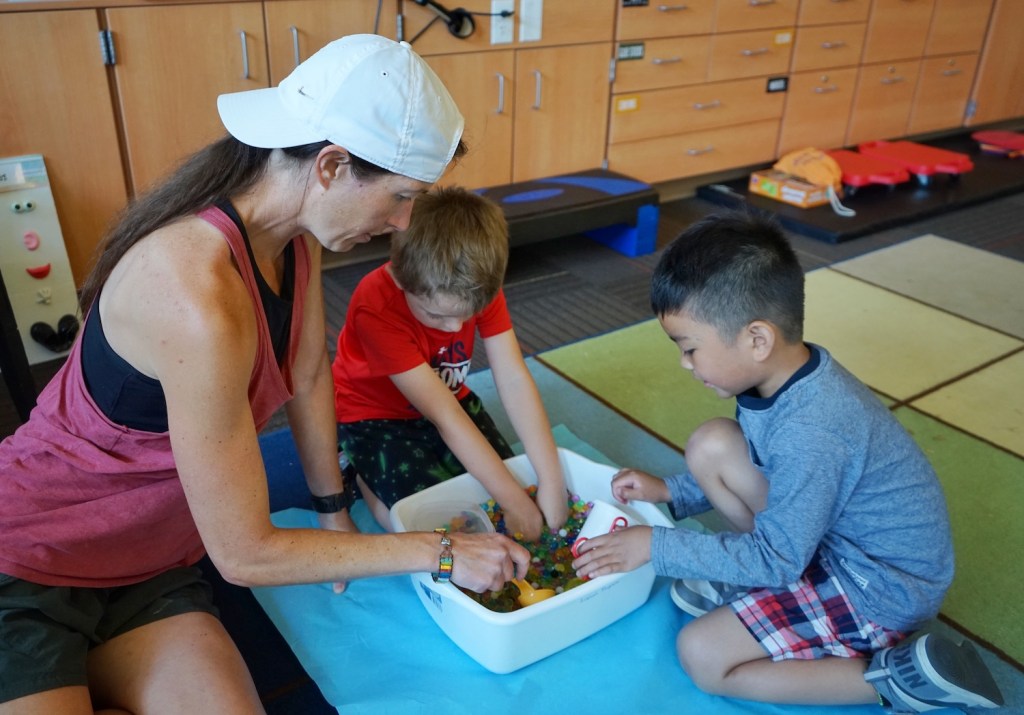
Following story time, the children moved through play stations around the room — painting, handling fragile water beads, building with magnetic blocks, practicing handwriting with a magnetic “pen” among them. The stations were designed to help build things like motor skills, body awareness or language foundations, Vincelette said.

“Miss Paula has ‘kid magic,’” a local kindergarten teacher wrote in a testimonial after news broke that the position had been terminated. Vincelette collected a number of these in an effort to provide proof of how impactful the work has been. She hopes funding will be available in the future to support the reinstatement of something similar.

Supporters hope so too. In the pages of testimonials, kindergarten teachers, preschool directors, parents and mentees praised her singular talent with small children during an era when evidence of the importance of early childhood education on long-term outcomes of success is mounting.

They credited Vincelette with quelling behavioral issues and igniting imagination, equipping parents with tools to encourage learning-based play at home, transforming teachers’ approach to instruction and easing transition into the classroom for all kids, including those who didn’t attend daycare or preschool.

“Her absence will be profoundly felt by students, teachers, and families alike,” another teacher wrote.

Decker, the Lander mom, recently watched her son finish kindergarten. While he has his ups and downs, she said, “he is thriving academically and as a person. I credit so much of that to Ms. Paula.”

The post Declining federal funds, late notice extinguish Ms. Paula’s preschool ‘magic’ appeared first on .

Tuesday, June 17, 2025

New Mexico's Early Care and Education Investments Yield Promising Results

New Mexico's Early Care and Education Investments Yield Promising Results

As soon as Sandra Parra walks into her pre-K classroom at the Christina Kent Early Childhood Center in Albuquerque, New Mexico, three children begin vying for her attention. One boy says he has a toy for her, a girl tells her she plans to bring in a croissant from home. A third child recounts how the mailman came to his house and reenacts the story with a toy car. Parra has a cheerful response for each of them. Then she holds up the books she has brought with her to read. And soon, most of the class is sitting on the rug for story time.

Parra has been teaching at Christina Kent, a child care center that dates back to 1919, for 23 years. Though she works full time, she described when she lived “paycheck to paycheck” as a single mom raising three kids and added that she occasionally had to borrow $20 from a friend, just to get gas.

But the early care and education system in New Mexico has undergone dramatic changes in the past five years, with an influx of investment from the state that has upended the sector’s traditional business model which, in most of the country, relies on thin margins and poverty wages for providers . In 2020, after a sustained effort from local activists, House Bill 83 was signed into law, creating a fund for early childhood education, and a designated early childhood department in the state government.

Get stories like this delivered straight to your inbox. Sign up for The 74 Newsletter

Then, in 2022, New Mexico became the first state to enshrine a right to early education for children ages 0 to 5 years old, by passing a constitutional amendment that expanded funding from the Land Grant Permanent Fund so that a steady stream of money would be dedicated to early childhood year after year. Among the shifts since 2022: increased pay for teachers, higher reimbursements for providers that accept subsidies, more families qualifying for free or reduced price child care, and more child care slots.

Christina Kent Early Childhood Center, for example, has made significant changes including increasing wages and providing health insurance for staff, said Sondra Carpenter, the center’s executive director. Before COVID, Parra made $17 an hour; today she makes more than $22 an hour. With the additional income, she’s paid off her car, purchased her first home, and reports that she no longer feels the unending stress that comes with financial precarity. The center is also in the process of expanding to serve more families: it’s broken ground on a new facility for infants and toddlers, which Carpenter said will open this September.

Across the state, child care providers who accept subsidies have seen their reimbursement rates rise, and the subsidies are now tax-exempt, saving families and providers more money. With the increased investment, more families now qualify for child care subsidies, including those who make up to 400% of the federal poverty line , which for a family of four is an annual household income of $128,600.

Liliana Vazquez Diaz, another child care provider, has also reaped the benefits of these shifts. She now sees higher reimbursement rates for the six kids enrolled in La Casa de Lily, the child care program she runs out of her house in the Alamosa neighborhood of Albuquerque. Diaz was recently approved to provide pre-K services, which will raise her reimbursement rate even more.

And the Explora Science Center and Children’s Museum in Albuquerque, which runs two classrooms out of their museum space for children of students at the local community college, has just broken ground on a new child care facility, which will serve over 100 children, with 16 slots for infants, which are the toughest slots secure in the state. “The state child care subsidies have made that a viable option,” said Kristin Leigh, co-executive director of Explora.

“We have really made a shift in the way we approach early education,” said Javier Martinez, the speaker of the New Mexico House of Representatives, who ran for the legislature on a platform of early education and immigration rights. “We are rebuilding the village that it takes to raise a child in New Mexico.”

Related

New Mexico Just Became the First State to Make Child Care Free for Nearly All Families

How New Mexico Funded Early Education

New Mexico has consistently been one of the lowest ranked states for school attendance, economic well-being, child poverty, education proficiency, and child well-being . “There is this shame of having more children in poverty than anywhere else,” said Hailey Heinz, deputy director and senior research scientist at the Cradle to Career Policy Institute at the University of New Mexico. The pervasive intergenerational poverty includes New Mexico’s tribal communities which live on sovereign lands but have faced centuries of adverse policies and discrimination. “We have people who have never had a generation that was allowed to thrive,” said Heinz.

An understanding of New Mexico’s complicated history of child well-being and poverty can be traced back to the Mexican-American War in 1846 , when the state ceded to the United States. For more than 60 years, New Mexico was a territory and its people didn’t have full rights as U.S. citizens, but the region’s oil and gas reserves were profitable. When in 1912, New Mexico became a state, a Land Grant Permanent Fund was created , whereby profits from oil and gas would be bound up in the trust, and the proceeds would pay for education and services for its citizens.

“A giant trust fund to secure mineral rights, in which the state constitution determined the beneficiaries,” was how Jacob Vigil, the chief legislative officer for New Mexico Voices for Children described it. “New Mexico is called ‘such a poor state’ but it is not a poor state, it’s a colonized state with historical disinvestment and racism,” he said.

As oil and gas prices continued to boom, the Land Grant Permanent Fund swelled into the billions. Today, it’s worth nearly $32 billion . Yet the state still had high rates of poverty, and more research began to show the profound effects of improving generational poverty outcomes through early education and intervention. So in 2009, grassroots activists, including Martinez and Vigil, targeted the fund as a way to pay for child care .

This required legislative action, and the chairman of the Senate budget committee, Democrat John Arthur Smith, denied the opportunity for a committee vote for nearly a decade. But political pressure and grassroots organizing led to a Democratic primary challenge, which Smith lost in July 2020. After that the bill easily passed both the House and Senate, and since it required a constitutional change, it was put to a public vote, which it passed in the November 2022 election by an overwhelming 70% .

Other states may not have the robust external funding source to use for early childhood, but Erica Gallegos, co-director of Child Care for Every Family Network believes New Mexico’s advocacy efforts are replicable elsewhere, especially when combined with political might. “You have to have a C4 strategy,” she said, referring to the 501(c)(4) tax status organizations have when becoming involved in elections, and the willingness of advocacy groups to unseat legislators. “It can’t just be about going after Republicans. It has to be about going after power and holding that power accountable.”

Related

New Mexico is the First State to Guarantee a Right to Early Childhood Education. Universal Child Care Could Come Next

What Success Looks Like

The dollars from the Land Grant Permanent Fund have allowed for substantial investment in early childhood. In addition to higher wages, increased subsidy reimbursement rates and expanded access to affordable child care for families, the state created an agency dedicated to early childhood with a cabinet-level secretary, and added considerable funding for universal home visiting programs , early intervention and pre-K programs. The state also created a higher earned income tax credit and child tax credit that are both fully refundable.

Martinez says he is “very satisfied” with the state’s progress in early care and education to date. He predicts that in the next few years, New Mexico will start to see improved reading and math scores, as the children benefiting from early learning programs matriculate to elementary school. He cites studies, including a longitudinal study still underway at the University of New Mexico , that show dramatic improvements in the lives of kids and families who participated in the home visiting program,including increased parent confidence, and fewer emergency room visits and interactions with law enforcement.

But he’s also identified additional areas to target: strengthening the care infrastructure for 0 to 3-year-olds, creating a state paid family and medical leave option, and improving the foster care system, which has kids sleeping in homeless shelters and agency offices .

He is also anticipating interest from private equity groups looking to be involved in child care in the state, and he’s keeping a close eye on that, as such groups tend to be intrigued by sectors with steady government funding, yet historically have not always been careful stewards in implementing them.

Martinez knows that the conversations around early care and education have changed. When he was building support for opening up the Land Grant Permanent Fund, he spoke about child care as “the need to invest in kids, how those years were so critical,” he explained. But now, he says he can speak more openly about what this was about. “We are literally talking about a redistribution of wealth,” he said.

As the value of the Land Grant Permanent Fund ballooned, Martinez said, financial advisors and wealth managers investing those funds were making millions each year in fees for doing so. Yet, children in New Mexico were “dying on the vine,” he added.

Opening up the Land Grant Permanent Fund became a rallying cry. “It wasn’t just about more money in the [early childhood] system,” he said. “It was about the poorest and most vulnerable children being able to make use of it.”

This work is supported by a child care reporting grant at the Better Life Lab. More details on the reporting grants can be found here .

Notification
This is just an example, you can fill it later with your own note.
Done