Articles of Education: school children
News Update
Loading...
Showing posts with label school children. Show all posts

Sunday, August 24, 2025

Are "COVID Kindergartners" School-Ready?

Are "COVID Kindergartners" School-Ready?

Featured Image

The First Day of School for a Generation

Last Wednesday marked a significant milestone for the Sussman and Frankel family. It was the first day of school at California Creative Academy, a charter school in Los Angeles, where 5-year-old Eli began his kindergarten journey. Mollie Sussman, Eli’s mother, admitted that the day was filled with anxiety. “We were super freaked out,” she shared, referring to herself and her husband, Brad Frankel. “We were really scared, and [Eli] was pretty scared” leading up to the event.

Mollie’s concerns centered around Eli, an only child, potentially feeling overwhelmed by the transition from a small preschool to a new elementary school that includes students up to the eighth grade. She worried about him crying, having a meltdown, or struggling with the structured environment of a kindergarten day without naps. However, after participating in a class activity where they traced each other’s hand outlines, the family left the classroom with no issues. “He was ready when we left. He did really well and he was super brave,” Mollie said, adding that the only one in their family who cried that day was her husband.

Mollie and Brad are not alone in their concerns. Eli is part of a growing group of children born in 2020 during the height of the COVID-19 pandemic, now entering elementary schools across the country. These children grew up in a world filled with masked adults and frequent use of hand sanitizer. Many spent their early years in isolation or limited social interactions, raising questions about the long-term effects on their development.

Research highlights the lasting impact of early childhood experiences on development and growth, as noted in a 2023 study published in the Journal of the American Medical Association Pediatrics (JAMA Pediatrics). While positive experiences can enhance cognitive abilities and academic performance, early life challenges can lead to deficits in managing stress and self-esteem. This has led to heightened awareness among parents, experts, and educators regarding how pandemic-related hardships might affect this generation.

Dani Dumitriu, a pediatrician and neuroscientist at Columbia University, explained that being in utero during a highly stressful time had some developmental effects on infants. “They weren’t large effects but that was a very worrisome sign given that so many women gave birth during that period.” Dumitriu’s research, published in 2022, found that 6-month-old infants born during the early months of the pandemic had slightly lower scores on motor and social skills compared to those born before the pandemic. However, as the study expanded, it became clear that these children quickly caught up.

“Child development is incredibly malleable,” Dumitriu emphasized. “What happens at 6 months is not predictive of what happens at 24 months or 5 years.”

Eli's Journey and Speech Delays

Eli’s experience aligns with findings from a 2023 study published in Epic Research, which showed that children who turned 2 between October and December 2021 were about 32% more likely to have speech delays than those who turned 2 in 2018. The rate increased dramatically to nearly 88% for children who turned 2 between January and March 2023. Overall, speech delay diagnoses rose from an average of 9% in 2018 to nearly 17% in the first quarter of 2023.

Mollie noticed that Eli wasn’t speaking at the expected level and sought help through speech therapy. “The speech therapist said that they had seen an increase in the number of kids coming to speech therapy. Likely because of the lack of exposure to mouths and facial expressions, which is a big part of how you learn to talk,” she explained. By the time Eli turned 3, he was much more verbal and in a great place.

Pandemic Behaviors and Kindergarten Readiness

Other effects of the pandemic, such as increased screen time and parental stress, have contributed to lingering challenges for kindergartners. According to a study published in the journal Nature, children spent more time on screens during lockdowns, which can make them less prepared for school. Michelle Yang, a resident physician with Children’s Hospital of Orange County, highlighted the dangers of excessive screen time for children aged 2 to 5, noting increased behavioral problems, poor vocabulary, and delayed milestones.

School attendance and preschool enrollment levels have also declined since the pandemic. A recent study by the U.S. Department of Education found that chronic absenteeism averaged 28% across the country during the 2022-2023 school year. These changes in behavior and habits are reflected in test scores, with many kindergarten students arriving behind their pre-pandemic peers.

Kristen Huff, head of measurement at Curriculum Associates, noted that the percentage of 5-year-olds arriving kindergarten-ready in reading has declined by 8 points since 2019. Similar declines are seen in math, with disparities based on race and income. Despite these challenges, Huff emphasized that students are making strides and that the right resources can help bridge the gap.

“We know what works,” Huff said. “When the right support is in place, even schools in low-income communities can buck the trend.”

Monday, August 4, 2025

Back-to-School Essentials: August 4 Guide

Back-to-School Essentials: August 4 Guide

Featured Image

Key Changes and Updates for the 2025-2026 School Year in North Alabama

As students across North Alabama prepare to return to school, several key changes and updates have been implemented to ensure a smooth start to the new academic year. These updates cover everything from school policies and schedules to supply lists and safety measures.

Colbert County Schools: Middle School Model Transition

One of the most significant changes in the Colbert County School System is the implementation of the "middle school model." This transition moves sixth graders into high schools, creating a more structured environment for middle school students. Superintendent Nathan Fuller explained that this model aims to provide a new level of separation between middle school and high school students by having separate classrooms and hallways. This change is intended to address challenges faced by middle school students and improve their learning experience.

In addition to this structural change, all students in Colbert County Schools will receive free breakfast and lunch for the 2025-2026 school year, thanks to the United States Department of Agriculture's support.

FOCUS Act Implementation

The FOCUS Act, which went into effect for the 2025-2026 school year, prohibits the use of wireless communication devices on school campuses during instructional hours. This means that cell phones, smartwatches, and other personal communication devices must be turned off and stored away from students' persons—either in lockers or vehicles—from the first bell until dismissal. There are limited exceptions, such as for students with individualized education plans (IEPs) or health plans, emergencies, or instructional purposes.

This policy applies to all public schools in Alabama, including schools like Colbert Heights High School, Colbert Heights Middle School, and Scottsboro City Schools. For example, at Scottsboro City Schools, students can bring devices to campus but must turn them off and store them in backpacks or locked cars. The school also introduced an asynchronous course to educate students on safe social media use.

School-Specific Updates

Each school in the district has its own set of updates and requirements:

  • Colbert Heights High School and Colbert Heights Middle School both posted traffic information and updated drop-off times. Middle school doors open at 7:20 a.m., while high school doors open at 7:25 a.m.
  • Colbert Heights Elementary School provided a traffic flow map for arrival and dismissal.
  • Cherokee High School listed essential school supplies for students, including a $20 parking permit for drivers.
  • Colbert County High School issued specific supply lists for each grade, with sixth-grade students not allowed to use ink pens or perfume.
  • Hatton Elementary School received funding from Florence Federal Credit Union to purchase basic supplies and class shirts for all students.
  • Leighton Elementary School announced a free after-school program for K-5 students, with transportation available from NBES to CHES.
  • Scottsboro City Schools emphasized the importance of the LINQ Connect online tool for managing school meal accounts and introduced a Child Nutrition Plan offering free meals to all students.

Transportation and Safety Measures

Several schools have made changes to their transportation policies:

  • Scottsboro High School opens doors at 7:45 a.m., with non-driving freshmen and sophomores dropped off in front of the school.
  • Scottsboro Jr. High School requires students to be dropped off in the back of the building, with a tardy bell at 8:10 a.m.
  • Lockers will not be issued at Scottsboro Jr. High School due to pandemic-era practices, requiring students to carry backpacks throughout the day.

Other schools, such as Huntsville City Schools, have outlined consequences for violating the FOCUS Act, including in-school learning centers and out-of-school suspensions. They also continue participation in the Community Eligibility Provision, providing free meals to all students.

Special Programs and Initiatives

Several schools have introduced new programs and initiatives:

  • Rainbow Elementary School launched a House System to foster community values and engagement among students.
  • Mt. Carmel Elementary School unveiled a new adaptive playground designed for all children, including those with disabilities.
  • Madison County Schools emphasized the importance of clear backpacks and mesh bags for security reasons.
  • Legacy Elementary School offered After School Care Spots and required clear backpacks to maintain a secure learning environment.

Back-to-School Supplies and Schedules

Schools across the region have provided detailed lists of required supplies, with some schools like Caldwell Elementary School and Nelson Primary School outlining specific dates and schedules for the first week of school.

Final Notes

As the 2025-2026 school year begins, students and families are encouraged to review the latest updates from their respective schools. From new policies and procedures to updated schedules and supply lists, these changes aim to create a safer, more organized, and supportive learning environment for all students.

Saturday, July 26, 2025

California's $14 Billion Summer Learning Boost Transforms Schools

California's $14 Billion Summer Learning Boost Transforms Schools

Featured Image

A Joyful Start to Summer Learning

On a recent morning, nearly 100 children clapped, sang, and danced in a large circle filling the cafeteria at Nystrom Elementary School in Richmond as part of a joyous Harambee celebration, the Swahili word for “all pull together.” The students, ranging in age from 4 to 11, were participating in the daily opening ceremony of the CDF Freedom School. This no-cost summer program focused on intensive reading and vocabulary building, with after-school offerings that ranged from skateboarding and robotics to mural painting and African dance.

The CDF Freedom School is one of nearly a dozen summer programs offered by the West Contra Costa Unified School District. Most of the programs are in partnership with a range of nonprofit organizations; many are made possible by support from the $4 billion-a-year Expanded Learning Opportunities Program or ELOP, initiated five years ago.

This initiative represents one of the largest investments in California education in decades — one that has received scant attention. It is based on research showing that high-quality summer learning can slow or eliminate the well-known “summer slide,” which contributes to maintaining or even widening the achievement gap.

The initiative has allowed districts serving large numbers of low-income students, like West Contra Costa Unified, where Richmond is located, and others around the state, such as the Compton Unified School District in Los Angeles County, to launch an array of what are called summer “enrichment” programs. These programs go beyond traditional summer remedial or developmental classes and “credit recovery” courses for high school students at risk of not graduating. Instead, they are designed to foster creativity, critical thinking and a love of learning in a fun and supportive environment.

A Multibillion-Dollar Initiative

The multibillion-dollar initiative makes it possible to offer after-school and summer programs “on a scale not seen in any other state,” said Linda Darling-Hammond, an education professor emeritus at Stanford University and president of the California State Board of Education. “While we are still growing the capacity of the program to meet the demand, it has been a game-changer in many districts.”

Over the past five years, the state has spent nearly $14 billion on the initiative, which must be spent only on children from transitional kindergarten through the sixth grade. By the end of the current fiscal year, the state will have spent over $18 billion on the program. That’s because Newsom convinced the Legislature to increase the funding by an additional half billion dollars (to $4.5 billion) this year so that more of the state’s children can participate.

Because no research component was built into the initiative, it is impossible to know whether it is having the statewide impact that legislators hoped for. That is why the best — and perhaps only — way to gauge its impact is to look at districts like West Contra Costa Unified, where educators say the infusion of expanded learning dollars has had a huge impact on their summer offerings.

Expanding Access to Enrichment Programs

Funds allowed West Contra Costa to grow to nine enrichment programs. Last year, West Contra Costa Unified, with a student enrollment of just under 30,000 students, received $18.5 million in funds from the initiative. Of that, it spent two-thirds on after-school and other activities during the regular school year. The rest went into its expanded summer offerings.

Martine Black, the district’s director of family and community engagement, recalls that before the initiative got underway, the district only offered two summer enrichment programs. Now, she says, there are at least nine such programs. “ELOP has vastly enhanced our ability to ensure that more students, particularly underserved students, have access to expanded learning,” she said.

Gabriel Chilcott, the district’s director of curriculum, instruction and assessment, says the funds the district receives “definitely fill in a gap that enables us to get kids into fantastic programming.” In addition to the CDF Freedom School, the district contracts with nonprofit organizations such as the Headwaters Science Institute, which teaches scientific methods to children as young as 4 in outdoor settings. Aim High, serving sixth to ninth graders, teaches science through hands-on projects. Its Issues and Choices curriculum helps sixth graders tackle questions like “How do I utilize my strengths to transition to middle school successfully?” The nonprofit Love. Learn. Success. offers Mandarin language instruction, among many other activities at different school sites.

A Growing Number of Students Participating

This summer, nearly 1,300 students enrolled in enrichment programs, at least partially supported by Expanded Learning funds. That’s still a relatively small percentage of the district’s 10,000 or more TK-6th-grade low-income and other high-need students. But it is a far larger number than it could serve in the past, and Chilcott says the district is “relatively close to achieving that sweet spot of matching interest with the need.”

Shakira Reynolds, the dynamic director of the Richmond Freedom School, which belongs to a nationwide network of programs founded by the Children’s Defense Fund, is particularly proud that many of her summer enrollees are in special education programs during the year, and several of them are on the autism spectrum. The Freedom School offers a rare opportunity for many of them to spend time with peers without disabilities in a relaxed, non-stressful environment.

Reinforcing curriculum while strengthening social-emotional skills. After the opening Harambee ceremony, students — or scholars, as Reynolds calls them — break into groups of eight to 10 students, where they read about Black history and civil rights. Each class is led by a college student or recent graduate who is often considering becoming a teacher. They’re assisted by high school students from district schools who are paid interns.

Nomi Harris, 12, who lives in Richmond, has attended the Freedom School for five consecutive summers. She says she likes the “positivity” of the program, especially the opening celebration, and the “comforting” environment it offers. Nomi said the program offers a welcome opportunity to be around other Black children, who make up the majority of the summer school’s enrollment. Richmond was a majority Black city as recently as the 1980s.

Fifth grader Mack Dixon, 10, especially likes the wide range of after-school activities, which he wouldn’t usually have access to. Last summer, his parents gave him math exercises to do — math is his favorite subject, he says — and books to read, while bugging him to get off video games like Fortnite or Call of Duty, which do nothing for his mood. “I just lose my temper,” he said. Asked what the favorite parts of the program are, he says, “Everything. I like all of it.”

Exploring Science Through Outdoor Experiences

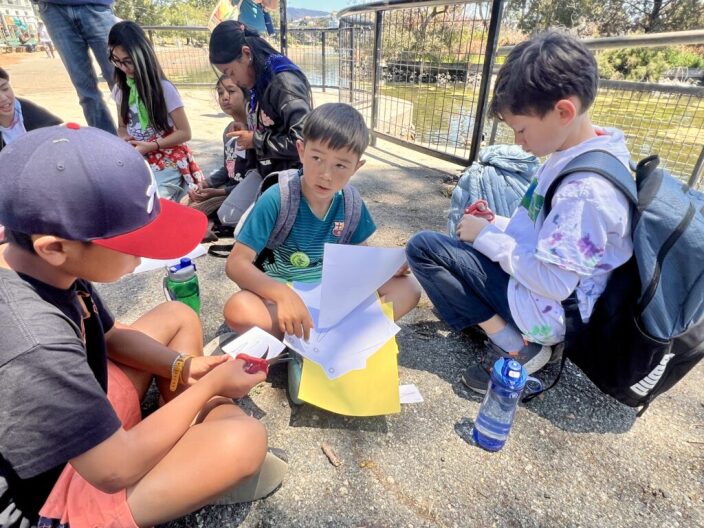
Across town, about 100 students enrolled in the Headwaters Science Institute start their day at Riverside Elementary School. On a recent morning, they headed out in yellow school buses to the botanical garden on the banks of Lake Merritt, an Oakland landmark. There, they broke into small groups to carry out a range of scientific “experiments” or to find answers to questions students themselves have chosen.

On this day, the younger children tackled questions like, “Are there more birds in the tree or on the ground? and “Are there more plants in wet soil or dry soil?” They gathered “data” from observations, which older students and staff helped record for them. Their findings: There are more birds in the trees (in part, they explain, because they may have scared birds on the ground away) and more plants in wet soil, despite the drought-resistant emphasis in the gardens.

Megan Seifert, the Headwaters program’s director and founder who has a Ph.D. in zoology, is enthusiastic about her partnership with the district, where officials were looking “for a lot more than child care … our goals really aligned with the district’s,” she said.

Ylan Hunt, whose 6-year-old son, Miles, is in the program, says a similar one in San Ramon, a much more affluent community a half hour away, would cost at least $800. “This is absolutely needed for our children,” she said. That includes children with special needs who might not be able to get into other programs. “There are no exclusionary criteria,” she said. As for her son, “he loves school anyway, but if he can get a field trip two or three days a week, and he is outside, he is happy,” she says. And she recognizes the importance of introducing kids to science at a very early age.

The summer program, Seifert points out, reinforces the regular school curriculum and strengthens social-emotional skills that many educators now recognize as key to long-term success. Seifert says students learn math skills like graphing in a way that is much more fun — and relevant — than in a regular classroom. “There’s no stress around it,” Seifert says. They also become more confident about public speaking through presenting their research findings to classmates and parents at the end of each week.

“We love it, the kids love it,” said Donavan Szarka, who has three children in the program. Initially, he concedes, they didn’t want to be there at all. They asked him to pick them up as early as possible. After a few days, the message changed. “Leave us here longer,” they pleaded. “Let us stay later.”

Tuesday, July 1, 2025

**"Empower Your Child: 30+ Back-to-School Affirmations for Confidence & Positivity"**

**"Empower Your Child: 30+ Back-to-School Affirmations for Confidence & Positivity"**

Is your child feeling anxious about the new school year already? You’re not alone! One minute we’re savoring summer popsicles and pool days, and the next, we’re packing lunchboxes and double-checking supply lists. And in my family we’re already preparing our back-to-school affirmations.

As a mom, I know how emotional this time can be—not just for us, but for our kids, too. Whether they’re nervous about making friends, worried about a new teacher, or just feeling all the big feelings that come with change, a few encouraging words can make a world of difference. For moms too!

That’s why I love using simple, positive affirmations to boost their confidence and remind them how capable, kind, and brave they are. Keep reading for more than 30 back-to-school affirmations to help your child walk into the new year feeling grounded, supported, and ready to shine.

Back-to-school Affirmations for Young Kids

Affirmations are a practice that even young children can understand and participate in, especially if they are kept simple, like the following.

I am important.

The one thing children want to feel more than anything else is seen. They want to know they’re an integral part of whatever is happening around them.

I am loved.

Love is the best emotional protection a child can have. There is no such thing as too much love when it comes to kids. Making sure they understand how valued they are can make all the difference.

I can do hard things.

If everything were easy all the time, we’d never feel the satisfaction of accomplishment. This goes for spelling tests as well as having the courage to make new friends.

I am kind.

Sharing concrete examples of when you’ve seen your child be kind can help them internalize this affirmation.

I am a good friend.

One of the most important parts of school is making friends. This affirmation reminds them that being a good friend is the first step to having good friends. Ask questions about what they like about their friends and why. This can help kids think through what being a good friend looks like in practice.

I can ask for help when I need it.

Schools are full of helpers, but sometimes kids need to feel like they have permission to ask for assistance.

I can learn how to do anything.

This is the whole point of school! And even if they don’t have a natural gift for, say, long division, framing it as something they haven’t mastered yet can change how they think about their skills and abilities.

I forgive and learn from my mistakes.

Remind them that we go to school to learn new things, so of course, we don’t know how to do everything right away. This also applies to getting in a fight with a friend or missing recess to make up a homework assignment they forgot about. Now is the time for them to learn how to navigate these situations.

I am safe and cared for.

Big emotions can come with change. Help them remember that even during times of transition, they are safe to explore and they are cared for by you and other around them.

I am brave.

When they do feel the nerves coming in for the start of a new year, this positive affirmation will help them remember that they can tackle difficult situations.

It’s OK to try again.

There may be a learning curve to certain things at school since there’s so much information to absorb. If a new skill isn’t mastered on the first try, saying “it’s OK” gives kids the opportunity to reset and try again in a positive way.

I am unique.

Meeting new friends at school can be an exciting experience, but it doesn’t mean a child has to conform into someone they are not. To be yourself is wonderful and that is what makes you unique.

I have great ideas.

Having an imagination can highlight creativity. This affirmation allows kids to participate in group settings and can help with critical thinking as they get older.

I am smart.

Everyone learns differently. A new skill or subject can take more time to learn compared to others, or the skill may need to be taught in a different way for it to stick. How a child learns or how long it takes them to grasp a concept doesn’t define how smart they are.

I am doing great.

Acknowledge when things are going great—positivity is infectious—even when things aren’t going the way they planned.

Affirmations for Tweens and Teens

As kids move toward the tween and teen phases, their emotional lives become more complicated, and social pressures increase. This is a good time to introduce affirmations that address some of these pressures, like the following.

Problems are challenges that help me grow.

Contrary to what social media might have them believe, they don’t have to have everything figured out. Give them permission to struggle and grow from it.

My past self is the only one I can compare myself to.

Sadly, the pressure of comparison starts early. Kids need to understand that they never know what’s going on with someone on the inside—and they can’t compare their own inside to another person’s outside.

My goal is progress, not perfection.

The pressure to succeed at school is now hitting harder and earlier than ever before . Many students struggle with perfectionism and its resulting mental health challenges. This affirmation can help kids keep things in perspective.

I am making good choices.

Helping kids to feel more confident in their decision-making skills is a great way to encourage good choices.

I am enough just the way I am.

Though older kids might not let on, they need to believe people can love them just the way they are—starting with their parents or caregivers.

It is enough to do my best.

While competition can be a good thing and beneficial to kids’ growth, this affirmation can serve as a reminder that doing their best in any situation is all that matters.

The only person I can control is myself.

As kids enter the phase where they want to do whatever their friends are doing, this is a great reminder that they alone are responsible for their actions. We also love that this can serve as a reminder that while they can’t control the actions of others, they are in control of how they respond. It serves as a great way to practice emotional regulation as well.

To thine own self be true.

It never hurts to throw in a little Shakespeare, and what could be more important than this statement?

I am proud of myself.

We can tell our kids every day that we are proud of them, and while that will also make a profound impact, them internalizing the belief that they can be proud of their own accomplishments will be invaluable and likely highly motivating.

I am beautiful, inside and out.

There are enormous pressures on all kids to look a certain way, keep up with trends , and place value on their physical appearances. They can use this affirmation to remind them that their beauty goes beyond physical attributes.

I have a bright future ahead of me.

Help them remember what school is all about—setting them up for a successful and prosperous future.

I belong here.

As children get older, it can be difficult to try to fit in or find a friend group. It’s important for kids to know that they belong.

All of my feelings are valid.

Children need to express themselves. Repeat this affirmation to them so they know they don’t have to hide how they feel. When they have validation, they can be more open to talk about their problems.

My voice and opinion matter.

This statement is powerful because it gives kids the confidence to speak up for themselves and others.

I can make a difference.

The world can seem so big at times, but sometimes it only takes one person to start a movement.

I believe in myself.

To tell a kid you believe in them can go a long way, and when a kid starts to believe it too, it can make the biggest difference. They do not need to constantly seek validation from others.

While a serious practice, affirmations can be fun, too! Encourage your kids to create their own affirmations. Make up some of your own . Say them together over breakfast, in the car, or post them on the mirror. This is a journey you can take with your kids and one that benefits everyone.

ABOUT THE AUTHOR

Caitlin Weaver, Contributing Writer

Caitlin is a writer and editor living between Atlanta and Toronto. She has covered an extensive range of parenting , wellness , and empowering motherhood content for The Everymom. When not chasing her two young boys, she can be found on her yoga mat or tackling her ever-growing TBR pile.

READ CAITLIN’S FULL BIO
ABOUT THE AUTHOR

Patty Schepel, Editorial Intern

As the editorial intern, Patty works with The Everymom’s team on pitches, creating original articles, updating existing content, photo sourcing, writing shopping product descriptions, inputting freelance articles, and more. When she’s not working, you can find her spending time with her family, training for half marathons—she ran one 16 weeks pregnant—traveling, cooking, reading a rom-com, and keeping her sourdough starter, Rose, alive.

READ PATTY’S FULL BIO

Like The Everymom content? Be sure to follow us .

This article was originally published on The Everymom

Tuesday, June 17, 2025

This Is How School Looked 100 Years Back

This Is How School Looked 100 Years Back

Work came before school for many children

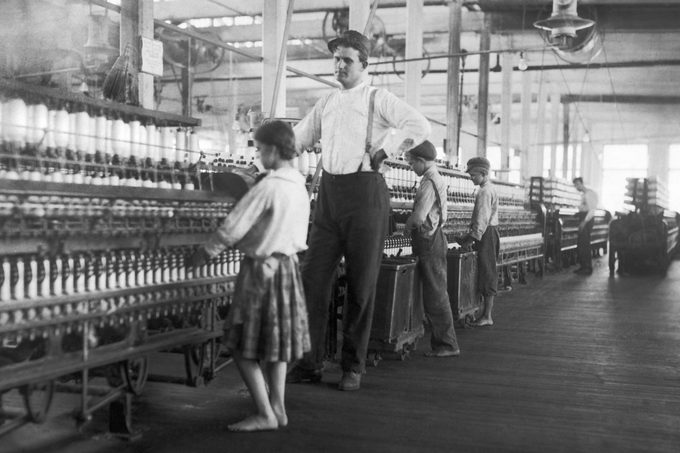
Today’s child labor laws would be unthinkable to many American families a century ago. With the exception of professional or fairly wealthy households, parents often couldn’t make ends meet without children working the family farms, pitching in at family businesses or getting jobs in mills, mines or factories. Some of those jobs are part of the reason why the school year doesn’t start in January .

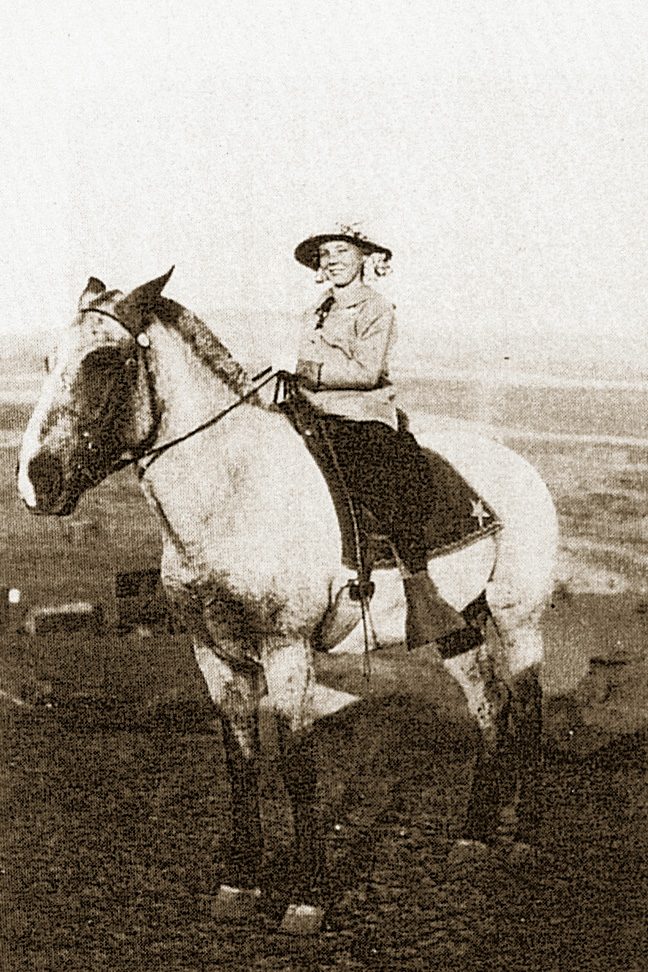
Some students rode horses to school

Louise Basse and her horse, Jane, seen here, navigated seven fields and gates to get to school in Goldendale, Washington, in the early 1900s.

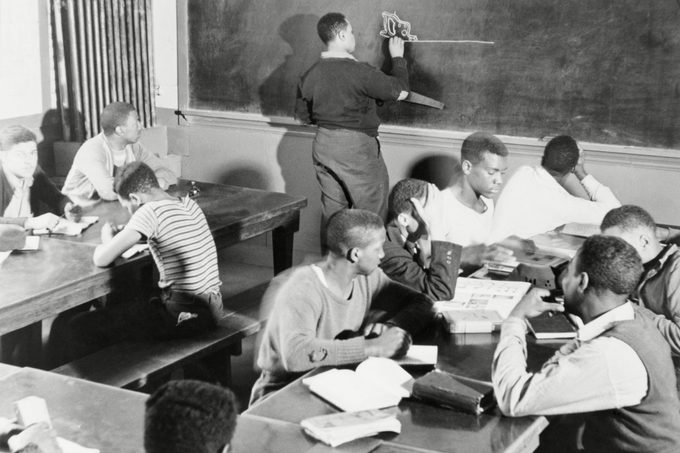
School was segregated

At the turn of the 20th century, long before the Civil Rights movement , there were limited educational opportunities for African American students. In 1910, 90% of Black Americans lived in the South, where schools were far poorer than in the North. Average school years in the South lasted only 121 days, with no attendance laws. Black teachers’ salaries were dismally low, and public secondary schools for African American students were few.

Not all children went to school

At the turn of the century, only 51% of children aged five to 19 even went to school. By 1910, the number had grown to only 59%, according to the National Center for Education Statistics. Enrollment was about 20% lower for non-white students, and most only attended school for a few years to learn basic English and math. In 1900, only 11% of high school-age children were enrolled at all.

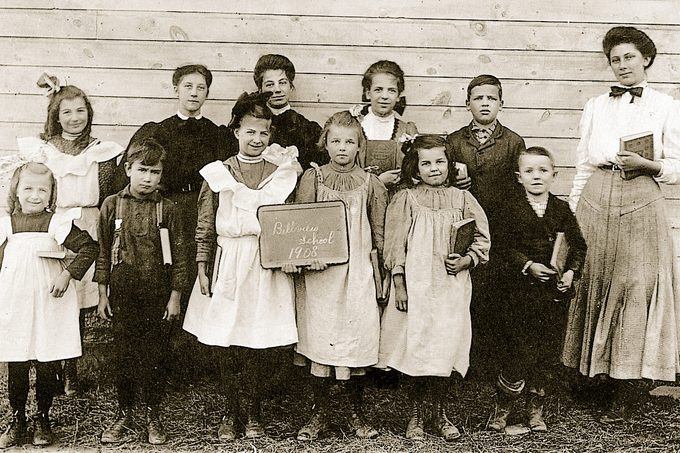
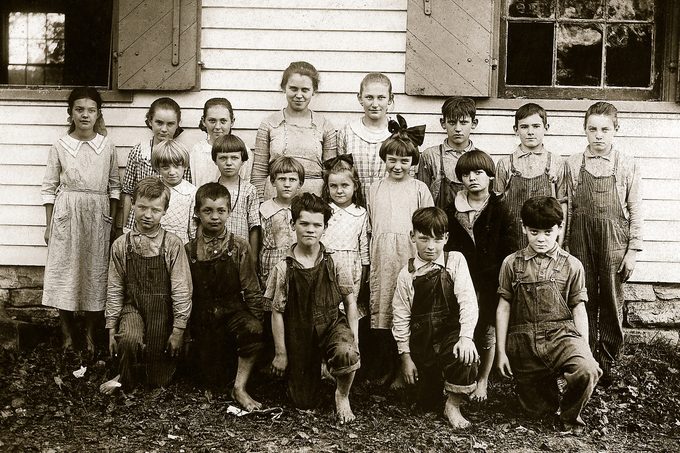
Students had specific attire that they wore to school

In 1908, Clarice Winters’ mother, Marjorie Zimmerman (back row, center), was in her last year at Bellview School in Somerset County, Pennsylvania. Fashion trends of the era often found girls wearing aprons or frocks over their dresses.

Night school wasn’t just for adults

Child labor on farms and in cities was so common in the late 1800s and early 1900s that many states passed laws requiring larger cities to provide evening elementary and high school education. One school official said at the time that parents were happy their kids could finally get a basic education without quitting the farm work or outside jobs they had during the day.

They had school sports, but the uniforms were very different

The Emlenton (Pennsylvania) High School girls’ basketball team posed in 1915 in their game attire. Ruth Nuhfer says her mother, Blanche (Grieff) Barnes, is on the right.

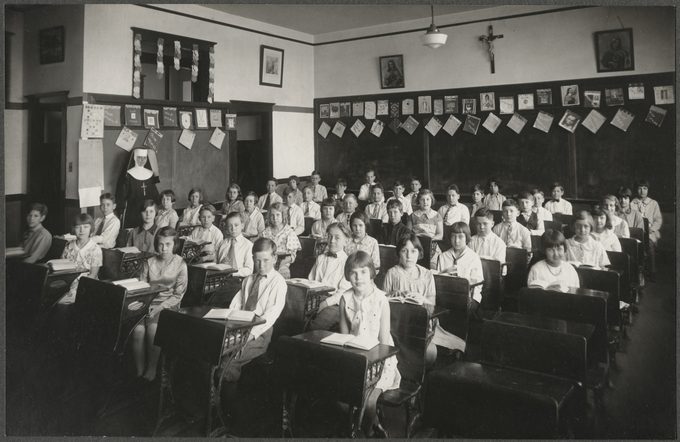
Many schools only had one room

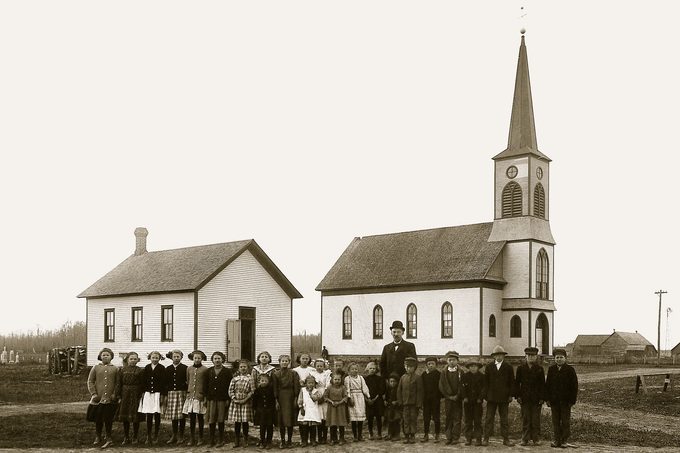
Renata Nelesen and her brother Harold attended this one-room parochial school near Marshfield, Wisconsin, where their father was also the teacher, says Renata’s daughter, Janet Duebner of Sturgeon Bay, Wisconsin. He was also the church’s pastor and posed with his students for this photo in 1913.

Debate teams were more popular

Virla Jean (seated at left) was proud of her accomplishments as part of the Farmington (Michigan) High School debate team in 1929—one of many ways students found purpose and pride beyond the classroom.

Punishment was hands-on

Like today, misbehaving students 100 years ago could get detention or be suspended or expelled from school. But they were also regularly spanked, paddled, lashed or had palms or knuckles rapped with a ruler. Although corporal punishment in schools is outlawed in most of the United States today, it’s still legal in 17 states, according to the National Education Association.

Class sizes fell in the 1920s

Class sizes in the early 1900s hovered around 35 students per teacher , on average, before falling over the next several decades. These days schools have closer to 20 or 25 students per teacher, though the numbers vary depending on factors including funding and location. Magdalene Becker started teaching in 1927 near Murry, Wisconsin. Her first class, pictured here, had 20 students.

Teachers were just as inspiring back then

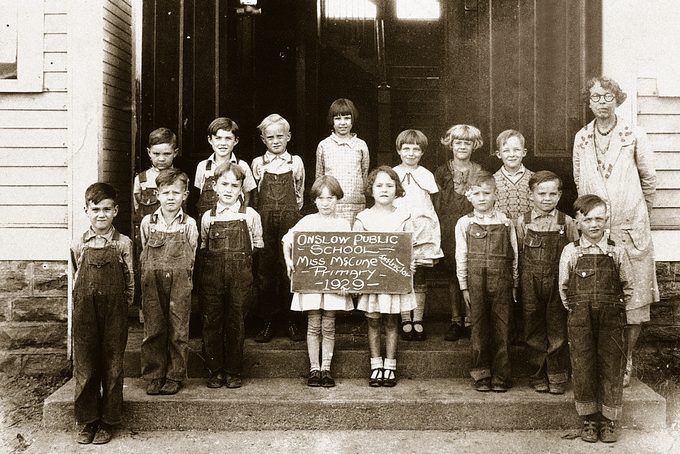
Floyd Streeper (second from right) said his first-grade teacher, Miss McCune, in Onslow, Iowa, gave him a solid foundation for learning in 1929.

Many students were eager to start learning

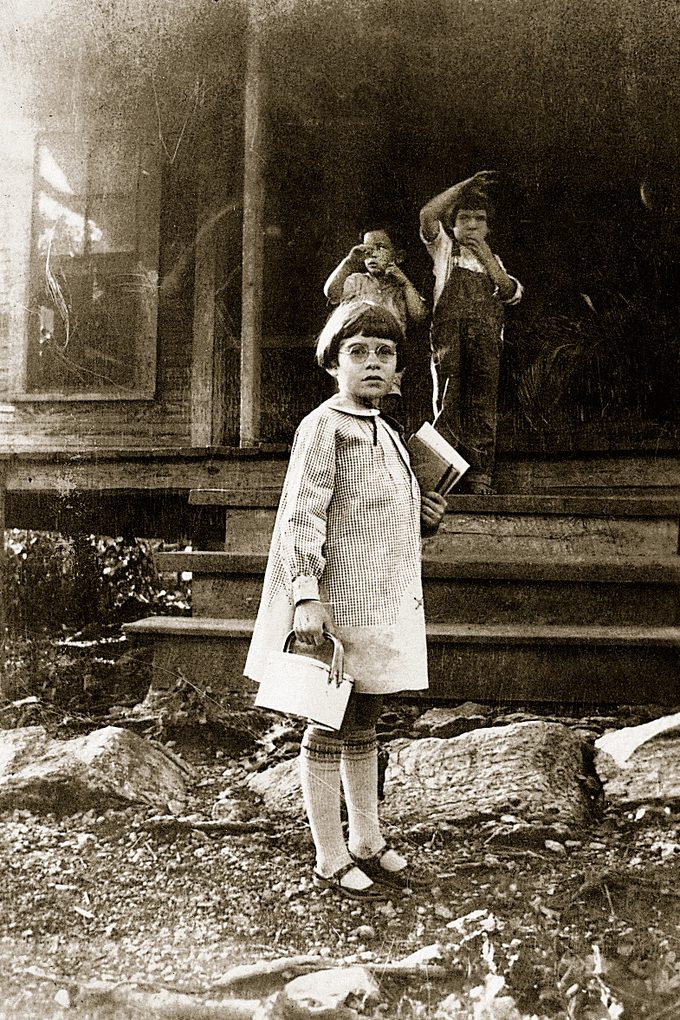
Martha Dudley was eager to start school in 1926. That’s her little brother O.R. and sister Lillie Ruth waving in the background.

Kids just starting school were afraid to leave their parents

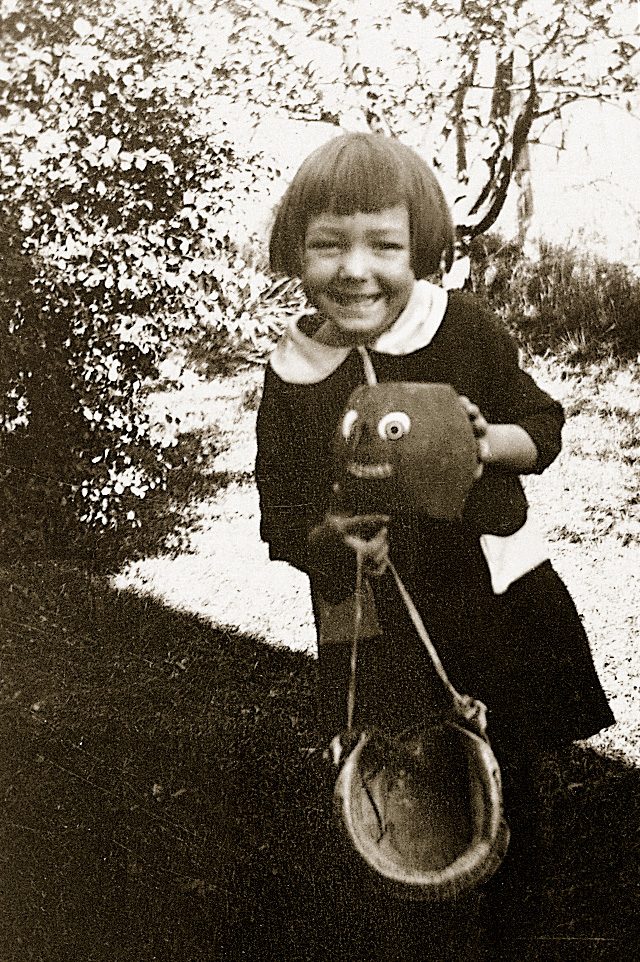
Alice Marks looks more relaxed in this October 1928 photo than she felt for the first two weeks of school. It was her first time being separated from Mom and Dad.

Some children really did walk 5 miles to school

In the 19th and early 20th centuries, there was no public or school transportation across most of the United States. In rural areas, children routinely walked several miles to and from school. Of course, if you had a horse or buggy, you could get there faster.

Some bus rides were long

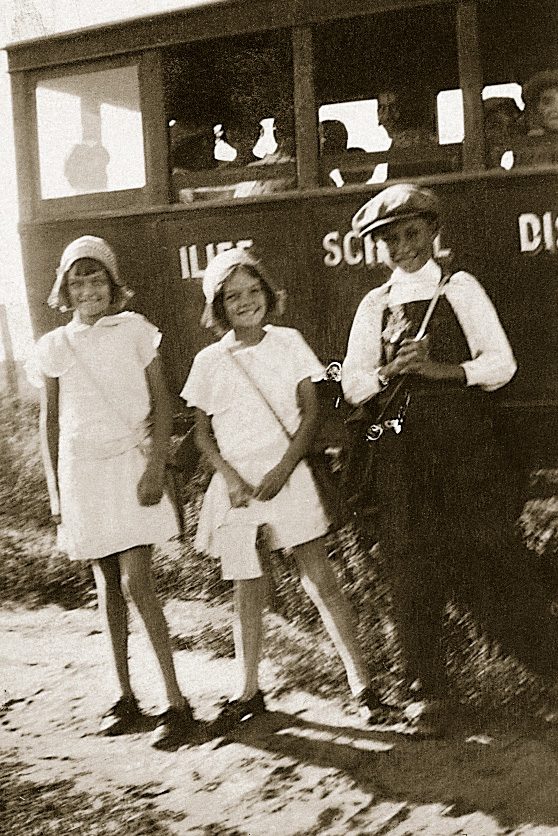
In the 1920s, Mary Ann Kunselman (center), twin sister Martha and brother Shelton had the longest bus ride ever when they got off at the last stop.

Schools could be much smaller

Evelyn Cochran attended this school in Passport, Illinois, from 1915 to 1923. Though major cities had large schools just like they do today, one-room schoolhouses were still common in rural areas.

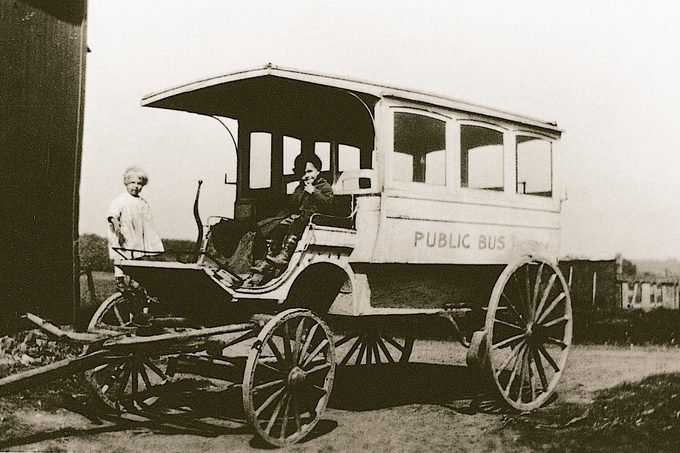
Buses used to be drawn by horses

“The horse-drawn bus was painted yellow with a door in the back. Grandpa parked it next to the barn, where kids would play in it,” recalls Elizabeth Norton. “That’s my sister Alta and brother Charles in the wagon in 1923.” Horses weren’t just used for school buses back then— they also helped deliver the mail .

Some students had their mother as their teacher

Belle Brown was Belle Barnes when she attended Edgewood School. That’s her in the lower right corner in 1924. Her mother was the teacher.

The school year was a lot shorter

Today the school year stretches from late August or September through late May or June—about nine months. In the late 1800s, kids in rural areas were in school for only five, because parents needed children to help with harvest and planting seasons. The school year got longer in the early 1900s, as educating children became required by law and more public schools were built. But farm kids were often absent in spring and fall.

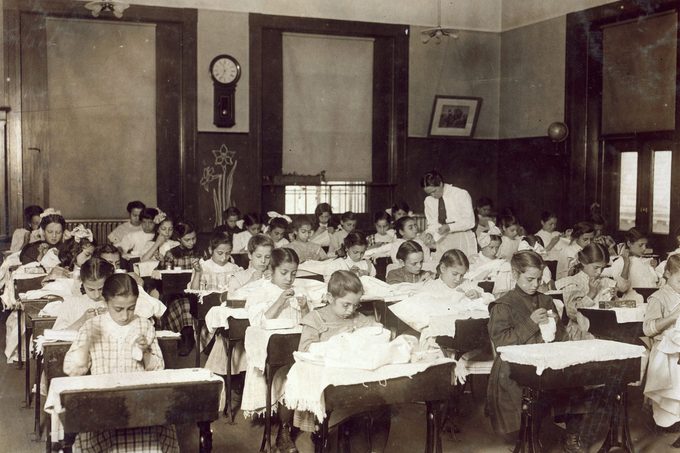
Girls learned domestic skills like sewing

Women’s charities and other groups pushed to include basic domestic skills like sewing, mending and hygiene in girls’ education. These were marketable skills and helped less affluent girls get domestic service jobs like housekeeping and laundering. Advocates of domestic education in schools also believed the skills would improve the home lives of the girls, many of whom were impoverished.

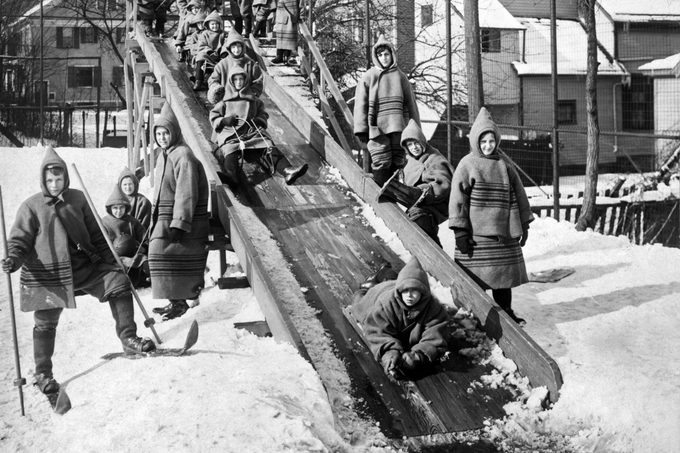
Open-air school was a thing

In the early 20th century, outdoor and open-air schools became a popular trend for children with lung disease or other health problems. The school buildings were often a tent with open sides, or just classrooms with huge windows that were left wide open, even in winter. It was thought that the sunshine and fresh air would help the kids breathe easier and feel more energetic.

Discipline was enforced

Max Philpot (front row, far left) and his buddy wondered who’d get the discipline stick first. Max did after he was caught fighting. This photo of their 1850s log school, which was later covered in siding, was taken in 1922.

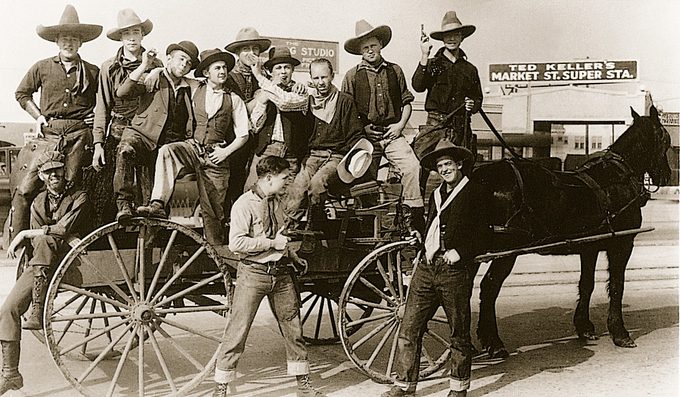
Students skipped school sometimes

Willard Bailey and his friends at Inglewood High School marked their 1926 “senior skip” day with a Western twist—dressed up like cowboys and rode a wagon around town. Willard is at the top right.

Some classrooms could fit in their teacher’s car

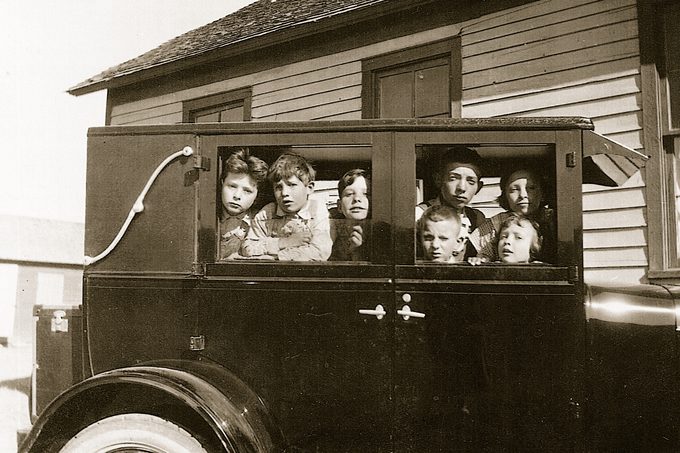
This might be the 1923 class photo for Lucas School, a few miles south of Satanta, Kansas. It shows all the students, including Edmund Wright (left), seated in their teacher’s car.

Scissors looked the same

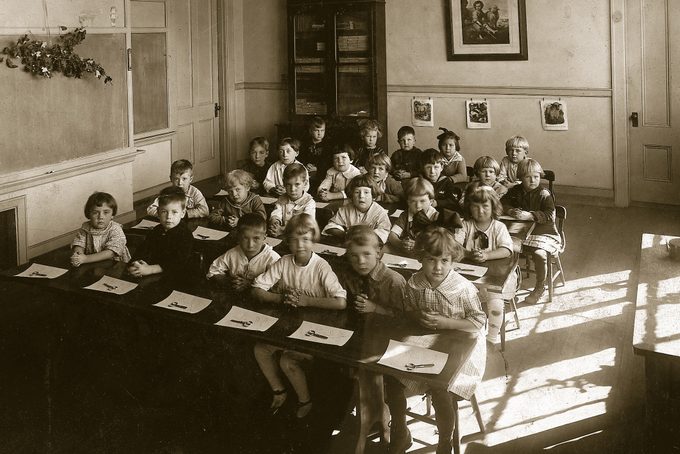
Using scissors is obviously what these children were waiting for in this 1922 photograph at the Presumpscot School in Portland, Maine. Ken Cole is in the last row, on the right.

Grades 1 to 8 learned together in a one-room schoolhouse

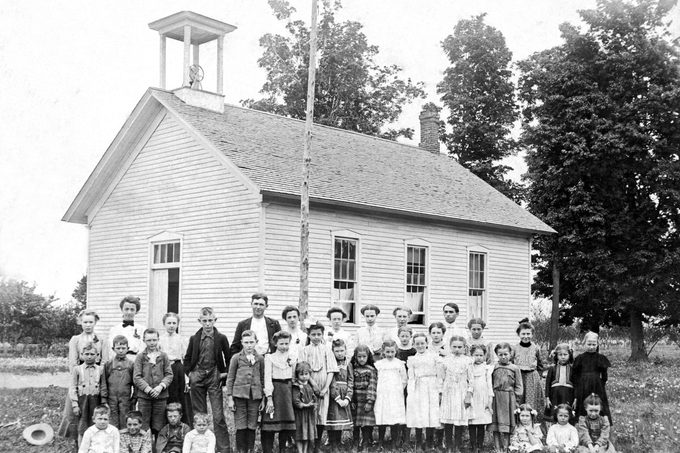
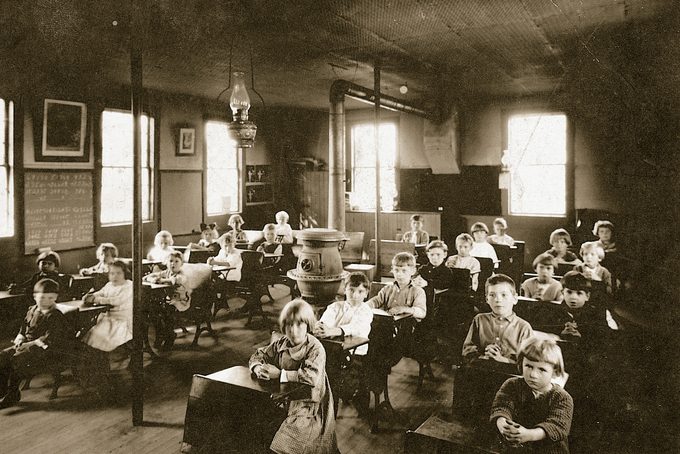
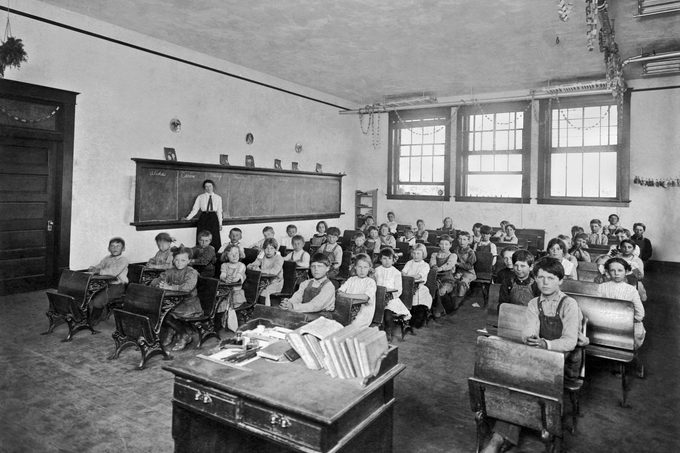
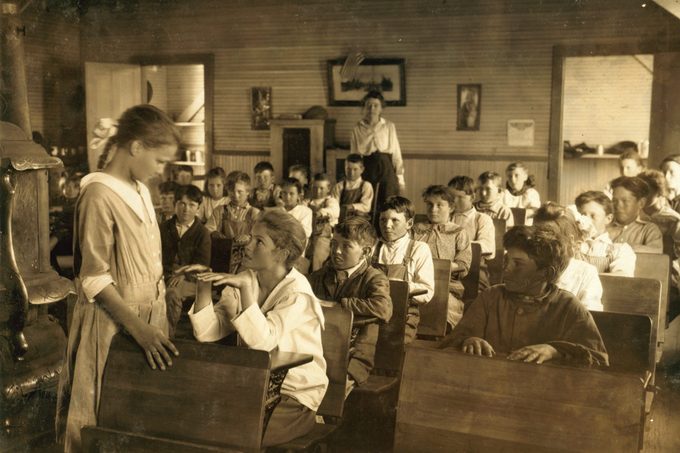
Most American kids in the 1800s and early 1900s attended one-teacher, one-room schoolhouses for first through eighth grade. Depending on the local population, there could be anywhere from a handful of students to more than 40. The youngest kids often sat in the front and the oldest in the back, though here the children are seated with the oldest on the right.

Lunch pails were actual metal pails

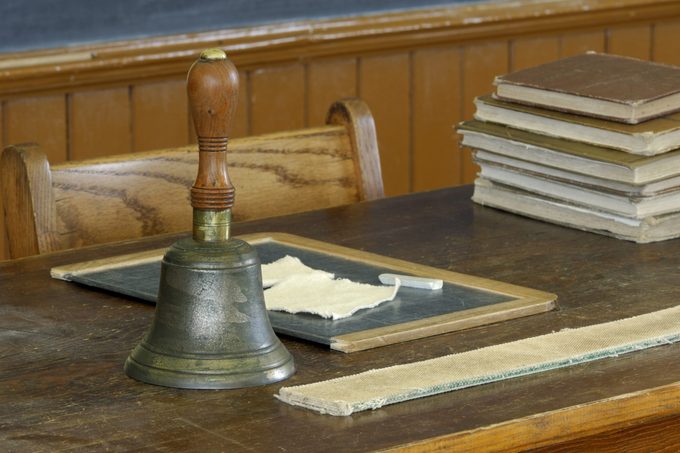
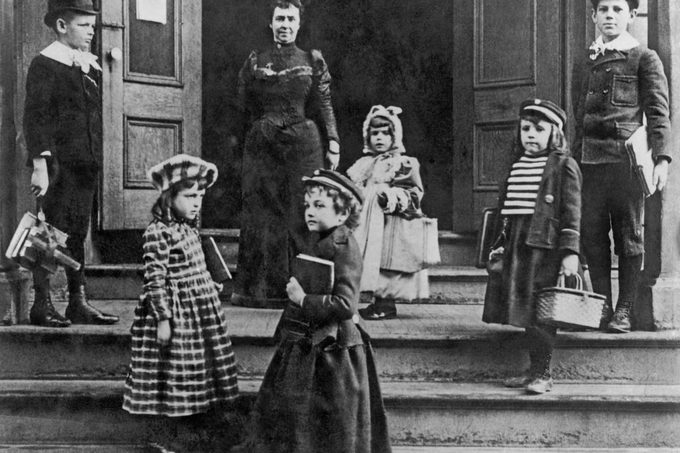
In the early 1900s, children’s school supplies were limited to chalk and tiny chalkboards called slates, and sometimes textbooks, according to the Library of Congress. They used slates much like notepaper and worksheets are used in elementary classrooms today—to work math problems, practice writing and spelling, and more. For lunch, children often carried their lunch in metal pails (hence the term “lunch pail”) or woven baskets.

School plays were always a hit

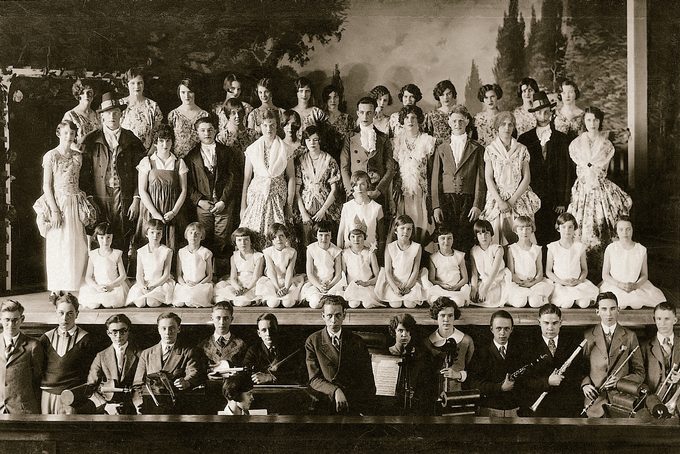
The art and drama department of Howell (Michigan) High School put on a production of The Wishing Well for two nights to a packed house in March 1928. Viola Stoddard (back row, sixth from right) was in the chorus.

Kindergarten wasn’t available in every town

“It was the first day of school in 1920 for me (in the hair ribbon) and my brother, Raymond,” Marjorie Leborgne says. “Raymond was 5 and going into first grade because there was no kindergarten in Kingston, New York, where we lived. I was 7 and starting third grade. Our sister Alma was 3 and too young for school . She stayed home with our mother, who is behind us.”

They had limited instruments for music class

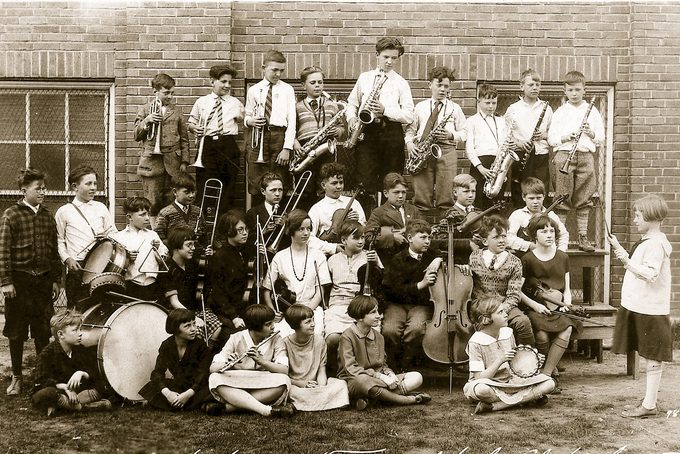
“In 1926, I was a 12-year-old musician with the junior orchestra at Mark Twain School in Webster Groves, Missouri,” says Ione Pinsker (second row, right of the triangle). “By the time they got to me, the only instrument remaining was the viola, which I disliked, but I had promised to finish the semester on any available instrument. My real education was learning to appreciate music.”

Students put on pageants

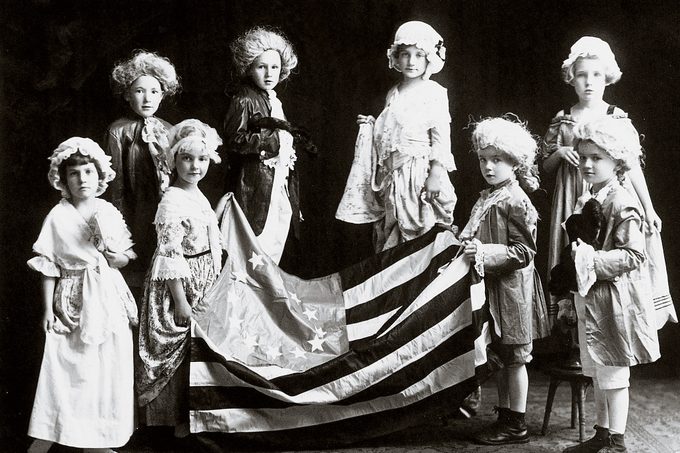
Back in 1922, eight second-graders at McAlister School in Lawrence, Kansas, put on a pageant to celebrate Washington’s birthday. That’s James Burdette Smith at the far left in the back row.

A lot of students loved their teachers

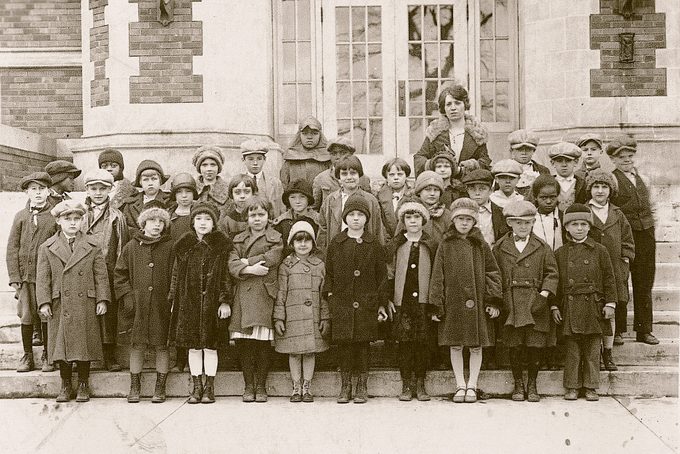
“This 1924 picture is of my first-grade class at Warren School in Decatur, Illinois,” says Mary Smith. “I’m second from the left in the first row, and my brother, Paul, is second from the left in the second row. The teacher was Miss Pearson, whom I dearly loved .”

Teeth and fingernails were inspected for dirt

Children’s fingernails, hair, faces, and teeth were inspected for dirt, and they were taught how to properly wash up with soap and scrape the dirt from under their nails. Teachers at overcrowded urban schools also worried about contagious disease and often quarantined kids with sniffles and other symptoms.

While much has changed in the last century, one thing remains the same: The classroom continues to shape future generations, just with fewer horses and more homework.

Why trust us

At Reader’s Digest , we’re committed to producing high-quality content by writers with expertise and experience in their field in consultation with relevant, qualified experts. We rely on reputable primary sources, including government and professional organizations and academic institutions as well as our writers’ personal experiences where appropriate. We verify all facts and data, back them with credible sourcing and revisit them over time to ensure they remain accurate and up to date. Read more about our team , our contributors and our editorial policies .

Sources:

  • Encyclopedia.com : “The 1910s Education: Topics In The News”
  • National Education Association : “Corporal punishment in schools still legal in many states”
  • National Center for Education Statistics : “120 Years of American Education: A Statistical Portrait”
  • Vanderbilt University : “Evening Schools and Child Labor in the United States, 1870-1910”
  • Mental Floss : “11 Ways School Was Different in the 1800s”
  • National Library of Medicine : “Corporal Punishment in U.S. Public Schools: Prevalence, Disparities in Use, and Status in State and Federal Policy”
  • Butler University Libraries : “A Brief History of the Teaching of Home Economics in the Public Schools of the United States”
  • Slate : “When Students Went to School Outside—Even in Winter”
  • Library of Congress : “One-Room Schoolhouse”
  • Chasing Dirt: The American Pursuit of Cleanliness by Suellen Hoy
Notification
This is just an example, you can fill it later with your own note.
Done