Articles of Education: personal finance education
News Update
Loading...
Showing posts with label personal finance education. Show all posts

Thursday, August 21, 2025

Is Education a Better Investment Than Stocks? Here's the Data

Is Education a Better Investment Than Stocks? Here's the Data

Featured Image

The Financial Value of a College Degree

According to recent research from the Federal Reserve, college graduates can expect a median annual return of 12.5% on their investment in higher education. This figure is significantly higher than the long-term returns typically seen in the stock market. The financial benefits of a college degree are also evident in the earnings gap between graduates and those with only a high school diploma. On average, college graduates earn $32,000 more annually than their peers without a degree, a premium that has reached near all-time highs.

Despite rising student loan debt and fluctuating stock market performance, many Americans are questioning whether a college degree is still worth the investment. However, researchers at the Federal Reserve Bank of New York, Jaison R. Abel and Richard Deitz, argue that college remains a valuable investment for most people. Even though some recent graduates may struggle to find good jobs, they are generally in a better position than similarly aged workers without a college degree, who often face higher unemployment rates and lower wages.

College as a Blue-Chip Investment

Abel and Deitz’s research highlights that the financial return from a college degree surpasses traditional investment benchmarks. Their study found that, even when accounting for opportunity costs—such as the income forgone during years spent in school—the median lifetime return for a college graduate is 12.5% annually. This rate makes higher education a strong financial investment, even when compared to the S&P 500, which has historically provided long-term real returns of under 7%, and bonds, which have averaged less than 2% annually.

The consistency of the college wage premium over the past three decades is a key factor in this value. While college costs have increased, so have the financial benefits. This has led to headlines suggesting that the rate of increase has leveled off, sometimes using terms like "stagnation" to imply negative trends. However, the data shows that the college wage premium has remained remarkably high, with median college graduates earning about 70% more than those without a degree. This advantage has not been expected to grow year after year indefinitely.

The Wage Premium and Economic Trends

The wage premium for college graduates has increased over time due to several factors. Wages for those with only a high school diploma have declined significantly since the early 1970s, while salaries for college graduates have risen by about 5% over the same period. Other studies support these findings. A 2025 study from the Federal Reserve Bank of San Francisco estimated the college wage premium at around 75%, and a 2024 study from New York University found that earning a degree had an annualized rate of return of about 10% for women and 9% for men.

AI and the Job Market

Recent concerns about artificial intelligence (AI) displacing college graduates have sparked alarm in the job market. However, Abel and Deitz remain skeptical about the widespread impact of AI on recent graduates. They note that weakness in demand for computer science graduates has existed for years before AI became widely accessible. Instead, they point to broader economic factors, such as a cooling labor market and sector-specific challenges, as more likely causes of job market fluctuations.

The Real Cost of College

Contrary to popular belief, the out-of-pocket costs of college have actually decreased in recent years. In 2024, the average published tuition at four-year colleges was around $21,000 per year. However, students received nearly $15,000 in grants, aid, and tax benefits, reducing the average net price to about $30,000 over four years. The biggest cost of college, according to the Federal Reserve, is not tuition or books but the opportunity cost—the wages lost while attending school.

When the Investment Doesn’t Pay Off

While the overall return on a college degree is strong, it depends on several factors, including the major chosen and the time taken to graduate. Graduating in five or six years can significantly reduce the return on investment. For example, taking five years to complete a degree lowers the median return to about 9%, and taking six years pushes it down to 7%. These figures reflect not just additional tuition costs but also the impact of delayed career entry and missed opportunities for advancement.

According to the Fed's analysis, about a quarter of college graduates do not see significant financial benefits from their degrees. However, for the majority, higher education remains one of the most reliable pathways to economic mobility.

The Bottom Line

While stock market investments can offer high returns, they come with uncertainty and require careful timing. In contrast, higher education provides a more stable and predictable financial return. Historically, it has been a powerful tool for working-class families to achieve middle-class stability and beyond. As the data shows, a college degree continues to be a wise investment for most individuals, despite the challenges and evolving economic landscape.

Sunday, August 17, 2025

Teachers' Big Classroom Spending May Bring Bigger Tax Breaks — With a Catch

Teachers' Big Classroom Spending May Bring Bigger Tax Breaks — With a Catch

Featured Image

Teacher’s Back-to-School Expenses Highlight Ongoing Challenges

As the new school year approaches, many educators are preparing not just for lessons and student engagement, but also for the financial burden of purchasing classroom supplies. For teacher Heather Fulmer, a special-education mathematics instructor in Arkansas, this means a significant investment in materials that will support her students’ learning. She has already spent between $600 and $700 of her own money on items such as pencils, binders, backpacks, paper, and snacks. This is only half of what she expects to spend before the school year ends.

Fulmer receives a $250 classroom allowance from her school district, located about 45 minutes east of Little Rock. However, creating a welcoming and comfortable learning environment requires more than just a small budget. The cost of maintaining a positive classroom atmosphere often exceeds what schools can provide, especially when it comes to ensuring that all students have the tools they need to succeed.

With the start of tax-filing season in January, teachers like Fulmer may find some relief through the recently passed federal tax and spending package. This law introduces broader deductions for out-of-pocket expenses related to school supplies. While this change is welcomed, experts argue that it may not fully address the growing costs associated with teaching, particularly as rising tariffs threaten to increase the price of essential classroom materials.

According to the U.S. Chamber of Commerce, tariff rates on back-to-school supplies have increased to an average of 18% in May and June, compared to 5% during the same period last year. These higher costs add to the financial pressure on educators who already spend significant amounts of their own money on classroom needs.

Currently, teachers can deduct up to $300 in unreimbursed expenses related to school supplies, while married couples filing jointly can deduct up to $600. This includes teaching and cleaning supplies, as well as certain professional development costs. The new tax law, known as the One Big Beautiful Bill Act, maintains this deduction but introduces additional changes.

One key update allows coaches and interscholastic sports administrators to include their unreimbursed equipment costs in the deduction. This could be beneficial for teachers who take on extra roles beyond the classroom. However, the definition of “interscholastic sports administrator” may need further clarification, according to Jodi Eckhout, a member of the American Institute of CPAs.

Eligible educators must work at least 900 hours per year in K-12 education to qualify for the deduction. The expanded definition of eligible professionals, including coaches and sports administrators, will apply starting in 2026. Teachers who meet these criteria can still claim the deduction alongside the standard deduction, making it an “above the line” benefit.

Many educators, like Fulmer, spend far more than the deductible limit on classroom supplies. Surveys suggest that out-of-pocket expenses range from $500 to $700 or more. While Fulmer believes the investment is worth it, she would prefer a higher deduction. Others, including Colin Sharkey of the Association of American Educators, have long advocated for a $1,000 educator-expense deduction to better reflect the reality of classroom costs.

The new tax law also offers another potential benefit: the ability to deduct expenses exceeding the $300 or $600 limit if teachers choose to itemize their deductions. However, this option is available to only a small percentage of taxpayers, as roughly 90% of households currently take the standard deduction. The law temporarily raises the state and local tax (SALT) deduction to $40,000, which may encourage some teachers to itemize if they live in high-tax states.

Beyond the SALT deduction, other factors can influence whether a teacher chooses to itemize, such as large medical bills or charitable contributions. For those who do, the new law could provide additional flexibility in managing their taxes.

In addition to these changes, teachers and aspiring educators may also qualify for other tax benefits. The lifetime-learning credit, worth up to $2,000, applies to undergraduate, graduate, and professional-degree courses. The American Opportunity Tax Credit, available for the first four years of higher education, offers up to $2,500 in benefits. Starting in 2026, these credits will require a Social Security number, limiting eligibility to citizens and authorized immigrants.

For educators like Fulmer, the combination of rising costs and limited tax relief continues to present challenges. Yet, with new opportunities emerging, there is hope that future policies will better support the financial needs of those dedicated to shaping the next generation of learners.

Tuesday, August 5, 2025

More Adults Return to School—Should You?

More Adults Return to School—Should You?

Featured Image

Rising Interest in Higher Education Among Adults

More adults are considering returning to college, driven by a mix of economic uncertainty and the desire for career advancement. However, many are unsure whether the long-term benefits will outweigh the immediate financial challenges. This trend is not new—economic downturns have historically led to increased enrollment in higher education. For instance, during the 2008 recession, college enrollment rose by 12%, with a significant increase in students over the age of 24. The promise of stability or higher pay was a major motivator, even as job markets shifted rapidly.

Today’s interest in returning to school stems from similar concerns. Many adult learners are seeking a second chance to finish degrees they started years ago or hoping that new credentials could open up better opportunities in a changing job market. With AI and other technological advancements reshaping industries, the need for updated skills has never been more pressing.

However, history shows that increased enrollment doesn’t always lead to degree completion or improved outcomes. In the aftermath of the 2008 crisis, less than 60% of those who returned to college earned a degree within six years. Many took on new student loans without a credential to show for it, highlighting the risks involved.

The Hidden Costs of Adult Education

Returning to school as an adult involves more than just tuition. While the average annual cost at public colleges exceeds $29,000, there are additional expenses such as healthcare, childcare, and on-campus services. These costs can add thousands of dollars per year, making the financial burden even heavier for adult students.

For many, the situation is further complicated by existing financial obligations like rent, mortgage payments, insurance, and childcare. Parents may find that the cost of childcare during class hours can be nearly as high as tuition itself. Additionally, adults who reduce their work hours to attend school must consider the lost wages, especially if they are the primary earner in their household.

The financial pressure of replacing a paycheck with a student loan is real and affects both daily spending and long-term savings. It's crucial for adult learners to carefully assess these factors before making a decision.

Strategies for Managing the Financial Burden

Choosing the right educational path is often the first step. Some adult learners opt for full-time programs, while others balance coursework with their current jobs. Either approach requires careful planning and consideration of personal and professional needs.

Prioritizing in-state public universities, part-time programs, or online schools with flexible schedules can help manage costs and time commitments. Some institutions offer night and weekend classes, which may be more feasible for working adults or parents.

Once a program is selected, the next challenge is funding. Employers may offer tuition reimbursement programs, especially if the degree aligns with the employee's current role. Scholarships and grants are also available, particularly for those pursuing high-demand fields. Filing the Free Application for Federal Student Aid (FAFSA) is essential, as it determines eligibility for federal aid, including Pell Grants, which now cover more workforce training programs.

Federal and private student loans can fill any remaining gaps, but taking on new debt should be done with caution. Adults already in repayment on existing student loans must evaluate whether additional borrowing makes sense for their financial situation.

Weighing the Risks and Rewards

Not everyone who returns to school completes their program. The post-2008 enrollment spike saw many students take on new loans without earning a degree, underscoring the importance of setting realistic expectations. The decision to go back to school often comes down to whether the potential benefits outweigh the risks.

If a specific job or promotion requires a degree, or if a new credential can clearly boost earnings, the investment may be worth the financial risk. However, if the outcome is uncertain, a closer look is needed. Adult learners should compare the total cost of attendance—including indirect expenses—against the likely increase in future earnings.

They should also consider whether their intended field values educational attainment or work experience more heavily. Using a College ROI Calculator can help make this assessment. In some cases, industry-specific certifications or short-term training programs may offer a faster, more affordable path to better employment.

Community colleges and workforce development centers often provide these options at a lower cost, making them a viable alternative for some learners.

A Personal Decision with No Guarantees

Returning to school as an adult is a complex decision that involves trade-offs between time, money, and personal goals. There are no guarantees of success, but for some, it can be a meaningful opportunity to reset and gain new skills.

As the job market continues to evolve, the need for updated knowledge and abilities is becoming increasingly important. The right education, in the right setting, at the right time, can lead to positive outcomes. However, history shows that increased enrollment does not always result in completion, and even completion does not always lead to better pay.

The best results come when adults choose programs carefully, understand the costs, and enter with a clear plan. The question is not just whether school is worth it, but whether it makes sense right now, for this person, in this situation.

Wednesday, July 30, 2025

Harvard's Windfall: Executives Return to School

Harvard's Windfall: Executives Return to School

Featured Image

Harvard’s Shift to Executive Education as a Financial Lifeline

Harvard University has increasingly turned to executive and continuing education programs as a vital source of revenue, offering a crucial financial buffer during a period of significant challenges. This shift has positioned the university as a key player in the growing market for professional development, even as it faces scrutiny and financial pressures from external forces.

Before the Trump administration imposed restrictions on federal funding, Harvard had already begun focusing more on these programs. Executives and professionals seeking to enhance their skills or stay current with technological advancements have been willing to invest substantial sums in Harvard's courses, often covering the costs themselves or through employer sponsorship. These programs have become a reliable revenue stream, insulated from the political and financial turbulence that has affected other parts of the university.

In 2024, Harvard reported that executive and continuing education contributed nearly $600 million to its operating revenue, a significant increase from $155 million two decades ago. These programs accounted for 9% of the university's total operating revenue of $6.5 billion, making them a major financial pillar. Additionally, they made up 42% of the school’s net tuition and fee revenue, compared to 26% in 2005.

Despite some skepticism from alumni who view these programs as lacking the traditional prestige of Harvard’s degree-granting programs, the demand remains strong. The programs cater to a wide range of learners, including corporate executives, professionals, and lifelong learners. Courses vary in length and cost, with some short-term certificates priced at a few hundred dollars and others, such as multiyear programs at the Harvard Business School, costing over $150,000.

Revenue Streams and International Appeal

The appeal of Harvard's executive education programs extends beyond U.S. borders. Approximately 70% of the 12,000 executive education students at the Harvard Business School are international, making global reach a significant selling point. For instance, Raoul-Gabreil Urma, a UK-based entrepreneur, recently completed a multiyear program that included on-campus components and cost around $150,000. He praised the program for bringing together a diverse group of professionals from around the world.

However, the Trump administration’s efforts to restrict federal funding and limit enrollment of foreign students pose potential threats to this international appeal. Despite these challenges, many elite U.S. universities are expanding their executive education offerings, both online and in-person, to meet rising demand.

Other institutions, such as MIT, Columbia University, and the University of Virginia, have also entered the executive education space. MIT is developing a network of campuses across the U.S., while Columbia offers specialized programs for chief financial officers. The University of Pennsylvania’s Wharton School has established a campus in San Francisco, and the Darden School of Business at the University of Virginia has expanded into the Washington, D.C. area.

Expanding Global Reach and New Programs

Harvard itself is broadening its professional education initiatives. The university offers executive and continuing education through various schools, including the Kennedy School of Government and the TH Chan School of Public Health. These programs include cybersecurity certificate courses and leadership training, which are highly sought after by professionals in different sectors.

The TH Chan School of Public Health, for example, has seen a significant portion of its revenue come from federal research grants. However, as these funds face uncertainty, the school is turning to continuing education to fill the gap. A recent online leadership program, priced at $14,000, attracted interest from professionals looking for high-quality, flexible learning opportunities.

Rifat Atun, the new vice dean for non-degree education and innovation at the TH Chan School, is leading efforts to expand these programs, particularly in Latin America and the Middle East. His goal is to create more tailored educational offerings that meet the needs of a global audience.

Future Directions and Innovation

Harvard is also exploring new formats for continuing education. The Harvard Extension School is introducing microcertificates in AI-related topics and online graduate certificates that can be stacked toward a master’s degree. These innovations aim to provide more accessible and flexible learning options for working professionals.

Unlike earlier attempts at free online courses, which were not financially sustainable, executive education has proven to be a profitable model. Peter Bol, a Harvard professor, noted that while free online courses were a “money loser,” executive education has been a successful financial venture.

As Harvard and other top universities continue to invest in executive and continuing education, these programs are becoming an essential part of the higher education landscape. They not only provide critical revenue but also offer valuable learning opportunities for professionals seeking to advance their careers in an increasingly competitive global market.

Wednesday, June 18, 2025

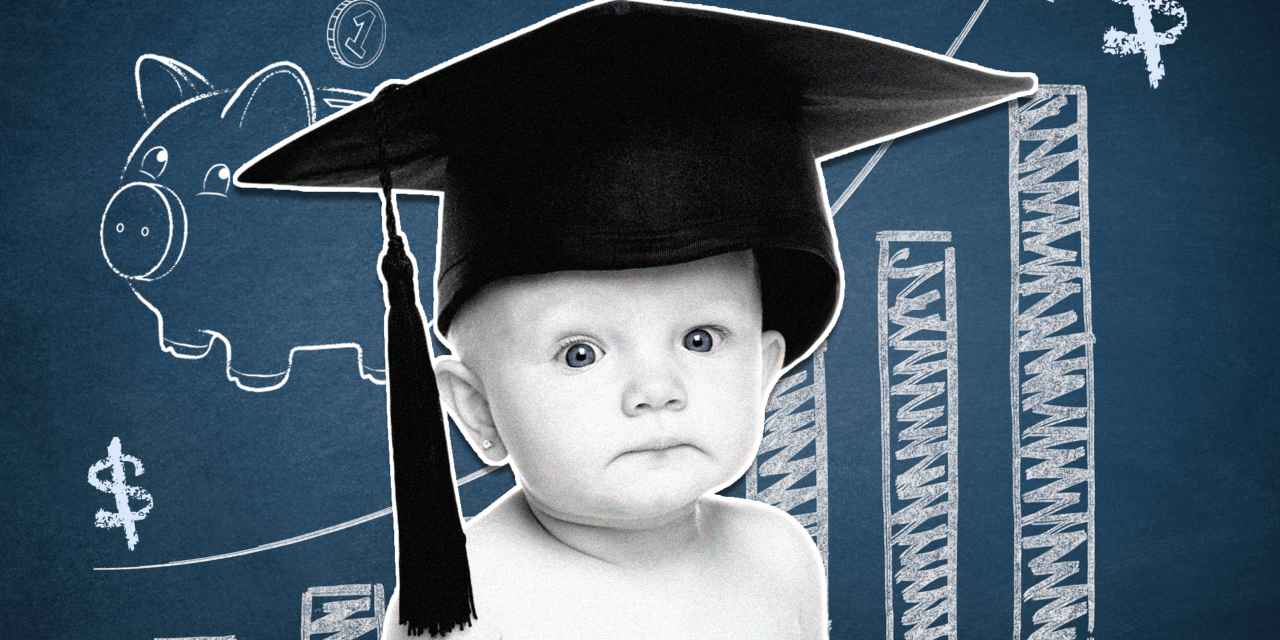
Get Ready: Exact Savings Goals for Your Child's College Fund at Ages 5, 13, and 18

Get Ready: Exact Savings Goals for Your Child's College Fund at Ages 5, 13, and 18

CORRECTION: A previous version of this story misspelled Dave Ragan’s name.

American families face ongoing college-affordability and student-debt crises as new technologies like artificial intelligence transform the workplace, casting doubt on the value of higher education in the future.

Despite these challenges, financial planners say it remains wise for parents to prepare for the rising costs of education by saving — a lot — for college, and talking to their children about their options.

If your newborn today plans to attend college, you should plan to save roughly $105,000 in a college fund by the time they turn 18, which would cover nearly 50% of their total college expenses — tuition, fees, housing and food — at a four-year, public in-state university. That’s the latest advice for parents from T. Rowe Price an investment firm that offers college-savings plans.

With higher education costs continuing to rise and millions of Americans struggling with student loan debt, any amount of money saved for college can make a difference. financial-planning columnist Beth Pinsker answers the internet’s most searched questions about the tax-advantaged saving account.

In order to achieve this staggering figure, parents today could invest $280 each month per child from the time they are born into a 529 college-savings account that earns 6% annually, which could grow to more than $19,000 by age 5, almost $45,000 by age 10, about $64,000 by age 13, and nearly $105,000 by the time they turn 18. That six-figure total is approximately 1.75 times the $59,972 estimated annual cost of college by that time. To fully cover 50%, parents would continue saving through the four years their child is enrolled in school.

The analysis assumes the other half would be covered by student loans, scholarships and grants. Almost 30% of undergraduates receive federal student loans.

Setting aside $280 per month for two children would add up to $6,720 per year. For a family of four making the average gross income of about $146,000, according to the Bureau of Labor Statistics, that would translate to 4.6% of gross income.

“That’s achievable. They just have to control their spending,” Mark Kantrowitz, author of “How to Appeal for More College Financial Aid,” told . Reaching this savings goal might require sacrificing wants, like vacations, but “vacation is a luxury, not a necessity, so that should be the lowest priority,” he said.

T. Rowe Price’s guidelines suggest that by the time a child is 18, parents should have saved 1.75 times the current cost of one year of college. Over time, this means having 0.6 times the annual cost by age 5, when many children start elementary school; 1.1 times by age 10, as they prepare to enter middle school; and 1.35 times by age 13, before they begin high school.

Average annual expenses at four-year, in-state public universities totaled $24,920 this year, and at private universities the average was $58,600. These benchmarks factor in average 5% annual college inflation, which would push up the mean annual cost of attending an in-state school to $59,972 in 18 years. Young said parents can monitor their progress each year using actual sticker prices at the time, as the $59,972 figure is just an estimate.

‘Time will either be your friend or your enemy, so make it your friend.’ — David Mendels, principal of DBM Planning

For most parents, these are daunting figures. The median retirement savings , a more common savings goal, for a couple with children is just over $95,000, according to 2022 data from the Federal Reserve. But it is in parents’ interest to come up with a plan for dealing with college costs, Larry Pon, a financial planner and accountant in California, told . Too many parents, determined to send their kids to their “dream school,” say they will “figure it out,” he said — and “usually what ‘figure it out’ means is taking on student loans.”

Related: Is going to college worth it? Ask these 5 questions to make sure it’s a good investment for you.

College is an important financial goal, but not the top one

As they begin planning to save for college, parents must first establish where college expenses fit into family financial goals. In terms of priorities, an emergency fund comes first, Roger Young, a financial planner at T. Rowe Price, told . The next biggest priorities should be paying off high-interest debt and saving for retirement — which at the very least means maximizing an employer match, but preferably means saving at least 15% of income, which Young describes as “adequate” for retirement.

The planners spoke with all agreed that retirement savings were a higher priority than college savings. Unlike education, there is no loan product for retirement, they noted. After those more urgent goals are accounted for, parents can start saving for their children’s education, and also should talk to their children about the plan.

Parents who are not able to save $280 per month per child, as T. Rowe Price suggests, can establish different goals. Another framework is to aim to fund one-third of college costs from savings (rather than 50%), one-third from parent income while attending, and one-third from student loans or scholarships, said Kevin Brady, a financial planner at Wealthspire in New York. “Those ratios can be adjusted as needed depending on total cost, age, income, number of kids and so on,” he said.

The rule of thumb is not to borrow more than you think your annual starting salary will be.

Eventually, when children are old enough to work, they can also contribute to this $280 monthly target. “I help clients reframe college savings as a shared responsibility: The family may cover part, and the student contributes through work, scholarships or modest loans,” said Nathan Sebesta, a financial planner at Access Wealth Strategies in New Mexico.

Being realistic about a college budget might also mean thinking through the financial impacts of different options. Dave Ragan, who has three children and is a financial planner at Grunden Financial Advisory in Texas, said he was putting away about $350 total per month for college, which at times felt like “a stretch.” He had originally aimed to save $20,000 to $30,000 for each of his children to attend community college and then a local university. When his son said he wanted to attend a school out of state, however, “we started crunching the numbers, and there was a big difference from what the college cost actually was compared to what we had been talking about and planning with him.”

Ragan tried to bump up the savings rate into their 529 college-savings account, but ultimately sat down with his son and “ruled it out” based on the amount of debt he would likely have to take on to go out of state. The rule of thumb is not to borrow more than you think your annual starting salary will be . His son ultimately stayed in-state, got scholarships and contributed money from his summer jobs.

For the typical American family, however, setting aside money for education is a stretch, especially with prices expected to rise due to changing U.S. tariff policy. “For many families, fully funding college just isn’t realistic,” said Liz Gillette, a financial planner at Curio Wealth in Maryland, who says the topic comes up often with clients in their 30s and 40s. “I suggest having honest, age-appropriate conversations with your child early — about what types of programs make sense and how much the family can realistically contribute.”

Only 17.2 million families in the U.S., or roughly 15% of family households, use 529s.

As it is, American parents are already less likely to have enough emergency savings to cover three months of expenses (49%) than adults in the U.S. overall (57%), according to 2024 data from the Federal Reserve. They are also more likely to have credit-card debt and higher credit-card balances than average, according to a 2023 PYMNTS survey .

Read more: Parents are ‘hunkering down financially’ to brace for Trump tariff impact

“I’ve seen people who are very successful savers, saving at high percentages even though they don’t have a ton of income,” Young said. Still, “we need to give ourselves some grace.”

Is a 529 plan worth it?

To incentivize parents to save for college, Congress created 529 plans in the 1990s, offering tax-free earnings on investments used for higher education. ( Many states also offer tax deductions on 529 contributions.) Sen. Mitch McConnell of Kentucky, the former Republican majority leader, and former Sen. Bob Graham, a Florida Democrat, led the effort to secure federal tax advantages. Starting in 2024, up to $35,000 left in 529 accounts also became eligible to be rolled over into Roth IRAs, giving parents more flexibility — and incentive — to save.

For the 61% of high-school grads who go to college, “the tax benefits are meaningful,” Young said of 529s. Earnings in regular savings accounts are taxed as ordinary income, and growth in taxable brokerage accounts are taxed as capital gains.

Yet only 17.2 million families in the U.S., or roughly 15% of family households, use 529s, according to data from the research firm ISS Market Intelligence that was shared with . (One contributing factor is that about half of U.S. adults do not know what 529s are, a separate survey by Edward Jones found.)

While high-income Americans have the greatest ability to take advantage of 529 benefits, ISS Market Intelligence data show others are also trying. The majority of households that have 529s — about 74% — earn less than $150,000 per year, roughly the threshold for the highest 20% of income earners in the U.S.

The estimated median 529 account balance is $9,500, according to ISS, and among families that auto-deposit, the average contribution is about $200 per month.

The sooner you start, the more your student stands to benefit

“The most important point for anyone thinking about saving for college is to start now,” said David Mendels, principal of DBM Planning in New York. “Time will either be your friend or your enemy, so make it your friend.”

The earlier parents start saving, the more time can help their investments compound — meaning the amount they would have to contribute to meet that $105,000 target is hopefully lower than if they start later and have less time to let their investments grow.

Parents who aren’t able to start early — for example, if child-care costs consumed too much of the monthly budget — would have to save at a higher rate in order to meet the $105,000 benchmark, according to T. Rowe Price.

Pon, the accountant in California, said his two children graduated college in 2021 and 2023. He deposited gifts from when his two children were born, as well as any monetary gifts for their birthdays, into their college savings. He regularly contributed to their 529s, and also took advantage when the markets were down by contributing more during those dips. When he looked at the tax form after withdrawing from his child’s 529, the amount he had actually contributed on $10,000 was just $4,000; the other $6,000 “was tax-free growth,” he said.

“The most important message from a personal-finance perspective for families is that a dollar saved is more than a dollar earned,” said Paul Curley, a financial analyst and executive director of 529 & ABLE Solutions at ISS Market Intelligence. “Saving automatically adds up, and 529s increasingly make sense for almost all families once an emergency fund is in place.”

You may not save $105,000 for college — but ‘something is better than nothing’

You may not reach your college-savings goal, but you and your children will benefit from doing what you can.

The truth is that “you can fund all your goals, but you may not be able to fund it to the degree that you want,” financial planner Marguerita Cheng, chief executive of Blue Ocean Global Wealth in Maryland, told . This may not be ideal, but parents should not be discouraged, she said: “It’s not all or none.”

“The reality is, college is inflating at a much faster rate than other goods and services,” said Cheng. “If people can’t do 100% of that goal, they can do a portion of that goal and start when their kids are little, with $50 or $100 [monthly]. … What’s important here is the habit.” The amount that parents contribute can always increase as their income increases, she added.

Cheng’s children are ages 28, 26 and 20. When she was saving for their education, she was also caring for her father, who has Parkinson’s disease. “I, at that time, was worried about three things: the kids’ college, my retirement, and making sure that I’m helping my parents,” she said. Cheng started with $50 contributions and gradually increased the amount over time. The most she was ever able to put away for the three of them was $1,000 per month total.

She was able to use 529s to pay for about 50% of college expenses, with the rest funded by cash flow and federal student loans. Her son paid back his student loans by living at home while doing a fellowship that paid about $48,000 per year. Cheng said she made it clear to him that he couldn’t just spend his salary on wants; he needed to set aside money for an emergency fund and a Roth IRA, and to pay off his student loans.

Whatever your situation, “do something,” Pon said. Even if you are only contributing a small amount each month, “something is better than nothing,” he added.

What personal-finance issues would you like to see covered in ? We would like to hear from readers about their financial decisions and money-related questions. You can fill out this form or write to us at readerstories@ . A reporter may be in touch to learn more. will not attribute your answers to you by name without your permission.


Notification
This is just an example, you can fill it later with your own note.
Done